central line associated blood stream infections

why is this a priority for us?
- Central lines are used every day in our hospital to provide antibiotics, IV fluids, and nutrition
- When bacteria enters a central line and gets into the blood stream, a child can become very ill, requiring extra antibiotics, hospitalization, and additional monitoring.
who’s at greatest risk?
- Any patient with a central line. This includes:
- Many of our patients with cancer
- Patients who require lengthy courses of IV antibiotics
- Patients who require nutritional support through an IV
what are we doing to help reduce infections?
- We follow set procedures for placing lines and daily care of lines to help keep lines free from infection
- Procedures include things like:
- Good hand hygiene
- Daily bathing with medicated soap
- Using sterile technique when placing and accessing the line
- We investigate every infection with a small team to understand why we had an infection
what do we measure?
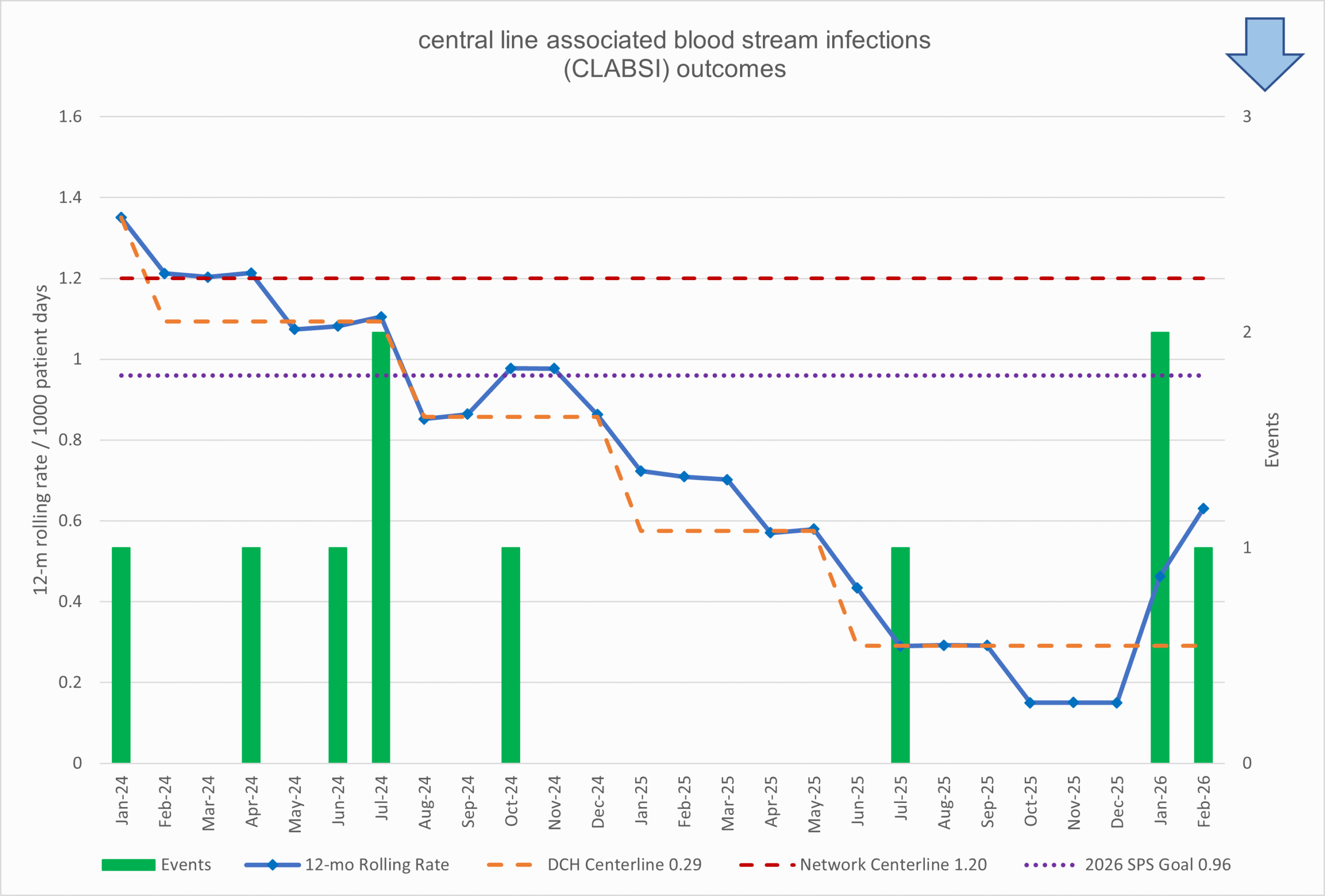
- We measure every infection per 1000 line days
how are we continuing to improve?
- Over the last year, we have had an increase in infections. These have been mostly due to a small group of patients.
- We are trialing new products to better address this group’s needs
- We implemented new training techniques to ensure everyone is being trained exactly the same way.
related links
Visit the links below to learn more about how we measure quality and safety and overall patient experience.


explore care options
From the common to the complex, Dayton Children’s is here for you. Find a trusted provider who knows and understands kids, schedule an appointment online or find care now.