did you know traveling encourages family bonding?

family looks at travel magazine while on an airplane

Navigating family vacations and travel with kids can be complicated. However, traveling with children can also be a fun learning opportunity! We sat down with Mary Beth DeWitt, PhD, chief of child psychology at Dayton Children’s Hospital, to look at the positive relationship between traveling and family bonding.

why are events such as family trips important to family bonding? and how about when the trip is annual or a tradition?

Family vacations and travel can contribute to bonding, which is an important variable in development. Our relationships from early childhood help us develop later relationships which, when healthy, contribute to our positive self-esteem, resilience and happiness. Our lives are becoming so busy, that it is sometimes hard to get away to facilitate and foster those relationships. Travel and vacations in some ways protects that time to share new adventures, strengthen our bonds and increase wellbeing. It may serve to enhance relationships though physical and emotional connections. What remains important is staying engaged with children and with families. The quality time is what is important, not necessarily a lavish vacation. 

and what about families who choose the same destination? what does making a place special like that mean?

This may serve the function of a routine. Family routines and rituals are alive and well and are associated with marital satisfaction, adolescents’ sense of personal identity, children’s overall health, academic achievement and stronger family relationships.

Routines and predictability are important for children, so as the American Psychological Association comments, common routines are bedtime, chores, dinnertime and everyday activities. Rituals include holidays, birthdays, reunions, all of which are important and contribute to family bonding.

what do these trips do for a child’s development?

Special time with families contributes to quality time, to engagement, to relationship building and bonding which are associated with overall health and wellbeing. 

what does traveling together do for family dynamics?

A shared experience can contribute to fond memories, topics for discussion and reminiscence over time. Healthy families spend time together and parents model stress management and coping.

“I don’t want families to expect that they have to travel to have good family bonding.” says Dr. DeWitt. “Small activities to stay engaged, such as outings to the park, family game nights, and regular conversations about their days, can contribute to relationship building.” 

Additional research can be found here:

last reviewed

care that goes above and beyond

Because every child deserves care that goes above and beyond, Dayton Children’s provides compassionate, expert care for kids of all ages. Find a provider, schedule an appointment, or learn more about conditions we treat today.

caring for your child during a surge in respiratory illnesses

in this article:

By now, you’ve seen the headlines or you’ve experienced firsthand the respiratory illnesses currently affecting children in our region. At Dayton Children’s, we’re seeing a record number of children in our emergency departments, urgent cares, and inpatient units seeking care for RSV, flu, COVID, and other respiratory viruses that are circulating.

According to the Centers for Disease Control, these viruses are at levels higher than usual for this time of year. And for many children, this may be their first fall and winter without masking or social distancing protocols in place, exposing them to these viruses for the first time.

when to be concerned

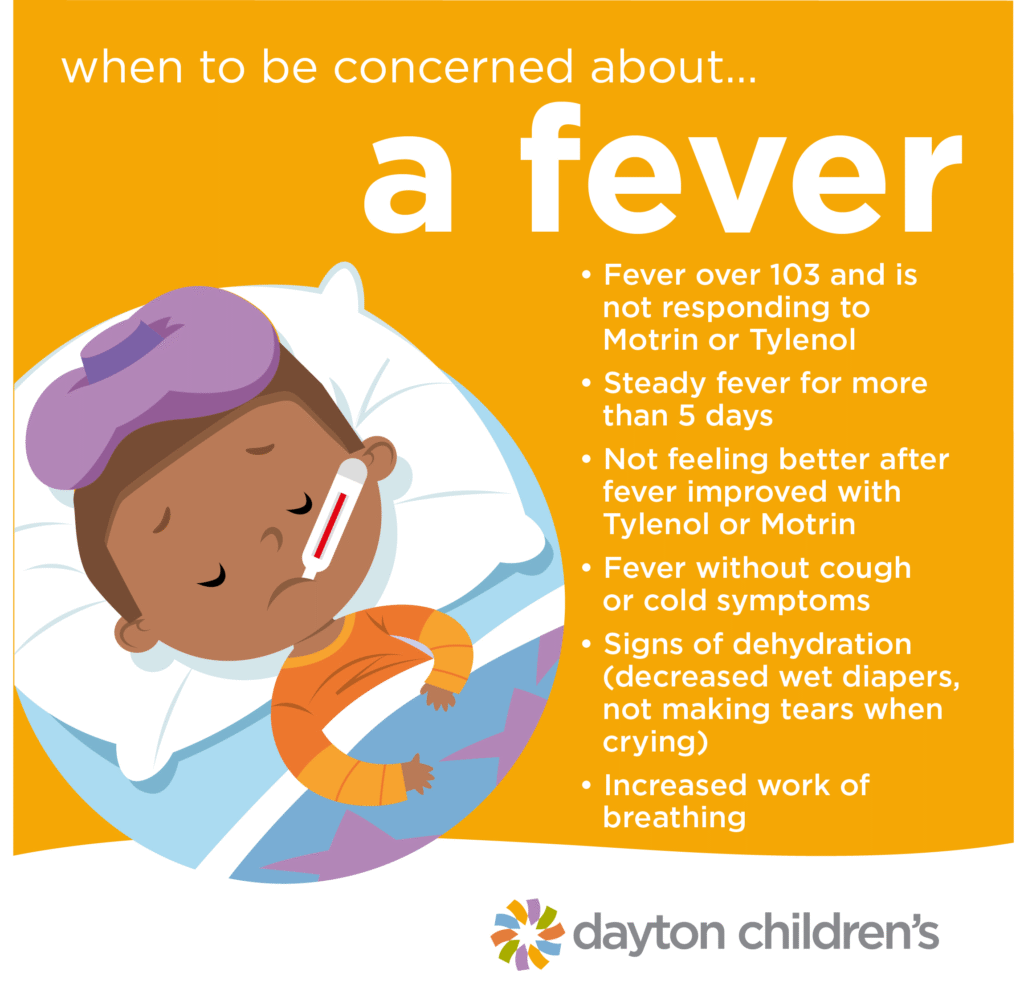
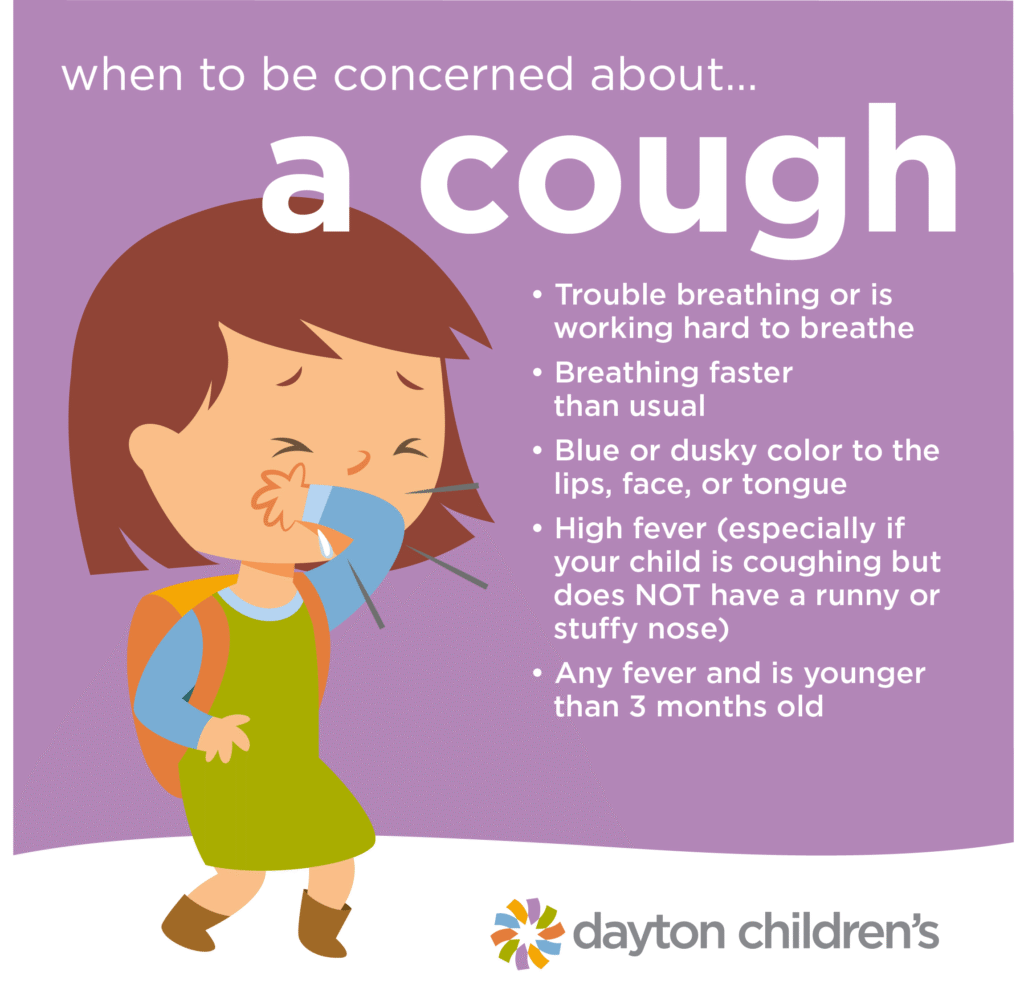
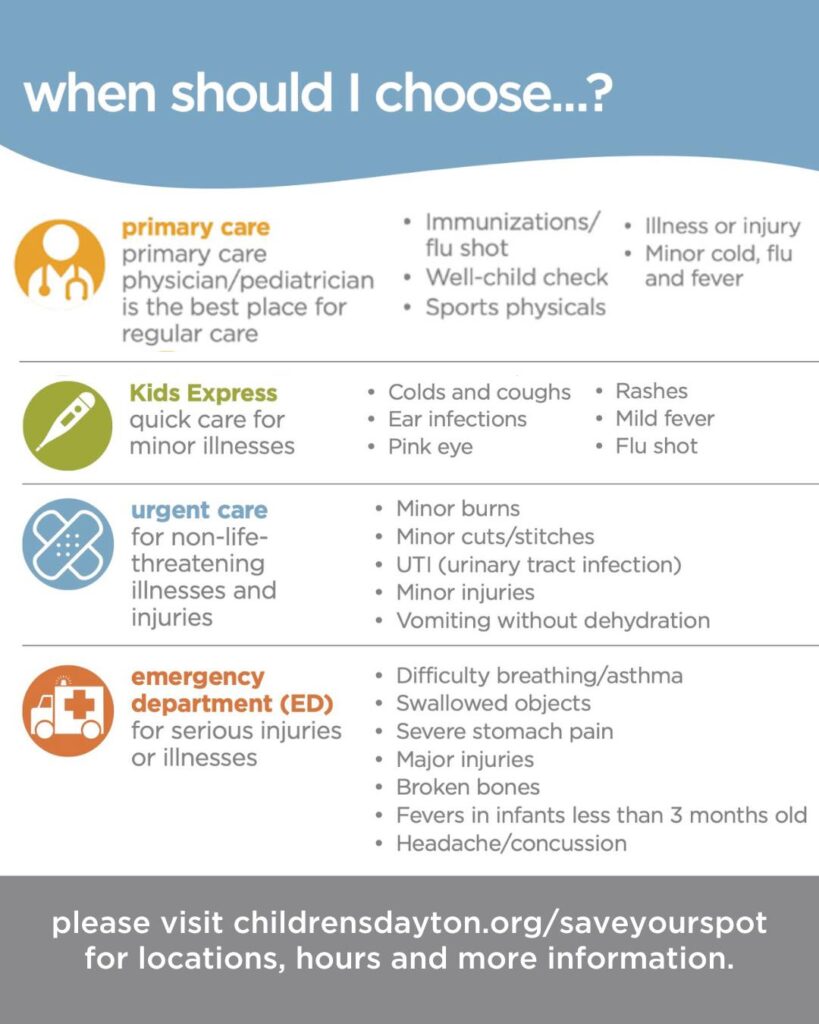
As a parent, it’s easy to feel helpless when your kiddo isn’t feeling well. We get it! The most common symptoms we’re seeing at our care sites are complaints of fever and cough. The graphics below can help you decide when to seek care for either of these conditions:

how to help your child

If your child is experiencing these symptoms, but doing relatively well, there are a few ways to provide “comfort care” at home to get them back on their feet. They include:

  • Motrin (ibuprofen) or Tylenol (acetaminophen) for fever or discomfort
  • Nasal saline spray and suction for little ones that like to breathe out of their nose
  • A warm shower or humidifier if they have a barky-sounding cough

Above all look at the behavior of your child. If they are playful, active, and eating and drinking well, even with medicine, then they are doing okay. If they are not acting like themselves or their behavior has you concerned, consult with a medical provider.

where to go for care

The large number of children seeking care means there may be a long wait time to be seen. Everyone seeking emergency treatment at our emergency department will be seen. Urgent cares and Kids Express locations may stop accepting walk-in patients when they reach capacity for the day. We ask that families be patient and kind as our staff work to ensure each child has the care they need.

If your child is sick, please contact their pediatrician first, even if it is after office hours. They can help direct you to the best care for your child’s condition.

Kids Express

Please check the website for updates for each of our locations.

protecting your family

Dayton Children’s is encouraging families to use this time to get their child’s flu shot and COVID-19 vaccine series. It’s not too late!

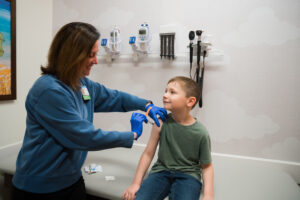
Kids Express can provide the flu vaccine for age 6 months and up and the COVID vaccine for age 5 and up. For kids age 5 and up, the flu vaccine and COVID vaccine can also be given at the same time. Learn more

Families should also be washing their hands regularly, avoiding large crowds, when possible, and staying home when sick.

last reviewed

care that goes above and beyond

Because every child deserves care that goes above and beyond, Dayton Children’s provides compassionate, expert care for kids of all ages. Find a provider, schedule an appointment, or learn more about conditions we treat today.

can I give my child melatonin?

little girl sleeping with teddy bear

The short answer is yes, melatonin can be given to children. But it is important to know when and why a sleep aid, like melatonin, should be considered. We sat down with Samuel Dzodzomenyo, MD, sleep medicine provider at Dayton Children’s, to get the 411 on children and sleep aids, specifically melatonin.

when can melatonin be given?

There are a few instances when a sleep aid, like melatonin, should be considered.

  1. When a child is suffering from delayed sleep phase syndrome (sometimes called “night owl” syndrome) a sleep aid can be given. This is typically common in teenagers and is when the body’s internal clock doesn’t switch to night-mode. Naturally, everyone makes melatonin in their bodies, but as a child’s body begins to change and develop during puberty, the natural production of the sleep hormone, melatonin, is produced later in the night which can cause trouble falling asleep.
    • If a child is suffering from delayed sleep phase syndrome, your child’s provider may recommend a small dose of melatonin to be given about four hours before their expected bedtime. The idea is that this will not put a child to sleep but help prepare their body to switch to night-mode at the appropriate time.
  2. A short-term method to help get a child back on a routine sleep schedule. This could possibly be used after a family vacation or break from school, such as summer break, to help get a child back on their routine. Once a child starts staying up later and sleeping in, it can be difficult to fall asleep on their own. A small dose of melatonin may help get a child back on schedule.
  3. Melatonin may also be given to children with autism spectrum disorder or attention-deficit hyperactivity disorder (ADHD). Children with autism or ADHD may have problems falling asleep and staying asleep, and lack of sleep tends to cause behavioral issues. A small dose of melatonin may be considered for these kiddos.

how much melatonin can be given?

This is the question that you’ve all been waiting for! Melatonin comes in many different forms and dosages. It can come in liquid, chewable gummies, dissolvable pills, capsules and more. The other thing that parents should know about melatonin dosage is that labels can be confusing and sometimes misleading. There is no standardization when it comes to the active ingredient level making it difficult to know how much melatonin you are actually getting. Look for products that are labeled with “USP Verified.” This means that the product has met safety and quality standards, contains the ingredients listed on the label and will provide guidance on appropriate dosage. Please be aware of excessively high doses that can lead to toxicity.

Before giving your child melatonin, talk to your child’s primary care provider about products and dosage. It’s also important to make sure the melatonin won’t interfere with any other medications your child may be on.

how long can I give my child melatonin?

Short-term use (anywhere from three months to two years) has proved to be safe and effective in getting children back on a sleep schedule, but there are no long-term studies of melatonin usage in kiddos.

Talk to your child’s pediatrician about dosage and when it’s an appropriate time to give melatonin. Remember that sleep aids, such as melatonin, should not be given as an alternative to a good bedtime routine. Over 50% of children with sleep problems may benefit from some type of bedtime behavior modification requiring no sleep aid.

If you have other sleep related concerns for your child, check out our online scheduling options for sleep medicine.

last reviewed

care that goes above and beyond

Because every child deserves care that goes above and beyond, Dayton Children’s provides compassionate, expert care for kids of all ages. Find a provider, schedule an appointment, or learn more about conditions we treat today.

10 safe food options to pack if your child attends a nut-free school

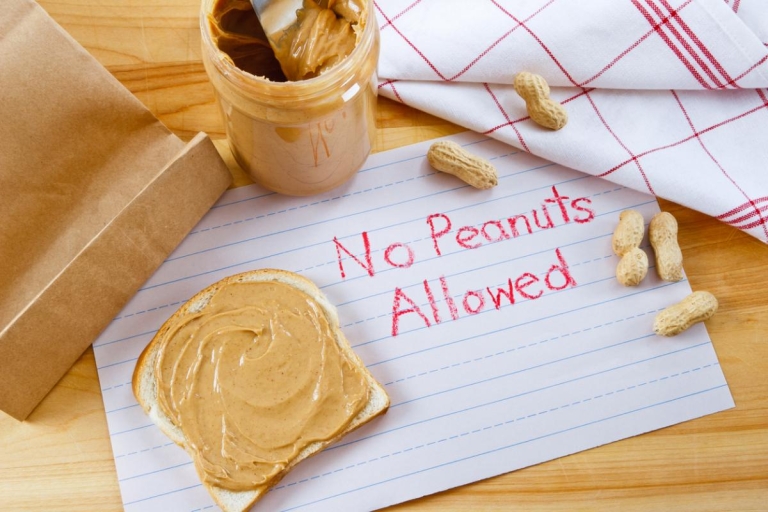
peanut products with a sign that says "no peanuts allowed"

Did you know that about 1 in 50 children has an allergy to nuts? For some children, consumption of a small amount of peanut can cause a severe allergic reaction.*

A nut allergy is a serious thing and is becoming more common in children. Many schools and camps have started to implement nut-free or nut-aware environments to keep kids with allergies safe. A nut-free or nut-aware environment may prove to make lunchtime a challenge for parents whose kids are PB&J fanatics.

So, what is safe to send, and what should be avoided when packing lunch for your child or sending in snacks? We checked in with Dr. David Morris, division chief of allergy and immunology at Dayton Children’s to get answers to the questions we all want to know.

what is the difference between nut-free and nut-aware?

Environments with a nut-free policy will typically enforce a ban on peanuts and tree nuts. This means nut products are not allowed on the premises, at all. While nut-aware environments will allow nuts on the premises, but heavily discourage them.

Nut-aware environments put a lot of effort into preventing cross contamination through proper handling of food and proper hygiene. They will usually have a nut-free table for children with an allergy to eat at during mealtime. Many districts have made these tables optional for the food allergic child.

what foods should be avoided if my child is in a nut-free environment?

Every policy may differ based on the type of nut-free environment needed by those with a severe food allergy. To be on the safe side it is generally best to avoid sending any type of peanut or tree nut with your child. This includes:

  • Almonds
  • Brazil nuts
  • Cashews
  • Chestnuts
  • Hazelnuts
  • Hickory nuts
  • Macadamia nuts
  • Pecans
  • Pine nuts
  • Pistachios
  • Walnuts

how do I know if a food is nut-free?

The best way to be sure if a food is nut-free is to read the label and check the ingredient list. Foods sold in the Unites States are required to state on their labels if the food contains peanuts or tree nuts (per the Food Allergy Labeling and Consumer Protection Act of 2004). After checking the ingredients list, look on the label for phrases like “may contain tree nuts” or “produced on shared equipment with tree nuts or peanuts.” Foods with these warnings on the label may be consumed by children without food allergies as these are unlikely to cause reactions in food allergic children from cross contamination (when eaten by other children). Parents should check their specific school regulations.

other high-risk foods

When thinking about classroom treats or field trips, parents should read labels carefully. According to KidsHealth there are other high-risk foods for people with peanut or tree nut allergies because of potential cross-contamination that may not be mentioned on the food label.

  • Cookies and baked goods. Even if baked goods don’t contain nut ingredients, it is possible that they came into contact with peanut or tree nuts through cross-contamination. Unless you know exactly what went into a food and where it was made, it’s safest to avoid store-brought or bakery cookies and other baked goods.
  • Candy. Candies made by small bakeries or manufacturers (or homemade candies) may contain nuts as a hidden ingredient. The safest plan is to eat only candies made by major manufacturers whose labels show they are safe.
  • Ice cream. Unfortunately, cross-contamination is common in ice cream parlors because of shared scoops. It’s also a possibility in soft-serve ice cream, custard, water ice, and yogurt shops because the same dispensing machine and utensils are often used for lots of different flavors. Instead, do as you would for candy, buy tubs of ice cream at the grocery and be sure they’re made by a large manufacturer and the labels indicate they’re safe.
  • Asian, African and other cuisine. African and Asian (especially Thai, Chinese and Indian) foods often contain peanuts or tree nuts. Mexican and Mediterranean foods may also use nuts, so the risk of cross-contamination is high with these foods.
  • Sauces. Many cooks use peanuts or peanut butter to thicken chili and other sauces.

what can my child pack for a nut-free lunch?

For starters, you don’t have to veer too far from your child’s love of PB&J. Try using a sunflower seed butter instead of peanut butter, almond butter or hazelnut spread. Your child probably won’t even notice a difference. Lunch meat is also a safe option if your child likes a little variety.

If sandwiches aren’t your child’s “jam,” below is a list of other healthy and safe food options your child could enjoy in a nut-free environment.

  1. String cheese
  2. Fruit: fresh, dried, freeze-dried, fruit leathers, dried fruit bars, fruit cups
  3. Vegetables
  4. Individual guacamole and hummus cups
  5. Hard-boiled eggs
  6. Yogurt cups/tubes
  7. Cottage cheese
  8. Meat sticks/jerky
  9. Pretzels
  10. Animal crackers

As a best practice we still recommend you always check a food’s ingredient label. One brand of a certain type of snack may be safe, while another may contain nut ingredients.

what is the future of nut-free schools?

In May 2021, new guidelines recommended against bans of specific foods including nuts. There is not enough evidence for or against site wide (nut free schools) bans. Concerns surround the impact of site wide food bans on the psycho-social well being of not only the children with food allergies but also children without these allergies. These impacts were measured against the mitigation of risks provided by site wide food bans. Unfortunately, there is not enough evidence that these bans prevent reactions. These concerns are what prompted the recommendation against the ban.

so what can parents do to help, now?

As stated, evidence for site wide food bans is low. Dr. Morris encourages parents to “stay tuned” as more evidence will be forthcoming. Until that time, he recommends the five tenets set out by the CDC in their voluntary guidelines for schools regarding food allergy:

  1. Ensure the daily management of food allergies in individual children.
  2. Prepare for food allergy emergencies.
  3. Provide professional development on food allergies for staff members.
  4. Educate children and family members about food allergies.
  5. Create and maintain a healthy and safe educational environment.

Education about food allergy is important to help all our children (allergic and non-allergic) to thrive.

*Note: severe allergic reactions do not occur with only contact exposure.

last reviewed

care that goes above and beyond

Because every child deserves care that goes above and beyond, Dayton Children’s provides compassionate, expert care for kids of all ages. Find a provider, schedule an appointment, or learn more about conditions we treat today.

do certain foods upset your child’s stomach?

girl drinks milk in a sunlit kitchen

Has your child ever eaten something and not felt great afterwards? Depending on the symptoms, this could be a sign of a food intolerance (also known as a sensitivity) or an allergy. And you might be wondering, what is the difference between a food allergy and intolerance? David Morris, MD, division chief of allergy and immunology at Dayton Children’s Hospital is here to help us identify the differences.

food allergy versus intolerance

A food intolerance, such as lactose intolerance, can make someone feel ill with symptoms such as nausea, gas, cramping in the stomach, diarrhea and/or headaches.

A food allergy, such as a peanut allergy, can also make someone feel ill but with more serious symptoms such as hives, vomiting, throat tightness, difficulty breathing and more.

food intolerance broken down further

A food intolerance, means that our body can’t digest a certain food the right way. For instance, someone who is lactose intolerant has trouble digesting the type of sugar that is typically in milk and other dairy products. This does not mean that they are allergic to milk, it just means that they probably won’t feel good after eating something that contains milk.

If your child has an intolerance to a food, they will probably notice symptoms within two hours of eating or drinking. Everyone reacts differently and a food intolerance can start out of nowhere – even if they’ve never had trouble with a certain food before.

There are some at-home food sensitivity tests that you can buy over the counter that will measure the body’s response to foods that commonly cause an intolerance. Unfortunately, data has not consistently shown these tests as a valid way to evaluate triggers. I would recommend a food diary recording symptoms after consumption. 

food allergy broken down further

A food allergy is when the body’s immune system sees a type of food as an invader. This is what leads to an allergic reaction. According to KidsHealth, an allergic reaction is the immune systems response in which chemicals like histamine are released in the body. An allergic reaction can cause symptoms that can be life-threatening.

A person with a food allergy is always at risk for the next allergic reaction being a life-threatening one. Eating even a small amount of the food can lead to anaphylaxis. Anaphylaxis is a severe allergic reaction that can cause many problems at the same time. People with a food allergy must always avoid the problem food and carry an emergency injectable epinephrine (also known as an epi-pen).

Some of the most common food allergies include:

  • Peanuts and other tree nuts
  • Seafood, such as shrimp
  • Fish
  • Milk (usually cow’s milk)
  • Eggs
  • Soy
  • Wheat
  • Sesame

If you think your child may have a food allergy, talk to their pediatrician. You will probably be referred to an allergist (a doctor who specializes in allergies). The allergist may want to do a skin test. A skin test will see how the body reacts to a small amount of the food that you think may be causing the problem.

Unfortunately, there is currently no medication available to make food allergies go away. Sometimes food allergies can be outgrown, and others may last forever. The best treatment is to avoid the food that is causing the problem – this is for allergies and sensitivities!

If you have more questions about allergies or think your child may need to see an allergist, click here.

last reviewed

care that goes above and beyond

Because every child deserves care that goes above and beyond, Dayton Children’s provides compassionate, expert care for kids of all ages. Find a provider, schedule an appointment, or learn more about conditions we treat today.