Cyclospora: what parents need to know right now 

Young girl having stomach pain sitting on her bed at home.

two things to remember:

  • Wash fresh fruits, vegetables, and herbs before eating them. Proper handwashing and rinsing produce under running water are simple ways that can help lower your family’s risk. 
  • Call your pediatrician if your child has watery diarrhea that lasts more than a few days. Most stomach bugs get better on their own. But if diarrhea continues, your child’s doctor can help decide if testing is needed. 

in this article: 

  • What is Cyclospora? 
  • What are the symptoms? 
  • How does Cyclospora spread? 
  • How can I protect my child? 
  • When should I call the doctor? 

Have you heard about the Cyclospora outbreak? Public health officials are investigating a multistate outbreak of Cyclospora, a tiny parasite that can cause diarrhea. While Ohio has reported hundreds of cases this year, Dayton Children’s has seen only a few positive tests. Public health experts are still working to find the source.  

Hearing about an outbreak can make any parent worry, especially when it involves food your family eats every day. The good news? Cyclospora is uncommon, it doesn’t spread easily from person to person, and it can be treated. 

what is Cyclospora? 

Cyclospora is a tiny parasite that infects the intestines and causes diarrhea. People usually get sick after eating contaminated fresh produce. In past outbreaks, foods like lettuce, raspberries, snow peas and fresh herbs – such as basil, cilantro and parsley – have been linked to illness. 

what are the symptoms? 

The most common symptom is watery diarrhea. Children may also have: 

  • Nausea 
  • Crampy stomach pain 
  • Bloating 
  • Fatigue (sleepy) 
  • Low-grade fever 
  • Decreased appetite 

Cyclospora can last longer than a typical stomach virus. Instead of getting better in a few days, symptoms may last several weeks. Sometimes children even seem to feel better, then symptoms come back. 

isn’t it probably just a stomach bug? 

Maybe. 

“There are many different causes of diarrheal illnesses besides Cyclospora,” says Michael Klatte, MD, chief of infectious diseases at Dayton Children’s. “If your child has bloody diarrhea, diarrhea with high-spiking fevers or diarrhea that resolves after a few days, then it’s unlikely your child has a Cyclospora infection.” 

That’s why it’s important not to assume every upset stomach is caused by the current outbreak. 

how does Cyclospora spread? 

Unlike other viruses that spread easily from person to person, Cyclospora usually doesn’t. The parasite is passed in poop (stool), but it needs time to mature in the environment before it can infect someone else. Because of this, passing it from person to person is unlikely. 

Instead, most people get Cyclospora after eating contaminated food. 

how can I protect my child

While investigators keep working to find the source of the current outbreak, good food safety habits are the best way to protect your family. Dr. Klatte recommends;

  • Wash your hands with soap and water for 15-20 seconds before and after handling fresh produce. 
  • Rinse fruits, vegetables and fresh herbs well under running water. 
  • Scrub firm produce, such as melons and cucumbers, with a clean produce brush before cutting them. 

These simple habits can also help protect your family from other foodborne illnesses. 

what should I do if I think my child has Cyclospora?

If your child has watery diarrhea that continues for more than a few days, call your pediatrician. 

Cyclospora is diagnosed with a stool test and treated with an antibiotic called trimethoprim-sulfamethoxazole. Your pediatrician can help decide whether testing is appropriate based on your child’s symptoms. Children with weakened immune systems, including those receiving cancer treatment or taking medicines that suppress the immune system, may be at greater risk for more severe or longer-lasting illness. 

when should I seek medical care right away?

Most children with diarrhea can recover at home with plenty of fluids and rest. But seek medical care right away if your child: 

  • Has signs of dehydration, such as a dry mouth, crying without tears or not urinating regularly 
  • Cannot keep fluids down 
  • Seems unusually sleepy or difficult to wake 

If you’re unsure whether your child needs medical care, your pediatrician is always a good place to start. 

the bottom line

Most diarrhea is not caused by Cyclospora. But if your child has watery diarrhea that lasts for weeks instead of days, or you’re concerned they’re becoming dehydrated, don’t wait to ask for help. When it comes to foodborne illnesses, staying informed, practicing good food safety, and knowing when to call your pediatrician can go a long way toward keeping your family healthy. 

contact us

If you are interested in pursuing a story about Dayton Children’s please contact public relations manager, Katie Solovey, at 937-673-4941 or by filling out a media inquiry through our contact us form.


last reviewed

tips for tackling back-to-school tummy troubles

a young boy sits at a desk at school

As you start the school season, you may notice your child is having more trouble pooping. You’re not alone. Here are some tips to help your child feel more comfortable, whether at school or in other settings

why won’t my child poop at school?

Your child could be nervous about pooping at school for these reasons:

  • Bathroom anxiety – Public or shared bathrooms can feel overwhelming. Lack of privacy, noise or fear of teasing can make kids nervous to poop during school.
  • Not enough time – Rushed schedules, short bathroom breaks or limited teacher permission mean kids often do not have enough time to relax and go.
  • Lack of routine – Pooping is often tied to home routines – after breakfast, after sitting on the toilet. School disrupts that natural rhythm.
  • Poor bathroom conditions – Dirty stalls, lack of toilet paper or automatic flushers that startle kids are common reasons for avoiding the school bathrooms.

how are my child’s brain and body connected?

It’s important to know what can trigger the body’s stress response. We often talk about stress in terms of how we think and feel emotionally, but the body makes sense of it more broadly. Being worried about pooping at school can trigger a stress response, which can lead to physical problems. When we think about controlling the stress response in the body, we want to think about healthy habits the body needs to work well, as well as taking care of our emotional and social stress.

how can I help my child feel more comfortable pooping?

  • Normalize pooping – Let your child know that everyone poops, including teachers and classmates.
  • Problem solve – Help them determine the cleanest or least busy bathrooms.
  • Set up a morning poop – Give a cup of warm liquid, then 5-10 minutes of relaxed toilet time before leaving for school.
  • Pack fiber and hydration into lunch – Send a water bottle and remind your child to drink throughout the day. Dehydration can cause pooping to be harder. Pack things like fruits and whole grain bread to help keep poop soft.
  • Talk to the teacher – If your child is struggling, ask the teacher to allow flexible bathroom breaks. Many teachers understand once they know it is a medical issue not a behavioral issue.

when do I need to seek medical help for my child?

In rare cases, constipation can be caused by a larger physical problem. If your child is experiencing any of these symptoms, call your primary care provider. If they are not available, consider a visit to the urgent care or the emergency department:

  • Fever (constant high fever)
  • Blood in the stool
  • Vomiting blood or dark green fluid – this may need an emergency department visit
  • Swollen stomach
  • Pain when the stomach is touched
  • Pain in groin or testicles
  • Pain or burning with urinating
last reviewed

care that goes above and beyond

Because every child deserves care that goes above and beyond, Dayton Children’s provides compassionate, expert care for kids of all ages. Find a provider, schedule an appointment, or learn more about conditions we treat today.

tips for transitioning from pediatric to adult care

teen poses with parent

Turning 18 comes with a lot of “firsts,” including taking more responsibility for your health. Along with more independence comes new responsibility, like managing appointments, understanding your insurance and speaking up about your care. For many teens and families, the move from pediatric to adult healthcare can feel overwhelming at first.  

The good news? Preparing early can make the transition much smoother. 

Whether your teen has a chronic condition or just visits the doctor once a year, learning how adult healthcare works is something they’ll use for the rest of their life. Here’s what families should know about transitioning to adult care and how to prepare now.

what changes when you turn 18?

At age 18, you become a legal adult. This means: 

  • You make your own medical decisions  
  • Healthcare providers will speak directly to you  
  • Your medical records become private  
  • Parents or caregivers can no longer access your information without permission  
  • Medical bills will be in your name 

Even if you stay on a parent’s insurance plan, these responsibilities will shift to you. 

why transitioning to adult healthcare matters

Learning how to manage your health helps build confidence over time. It also prepares teens for college, work, sports and everyday adult life.  

For teens with chronic conditions or ongoing medical needs, planning ahead is especially important. 

tips for teens preparing for adult care

The best time to prepare for adult healthcare is before turning 18. Small steps now can help teens feel more confident later. 

1. Start taking part in appointments

Practice answering questions during doctor visits instead of letting a parent answer everything. Try asking at least one question during each appointment. 

2. Learn about your health history

Teens should know: 

  • Current medications  
  • Allergies  
  • Past surgeries or medical conditions  
  • Family health history  
  • Vaccine history  

Keeping this information organized can make appointments much easier. 

3. Practice real-life healthcare tasks

Begin practicing skills like: 

  • Scheduling appointments  
  • Checking in at visits 
  • Refilling prescriptions  
  • Logging into MyChart  
  • Calling the doctor’s office with questions  

These are small steps that build confidence over time. 

4. Understand HIPAA and medical privacy

HIPAA is a law that protects private health information. Once a teen turns 18, healthcare providers can’t share medical information with parents or caregivers without permission. 

Teens can choose to share access by signing a release of information form. 

mother talks to teen son about mental health

tips for parents supporting the transition

For parents and caregivers, this transition can feel emotional. It may be hard stepping back after years of managing everything. The goal is to move from managing care to supporting independence.

Here are ways parents can help: 

  • Talking about medical forms like release of information or healthcare power of attorney if needed   
  • Encouraging teens to practice healthcare tasks  
  • Review insurance information together  
  • Talking about how involved they want to be after age 18  

transitioning to adult care for teens with chronic conditions

Teens with chronic illnesses, complex medical needs or disabilities may need extra support during this transition. 

Some conditions require ongoing care into adulthood. These conditions may include: 

  • Diabetes  
  • Epilepsy  
  • Asthma  
  • Heart conditions  
  • Gastrointestinal disorders  
  • Mental health conditions  

Families should start talking with their healthcare team early about transition planning, adult specialists and long-term care needs. 

a simple healthcare transition checklist 

Before turning 18, teens should try to: 

  • Know their medications and allergies  
  • Carry an insurance card  
  • Schedule an appointment on their own 
  • Refill a prescription  
  • Log into MyChart  
  • Ask questions during appointments  
  • Understand who has access to their health information  

growing into independence

Transitioning to adult care does not happen overnight. It is a gradual process that takes practice, patience and support from both teens and caregivers. 

With preparation and guidance, teens can feel more confident taking charge of their health and future. 

If you have questions about transitioning to adult healthcare, talk with your child’s primary care provider for additional support and resources. 

last reviewed

care that goes above and beyond

Because every child deserves care that goes above and beyond, Dayton Children’s provides compassionate, expert care for kids of all ages. Find a provider, schedule an appointment, or learn more about conditions we treat today.


5 heart-healthy add-ins to support kids’ growing hearts 

Mother figure makes heart hands with young girl in a park

If you have a young child, heart health is probably not at the top of your list to think or even worry about. But the habits kids build early can shape their health for years to come. How children move, eat, sleep and handle stress all play a role in keeping their hearts strong.

Caring for your child’s heart doesn’t mean changing everything or giving up foods and activities they love. At Dayton Children’s Hospital, our heart experts recommend adding small, positive habits into your every day life to help kids have healthy hearts as they grow! 

“Heart health is built little by little,” says Smita Mehta, MD, pediatric cardiologist at Dayton Children’s. “Research shows that adding positive habits, rather than trying to stop negative habits, can help the changes stick over time.” 

Here are five easy, family-friendly add-ins you can start today! 

1. Add small moments of movement in your day 

Kids don’t need long workouts to help their hearts. Short bursts of movement through the day can help boost heart health and energy. Activities like these help kids stay active and build healthy movement habits in a fun, simple way.  

  • Jumping jacks between doing homework
  • A short family walk after dinner 
  • Dancing or stretching between commercial breaks 
  • 15 minutes of activity for every 15 minutes of screen time  

2. Add more whole foods and plant-based foods

Instead of taking away your favorite foods, focus on adding healthier ones. These foods support heart health and overall wellness while keeping meals enjoyable.

  • Add fruit to breakfast or after-school snacks
  • Add vegetables to meals your child already enjoys
  • Add beans, nuts, or seeds to lunches or snacks

Families can find even more healthy eating tips here.

3. Add better sleep by turning off screens 

Sleep is important for your child’s heart, mood and energy. One helpful habit is turning off screens an hour before bedtime. Reading, listening to music or gentle stretching are great adds for a screen-free bedtime routine. Have your child pick their favorite screen-free option, so they can relax and get the rest they need. Better sleep can: 

  • Reduce sugar cravings 
  • Improve focus and behavior 
  • Support healthy growth

Discover more practical tips for helping kids get better sleep here.

4. Add calm with mindfulness and relaxation 

Kids and teens feel stressed, too. Learning simple ways to slow down can help their hearts and emotions. These small moments can help kids feel calmer, more focused, and more connected. Dr. Mehta suggests: 

  • A few minutes of calm breathing or stretching twice a day
  • Adding three positive thoughts for every negative thought 
  • Adding mindfulness activities that you can practice together and do in moments of stress

5. Ask important questions at medical visits

Heart health also means helping kids make safe choices as they grow. One simple step is to ask your child’s doctor questions like, “Can we talk about how to avoid tobacco, alcohol or vaping?” These conversations give kids clear, honest information and support healthy choices now and later. 

Supporting heart health doesn’t have to feel overwhelming. With small, steady add-ins and guidance from pediatric experts, families can build healthy habits that last.  If you have questions about your child’s heart health or notice symptoms that concern you, our pediatric cardiology team is here to help.

Pediatric cardiologist poses with patient and smiles

last reviewed

care that goes above and beyond

Because every child deserves care that goes above and beyond, Dayton Children’s provides compassionate, expert care for kids of all ages. Find a provider, schedule an appointment, or learn more about conditions we treat today.

is your child’s backpack too heavy? 6 tips for choosing the right backpack

child poses with a backpack on the first day of school

Back to school shopping is exciting – especially when your child gets to pick out a cool new backpack. But while they’re focused on colors and characters, you’ll want to keep safety in mind.  

A backpack that’s too heavy or worn incorrectly can lead to back pain, neck strain and even injuries from falling. Heavy backpacks can cause children to roll their shoulders forward, which also causes the head to move forward triggering headaches. The effects of a heavy backpack may not show up right away, and can start a couple months after school starts.  

why backpack safety matters

  • Too heavy? It can strain your child’s lower back and neck.  
  • Poor posture? Heavy backpacks cause kids to hunch forward, leading to tension and headaches.  
  • Off balance? A shifting center of gravity increases the risk of falls.  
  • Missed fun? Chronic pain can keep kids from playing sports and social time.  

6 smart backpack tips for parents

  1. Keep it light – A full backpack should weigh no more than 15% of your child’s body weight.  Example: 100 lbs x 0.15 = 15 lbs max  
  2. Pick the right style – Choose a two-strap backpack over a messenger or shoulder bag for better weight distribution.  
  3. Check the fit – The bottom of the backpack should rest at the arch of the back – not below the belt line.  
  4. Pack it smart – Place the heaviest items closest to the back. Lighter items go farther out.  
  5. Clean it out regularly – Help your child empty and weigh their backpack at every seasonal break.  
  6. Lift with care – Teach your child to bend their knees and place the backpack on a desk or chair before putting it on.  

Experts also urge parents to stray away from rolling backpacks. Rolling backpacks can also become very heavy, causing the child to bend forward or to the side, resulting in pain. Children may also lift rolling backpacks up steps which can lead to injury.  

Picking your child’s backpack can still be a fun experience! Use these tips to determine what backpacks are safe and functional, then let them choose the style and color that expresses their personality. You will be one step closer to an excellent and safe school year.

last reviewed

care that goes above and beyond

Because every child deserves care that goes above and beyond, Dayton Children’s provides compassionate, expert care for kids of all ages. Find a provider, schedule an appointment, or learn more about conditions we treat today.

4 tips to prepare your kiddo for the upcoming time change

Time change with clock on blue background

The time change is notorious for messing with everyone’s sleep schedule, but it really messes with our kiddos because they can’t adjust to a new schedule in just one night.

The time change can cause kids to be cranky because their sleep cycle will be slightly “off” for a little bit of time. To help prepare for the upcoming time change, Khalid Safi, MD, chief of sleep medicine at Dayton Children’s Hospital, is providing tips for parents to get their kiddo ready for the extra hour.

tips to prepare for the time change

1. Start the transition early.

  • For falling back an hour, start putting your little one to bed 10 to 15 minutes later every night starting a week before the time change.
  • For springing forward an hour, starting putting your little one to bed 10 to 15 minutes earlier every night starting a week before the time change. 
  • The extra 10-15 minutes each night will get them prepared for the hour difference they will have the night of the time change.

2. Maintain routines. Even though you’re moving your sleep schedule 10-15 minutes, it’s important to maintain your normal bedtime routine. Whether it’s a bath before bed, reading a book together, or snuggling, just make sure that your child’s routine remains intact.

3. Use “okay to wake” systems. Okay to wake alarm clocks and night lights provide your child with a time when it’s okay to wake up or come out of their room. Start setting the time 10-15 min later each day for a week leading up to the time change.

4. Limit screen time before bed. Children should stop using electronics at least 30 minutes before their bedtime routine starts. Electronics mess with the brains ability to produce melatonin which can make falling asleep harder.

By following these four steps your child should adjust to the time change within a week or so. If your child is taking longer than that, talk with their pediatrician about possibly seeing a pediatric sleep specialist.

To learn more about sleep medicine at Dayton Children’s, or to schedule an appointment online click here.

last reviewed

care that goes above and beyond

Because every child deserves care that goes above and beyond, Dayton Children’s provides compassionate, expert care for kids of all ages. Find a provider, schedule an appointment, or learn more about conditions we treat today.

a day in the life of a same-day surgery patient

Have you ever wondered what happens if your child has same-day surgery? How long does it take, and what does it entail? Maybe you’ve never heard of the program and now you’re curious. Well, you’re not alone!

The same-say surgery program at Dayton Children’s is intended for patients with inguinal and umbilical hernias, as well as undescended testicles, circumcision, ingrown toenails and tongue ties. The program allows families the ability to schedule a surgical consult and the operation on the same day at Dayton Children’s convenient south campus in Springboro.

Program benefits:

  • Minimizes time away from school and work
  • Surgery is performed on a Friday; most kids recover over the weekend and return to school the following Monday
  • Reduced office visits and time spent in a healthcare setting. Most same-day surgery patients are in and out of the hospital within 3 to 4 hours, and that includes their surgery!

To help understand the process, we shadowed Logan from start to finish during his same-day surgery, documenting each step along the way.

before surgery

A week before Logan’s big day at Dayton Children’s, his mom receives a call from the surgery clinic after receiving a referral from Logan’s pediatrician. The kind voice on the other end wanted to make sure Logan was an eligible candidate for same-day surgery. After several questions and determining that he would make a perfect patient for the program, she provided detailed instructions regarding eating, drinking, taking medications and what to do if Logan developed an illness prior to surgery.

day of surgery

8:15 am – Filled with excitement and nerves, Logan and his mom arrive at Dayton Children’s south campus in Springboro. Logan is immediately distracted by the playful decorations and colorful lights and forgets why he is at the hospital. Mom, however, reminds him they must head to the second floor and check in for his clinic consultation.

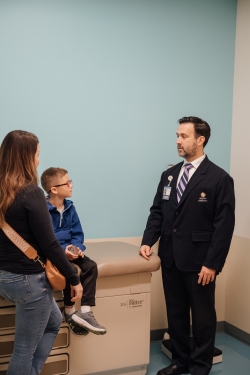
8:30 am – Logan’s name is called from the door to the clinic space by a welcoming voice. Kalista, a patient care assistant (PCA) for the surgery clinic leads Logan and his mom to their consultation room. Here she measures his weight and height and gets the other necessary vitals to make sure he is healthy and ready for surgery. Shortly after Kalista collects Logan’s vitals, Dr. Arturo Aranda, division chief of pediatric surgery, enters the room. He begins his evaluation to determine if Logan is a candidate for same-day surgery. While evaluating Logan, Dr. Aranda answers questions mom has about the surgery and recovery, making her feel more at ease. After completing his evaluation, Dr. Aranda agrees that Logan will make an excellent candidate for same-day surgery, and he asks Kalista to put him on the surgery schedule for later that morning.

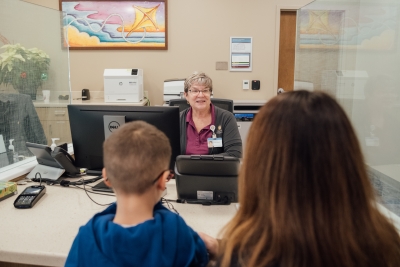
9:30 am – After Kalista coordinates Logan’s surgery details, she walks him and his mom to the surgery center where they meet Christine, who walks them through the surgery registration process. She gives both Logan and mom special bracelets so everyone knows who they are and that they belong together. She also gives mom a code that is unique to Logan. The code will appear on monitors throughout the surgery center and mom will be able to tell where he is in the surgical process based on the color of his code.

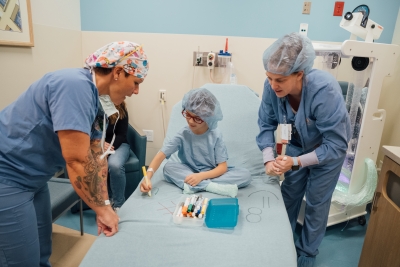
9:40 am –  Logan and his mom are led back to his pre-op room. He changes into a surgical gown, Kristen and Sunshine record Logan’s vitals and answer any lingering questions mom has. To keep Logan occupied, Kristen and Sunshine hand him a box of markers and begin playing tic-tac-toe on his bed. One thing leads to another, and Logan’s sheet is transformed into a canvas of colors, once again making him forget about his pre-surgery nerves.

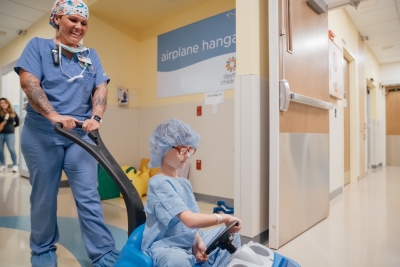
10:00 am – It’s time for surgery! After an infinite amount of hugs and kisses (and maybe a few tears from mom), Logan climbs into a cool blue car and pretends to drive through the operating room doors. While Logan is in the good hands of Dr. Aranda and the rest of the surgical staff, mom remembers passing the UpCafe on their way to the surgery center. With Logan’s special code in hand, she grabs a cup of coffee and finds a place to wait where she can watch his progress on the monitors.

11:00 am – Logan’s mom watches the monitors as his code moves from surgery to recovery. The surgical staff calls her name and leads her to a consultation room where Dr. Aranda joins her. He goes over the details of Logan’s surgery and lets her know that she will be able to see him as soon as he wakes up from the anesthesia. Shortly after speaking with Dr. Aranda, mom is taken back to recovery where she finds Logan being attended to by staff with warm blankets and a slushy in his favorite flavor, blue raspberry!

Noon – It’s time to go home! Logan gets dressed and the nursing team goes over discharge instructions with mom. Logan’s mom receives a printout with wound care instructions and a direct phone number to call if an issue occurs. Minutes later, they are walking out of the hospital.

post-surgery

Home recovery – Once home, Logan settles in on the couch with a snack and his favorite movie. He isn’t in much pain, but he does feel worn out from the day’s activities. Over the weekend it will be important that Logan rests as much as possible, so he is ready to return to school on Monday.

Monday morning – Logan is feeling great, and he is ready to go back to school. Mom is grateful that he was able to recover over the weekend and they only had to take one day off from school and work.

two weeks later

Follow-up call – After two weeks have passed since Logan’s surgery, mom receives a call from a nurse in the surgery clinic. She checks in to make sure Logan’s recovery is going well and asks mom if she has any questions. Mom shares that Logan is doing great! He is completely healed and back to his regular activities.

The same-day surgery program was a blessing for our family. It meant less time away from school and work, a smooth journey from clinic to recovery and the comfort of knowing our child was in expert hands every step of the way. Grateful for a program that truly puts families first!” – Logan’s mom

last reviewed

care that goes above and beyond

Because every child deserves care that goes above and beyond, Dayton Children’s provides compassionate, expert care for kids of all ages. Find a provider, schedule an appointment, or learn more about conditions we treat today.

10 tips for raising independent kids

Father and son put garlic and herbs on a chicken and vegetable dish they are preparing to cook

One goal most parents have is to raise confident, independent children who are eventually capable of taking care of themselves. Here are a few tips on how to foster independence in our children.

1. Let children do things for themselves.

While it may be easier to do things yourself, this doesn’t teach your children anything about the tasks at hand. Show them, teach them, and then let your children do things on their own.

2. Give children responsibilities.

Everyone lives in your home and makes messes, so everyone should help to keep the house clean. Chores help teach children valuable life skills, responsibility, and respect for themselves and others.

3. Teach children life skills.

Knowledge of basic life skills including cooking, laundry, and managing money (how to save and spend) will help children grow into independent adults.

4. Teach children how to care for others.

By caring for others, children learn important lessons regarding responsibility and the need to think of others. Start by allowing your children to care for a pet (you can begin small with a fish), or allowing older children to care for a younger sibling.

5. Allow children to work out conflicts themselves.

Teach your children how to resolve conflicts with siblings or peers (e.g., negotiating, compromising) so they will know how to handle these situations without your help.

Nut-aware environments put a lot of effort into preventing cross contamination through proper handling of food and proper hygiene. They will usually have a nut-free table for children with an allergy to eat at during mealtime. Many districts have made these tables optional for the food allergic child.

6. Create an independent environment.

Allow your children to make some of their own choices (this can range from choosing their clothing for the day to picking between a “regular” class and an “honors” class in school). Give your children space when they need it. Alone time can be healthy, allowing children to gather their thoughts and create their own plans.

7. Show confidence in your children.

Acknowledge your pride in your children’s accomplishments. Be sure to praise effort and work put into something rather than just praising success. If you only praise success, your children with learn to think failure is bad.

8. Teach children to advocate for themselves.

Don’t immediately rush in to “rescue” your children when a conflict or problem arises. Talk your children through different ways they can advocate for themselves, even engaging in some role-playing so your children can practice what they will say to stand up for themselves.

9. Encourage children to get outside their comfort zone.

Growth occurs when children take risks and step outside their comfort zones. Encourage your children to take risks, even when the possibility of failure is very real.

10. Let your children make mistakes and fail.

Teach your children that failure is one possible outcome that happens to everyone at times. It is not something that needs to be feared or avoided at all costs. Teaching your children it is okay to keep trying at something will give them the confidence to try new things in their adult life.

last reviewed

care that goes above and beyond

Because every child deserves care that goes above and beyond, Dayton Children’s provides compassionate, expert care for kids of all ages. Find a provider, schedule an appointment, or learn more about conditions we treat today.

busting the myth on coconut oil

If you use coconut oil as a healthy alternative to vegetable oil, olive oil or butter during cooking, you’re not alone. In 2020, over 497,000 tons of coconut oil were sold in the United States. These impressive sales could be contributed to the alleged health benefits coconut oil claims to provide. Reducing belly fat and improving Alzheimer’s disease are among the most popular. But what do we really know about this popular cooking substitute?

is coconut oil heart healthy?

coconut oil on table with spoon

Coconut oil is entirely made up of fat, 80-90% of which is saturated fat. Fat is made up of smaller molecules called fatty acids, and there are several types of fatty acids in coconut oil. Lauric acid is the most predominant type of fatty acid and it makes up about 44% of the saturated fat in coconut oil. Lauric acid is known to increase your cholesterol, which could lead to early cardiovascular disease.

what does this mean for our children?

Since most children are not concerned with their waistlines or Alzheimer’s disease, they probably aren’t the ones making the decision to use coconut oil in their diet. The biggest concern with children consuming coconut oil is that over their lifetime, their organs and arteries will be exposed to it for a longer duration since they start at a younger age. An adult will have fewer years of exposure since they start consuming it later in life. This increased duration of exposure causes more damage to a child’s heart and arteries.

what type of oil is better to cook with?

As far as a heart healthy diet is concerned, olive oil is the cooking substitute of choice. Only about 14% of olive oil is made up of saturated fat. The predominant fat in olive oil is a monounsaturated fat called oleic acid. Oleic acid has properties that are suggested to reduce inflammation. In addition to fatty acids, olive oil is packed full of vitamins E and K, and powerful antioxidants that may reduce your risk of chronic diseases.

Olive oil is also one of the key ingredients in the Mediterranean diet, which has been shown to significantly reduce heart disease. Olive oil is thought to reduce inflammation but has also been shown to protect “bad” LDL cholesterol from oxidation, improve the lining of your blood vessels and may prevent excessive blood clotting. Olive oil has also been shown to lower blood pressure, which is a strong risk factor for heart disease.

what can I do with all my coconut oil if I shouldn’t eat it?

Don’t throw out your coconut oil just because it’s not a heart healthy cooking alternative. There are several other ways to use your coconut oil without eating it! The possibilities are endless, but here are a few of our favorite ways to use it:

  1. Coconut oil is great for your skin. It can be used as a moisturizer to relieve skin irritations and eczema. This includes cracked heels, cuticles and sunburn.
  2. You can also apply it to your hair before shampooing to reduce protein loss and improve hair health.
  3. Rub it on stubborn crayon marks to remove them from your walls.
  4. Remove gum from hair or clothing by rubbing the area with a generous amount of coconut oil.

If your family has a history of heart disease and you want to set your child on the right path to a healthier future, Dayton Children’s preventive cardiology clinic can help. Our judgement-free team helps identify early warning signs and shows your child and family how to reverse some negative changes that may already have set in. Schedule an appointment in the preventive cardiology clinic today!

last reviewed

care that goes above and beyond

Because every child deserves care that goes above and beyond, Dayton Children’s provides compassionate, expert care for kids of all ages. Find a provider, schedule an appointment, or learn more about conditions we treat today.

does my baby need a helmet?

Have you noticed the development of a flat spot on your baby’s head? Before you start down the rabbit hole of endless online research, rest assured that you are not alone. Flat head syndrome, also known as plagiocephaly or brachycephaly, occurs in nearly 40% of infants. In many cases, flat head syndrome resolves on its own with time and natural development.

To better understand how to prevent flat head syndrome and what to do if your baby has already developed a flat spot, we asked pediatric neurosurgery nurse practitioner, Stephanie Smith to answer the most asked questions about flat head syndrome.

what can I do to prevent my baby from getting a flat spot?

Limit the time your baby spends in reclined devices* such as swings and bouncer seats, as this can lead to flattening on the back of the head. Provide at least 60 minutes of tummy time each day as recommended by the American Academy of Pediatrics. When first starting tummy time, some babies may not enjoy it. The use of interactive tummy time playmats and placing toys in front of the baby may help them tolerate this position better. Tummy time can be broken up into five-to-ten-minute increments spread throughout the day. Without adequate tummy time, babies can be delayed in learning to roll and crawl.

*Please remember that although a car seat is a reclined device, your baby should always be secured in an appropriately sized car seat when your car is in motion.

what should I do if my baby has already developed a flat spot?

If using reclined devices for sleep or play, discontinue the use of these items immediately. Reposition your baby off the flat side of his or her head while awake. Do not place any pillows or repositioning devices in your baby’s bed. Your baby should always be placed on their back for sleep; however, you can encourage your baby to turn their head to the non-flat side with toys and/or lights placed in their room nearby. You should not place any items in your baby’s bed.

In babies who keep their head turned to one side, this often means that they have torticollis. Torticollis is a condition in which the neck muscles contract, causing the head to twist to one side. Contact your pediatrician to determine if your baby should be referred to neurosurgery and/or physical therapy to treat this condition.

how is flat head syndrome treated?

If the flattening of the head is determined to be moderate or severe, your baby may be placed in a helmet to help reshape the head. The helmets are worn for 23 hours per day and depending on the severity, helmets can be worn for up to six months. The average time in a helmet is approximately four to five months. To meet the eligibility for insurance companies to pay for helmet therapy, the following criteria must be met:

  • Two months of repositioning out of swings and other reclined seating devices
  • 60 minutes of tummy time per day
  • If the baby has torticollis, two months of physical therapy or neck stretching exercises prescribed by the pediatrician or performed by the chiropractor that have resulted in effective treatment of the torticollis

why is flat head syndrome treated by neurosurgery at Dayton Children’s?

Although rare, there can be other causes for flattening or mishappenings of the baby’s head that may require surgical intervention. Neurosurgery providers are experts in evaluating the baby’s head to determine the cause of the flattening and if needed, order the appropriate diagnostic work-up needed to rule out any potential surgical concern.

If you believe your baby has flat head syndrome, and would like an evaluation by our neurosurgery experts, schedule an appointment online.

last reviewed

care that goes above and beyond

Because every child deserves care that goes above and beyond, Dayton Children’s provides compassionate, expert care for kids of all ages. Find a provider, schedule an appointment, or learn more about conditions we treat today.