October 4, 2025 | blog post

your guide to coaching youth sports

injury prevention, first aid essentials and tips on leading a team

Stepping into the role of a coach as a parent volunteer can feel exciting and a little overwhelming – especially if you don’t have much coaching experience. But don’t worry; you don’t need to be an expert to make a positive impact. As a coach, you’ll play an important role in helping young athletes grow, stay safe and enjoy their sport. Consider Dayton Children’s as part of your team; we’re here to help make your coaching experience as easy as possible.  

This guide will provide you with youth sports coaching tips on preventing injuries, avoiding burnout and promoting a positive environment where your players can thrive. Together, we’ll help you feel confident and ready to lead your team to success!  

first aid kit essentials

As a coach, you should always have a well-stocked first aid kit on hand at all times. Here’s what your kit should include:  

  • Band-Aids of various sizes 
  • Athletic tape and pre-wrap  
  • Instant cold packs  
  • Compression wraps  
  • Sterile gauze and adhesive tape 
  • Tweezers and scissors  
  • Latex-free gloves 
  • Pain relievers  
  • EpiPen (if necessary for one of your players) 
  • Emergency contact information for all athletes  

Keeping these essentials easily accessible can help you respond quickly to minor injuries and stabilize more serious ones until medical help arrives.  

preventing burnout and injuries

Preventing youth sports injuries before they ever happen is the goal. Follow these tips to keep your athletes in tip top shape while lowering the risk of burnout:  

  1. Always include a warm-up and cool-down – A good warm-up helps prepare the body for activity and cooling down supports recovery.  
  2. Focus on strength and conditioning – incorporating a balanced training program that’s focused on strength, mobility and endurance reduces the risk of injury.  
  3. Keep an eye on workload and recovery – overtraining leads to fatigue and increased risk of injury. Make sure your athletes have rest days and are getting enough sleep and adequate nutrition. Click here for a comprehensive guide on nutrition for athletes.  
  4. Encourage communication – make sure your athletes feel comfortable coming to you with pain or fatigue without fear of losing playing time.  
  5. Teach proper technique – A lot of injuries are a result of incorrect mechanics. Whatever the sport is, make sure your athletes know the correct technique. Practice proper technique with drills and scrimmages.  

injuries happen – know how to handle them

Unfortunately, we know that injuries are an inevitable part of sports. As a coach, your ability to respond to an injury can make a difference in an athlete’s recovery and confidence. Here are some tips for handling injuries as a coach:  

  • Stay calm – This is essential for your athlete and their parents. Keep your composure and evaluate the severity of the injury.  
  • Follow emergency protocols – if the injury is serious (concussion, broken bone, dislocation, etc.), seek medical attention immediately and avoid moving the athlete if possible.  
  • Encourage proper rest and recovery – Make sure your athlete gets appropriate rest after an injury. Rushing back into play too soon can lead to re-injury. Follow the medical professional’s advice to ensure proper healing time.  
  • Provide education on pain vs. injury – Soreness comes with training, but pain caused by specific movements or pain that worsens over time should never be ignored.  

If an injury happens, we’re here to help! Click here to easily schedule an appointment online today with an orthopedics or sports medicine specialist.

how to be a great coach

As a youth sports coach, preparing your athletes for a game or activity is just one part of being a coach. Being a leader, mentor and creating a positive environment for your team is another important aspect of being a great coach. Here are some best practices to keep in mind as you lead your team:  

  • Lead by example – show the same discipline, respect and attitude that you expect from your athletes.  
  • Communication is key – Always provide clear instructions, constructive feedback and have an open door to athletes’ concerns.  
  • Develop trust – your athletes will perform better when they know their coach has their best interests at heart.  
  • Adapt to individual needs – no two athletes are the same. Provide training and feedback specific to each person’s abilities and goals.  
  • Promote a positive culture – a supportive team environment encourages better performance and personal growth.  

Coaching is more than leading a team to victory – it’s about creating a safe, positive and motivating environment for your athletes to thrive. By understanding injury prevention and burnout and providing a space for your athletes to be their best self, you can set your team up for long-term success. Implement these strategies and watch your athletes grow their skills and confidence.  

care that goes above and beyond

Because every child deserves care that goes above and beyond, Dayton Children’s provides compassionate, expert care for kids of all ages. Find a provider, schedule an appointment, or learn more about conditions we treat today.


September 23, 2025 | blog post

get your flu shot with Dayton Children’s

Flu shots now available

Dayton Children’s has flu shots available and is encouraging everyone 6 months and older to get theirs by October 31 for the best protection. Getting vaccinated at least two to three weeks before flu season starts is key to staying healthy this season. 

where to get your child’s flu vaccine

1. Call your child’s pediatrician (always the best option)

2. Kids Express - Beavercreek, Centerville, Springboro or West Chester

3. Dayton Children’s pharmacy

4. Xenia Community School students can go to their Dayton Children’s Health Clinic

“We’re excited to offer expanded access to flu shots at Dayton Children’s and our four Kids Express locations, in advance of this year’s flu season.” said Lisa Ziemnik, MD, division chief of Dayton Children’s Kids Express and urgent care.

We know what matters most to families is keeping their children healthy and having access to the flu vaccine in a way that is quick, convenient and done by caregivers that know kids. We hope families choose Dayton Children’s to get their vaccine this year.”

quick care for minor conditions

If you think your child needs to be seen for a minor condition and you can’t get into your child’s doctor, bring them to Kids Express. Kids Express is the only pediatric-focused retail clinic in the region. Save your spot online before you come and wait from home! 

care that goes above and beyond

Because every child deserves care that goes above and beyond, Dayton Children’s provides compassionate, expert care for kids of all ages. Find a provider, schedule an appointment, or learn more about conditions we treat today.
May 23, 2025 | blog post

meet our newest (and furriest!) member of the mental health team

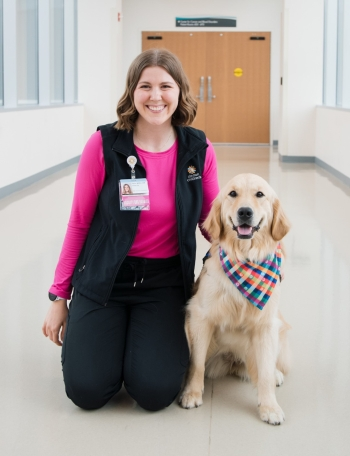
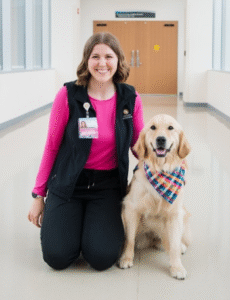
We’re excited to share something very special with our patient families – a new teammate who is already bringing comfort, calm and connection to patients. She’s friendly, she’s furry and she has a wagging tail that’s helping transform the way we support mental health and wellness. Meet our newest facility dog in our Canine Co-pilots program, Piper!

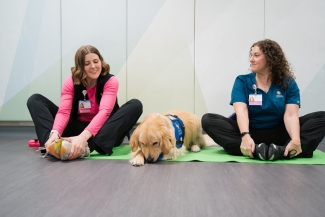
Piper works alongside her primary handler, Taylor. Taylor is a licensed independent clinical social worker with extensive experience as a mental health therapist. Together, Taylor and Piper, work together to tailor interventions and support the unique challenges kids may face during their time with us. Whether your child is newly admitted, struggling to open up, or facing tough emotions, this dynamic duo is here to help.

how Piper will help patients at the Mathile Center for Mental Health and Wellness

Piper plays a special role in individual therapeutic sessions. Here are some of the way she and Taylor help support patients:

  • Helping patients adjust to the unit: being in a new place can be overwhelming. Piper offers comfort to patients who feel hesitant about being admitted to the mental health unit. While Taylor can help explain what to expect, the dog provides gentle reassurance.
  • Building trust and connection: Dogs have a natural ability to break down walls. Many patients feel more comfortable talking to a therapist when Piper is there. She helps bridge the gap and builds the trust needed for healing.
  • Support during hard conversations: Whether it’s discussing trauma or navigating big emotions, Piper is there to lay beside patients, offer deep pressure for grounding, or just be a steady presence to hold onto.
  • Lifting spirits and highlighting strengths: Piper’s playful and loving nature makes it easier for patients to engage in positive conversations about coping skills, goals and navigating conflict.
  • Modeling healthy routines: Piper models positive coping strategies and can demonstrate how she maintains a good mindset and mood. She can also model activities of daily living like brushing her teeth and brushing her hair. These fun interactions help reinforce how small daily habits can make a big impact on both mental and physical health.
  • Getting active together: Movement is a key part of mental wellness. Through structured play and physical activities, Piper helps patients burn off energy, stay focused in therapy, and feel good in their bodies.

group therapy sessions

Beyond individual sessions, Piper has dedicated animal-assisted group therapy sessions weekly. She helps lead discussions on important topics like self-control, connection, coping skills and resilience. Her calming presence helps patients feel safe and supported as they work through their feelings together.

crisis response

Piper is more than just a cuddly companion – she is specially trained in behavioral management and crisis response. In emergency situations, Piper and Taylor can respond to codes to support patients in distress. Since the involvement of our facility dogs in code responses, we have seen drastic results:

  • Odds of using physical restraint were 71% lower
  • Average time in physical restraints was 18.5 minutes shorter
  • Odds of intramuscular medication administration were 37% lower

These outcomes speak to the incredible impact of compassionate, canine-assisted approaches to care.

We know that mental health challenges can be tough – for both patients and their families. That’s why we’re so proud to offer innovative, heartwarming support through our facility dog program. Piper isn’t just a pet – she’s a partner in healing, connection and resilience. And she’s already making a difference in the lives of the children we serve.

Happy Mental Health Month – from all of us, and a very special wag of the tail from our newest teammate, Piper!

For more information about our Canine Co-pilots program, click here

care that goes above and beyond

Because every child deserves care that goes above and beyond, Dayton Children’s provides compassionate, expert care for kids of all ages. Find a provider, schedule an appointment, or learn more about conditions we treat today.
April 16, 2025 | blog post

measles: what every parent needs to know right now

two points to remember:

  • Get your child vaccinated. It’s the only proven way to prevent getting measles. Ask your pediatrician to talk through the facts with you. 
  • If you suspect your child might have measles, call before you go to the doctor or the hospital. They will have special protocols to help you get the help you need safely.  

in this article:

Measles vaccine

How does measles spread?

How can I protect my child?

What are signs and symptoms of measles?

Have you heard about the measles outbreak?

At the time of this blog, at least 700 people so far have tested positive for the disease across 6 states, including Ohio – 97% of those infected were unvaccinated, and 70% were age 19 or younger.

You might think measles is just a rash and a fever, but it can lead to other serious problems and is very contagious.

If someone is exposed to measles and isn’t vaccinated, there is a 90% chance they will get infected. If not vaccinated, measles can cause pneumonia, brain swelling and even death.

The good news? If you are vaccinated, it is very unlikely you will get the disease even if exposed.  

how does measles spread? 

Measles spreads quickly through coughing and sneezing and is much more contagious than a cold or the flu.

Measles can stay in the air and on surfaces for up to two hours after an infected person leaves. This means someone can catch measles even without directly being around an infected person!  

Because measles spreads so easily, just one infected person can cause an outbreak if people are not vaccinated.  

how can I protect my child? 

The only proven way to protect your child and the community from measles is by getting the measles, mumps and rubella (MMR) vaccine.  

The MMR vaccine is a routine childhood shot given around 12 to 15 months of age and again at 4 to 6 years of age.

Two doses of the MMR vaccine are 97% effective at stopping the disease, but even one dose is 93% effective, according to the Centers for Disease Control and Prevention (CDC). 

I thought measles was eliminated? What happened?   

Because the vaccine is so effective, if vaccination rates are high we can eliminate measles all together.  

In 2000, measles was declared eliminated in the US, meaning that there were 0 cases of measles in 12 months. But measles has been coming back as vaccine rates have decreased. 

 This is why making sure your child gets their measles vaccine is so important.  

Getting vaccinated not only protects your child, but it also helps protect others in the community, especially babies who are too young to be vaccinated.  

what are the signs and symptoms of measles? 

It’s important to know the signs and symptoms of measles, especially if you aren’t vaccinated.

Symptoms usually appear 7 to 14 days after exposure and can include: 

  • High fever (sometimes over 104 degrees Fahrenheit)  
  • Cough 
  • Runny nose 
  • Red, watery eyes (conjunctivitis) 
  • Tiny white spots inside the mouth (called Koplik spots)  
  • A red rash that starts on the forehead and spreads down the body 

If you notice these symptoms, especially if your child hasn’t been vaccinated, contact your pediatrician immediately.  

Treating measles when you first see symptoms can make a big difference. People who are vaccinated are highly unlikely to be infected with measles.  

it’s not too late to get vaccinated!  

Getting your child vaccinated is the only proven way to prevent getting measles. We know there’s some hesitation in getting vaccines. The MMR vaccine is safe and effective.  

If you have questions, reach out to your child’s pediatrician. Share your concerns and talk through the facts together.  

Vaccination is a simple step that can save lives.  

related posts


No posts found.

care that goes above and beyond

Because every child deserves care that goes above and beyond, Dayton Children’s provides compassionate, expert care for kids of all ages. Find a provider, schedule an appointment, or learn more about conditions we treat today.
April 10, 2025 | blog post

sports injuries in teen athletes: why pediatric care makes a difference

Did you know that kids and teens have unique needs when it comes to growth and development? When an injury happens, it’s natural to want the fastest recovery possible, but seeing a pediatric specialist matters.  

From diagnosis to treatment and rehabilitation, Dayton Children’s orthopedic and sports medicine specialists specialize in caring for the whole athlete – physically, mentally and emotionally – so they can get back to doing what they love safely and confidently.  

benefits of pediatric care for sports injuries

Teens aren’t just young adults! Children’s bodies continue to grow and develop until they hit puberty, which for some can extend into their early 20s. At Dayton Children’s, we are specially trained to diagnose and treat injuries with a young athlete’s long-term health in mind.

growth plates – a key difference

Growth plates are areas of soft cartilage at the end of long bones. This is where growth occurs. For girls, growth plates are typically fully formed between 13 and 15 years old, but for boys this can continue into their early 20s. Injuries that affect growth plates need a pediatric specialist for a few reasons:  

  • A child’s bones, joints and muscles function differently than those of adults.  
  • If not treated properly, an injury to a growth plate can impact a child’s future growth and development. 
  • Pediatric specialists go through extra training to spot these subtle yet critical differences in growing bones.  

nutrition fuels performance and recovery

To play and compete at their best your child should incorporate all players in sports nutrition: offensive and defensive (and leave some players on the bench).  

  • Offensive: Incorporate macronutrients to help your child to be the best athlete they can be. These are things like carbohydrates, protein and heart-healthy fat fuel.  
  • Defensive: Keep your child’s athletic performance strong and prolonged with hydration, vitamins and minerals.  
  • Players to keep on the bench: Stay away from supplements and energy drinks.  

When it comes to an athletic event, it’s important for your child’s nutrition to start before the event. Proper nutrition before, during and after supports performance and overall health, while decreasing the risk of nutrient deficiencies, injuries and slowed growth.

Follow this suggested plan for proper nutrition when it comes time for the big competition:  

  • 3-4 hours before: Your child should eat a carbohydrate-rich meal before a game or sporting event 
  • 30-60 minutes before: Have your child eat a quick snack like fruit with water.   
  • During: Make sure your child stays hydrated! Water, carbohydrate-rich foods and sport drinks that contain electrolytes are important for staying hydrated and keeping their energy levels up.  
  • 15-30 minutes after: Your child should have a mix of protein and carbohydrates after a game or practice.   

For more information on incorporating all the players of sports nutrition click here

At Dayton Children’s, we incorporate nutrition into your child’s treatment plan to ensure your young athlete is properly fueled.   

mental health is just as important as physical health

While competitive athletes may feel much of their schedule is taken up by their sport, it is crucial they carve out intentional time for routine self-care. This can be as simple as: 

  • Scheduling 5-10 minutes every day to reflect using a journal  
  • Practice mindfulness – it not only boosts your athlete’s outlook, but it also enhances awareness of their emotional and physical wellbeing.  

Athletes are just as human as everyone else and require regular maintenance and recovery to reach their long-term goals. 

  • Emotional investment builds resilience: Athletes who prioritize their health find strength in making touch choices, like taking a break from their sport.
    • Challenges of sitting out: Time away from their sport can lead to frustration, anxiety about falling behind and a sense of lost identity.  
  • Teach self-awareness: Encourage your child to listen to their body and mind.  
  • It’s okay to get help: Taking a break to get help could be the healthiest choice for your child.   

Our pediatric orthopedic and sports medicine specialists understand the psychological impact of injuries and provide age-appropriate support to help your child stay engaged and motivated during recovery. 

getting your child back in the game safely

The goal isn’t just a quick recovery – it’s a safe and complete recovery. Getting back to the game too soon can lead to re-injury or long-term complications. We work with you and your child to create an individualized treatment plan that prioritizes healing while maintaining strength, mobility and confidence to get them back to doing what they love.  

At Dayton Children’s, we don’t just treat injuries – we care for the whole athlete. We believe every athlete deserves care just for them. When it comes to your child’s health, expertise matters.  

If an injury happens, we’re here to help. Easily schedule an orthopedics or sports medicine appointment online today.

related posts


No posts found.

care that goes above and beyond

Because every child deserves care that goes above and beyond, Dayton Children’s provides compassionate, expert care for kids of all ages. Find a provider, schedule an appointment, or learn more about conditions we treat today.

September 27, 2024 | blog post

what to do while waiting for your child’s first gastroenterology appointment

10 tips to help prepare

If your child is suspected of having a gastrointestinal (GI) issue, you may be eager to see a gastroenterologist and get an evaluation. Waiting for the first appointment can be stressful, but there are things you can do to help manage your child’s symptoms and make them more comfortable.

1. Keep a symptom journal: Track your child’s symptoms, diet and anything else that seems important. This will help the gastroenterologist understand what’s happening and identify any patterns.

2. Encourage a balanced diet: Offer gentle, easy-to-digest foods and avoid anything that seems to trigger symptoms. Pay attention to how certain foods affect your child.

3. Ensure they stay hydrated: Make sure your child drinks plenty of fluids, especially if they’re experiencing diarrhea. 

4. Monitor medication and supplements: If your child is taking any medications or supplements, keep a detailed list of them, including doses and any side effects.

5. Adjust activities as needed: Encourage your child to listen to their body and rest when needed. Avoid pushing through fatigue or discomfort.

6. Help reduce stress: Introduce relaxation techniques such as deep breathing exercises or gentle activities like walking to help ease anxiety.

7. Create a comfortable environment at home: Make your child’s environment as comfortable as possible. This could include easy access to the bathroom, cozy resting areas and favorite comfort items like books or toys.

8. Stay in touch with your primary care provider: Keep your child’s primary care provider updated on their condition. They can help manage symptoms while you wait for the gastroenterology appointment.

9. Prepare for the appointment: Write down any questions or concerns you have so you’re ready to discuss them with the gastroenterologist.

10. Know when to seek immediate care: If your child experiences severe pain, significant weight loss, or other serious symptoms, don’t wait for the appointment – seek emergency medical attention.

By taking these steps, you can help support your child while you wait to see the gastroenterologist.

Still need to make an appointment? Use our online scheduling tool to choose a date and time that works best for you!

related posts

No posts found.

care that goes above and beyond

Because every child deserves care that goes above and beyond, Dayton Children’s provides compassionate, expert care for kids of all ages. Find a provider, schedule an appointment, or learn more about conditions we treat today.

May 21, 2024 | blog post

the unique role helping spine patients at Dayton Children’s

get to know: Dayton Children’s spine nurse navigator

Few children’s hospitals see as many patients with scoliosis and other spinal conditions as the orthopedic center at Dayton Children’s.

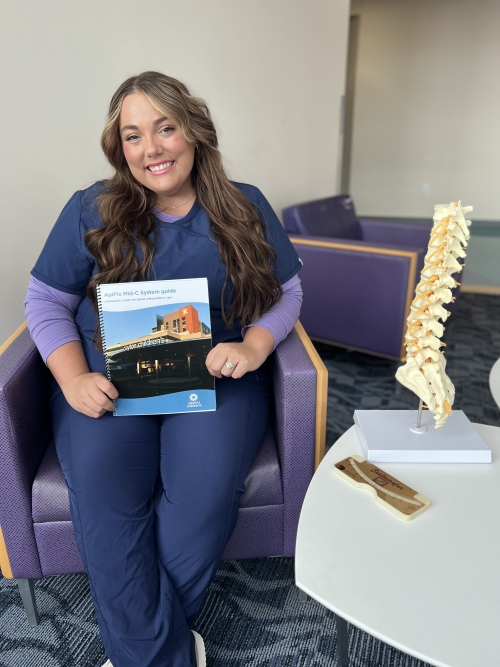
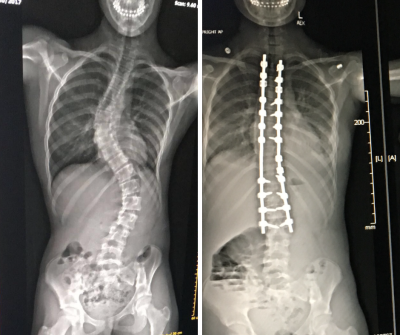
We specialize in all types of treatment for scoliosis, including innovative surgical techniques like ApiFix and the BandLoc spinal procedure. And, helping us care for these patients is Taylor Powell, spine nurse navigator.

Taylor serves as an educator and liaison throughout a patient’s entire spine surgery journey. This position is unique to our program and sets us apart from other scoliosis programs. 

We sat down with Taylor to learn more about her role on Dayton Children’s spine team.

What is your role on Dayton Children’s spine team?
I am the spine nurse navigator here at Dayton Children’s. My job is to help make your spine surgery journey above & beyond your expectations! I am here to help support you, guide you, educate you, and prepare you & your family for upcoming spine surgery.

How do you work with patients/families that have spine surgery at Dayton Children’s?
Once the decision is made that a patient needs spine surgery, that is when I become part of their care team! I will call and introduce myself to the family and create a care plan with them to ensure all clearances, imaging, and appointments are completed before surgery to verify they are in their best shape for surgery. Then, I will have them come in for a pre-op teaching appointment with me where we discuss education that pertains to pre-surgery, surgery day, inpatient stay and post-operative care.

I give them a tour of the unit they will be going to after surgery and make sure they feel confident for surgery day. After surgery, I follow them every day while they are in the hospital and will visit them during their stay.

When they go home, I call and check in with them to make sure they are doing okay and review care details. My favorite part of my role is the relationship I build with my patients and their families.

“I am their advocate and liaison throughout their entire spine surgery journey and I get to watch how resilient they are!”

It means so much to me to see my patients recover and get back to their daily activities. I am always there to answer questions, help navigate any problems, and cheer them on.

What is something you want your colleagues and the community to know about the spine team at Dayton Children’s?
The Dayton Children’s spine team is here for YOU! Everything we do is patient-centered and is designed to ensure that our patients have the best possible outcomes. We truly care about our patients and their families during what can be a scary time for them and always strive to give them the best possible care and experience they can receive.

I am so lucky to work with incredible, compassionate physicians who are committed to always going above and beyond for our kids. Our spine team is innovative and always improving our practice to ensure we bring in the latest and most relevant treatment for scoliosis.

I am truly so proud of our team and care we provide! 

make an appointment with our spinal and scoliosis program 

Few pediatric hospitals see as many pediatric patients with scoliosis and other spinal conditions as the orthopedic center at Dayton Children’s.

We specialize in all types of treatment for scoliosis and other spinal problems, including non-surgical and minimally invasive.

Our doctors are at the forefront of cutting-edge research and innovation, including being involved in the early development of ApiFix and BandLoc spinal surgery.

Learn more about the program or make an appointment to see one of our orthopedic surgeons (no referral necessary).  

Dayton Children’s spinal patient, Allison Mundey

care that goes above and beyond

Because every child deserves care that goes above and beyond, Dayton Children’s provides compassionate, expert care for kids of all ages. Find a provider, schedule an appointment, or learn more about conditions we treat today.

February 26, 2024 | blog post

a day in the life of a same-day surgery patient

Have you ever wondered what happens if your child has same-day surgery? How long does it take, and what does it entail? Maybe you’ve never heard of the program and now you’re curious. Well, you’re not alone!

The same-say surgery program at Dayton Children’s is intended for patients with inguinal and umbilical hernias, as well as undescended testicles, circumcision, ingrown toenails and tongue ties. The program allows families the ability to schedule a surgical consult and the operation on the same day at Dayton Children’s convenient south campus in Springboro.

Program benefits:

  • Minimizes time away from school and work
  • Surgery is performed on a Friday; most kids recover over the weekend and return to school the following Monday
  • Reduced office visits and time spent in a healthcare setting. Most same-day surgery patients are in and out of the hospital within 3 to 4 hours, and that includes their surgery!

To help understand the process, we shadowed Logan from start to finish during his same-day surgery, documenting each step along the way.

before surgery

A week before Logan’s big day at Dayton Children’s, his mom receives a call from the surgery clinic after receiving a referral from Logan’s pediatrician. The kind voice on the other end wanted to make sure Logan was an eligible candidate for same-day surgery. After several questions and determining that he would make a perfect patient for the program, she provided detailed instructions regarding eating, drinking, taking medications and what to do if Logan developed an illness prior to surgery.

day of surgery

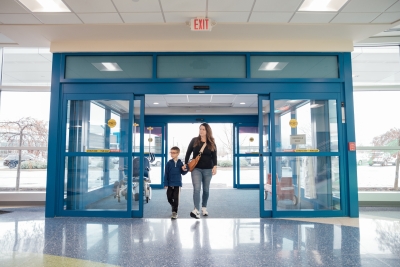
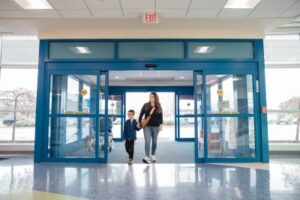
8:15 am – Filled with excitement and nerves, Logan and his mom arrive at Dayton Children’s south campus in Springboro. Logan is immediately distracted by the playful decorations and colorful lights and forgets why he is at the hospital. Mom, however, reminds him they must head to the second floor and check in for his clinic consultation.

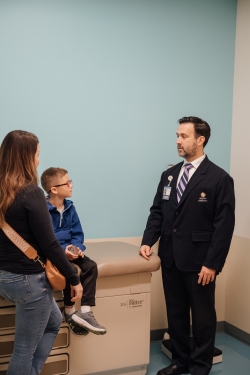
8:30 am – Logan’s name is called from the door to the clinic space by a welcoming voice. Kalista, a patient care assistant (PCA) for the surgery clinic leads Logan and his mom to their consultation room. Here she measures his weight and height and gets the other necessary vitals to make sure he is healthy and ready for surgery. Shortly after Kalista collects Logan’s vitals, Dr. Arturo Aranda, division chief of pediatric surgery, enters the room. He begins his evaluation to determine if Logan is a candidate for same-day surgery. While evaluating Logan, Dr. Aranda answers questions mom has about the surgery and recovery, making her feel more at ease. After completing his evaluation, Dr. Aranda agrees that Logan will make an excellent candidate for same-day surgery, and he asks Kalista to put him on the surgery schedule for later that morning.

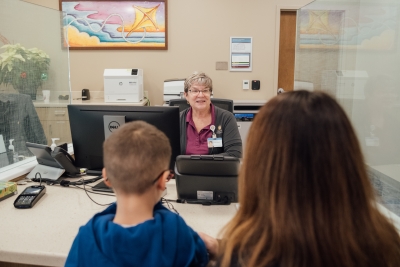
9:30 am – After Kalista coordinates Logan’s surgery details, she walks him and his mom to the surgery center where they meet Christine, who walks them through the surgery registration process. She gives both Logan and mom special bracelets so everyone knows who they are and that they belong together. She also gives mom a code that is unique to Logan. The code will appear on monitors throughout the surgery center and mom will be able to tell where he is in the surgical process based on the color of his code.

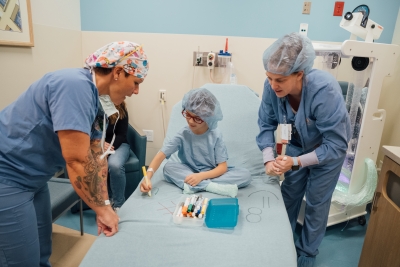
9:40 am –  Logan and his mom are led back to his pre-op room. He changes into a surgical gown, Kristen and Sunshine record Logan’s vitals and answer any lingering questions mom has. To keep Logan occupied, Kristen and Sunshine hand him a box of markers and begin playing tic-tac-toe on his bed. One thing leads to another, and Logan’s sheet is transformed into a canvas of colors, once again making him forget about his pre-surgery nerves.

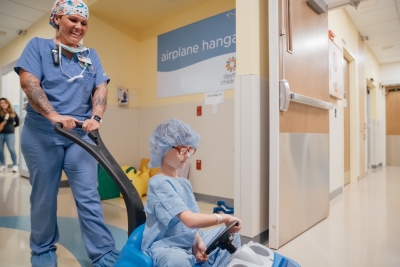
10:00 am – It’s time for surgery! After an infinite amount of hugs and kisses (and maybe a few tears from mom), Logan climbs into a cool blue car and pretends to drive through the operating room doors. While Logan is in the good hands of Dr. Aranda and the rest of the surgical staff, mom remembers passing the UpCafe on their way to the surgery center. With Logan’s special code in hand, she grabs a cup of coffee and finds a place to wait where she can watch his progress on the monitors.

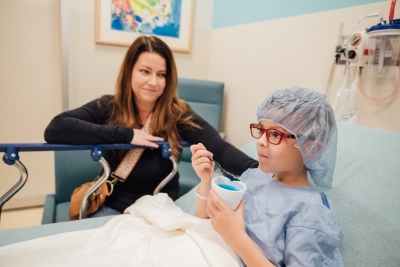
11:00 am – Logan’s mom watches the monitors as his code moves from surgery to recovery. The surgical staff calls her name and leads her to a consultation room where Dr. Aranda joins her. He goes over the details of Logan’s surgery and lets her know that she will be able to see him as soon as he wakes up from the anesthesia. Shortly after speaking with Dr. Aranda, mom is taken back to recovery where she finds Logan being attended to by staff with warm blankets and a slushy in his favorite flavor, blue raspberry!

Noon – It’s time to go home! Logan gets dressed and the nursing team goes over discharge instructions with mom. Logan’s mom receives a printout with wound care instructions and a direct phone number to call if an issue occurs. Minutes later, they are walking out of the hospital.

post-surgery

Home recovery – Once home, Logan settles in on the couch with a snack and his favorite movie. He isn’t in much pain, but he does feel worn out from the day’s activities. Over the weekend it will be important that Logan rests as much as possible, so he is ready to return to school on Monday.

Monday morning – Logan is feeling great, and he is ready to go back to school. Mom is grateful that he was able to recover over the weekend and they only had to take one day off from school and work.

two weeks later

Follow-up call – After two weeks have passed since Logan’s surgery, mom receives a call from a nurse in the surgery clinic. She checks in to make sure Logan’s recovery is going well and asks mom if she has any questions. Mom shares that Logan is doing great! He is completely healed and back to his regular activities.

The same-day surgery program was a blessing for our family. It meant less time away from school and work, a smooth journey from clinic to recovery and the comfort of knowing our child was in expert hands every step of the way. Grateful for a program that truly puts families first!” – Logan’s mom

care that goes above and beyond

Because every child deserves care that goes above and beyond, Dayton Children’s provides compassionate, expert care for kids of all ages. Find a provider, schedule an appointment, or learn more about conditions we treat today.

April 27, 2023 | blog post

our sensory program sets the gold standard for patient care

Did you know that Dayton Children’s has a sensory program for children who need a surgery or procedure?

What started as a program specifically for children with autism spectrum disorder, has expanded to assisting all children who have special needs and higher anxieties around coming to the hospital for a surgical procedure.

Surgery can be scary for any child, but it is especially traumatic for children with special needs. Some children may not understand what’s going on which can cause them to act out and become very irritated.

In the past, the answer to this was to provide a pre-surgery calming medication to help the child cope. But today we have different options! 

so how do we combat this without medication?

In 2017, 90% of children requiring surgery at Dayton Children’s required pre-surgery calming medication prior to the implementation of our sensory-friendly surgery experience.

A team of Dayton Children’s employees led by pediatric anesthesiologist, Sean Antosh, MD, knew that there was a better way to meet the needs of these children without resorting to medication. Together they found a way to create a more relaxed, sensory friendly environment to soothe and distract kids before surgery, by creating our pre-op sensory-friendly rooms!

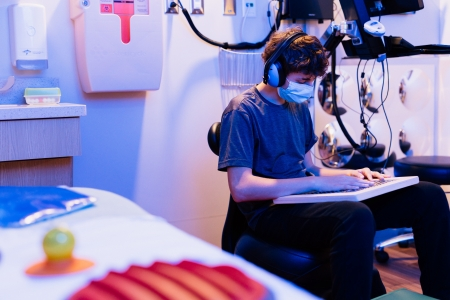
These rooms may include:

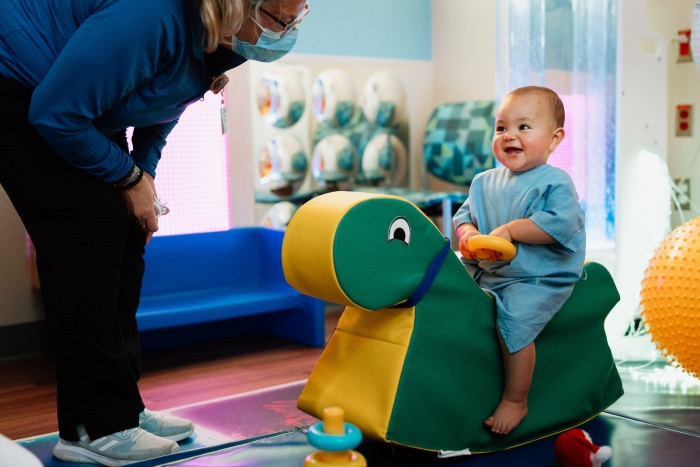
  • Sensory rover that includes fiber optics appealing to touch, a water feature appealing to sight and more
  • Projectors that can display a child’s favorite calming remedy (i.e., fish in the ocean)
  • Quiet with low lighting
  • Color mood lighting through a marble LED wall and wall light tiles
  • Fidget objects for children that are hyperactive
  • Liquid color changing floor tiles to walk on and explore
  • Bouncy chairs and floor cushions
  • White noise machines
  • Personal headphones
  • Weighted blankets

“Our sensory program for surgical patients has really evolved over the last six years,” Dr. Antosh explains.

“By creating a sensory-friendly experience for kids before surgery, it removes triggers and allows kids to feel more comfortable and calmer while the medical team prepares them for surgery.”

Dr. Anotsh goes on to explain, “the perioperative staff has been extensively trained in the needs of those with sensory processing issues and how to best accommodate the care we give on a daily basis.”

Click the video below to watch our sensory room in action

how does the program work?

During our routine call before surgery, the scheduler will ask you a series of questions to determine if your child is a candidate for our sensory friendly pre-operative room.

If the room is determined necessary, one of our child life specialists will reach out to develop a coping plan that is specific to your child!

5 benefits of the sensory program:

  • Reduction of pre-surgery calming medication
  • Quicker recovery times
  • When patients are calm going into surgery, they typically wake up calm after surgery
  • Parents feel more at ease bringing their special needs child in for surgery
  • Patients are able to overcome their fear of coming to the hospital

Since the start of our sensory program in 2017, the experience has helped reduce the amount of pre-surgery calming medicine from 90% to 20% of patients.

We have also been able to expand the sensory program to other areas of the hospital including in our lab and imaging department, our south campus surgery center, as well as offer the experience to kids with other special needs and higher anxieties coming to the hospital.
 

national recognition 
 

In 2021, Parent’s Magazine named Dayton Children’s as one of top 15 children’s hospitals in innovation and technology for our sensory program.

Parents are in awe of how we are transforming care for their child with sensory needs.

One mom said, “We walked in and immediately felt more at ease. The lights were turned down low. There was a projection of fish on the wall. They had a fiberoptic bubble machine. There were markers for Declan to color on the bed. Basically, anything they could do to help Declan not think about being at the hospital.”

If you think that your child may benefit from a sensory friendly surgery experience, please let the scheduler know during your pre-operative call.

Learn more about our sensory program here.

related posts


No posts found.

care that goes above and beyond

Because every child deserves care that goes above and beyond, Dayton Children’s provides compassionate, expert care for kids of all ages. Find a provider, schedule an appointment, or learn more about conditions we treat today.
March 27, 2023 | blog post

what’s the difference between a psychiatrist, psychologist and a social worker/therapist?

Many people use the words psychiatrist, psychologist and therapist interchangeably. While there are a lot of commonalities between the three professions, they are also very different. The three specialists can work closely together help improve patients’ mental health. Before we dive in – it’s ok if you aren’t sure which could be helpful for your child! Our Mental Health Resource Connection can help point you in the right direction. 

We sat down with three of our mental health providers at Dayton Children’s Hospital to explain the difference between these three.

what is a psychiatrist?

by Katherine Winner, MD, chief of psychiatry at Dayton Children’s Hospital

A psychiatrist is a medical doctor and can prescribe medication. Psychiatrists can assess, treat and provide medication management for mental, behavioral and developmental conditions. Often times patients will see a psychologist or therapist first and then be referred to psychiatry if medication is deemed necessary. Psychiatrists also do research, a very important contribution to the profession, both academically and clinically

At Dayton Children’s, psychiatry provides services for the following concerns:

  • Adjustment disorders
  • Anxiety
  • Attention deficit hyperactivity disorder (ADHD)
  • Autism spectrum disorder
  • Bipolar disorder
  • Depression
  • Developmental disorders
  • Disruptive behavior disorders
  • Obsessive compulsive disorder
  • Post-traumatic stress disorder and other trauma related disorders
  • Psychosis

what is a psychologist?

by Mary Beth DeWitt, PhD, chief of psychology at Dayton Children’s Hospital

Psychologists hold doctorate degrees, but they do not attend medical school and therefore cannot prescribe medication. Psychologists assess and treat mental, behavioral and developmental conditions. They aim to reduce psychological distress and promote psychological well-being. Clinical psychologists also provide consultation, training and supervision to other professionals and other agencies. Like psychiatrists, psychologists do research, too.

At Dayton Children’s, psychology provides these services:

  • Address functioning in children with chronic medical conditions
  • Address adjustment issues related to medical conditions
  • Provide psychoeducational assessment for children with complex learning and behavioral health conditions that are not addressed at school

what is a therapist/social worker?

by Jeremy Hayworth, LPCC-S, program director of outpatient therapy at Dayton Children’s Hospital

Licensed social workers and counselors (both often referred to as therapists) obtain a master’s degree, then must be approved by their licensing board to practice. Therapists can provide a diagnosis and treatment plan for a mental health condition. Therapy often includes individual, group sessions and family sessions to help reduce symptoms and improve their management of symptoms.

more about the Mental Health Resource Connection

The Mental Health Resource Connection program is a service that connects patients and families to available mental health services in the community. The service is administered by social workers experienced in evaluating pediatric mental health needs and the services required to meet those needs. If you’re looking for connection to mental health resources, click here.


care that goes above and beyond

Because every child deserves care that goes above and beyond, Dayton Children’s provides compassionate, expert care for kids of all ages. Find a provider, schedule an appointment, or learn more about conditions we treat today.