February 21, 2023 | blog post

how can I help my child’s anxiety about storms and bad weather?

Fears about thunderstorms, tornadoes or other inclement weather are common in children. Storms can be very overwhelming for some children, with flashes of lightning, booming thunder, high winds and pounding rains resulting in sensory overload. As children get a little older, they understand that sometimes storms and tornadoes can result in destruction and even death. This often results in a great deal of anticipatory anxiety surrounding bad weather. In addition, seeing their parents feeling anxious and nervous about bad weather can evoke additional fear in children.

There are things parents can do to help their children cope with storms.

  1. Have a storm plan: Parents can have a storm plan in place before the bad weather occurs. A plan should include identifying a specific safe place in the house to go to during storms. This place should have emergency supplies such as water, blankets and flashlights available. Parents can also identify a more comfortable, fun place in the home where children can go during nonemergent storms. This place might be away from windows and the sights and sounds of the storm. Having some relaxing time with a parent or a sibling in this space (e.g., reading a book together) can help ease children’s anxiety.
  2. Create a “storm kit”: Parents might consider helping their children create a “storm kit” that the children will only use during storms. Such a kit might include fun activities like puzzles, markers, fidgets and battery powered games. These types of activities can help distract children from their anxiety. A fun flashlight or lantern with batteries can also help ease anxiety in case the power goes out.
  3. Be honest with kids and reassure them of their safety: It is best to be honest with children about the weather. While talking about what is happening with the weather (e.g., a tornado has been spotted nearby), parents should also reassure their children that they are doing everything they can to keep them safe and that they will get through the storm together.
  4. Educate about storms: Some children may benefit from education about storms and tornadoes. Books and websites that discuss storms may be a good place for children to get information, as understanding what causes storms can ease some children’s anxiety about when a storm may happen. Education about storms should focus on the storms themselves and not the destruction they cause. Watching a news report in the spring may lead some children to believe that all tornadoes result in terrible death and destruction and this is just not the case.
  5. Remain calm: Because children clearly take cues from their parents, they are more likely to feel at ease during a storm if their parents remain calm during a storm. If parents struggle with high anxiety during inclement weather, they may benefit from taking some actions to help themselves feel safer (e.g., going to a safe place in the house) or engaging in activities to distract themselves (e.g., playing a game with a child, reading a book).

A fear of storms can typically be managed by parents at home. However, if children are fixated on the weather, such as constantly monitoring weather apps or frequently checking the forecast, parents may need to restrict access to that information. For those children whose fears are not calmed by their parents at home, parents can speak with their children’s primary care physician about whether a consultation with a psychologist or other mental health provider may be beneficial. 
care that goes above and beyond

Because every child deserves care that goes above and beyond, Dayton Children’s provides compassionate, expert care for kids of all ages. Find a provider, schedule an appointment, or learn more about conditions we treat today.

January 30, 2023 | blog post

what’s this red bump that won’t go away?


Have you noticed a small red bump on your child’s face or body? They could have molluscum contagiosum. 

what is molluscum contagiosum?

These are small bumps 1-5 mm in size and are caused by a virus in the poxvirus family. They occur mostly in children aged 1-10 years,  though people of any age can get molluscum. They can show up anywhere on the body and are firm and flesh/white/pink color. Molluscum bumps may come alone or in groups and have the signature umbilicated (dimpled) appearance.

As the name suggests, molluscum contagiosum is contagious. They can spread by person-to-person contact or through objects such as toys and towels. The virus lives in the skin so it does not spread through saliva or sneezing. Children with atopic dermatitis (eczema) or whose immune systems are suppressed are at increased risk for more severe cases. Because lesions persist for so long, the best way to prevent spread is good hand washing. Keeping lesions on the hands covered may also help prevent the spread to others.

Treatment for molluscum is typically watchful waiting. Lesions will go away on their own and typically resolve within 6-12 months, but they can persist for up to four years!  For more severe cases, doctors can treat the lesions with cryotherapy, laser therapy or curettage.

Topical treatments such as Cantharidin, salicylic acid, tretinoin and imiquimod can also be used. The goal of these topical treatments is to irritate the skin around the molluscum as a way to “alert” the body to the virus and start attacking it. Unfortunately, molluscum being a poxvirus, it can scar with or without treatment but luckily they typically do not!

related posts

No posts found.

care that goes above and beyond

Because every child deserves care that goes above and beyond, Dayton Children’s provides compassionate, expert care for kids of all ages. Find a provider, schedule an appointment, or learn more about conditions we treat today.

December 12, 2022 | blog post

does my baby need a helmet?

Have you noticed the development of a flat spot on your baby’s head? Before you start down the rabbit hole of endless online research, rest assured that you are not alone. Flat head syndrome, also known as plagiocephaly or brachycephaly, occurs in nearly 40% of infants. In many cases, flat head syndrome resolves on its own with time and natural development.

To better understand how to prevent flat head syndrome and what to do if your baby has already developed a flat spot, we asked pediatric neurosurgery nurse practitioner, Stephanie Smith to answer the most asked questions about flat head syndrome.

what can I do to prevent my baby from getting a flat spot?

Limit the time your baby spends in reclined devices* such as swings and bouncer seats, as this can lead to flattening on the back of the head. Provide at least 60 minutes of tummy time each day as recommended by the American Academy of Pediatrics. When first starting tummy time, some babies may not enjoy it. The use of interactive tummy time playmats and placing toys in front of the baby may help them tolerate this position better. Tummy time can be broken up into five-to-ten-minute increments spread throughout the day. Without adequate tummy time, babies can be delayed in learning to roll and crawl.

*Please remember that although a car seat is a reclined device, your baby should always be secured in an appropriately sized car seat when your car is in motion.

what should I do if my baby has already developed a flat spot?

If using reclined devices for sleep or play, discontinue the use of these items immediately. Reposition your baby off the flat side of his or her head while awake. Do not place any pillows or repositioning devices in your baby’s bed. Your baby should always be placed on their back for sleep; however, you can encourage your baby to turn their head to the non-flat side with toys and/or lights placed in their room nearby. You should not place any items in your baby’s bed.

In babies who keep their head turned to one side, this often means that they have torticollis. Torticollis is a condition in which the neck muscles contract, causing the head to twist to one side. Contact your pediatrician to determine if your baby should be referred to neurosurgery and/or physical therapy to treat this condition.

how is flat head syndrome treated?

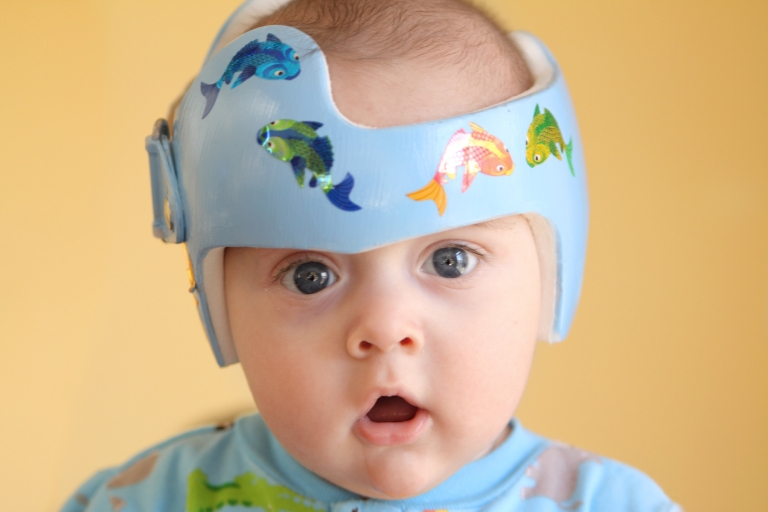
If the flattening of the head is determined to be moderate or severe, your baby may be placed in a helmet to help reshape the head. The helmets are worn for 23 hours per day and depending on the severity, helmets can be worn for up to six months. The average time in a helmet is approximately four to five months. To meet the eligibility for insurance companies to pay for helmet therapy, the following criteria must be met:

  • Two months of repositioning out of swings and other reclined seating devices
  • 60 minutes of tummy time per day
  • If the baby has torticollis, two months of physical therapy or neck stretching exercises prescribed by the pediatrician or performed by the chiropractor that have resulted in effective treatment of the torticollis

why is flat head syndrome treated by neurosurgery at Dayton Children’s?

Although rare, there can be other causes for flattening or mishappenings of the baby’s head that may require surgical intervention. Neurosurgery providers are experts in evaluating the baby’s head to determine the cause of the flattening and if needed, order the appropriate diagnostic work-up needed to rule out any potential surgical concern.

If you believe your baby has flat head syndrome, and would like an evaluation by our neurosurgery experts, schedule an appointment online.

care that goes above and beyond

Because every child deserves care that goes above and beyond, Dayton Children’s provides compassionate, expert care for kids of all ages. Find a provider, schedule an appointment, or learn more about conditions we treat today.

November 8, 2022 | blog post

caring for your child during a surge in respiratory illnesses

in this article:

By now, you’ve seen the headlines or you’ve experienced firsthand the respiratory illnesses currently affecting children in our region. At Dayton Children’s, we’re seeing a record number of children in our emergency departments, urgent cares, and inpatient units seeking care for RSV, flu, COVID, and other respiratory viruses that are circulating.

According to the Centers for Disease Control, these viruses are at levels higher than usual for this time of year. And for many children, this may be their first fall and winter without masking or social distancing protocols in place, exposing them to these viruses for the first time.

when to be concerned

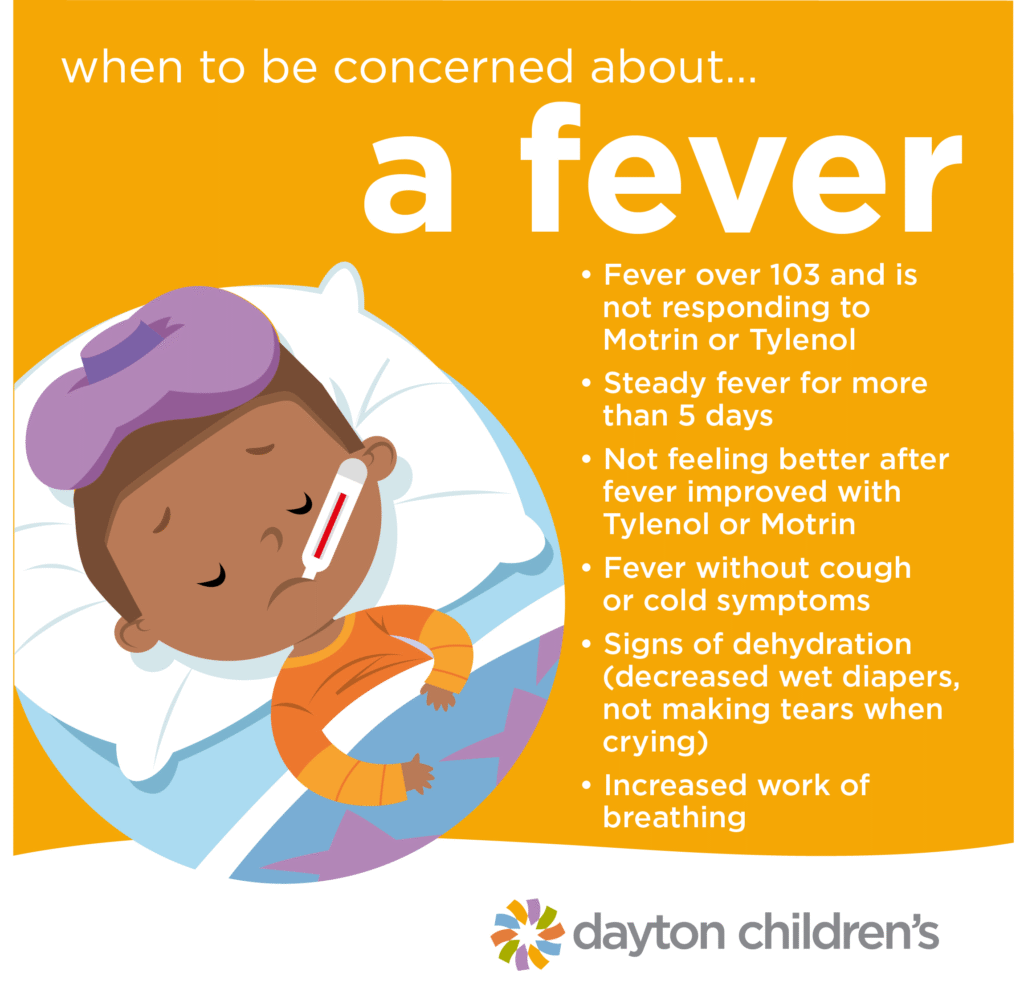
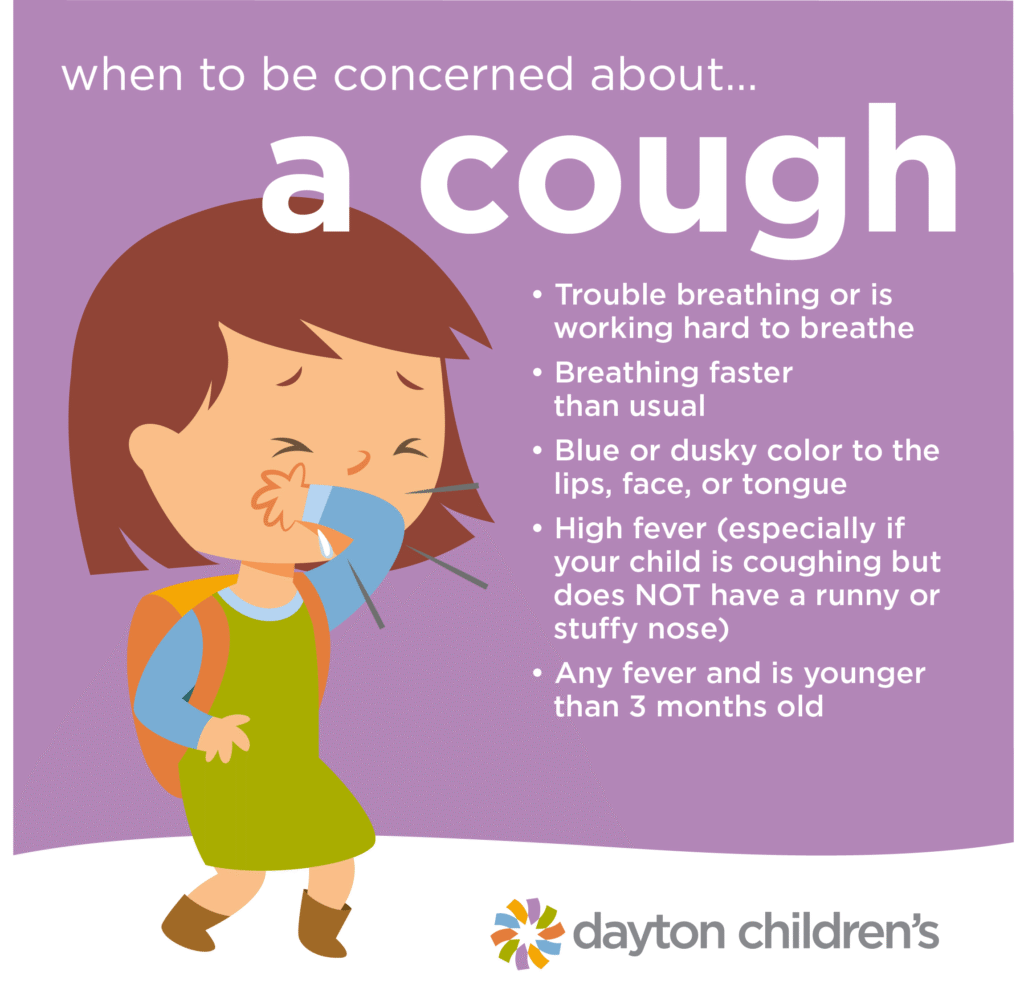
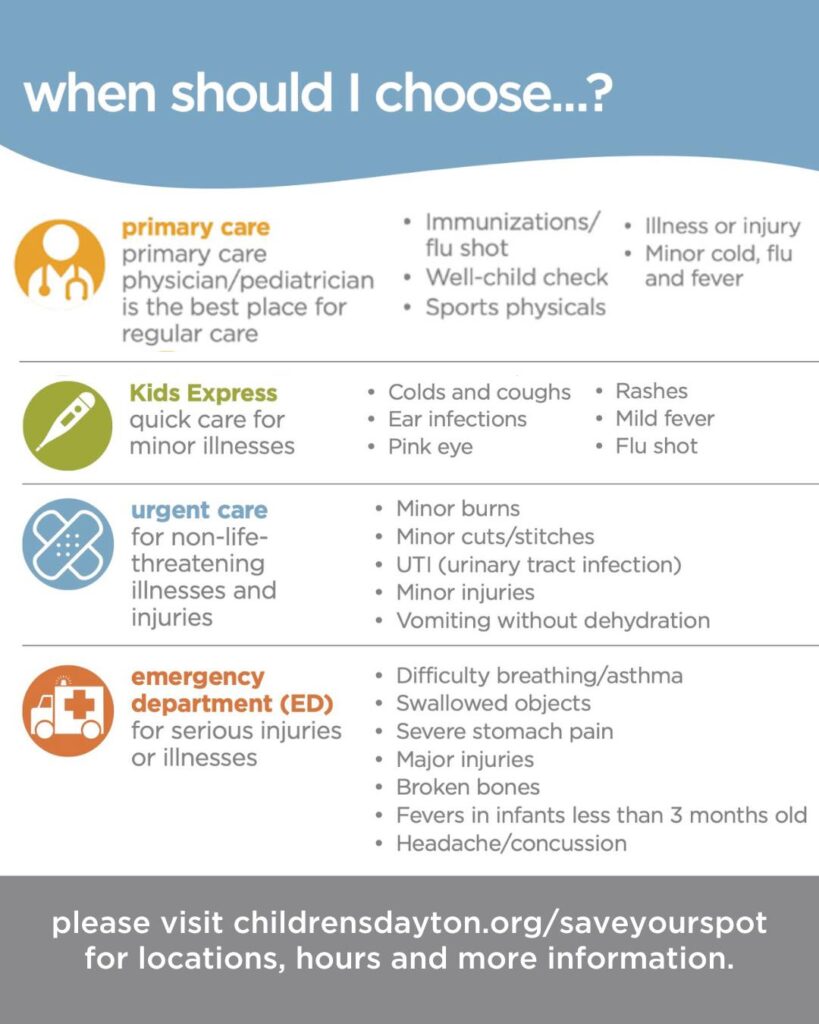
As a parent, it’s easy to feel helpless when your kiddo isn’t feeling well. We get it! The most common symptoms we’re seeing at our care sites are complaints of fever and cough. The graphics below can help you decide when to seek care for either of these conditions:

how to help your child

If your child is experiencing these symptoms, but doing relatively well, there are a few ways to provide “comfort care” at home to get them back on their feet. They include:

  • Motrin (ibuprofen) or Tylenol (acetaminophen) for fever or discomfort
  • Nasal saline spray and suction for little ones that like to breathe out of their nose
  • A warm shower or humidifier if they have a barky-sounding cough

Above all look at the behavior of your child. If they are playful, active, and eating and drinking well, even with medicine, then they are doing okay. If they are not acting like themselves or their behavior has you concerned, consult with a medical provider.

where to go for care

The large number of children seeking care means there may be a long wait time to be seen. Everyone seeking emergency treatment at our emergency department will be seen. Urgent cares and Kids Express locations may stop accepting walk-in patients when they reach capacity for the day. We ask that families be patient and kind as our staff work to ensure each child has the care they need.

If your child is sick, please contact their pediatrician first, even if it is after office hours. They can help direct you to the best care for your child’s condition.

Kids Express

Please check the website for updates for each of our locations.

protecting your family

Dayton Children’s is encouraging families to use this time to get their child’s flu shot and COVID-19 vaccine series. It’s not too late!

Kids Express can provide the flu vaccine for age 6 months and up and the COVID vaccine for age 5 and up. For kids age 5 and up, the flu vaccine and COVID vaccine can also be given at the same time. Learn more

Families should also be washing their hands regularly, avoiding large crowds, when possible, and staying home when sick.

care that goes above and beyond

Because every child deserves care that goes above and beyond, Dayton Children’s provides compassionate, expert care for kids of all ages. Find a provider, schedule an appointment, or learn more about conditions we treat today.

November 1, 2022 | blog post

How do you find developmentally appropriate toys?

Check out this toy list!

Whether it’s a birthday or Christmas present, how do you find developmentally appropriate toys? Navigating the toy aisle can be overwhelming with so many options and with online retailers like Amazon the options are almost limitless. Here are a few tips to help you out.

  1. Video or electronic games. These limit a child’s imagination.
  2. Beware of “educational” claims. Many of these claims are not supported.
  3. Avoid “close-end” toys like board games that have set rules and don’t allow for imagination.

Remember, the more a toy does (lights, music, sounds, batteries), the less your child has to do.

Tips for finding the right toy

The more children have to use their minds and bodies to make something work, the more they learn. Below is a list of tips to help you find the right toy for any child.

  • Choose toys that can be used in a variety of ways.  Toys should be “open-ended” in the sense that your child can play many different games with them (for example, wooden blocks can be used to make a castle). Open-ended toys benefit your child’s imagination and help them develop problem-solving and logical thinking skills.
  • Find toys that will grow with your child. Look for toys that will have different uses and be fun in different ways at various developmental stages.
    • Plastic animals
    • Action figures
    • Toddler-friendly playhouse
    • Vehicles such as trains, planes, and trucks
    • Stuffed animals and dolls
  • Select toys that encourage exploration and problem-solving. Toys that give your child a chance to figure something out on his or her own build logical thinking skills and will help your child become a better problem-solver.
    • Puzzles
    • Shape-sorters
    • Art materials like clay, paint, crayons or play-dough
  • Look for toys that spark your child’s imagination. Your child’s creativity is blooming. Pretend play builds language and literacy skills, problem-solving skills and the ability to sequence (put events in a logical order).
    • Dress-up clothes
    • Toy food and plastic plates
    • Toy tools or doctor’s kit
  • Provide toys for nurturing literacy. Look for things to help your child develop early writing and reading skills.
    • Books
    • Foam bath letters
    • Art supplies like markers, crayons and finger-paints 
  • Select toys that encourage your child to be active. Look for toys that help your child practice gross motor development.
    • Balls of different shapes and sizes
    • Tricycles or age-appropriate scooters
    • Pull or push toys (toy lawn mower)
    • Wagon
    • Gardening tools to dig and rake with (in sand or dirt at the park)

Need more help? We have a list by age too!

Group of adorable student clapping hands at nursery school. Adorable schoolboy and girl feel happy and enjoy back to school, learning with teacher in classroom at elementary kindergarten.
  • Soft cuddly items (stuffed animals, cloth dolls)
  • Water play toys for bath time
  • Crib gyms
  • Floor activity quilts
  • Soft mats to pat
  • Plastic-coated books
  • Rattles and sound-makers such as squeak toys
  • Foam blocks
  • Stacking toys
  • Push-pull toys
  • Pop-up toys
  • Board books
  • Two- to four-piece puzzles
  • Balls
  • Wooden blocks
  • Construction toys
  • Pretend-play toys
  • Nesting table toys
  • Wheeled toys and train sets
  • Nontoxic art and clay-like modeling materials
  • Up to 16-piece puzzles
  • Activity play stations such as airport, farm or zoo
  • Jigsaw puzzles
  • Complex card and board game
  • Arts and crafts kits
  • Car or airplane model kits
  • Natural science collections
  • Jump rope
  • Bike or scooter
  • Chapter books and short novels
  • Sports equipment
  • Musical instruments

related posts


No posts found.

care that goes above and beyond

Because every child deserves care that goes above and beyond, Dayton Children’s provides compassionate, expert care for kids of all ages. Find a provider, schedule an appointment, or learn more about conditions we treat today.

October 3, 2022 | blog post

does my child have sleep-disordered breathing?

Does your child have recurring strep throat? Do they snore? Take our 30-second quiz below to see if your child might have sleep-disordered breathing. They may benefit from having their tonsils and adenoids removed by a pediatric ENT specialist at Dayton Children’s.

related posts

No posts found.

contact us

For more information about pediatric ENT at Dayton Children’s, please call 937-641-4647

care that goes above and beyond

Because every child deserves care that goes above and beyond, Dayton Children’s provides compassionate, expert care for kids of all ages. Find a provider, schedule an appointment, or learn more about conditions we treat today.

May 23, 2022 | blog post

caring for type 1 diabetes and celiac disease

You may have heard that there has been an increase in autoimmune diseases, including type 1 diabetes and celiac disease. We’ve recently seen an increase in patients having both of these diseases together. We talked with endocrinologist Stacy Meyer, MD and gastroenterologist and division chief of pediatric gastroenterology and nutrition Michael Bates, MD to learn more about the connection between the two, and our clinical nutrition team for tips and resources for families whose children are managing both.

Autoimmune diseases are what we call “two hit” processes. You have to inherit the genes that make it more likely to develop an autoimmune disease, and then something else in the environment must trigger the process. Viruses are often triggers to the start of autoimmune diseases, but we don’t know for sure what the triggers might be for these disorders.  Recently, there has been a rise in type 1 diabetes cases that is thought to be associated with COVID infections. 

Celiac disease and type 1 diabetes share a genetic link.  Both celiac disease and type 1 diabetes risks are inherited on HLA genes and share two specific HLA types in their inheritance: DQ8 and DQ2. It appears that a person has to have one of these two HLA types to be at risk for celiac disease or type 1 diabetes.  

It is not currently known why we are seeing an increase in autoimmune diseases, but there are many theories and studies looking into this.  We have been seeing a rise in autoimmune diseases overall since the 1980s.  We also have better screening tests for celiac disease, which has led to an increase in its diagnosis.

The combination of celiac disease and diabetes can be especially difficult to manage. They both require adjustments to our diet and lifestyle that are independent of each other. Many of the foods safe for kids with celiac disease are higher in carbohydrates. This can make it harder for kids to cover with insulin and to keep their weight in a healthy range. 

People with diabetes and celiac disease should include healthy carbohydrates in their meals every day. These can include fruits, vegetables, gluten-free whole grains and gluten-free dairy products. Most kids with diabetes and celiac disease eat around 30 to 75 grams of carbohydrates at each meal, and 15 to 30 grams of carbohydrates for each snack.

Check the ingredient list on a food label to see if a food is a good source of whole grains. The first words on the list should be “whole grain [name of grain].”

  • Do not select foods that list the name of the grain as wheat, rye, barley, or oats (unless specified gluten-free oats) – These grains contain gluten.
  • Gluten-free grains include: buckwheat, teff, amaranth, rice, corn, quinoa, sorghum, millet, grits and labeled gluten-free oats.  The package should also be labeled as gluten-free.

care that goes above and beyond

Because every child deserves care that goes above and beyond, Dayton Children’s provides compassionate, expert care for kids of all ages. Find a provider, schedule an appointment, or learn more about conditions we treat today.

April 2, 2021 | blog post

sensory room in surgery helps children on the autism spectrum

Toddler boy with his mother and grandmother doing a jigsaw puzzle at home.

For many children, going into a hospital for a procedure or surgery is a scary, unknown experience. But for children on the autism spectrum, it is often a traumatic event. Not only do they not understand what’s going on, but they enter an environment where triggers are all around them leading to extreme agitation. Their only way of coping is to act out in an effort to try and make the intense stimulation go away. Traditionally, the only answer to help these children calm down has been to prescribe medication in the pre-operative environment.

But in 2017, a group of surgery employees including Sean Antosh, MD, anesthesiologist; Katelyn Shellabarger, CCLS, child life; and Robin Lawson, RN, pre-operative nursing liaison, started looking at ways to create a more relaxed, sensory friendly environment to distract kids with autism before surgery. 

Dr. Antosh knows firsthand that medicine plays an important role in surgery. However, if a child remains calm in the pre-operative area beforehand without the use of medication, they tend to wake up post-surgery in the same way, which leads to a better recovery. He tapped into other resources. Katelyn is the first child life specialist dedicated to surgery and Robin is retired special education teacher who worked with autistic kids in elementary and middle school.

The result: a dedicated sensory focused pre-operative room for kids with autism that can be individually tailored to the child’s needs.

“If we can take out the triggers and insert activities and items that sooth and distract the patient, it’s was a win for everyone,” Dr. Antosh explains. “It allows the patient to remain calm while the medical team does what we need to do to prepare the child for surgery. Let’s save the medication for when it’s truly necessary – back in the operating room itself.”

Prior to this program 49 percent of children with special needs received pre-anesthesia calming medication. Now only 36 percent do.

Katelyn in child life greets the patient and family in the room, prepares their masks and helps with the coping plan. “Surgery can be a traumatic experience for children with special needs, which is painful for parents, too,” Katelyn says. “The coping plans allow us to be proactive and get to know the child more so we can care for the patient in a more holistic way.”

With Robin’s help, the rooms are individualized for each patient prior to arrival at the hospital.

“Patients with autism are not like every other child,” Robin says. “We had to figure out away where we could meet them where they are. We truly are changing the way care is delivered.”

Providing innovative care for kids is just one reason Parent’s Magazine named Dayton Children’s as one of the top 15 children’s hospitals in innovation and technology in 2020.

The article features our sensory-friendly surgery experience. When kids come in on surgery day, they enter a space with familiar music, LED lighting in their favorite color, color changing floor tiles, headphones, fidget spinners or weighted blankets. They can even drive our remote-controlled airplane off to surgery!

Today there are three sensory-friendly rooms in preoperative services at our main campus. 

related posts


No posts found.

care that goes above and beyond

Because every child deserves care that goes above and beyond, Dayton Children’s provides compassionate, expert care for kids of all ages. Find a provider, schedule an appointment, or learn more about conditions we treat today.

October 5, 2020 | blog post

the pediatric difference in anesthesiology

Dayton Children’s is uniquely prepared to care for your child before, during and after surgery

Kids are not “little adults” and deserve care designed for them. When your child has surgery at Dayton Children’s, they’re being treated by a team of healthcare professionals that are specifically trained to care for children. This is especially important when your child requires anesthesia for their surgery or procedure. All of the anesthesiologists at Dayton Children’s are pediatric board certified and only take care of children. Pediatric anesthesiologist Sean Antosh, MD, explains why this is important and why Dayton Children’s is uniquely prepared to care for your child before, during and after surgery. 

Why is it important for kids undergoing surgery to be treated by a pediatric anesthesiologist?

Children have very different physiology as they grew from infants to adults. Therefore, they need an anesthesiologist who is trained in their special needs and how their bodies react differently to medications typically used during surgery. 

What are potential risks associated with using an anesthesiologist that does not typically treat kids? 

While most anesthesiologists are capable of taking care of all patients, pediatric anesthesiologists are acutely aware of the common heart and breathing issues that may arise during surgery. We are able to accurately diagnosis and treat these issues before they become an emergency. 

What education and training are required to be a pediatric anesthesiologist? 

Board certified pediatric anesthesiologists have been through four years of undergraduate education, four years of medical school, four years of general anesthesiology and critical care training, and an additional one to two years of pediatric anesthesiology fellowship. After all of this training, they then complete board certification for general anesthesiology, as well as an additional certification for pediatrics. 

What does Dayton Children’s do to make kids that have to undergo anesthesia more comfortable? 

As pediatric anesthesiologists, we interact with the patients and their parents to find out what the child likes and dislikes to help avoid anxiety. Sometimes we play games, use distraction devices (such as an iPad) or use remote controlled airplanes to take them to the operating room. Occasionally, we will have to give a drinkable medication to help them relax during the process. 

For our autism spectrum and special needs patients, we have one of a kind sensory rooms that patients can relax in prior to surgery. We also have a pediatric acute pain service, which provides nerve blocks for common orthopedic and general pediatric surgeries to help decrease discomfort and need for pain medications postoperatively. 

related posts


No posts found.

care that goes above and beyond

Because every child deserves care that goes above and beyond, Dayton Children’s provides compassionate, expert care for kids of all ages. Find a provider, schedule an appointment, or learn more about conditions we treat today.

December 6, 2019 | blog post

how tall will my child be?

Dr. Meyer shares the secret formula

Do you ever feel like overnight your child has grown out of their clothes?! I always notice the difference in my kids growth when I look at last year’s holiday card compared to this years! As an endocrinologist, I may monitor my children’s growth a little more than the typical parent, but you would too if you spent a good part of your day discussing normal vs. abnormal growth patterns!

After the age of 2 years, children grow at a more steady and predictable pace. Children under 2 years, may grow slower or faster as they move toward their genetically determined height. This is because length at birth and growth over the first months to a year of life is more dependent on nutrition and intrauterine environment than true growth potential.

how can I estimate my child’s height?

Wondering your child’s growth potential? Here is a good way to estimate this based on mom and dad’s adult height.

For Boys:

  • Add 5 inches to mom’s height and average this with dad’s
  • Ex: if mom is 5’4” you would add 5 inches to make 5’9” and then average with dad’s height of 5’11” and your little boy’s predicted genetic height is 5’10”

For girls:

  • Subtract 5 inches from dad and average with mom’s height.
  • Ex: In the above scenario you would average 5’4” with 5’5” which is dad’s height minus 5 inches to get 5’4.5”

Now these are of course only estimates and there can be up to 4 inches variability up or down but most children without any other extenuating circumstances will end up within 2 inches of this prediction.

So now that you know your child’s growth potential, how do you monitor if they are on track to reach this. The easiest way to monitor your child is by plotting and reviewing them on a standard growth curve. This tells you your child’s growth over time. Under the age of 2 years, children may move on the growth chart as they fall or climb toward their genetic potential, but after the age of 2 years, children should track yearly on the same growth curve percentile. This is something your doctor can show you at each yearly check up to help monitor. Of course, many things can alter that tracking especially timing of puberty, so it’s important to discuss any deviations with your doctor to determine if the cause for a change in percentiles is a problem or just a normal variation. Your doctor may recommend evaluating further with blood testing or an x-ray of the hand to look at the age of the bones.

If you don’t have access to your child’s growth curve but have been measuring diligently at home, here are some guidelines for typical growth in childhood.

  • From 0-1 year of life: typical growth is 10 inches
  • From 1-2 years of life: typical growth is 4 inches
  • From 2-4 years of life: typical growth per year is 3 inches
  • Above 4 years until puberty: typical growth is 2 inches per year.

From one mom (who is an endocrinologist) to another, growth is something you can and should be monitoring in your child. Time for growth is limited and can be the first indication in children of an underlying health concern. If concerns arise regarding growth discuss this with your doctor sooner rather than later as the best outcomes occur when issues are discovered early!

view our Facebook LIVE discussion with Dr. Meyer

Please note that we had some technical difficulties at the beginning of this broadcast. Fast forward to minute 2:45 to begin the conversation with sound. 

recent posts

No posts found.

care that goes above and beyond

Because every child deserves care that goes above and beyond, Dayton Children’s provides compassionate, expert care for kids of all ages. Find a provider, schedule an appointment, or learn more about conditions we treat today.