your guide to managing asthma
Please use this resource library to learn about your child’s asthma and how to manage it.


About asthma management
No matter who is providing your child asthma care, the goal is to make sure you have a thorough understanding about asthma, how to self-manage your child’s asthma, and how to prevent an asthma attack no matter where they may be…home, school, daycare, babysitter’s, etc. You will use the information in this library along with your health care provider to develop an asthma management plan that is specific to your child’s needs.
what is asthma?
Asthma is a chronic disease of the lungs. When you breathe, air goes in and out of your lungs through small tubes called airways. With asthma, two main things happen in the airways of your lungs:
- Inflammation (irritation) — the airways become swollen and fill with mucus
- Constriction — the muscles around the airways tighten, making the airways narrower
Both these things make it hard for you to breathe and can cause asthma symptoms.
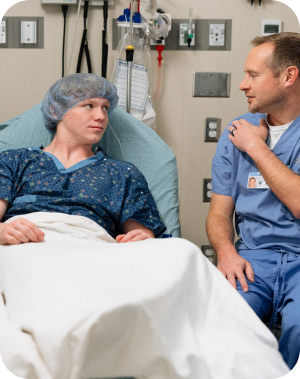
asthma symptoms
Your child may have all, some or just one of these symptoms. They can be mild or severe and change from day to day.
- Wheezing — a whistling noise when you breathe.
- Coughing
- Chest tightness — a feeling that someone is sitting on your chest
- Shortness of breath
- Trouble breathing — often at night and in the early morning
- Mucus — Phlegm or sputum an asthma attack
Your child’s asthma symptoms are a sign that a flare-up may be starting. When asthma symptoms become worse than usual, it is called an asthma attack. In a severe asthma attack, the airways can tighten so much that not enough oxygen can get to vital organs. People can die from severe asthma attacks. Most people with asthma can manage their disease and have fewer asthma symptoms and attacks.
faqs
It’s important to have an asthma action plan to know when you are having a flare up. The goal of an asthma action plan is to:
- Have minimal or no asthma symptoms during the day and night
- Reduce or eliminate asthma attacks
- Have no limitations on activities – no missed school or work days
- Use quick-relief (rescue) inhaler less often
- Reduce or have no side-effects from medicines
- Maintain normal or almost normal lung function
It’s also important to know what triggers your asthma. Check out Iggy and the Inhalers website for more tips and tricks to knowing what triggers your asthma.
Use this handout to develop your asthma action plan with your doctor.
If you have any of the following symptoms, call 911 or go directly to the emergency department – do not wait!
- Bluish lips
- Asthma symptoms are getting worst fast
- Struggling to breathe
- Can’t talk or cry because of hard breathing
- Passed out
Even though exercise may trigger asthma symptoms, students with asthma benefit from being active and playing sports. Still, some sports may be better choices for people with asthma. Sports like baseball, golf, and shorter track and field events are less likely to trigger flare-ups. Endurance sports, like long-distance running and cycling, and those that require high-energy output without a lot of rest time, like soccer and basketball, may be more challenging for students with asthma.
This is especially true for cold-weather sports, like crosscountry skiing or ice hockey. Students with asthma who exercise and play sports may:
- Have flare-ups that cause coughing, wheezing, and difficulty breathing
- Take daily control medicines for asthma and require a rescue inhaler during flare-ups
- Use an inhaler before or during exercise
- Need to take a break during exercise, practice, or game due to symptoms Need to skip exercise, gym class, practice, or a game if a flare-up occurs
what teachers and coaches can do
Teachers and coaches should make sure that asthma is under control before students exercise or participate in sports. In other words, they shouldn’t be having lots of flare-ups. ways to help students avoid flare-ups include:
- Reminding them to carry and use their bronchodilator (rescue) inhalers before activity, if they’re part of the students’ asthma action plans Allowing for extended warm-ups and cool-downs during practices and games
- Watching out for flare-up symptoms and knowing when students should take breaks
- Make sure your students with asthma have action plans to help prevent and manage flare-ups. You should know your students’ asthma triggers and allow them to use their medicines when needed. If a student’s symptoms get worse after taking medicine, call the school nurse or 911.
students with asthma may:
- Have flare-ups that cause coughing, wheezing, and difficulty breathing
- Take daily control medicines for asthma and require a rescue inhaler during flare-ups
- Use an inhaler before or during exercise
- Need to take a break during exercise, practice, or game due to symptoms
- Need to skip exercise, gym class, practice, or a game if a flare-up occurs
Because bullies often target students who seem “different,” certain health conditions, including asthma, can put kids and teens at higher risk of being bullied.
what teachers can do
Students with asthma may need special consideration regarding missed instruction, assignments, and testing when they miss class time due to flare-ups, going to the school nurse’s office to take medicine, and visiting their doctors.
Keep in mind that students with asthma can participate in school sports, phys-ed, and other activities. Students who have exercise-induced asthma (EIA) may need to use their inhalers before participating in physical activities. Students with EIA may have to take other precautions to avoid flare-ups — check with your students’ parents.
Make sure your students with asthma have action plans to help prevent and manage flare-ups. You should know your students’ asthma triggers and allow them to use their medicine when needed. If a student’s symptoms worsen after taking medication, call the school nurse or 911.
As you prepare for your next asthma appointment, think about the following questions when thinking about the last 30 days:
- Have your asthma symptoms increased or decreased?
- What steps have you been taking to relieve or prevent these symptoms?
- Do you need any medication refills?
- If so, please bring them to the appointment.
- Have you been awakened throughout the night with coughing and wheezing?
- If so, how often?
- Have you been able to participate in activities, such as running or playing sports?
- Have you had any urgent care or ED visits due to your asthma complications?
- Do you have any additional questions or concerns?
Learn all you can about asthma. These websites may help you find answers and support.
- Allergy and Asthma Network/Mothers of Asthmatics
- American Academy of Allergy, Asthma and Immunology
- American Lung Association
- Asthma Action America
- Asthma and Allergy Foundation of America
- US Environment Protection Agency, US EPA Office of Radiation and Indoor Air Indoor Environments Division
- National Heart, Lung and Blood Institute, National Institutes of Health, NHLBI Health Information Center
- National Jewish Medical and Research Center
American Lung Association in Ohio Freedom from Smoking (FFS)
- Phone: 513-985-3990
- FFS Clinic: Provided by on-site facilitator – fee determined by class size and location
- FFS Online: www.ffsonline.org – free option available
- FFS Facilitator Training – $350 – various location training sites
- Lung HelpLine: 1-800-586-4872 free
- Fee varies by program.
Dayton Children’s Hospital – Teen Cessation Program Teen Program
- Belinda Huffman: 937-641-3266
- Click here for more information
Dayton VA Medical Center
- Dr. Ramon Verdague: 937-268-6511, ext. 2659
- Group and individual cessation is provided to assist those who are determined to quit tobacco use
Kettering Medical Center (KMC)
- Pulmonary Rehabilitation Dept.: 937-395-8672
- KMC Provides cessation for employees and community. This is a one hour, five week group program on Tuesday and Thursday to help participants with a successful tobacco-free lifestyle.
- $55 fee per session.
Miami Valley Hospital (MVH)
- Lori Wulf Nichols: 937-208-2828
- If you have questions call 937-208-3617 or 1-877-MVH-HLTH
- MVH in partnership with Public Health provides cessation for employees, patients and the community. Cessation is provided by a Certified Tobacco Treatment Specialist. This is a five week program that helps participants gain confidence and equips them with the tools to be successful in choosing a tobacco-free lifestyle. Public Health provides one month of patches free for participants.
- Free / participants will also receive free parking.
Public Health – Dayton & Montgomery County (PHDMC)
- Bruce Barcelo: bbarcelo@phdmc.org or 937-225-4398
- PHDMC offers tobacco cessation for all residents of Montgomery County. Cessation is provided by a Certified Tobacco Treatment Specialist using the Mayo Clinic Cessation Model. PHDMC provides one month of patches free for participants. PHDMC offers cessation for worksites and partners with the Miami Valley Hospital to offer cessation.
- Free for Montgomery County residents.
Premier Community Health (PCH)
- 877-274-4543
- PCH provides 8 weeks of one-on-one counseling sessions preparing the smoker to quit. For employers, the smoking cessation group classes are held once a week for 8 weeks. The cost is $40 per person.
- Free/by appointment only
- Worksite: $40 per participant
Wright-Patterson Air Force Base
- 937-904-9358
- Classes are offered monthly. All the Tobacco Cessation classes are 1 session 11:00 am-1:00 pm.
- Classes are open to Active Duty, Reservists, Guard, retired military and their dependents, and base civilian employees. Contract and retired civil service employees may attend on a space-available basis.
- Free
Ohio Department of Health
- Ohio Tobacco QuitLine: 1-800-QUIT NOW or 1-800-784-8669
- Ohio Tobacco Collaborative 614-466-1390
- The QUITLINE offers free cessation telephonic counseling services to uninsured Ohioans, Medicaid recipients, pregnant women and members of the Ohio Tobacco Collaborative.
- Eligible callers can receive two weeks of free nicotine replacement therapy.
smoking quit guides and resources
American Cancer Society (ACS):
- To speak to a quit specialist: 1-800-227-2345
- Guide to Quitting Smoking
American Lung Association (ALA)
- N-O-T: Not on Tobacco is a program to help teens quit.
Cessation Nation Android App
- See how long it’s been since you stopped smoking, the amount of money you’ve saved, cigarettes not smoked, and health improvements. Play a fun distracting game while you forget about your cravings. Join the vibrant Facebook community offering support to everyone who has chosen to stop smoking!
Freedom From Smoking® (ALA)
- An online adult cessation site
Get Rich or Die Smoking Android App
- Why do you spend so much money on damaging your health? Why don’t you spend this money more reasonably? This app helps you to stop smoking by showing what you can now afford with the money saved.
Mayo Clinic
- Teen smoking: How to help your teen quit.
National Cancer Institute:
- Cessation information
- Teen cessation initiative
The American Legacy Association
- The EX Plan is a free quit smoking program that helps you re-learn life without cigarettes. The website offers a free plan to quit as well as access to a virtual community and various mobile formats:
Ohio Department of Health: QuitLogix
- This is an online program for individuals who are ready to quit or just thinking about it. The program is available 24/7. It also provides access to motivational messages, step-by-step guides to cutting and quitting tobacco as well as online support from other quitters and quit specialists.

pathway for asthma care
Your child may be referred to work with one of our community health workers if they have:
- Two or more visits to the emergency department, urgent care, or hospitalizations in one year
- Low asthma control test (ACT) score, <19
- Environmental triggers
- Non-compliant with medication
If they you are referred to a community health worker, your pathway may look similar to the pathway below.
asthma control test (ACT)
As mentioned above, we will give an asthma control test. This test tells us how well your asthma is controlled. If you score 19 or less on the test, you may be referred to a community health worker.
here when you need us
Whether you’re looking for the right provider, ready to make an appointment, or need care right now—we’re here to help you take the next step with confidence.