Feeling nervous or worried from time to time is a normal part of growing up. Kids may feel anxious before a test, a big game or the first day of school. But when anxiety starts to affect your child’s daily life, it may be time to take a closer look.
Understanding the signs of anxiety can help you know when your child may need a little extra support.
what is anxiety?
Anxiety is the body’s natural response to stress or fear. It can cause feelings of worry, nervousness or even panic. Everyone experiences anxiety sometimes, and in small amounts, it can even help kids stay alert and focused.
But anxiety becomes a concern when those feelings:
- Happen often
- Feel very intense
- Don’t go away easily
- Make it hard for a child to do everyday activities
Anxiety disorders are one of the most common mental health conditions in children and teens. The good news is that anxiety is treatable, and early support can make a big difference.
what are the symptoms of anxiety in children and teens?
Anxiety can look different depending on a child’s age and personality. Some kids talk openly about their worries, while others may show physical symptoms or changes in behavior.
emotional symptoms of anxiety
Children with anxiety may:
- Worry constantly or expect the worst
- Feel restless, nervous or overwhelmed
- Have trouble concentrating
- Become easily upset or irritable
- Avoid situations that make them nervous
physical symptoms of anxiety
Anxiety can also affect the body. Kids may experience:
- Headaches
- Stomachaches or nausea
- Trouble sleeping
- Fatigue
- Muscle tension
- Racing heartbeat
- Sweating or shaking
behavioral signs a parent may notice
Parents may see changes such as:
- Avoiding school or social activities
- Trouble being away from parents
- Frequently seeking reassurance
- Changes in eating or sleeping habits
- Sudden drop in school performance
what causes anxiety?
There isn’t just one cause of anxiety. Often, it’s a mix of factors. Common causes and risk factors for anxiety include:
- Family history of anxiety or mental health conditions
- Stressful life events, such as divorce, bullying or grief
- Academic or social pressure
- Trauma or difficult experiences
- Certain medical conditions
- Personality traits, such as being very sensitive or perfectionistic
Things like social media, busy schedules and big life changes can also add to stress and anxiety in some kids.
what treatments are available for anxiety?
The good news is there are several ways to help kids with anxiety. Treatment depends on a child’s symptoms, age and needs. Many children improve with support, healthy coping skills and therapy.
Non-medication treatments for anxiety
Therapy: Talk therapy is one of the most effective treatments for anxiety. A mental health professional can help children learn coping skills, manage worries and build confidence.
One common type of therapy is cognitive behavioral therapy (CBT). CBT helps kids recognize anxious thoughts and replace them with healthier ones.
Healthy lifestyle habits: Daily habits can also support mental health. Encourage your child to:
- Get regular sleep
- Stay physically active
- Eat balanced meals
- Limit screen time when possible
- Practice relaxation techniques like deep breathing or mindfulness
Family support: Your support matters more than anything. Listening without judgment, keeping routines consistent and encouraging open conversations can help kids feel supported and safe.
medication options for anxiety
For some children and teens, medication may be recommended as part of treatment. Medication is often used when anxiety symptoms are severe or make daily life difficult.
Doctors may prescribe anti-anxiety or antidepressant medications to help manage symptoms. These medications are usually most effective when combined with therapy and healthy coping strategies. Your child’s healthcare provider can help determine whether medication is appropriate and monitor for side effects or changes over time.
how parents can help a child with anxiety
If you think your child may be struggling with anxiety:
- Start a calm, open conversation
- Let them know their feelings are valid
- Avoid dismissing or minimizing worries
- Encourage healthy coping skills
- Reach out to your child’s pediatrician or mental health provider for guidance
Getting help early can improve your child’s emotional health, confidence and overall well-being.
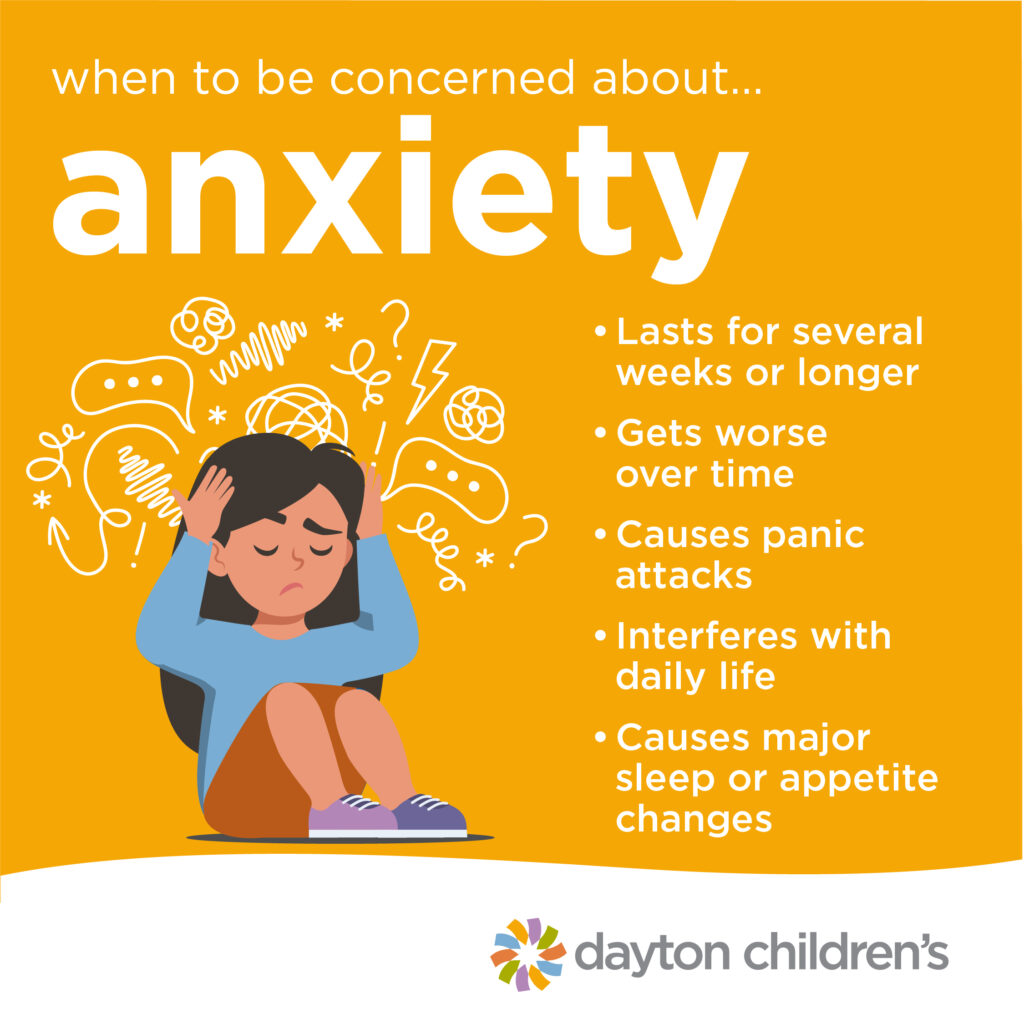
when should you be concerned about anxiety?
It may be time to talk with your child’s doctor or a mental health professional if anxiety:
- Lasts for several weeks or longer
- Gets worse over time
- Causes panic attacks
- Interferes with school, friendships or family life
- Leads your child to avoid normal activities
- Causes major sleep or appetite changes
You should also seek help right away if your child talks about self-harm, hopelessness or wanting to hurt themselves.
Anxiety in children and teens is common, but it should not stop kids from enjoying everyday life. Knowing the signs of anxiety and when to seek help can help families feel more prepared and supported. With the right care and support, children with anxiety can learn healthy ways to manage stress and thrive at home, in school and beyond.
Concerned about your child’s anxiety?
Dayton Children’s Mental Health Resource Connection connects patients and families to available mental health services at Dayton Children’s and in the community. If you’re interested in a referral to the Mental Health Resource Connection, please talk to your child’s primary care provider or submit a self-referral form today.