pediatric residency program
Advance your pediatric career with Dayton Children’s residency combining clinical experience, research and mentorship to shape future leaders.
locally focused, nationally recognized
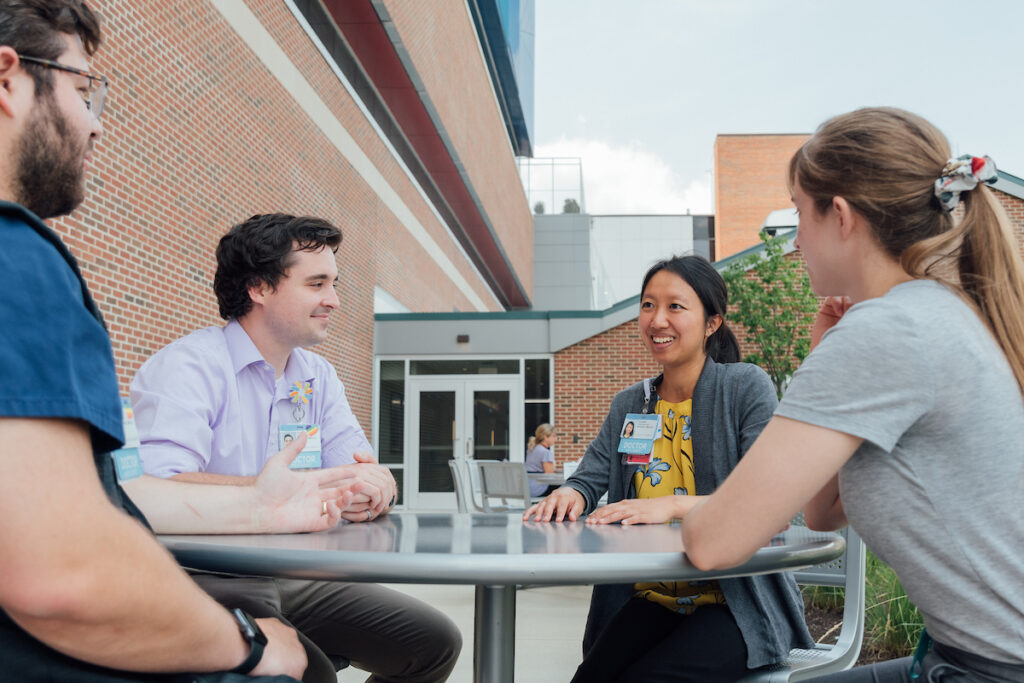
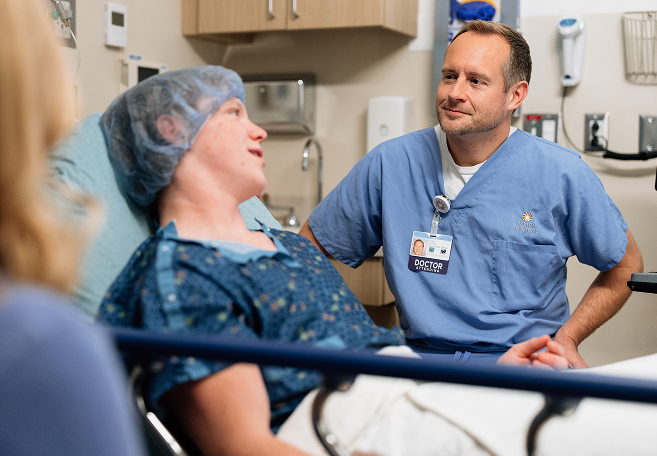
While our pediatric experts are nationally recognized, it’s our specialty in caring for kids locally that truly sets us apart. No one is more committed to the health and wellbeing of the children of our community than Dayton Children’s – and that includes providing support, training and development to the future physicians in pediatric healthcare.

related resources


welcome from leadership
We are so glad you are interested in our pediatrics residency program at Dayton Children’s. Take a moment to read messages from our program director and our pediatrics chair, where each will share a little more about residency life, training and the possibilities open to you as you start your career as a physician.
Thank you for your interest in our outstanding pediatric residency training program here at Wright State University Boonshoft School of Medicine (WSUBSOM). Our program’s home is Dayton Children’s Hospital. We recognize the important decision you have ahead of you in choosing where to train for pediatrics. Welcome and know that you have chosen an exceptionally fulfilling field.
Wright State Pediatrics has some unique strengths. It is a moderate size program — big enough to interact with a wide variety of faculty and peers, yet small enough to easily develop a great support system of mentors and friends. With a faculty of more than 50 academic general pediatricians and greater than 135 pediatric subspecialists, we are able to focus attention on the 48 pediatric residents we train.
Dayton Children’s Hospital is a great place to work. It provides, along with Wright-Patterson Air Force Base Medical Center, a broad and rich experience in pediatrics. We put quite a lot of effort into the details of our program: the competency-based curricula, the evaluation of residents in new and innovative ways, the emphasis on self-reflective learning and the outcomes measures we use to modify our program, to name a few. With a learner-centered approach that fosters the development of each individual resident, we aim to nurture the practice of life-long learning in our residents. We are very proud of our residents and the training program they comprise!
The faculty are committed to your education. An active academic advising system ensures career progression. Mentors help solidify and support the future plans of our residents. Based on outcome and survey data, the training you receive here well prepares you for a career in general pediatrics. Likewise, if you plan on becoming a pediatric subspecialist, you will receive wonderful general pediatric training that will allow you to excel as a fellow. About 20 percent of our graduates each year choose to do a subspecialty fellowship. We have sent our graduates to outstanding fellowships such as University of North Carolina (Endocrinology), Baylor (Pediatric Critical Care), Riley Children’s/Indiana University (Neonatology) and Washington University (Cardiology). Our board passage rate is above the national average. We are recognized nationally for being a strong place to train in general pediatrics.
Most importantly, we are proud of the people here. The atmosphere at Wright State is comfortable, warm, inviting and facilitative. We will help you to develop into a proficient resident and board-certified pediatrician. We will support you through hard times and share your joy in your successes. We believe in a balance between your professional and personal life – an overarching guiding principle in our residency is the wellbeing and flourishing of our residents.
Overall, Wright State is a quality experience in pediatrics training. Resident-friendly and geared towards the learner, we consistently try to evolve and grow the strengths we have. We are here to help in your search for the “right-fit” training program. We hope to meet with you and talk further about our exciting training program here at Wright State University and Dayton Children’s Hospital.
Ann Burke, MD, MBA
Pediatric Residency Program Director
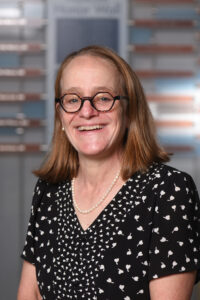
Thank you for choosing pediatrics, and welcome to Wright State University Boonshoft School of Medicine Pediatric Residency program at Dayton Children’s Hospital! It is truly an honor and privilege to be given the opportunity to serve the children in our community. By joining us at Wright State University Boonshoft School of Medicine, Wright-Patterson Air Force Base Medical Center, and Dayton Children’s Hospital, you will work in dynamic, state of the art settings with dedicated faculty in all pediatric specialties and primary care setting who will support you in your preparation for a career in general pediatrics or a pediatric subspecialty. The mission of Dayton Children’s is the relentless pursuit of optimal health for every child within our reach, and it is indeed a blessing to be part of a community that has committed to assuring that the children in our region have access to a world class free-standing, independent children’s hospital close to home. Our affiliation with Wright State University Boonshoft School of Medicine adds to your opportunities for academic success, and professional growth.
Dayton is also a great place to live, with short commutes, a vibrant and growing downtown, an amazing park system, and more bike trails than anywhere in the country. There are very few cities of our size that can boast to having great craft breweries, an outstanding arts scene, and an internationally recognized contemporary dance company. We are a resilient community that is coming together to address the major health and social issues of our time, and look forward to preparing the next generation of pediatricians to meet the challenges and opportunities that the future will bring.
Be a part of our efforts in the relentless pursuit of optimal health for every child within our reach!
Shehzad A Saeed, MD, FAAP, AGAF, NASPGHAN-F
Professor and Chair, Department of Pediatrics

pediatric residency schedule overview
Pediatric residents in our integrated program work at both Dayton Children’s and Wright-Patterson Medical Center. Through work at both locations, residents treat patients from different ethnic, socioeconomic, and geographic settings. Each facility is staffed by a faculty of pediatric generalists and subspecialists who are recruited for their commitment to education. Both sites also provide pediatric training to medical students from the Wright State University Boonshoft School of Medicine and other primary care residency programs in the area. Inpatient rotations, emergency medicine, and most electives take place at Dayton Children’s. Ambulatory care and adolescent months occur at the pediatric clinic at Wright-Patterson Medical Center. Newborn nursery occurs at Kettering Health Main Campus.
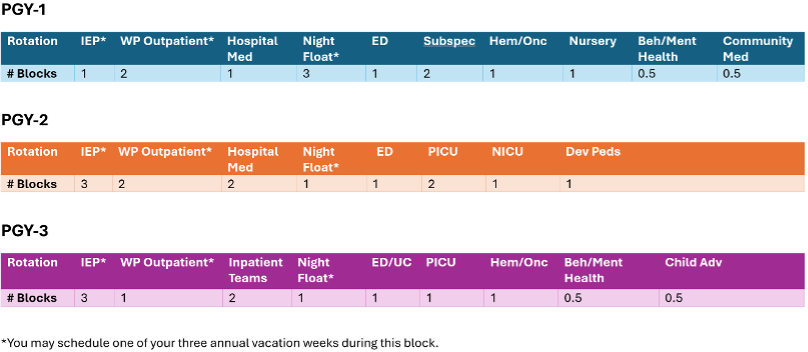
Each resident participates in at least 18 full-day continuity clinics per academic year. The full-day continuity clinic, rather than the traditional half-day, provides an improved focus on patient continuity and clinic-based learning. This provides a special experience for the resident to observe the physical, emotional and intellectual development of a child over an extended period. Our residents are the primary care physicians for both healthy children as well as those with chronic and acute illnesses. The civilian residents’ continuity clinic takes place at the Connor Child Health Pavillion. Military residents’ continuity clinic takes place at the pediatric clinic at Wright-Patterson Medical Center.
Senior residents have the flexibility to create their own electives to meet the needs of their specific learning and career goals. Residents can use this time for research projects, medical education, rotations in private practices and additional subspecialty electives.
A brand-new curriculum focusing on building knowledge, skills, and comfort in areas such as depression, anxiety, ADHD, autism spectrum disorder, normal development challenges, behavioral problems and substance use disorders.
Residents routinely engage in a variety of research and scholarly projects throughout their training including topics in clinical and translational research, medical education, and quality improvement. While completion of a research project is not required, we encourage our residents to collaborate with faculty in original or ongoing projects, especially during elective rotations. Resident scholarly endeavors result in opportunities to present findings at national and regional meetings as well as publication in peer-reviewed journals.
Our program’s desire to facilitate our residents’ scholarly work is exemplified by our yearly Fall Scholarship Day and the Megan Wenker Spring Research Symposium. During Fall Scholarship Day, the state of ongoing scholarly activity by residents and faculty is shared with medical students, residents and fellows. During the Megan Wenker Spring Research Symposium, medical students, residents, and fellows present their completed or ongoing work via poster sessions and platform presentations.
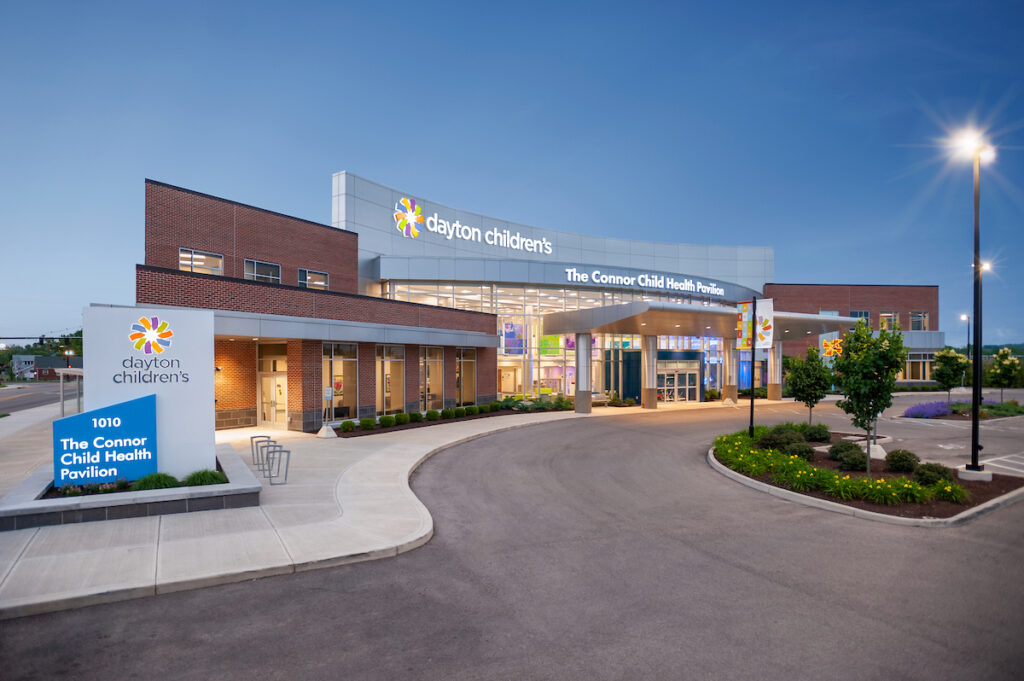
locations you’ll work
Throughout your residency, you’ll work at a variety of locations, including:
education opportunities for residents
Dayton Children’s offers a broad array of educational experiences to help our residents prepare for practicing medicine after residency, as well as achieving successful board certification in pediatrics.
Our educational didactic curriculum is centered around an academic half-day which promotes dedicated, protected learning focused on pediatric board content specifications. Our program has an 18-month rotating curriculum, which allows for a consistent and organized learning pattern. In addition to traditional lectures provided by pediatric generalists and sub-specialists, our program has also incorporated longitudinal and interactive educational opportunities detailed below.
- Acute care symposium – During the first two months of each academic year the academic half-day consists of lectures that introduce the residents to the acute management of issues that they run into during residency and beyond.
- Resident quality improvement curriculum (RQIC) – Throughout the first year, residents attend 10 sessions dedicated to introducing key concepts in Quality Improvement Science. During second and third year, residents have the opportunity to join or lead quality improvement initiatives throughout the hospital.
- Developmental/mental health case series – A longitudinal curriculum to provide residents with the resources and education needed to identify and manage common behavioral and mental health issues in the general pediatric setting.
- NICU bootcamp – Twice a year residents participate in interactive, hands-on conferences on high yield neonatology topics and procedures. Residents rotate through multiple small group sessions led by neonatologists and subspecialists.
- Jeopardy board review – PGY-2 and PGY-3 residents participate in a monthly, 1-hour Jeopardy-style board review session with their class. A resident favorite, this series encourages comradery and education on high-yield board topics.
- Chief-lead longitudinal board review consisting of high-yield topics, often in the form of games.
Our morning report is an informal and interactive 30-minute case-based presentation led by a senior resident or chief resident. It is held at Dayton Children’s every morning except the day of our academic half-day. Attended by inpatient senior residents, residents on electives, medical students, hospitalists, and subspecialists, it is an opportunity for growth of medical knowledge, differential diagnosis building, and critical decision making.
Noon conference is a 1-hour lecture that is held during a provided lunch twice a week. Topics include AAP policy review, resident case conferences, resident morbidity and mortality conferences, mock codes, financial lectures, subspeciality lectures, etc.
A 1-hour morning conference is held every day (except the day of academic half-day) for residents rotating on their ambulatory, newborn nursery, and adolescent blocks at WPMC. Lectures are given by various specialists on base such as child psychiatry, developmental pediatrics, orthopedics, adolescent medicine, ENT, dentistry, chief resident, etc. In addition, residents regularly practice their hands-on skills at the Wright-Patterson Medical Center Simulation Center and in monthly IV and suture labs.
Residents in the continuity clinic participate in a 30-minute lecture on a general pediatric topic. The structured curriculum covers a different topic every week throughout the year.
In May and June of every year, the third-year residents participate in eight half days of dedicated board review given by various generalists and subspecialists. This is protected time and residents are excused from clinic duties during this time.
Every summer, our second and third year residents are given the opportunity to spend a week at Camp Ko-Man-She where children ages 8 to 17 living with Type 1 diabetes get a chance to enjoy a fun outdoor experience with other children like themselves in a safe, medically supervised setting.
Our residents provide the campers with 24-hour health coverage by monitoring glucose, providing subcutaneous insulin injections, managing insulin pumps, and optimizing diabetes regimens (usually required with the increasing levels of activity throughout the week.)
Being at camp isn’t all work! Residents participate along with the campers in various activities including hiking, swimming, archery, horseback riding, arts & crafts, and the low rope course. The residents always love competing in the camp-wide talent show and dancing at the end-of-camp party! It’s a great opportunity to meet some great kids, spend a week outdoors, and learn about diabetes management.
- Grand rounds
- Monthly journal clubs, held on and off campus
- Monthly mock codes
- Courses for PALS, BLS, NRP
- Pediatric fundamental critical care support (PFCCS) – a two-day course that is funded by the program for every resident
- Yearly American Board of Pediatrics In-Training Exam to provide residents with a yearly measurement of their progress and information to help them tailor their educational experiences
prospective military residents
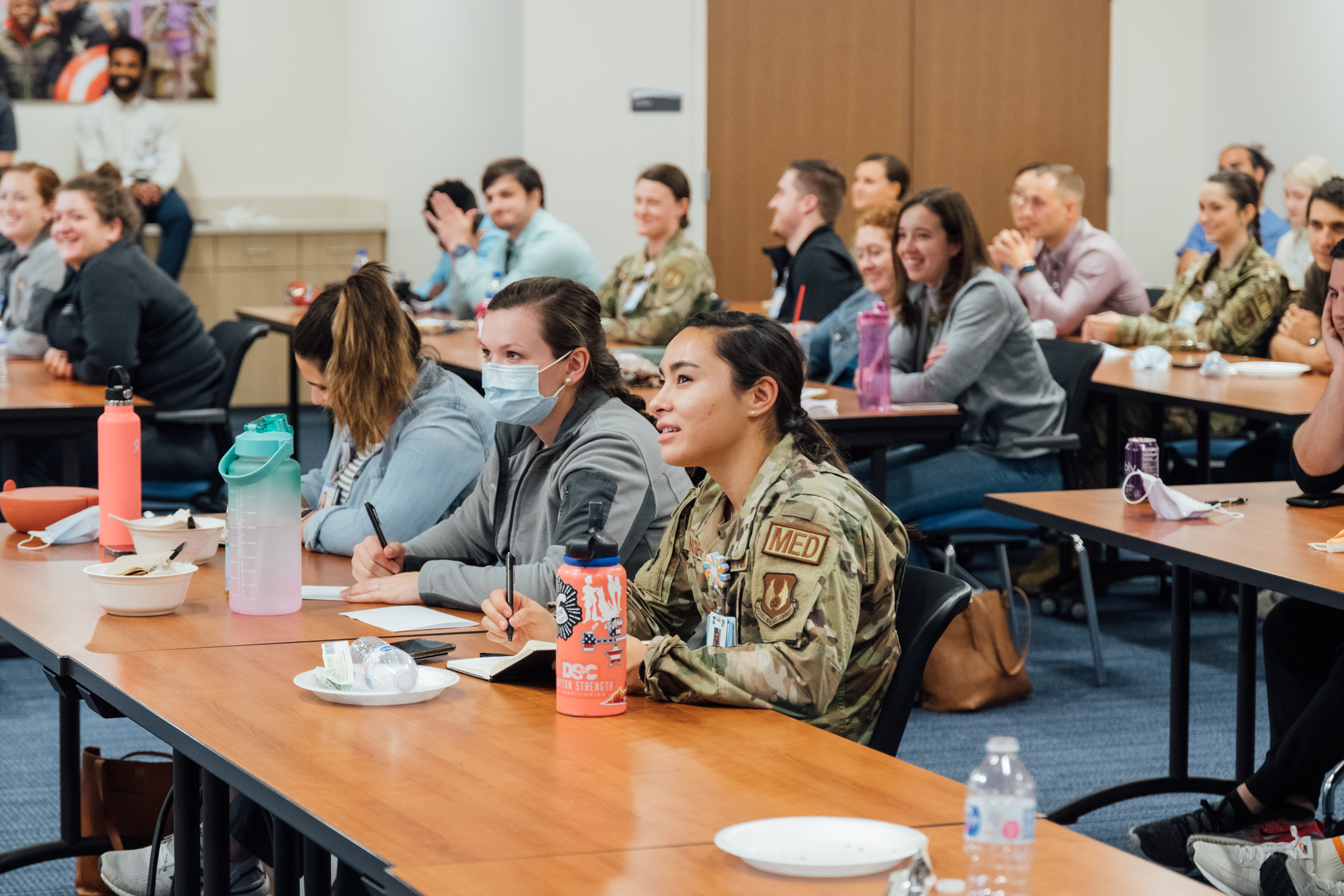
Our program has the distinction of being the only fully integrated military/civilian pediatric training program in the nation. This allows our residents all the benefits of training in a stand-alone children’s hospital while still gaining exposure to the military medical system to develop all the skills that will make you a successful officer and physician in the United States Air Force. Wright-Patterson Air Force Base (WPAFB) hosts the second largest medical center in the Air Force, the Wright-Patterson Medical Center (WPMC.) The newly renovated outpatient pediatric clinic located within WPMC has the second-largest pediatric outpatient clinic in the Air Force and serves approximately 8,000 military children performing over 16,500 encounters last fiscal year.
In addition to the WPMC General Pediatric Clinic, our residents rotate through both the Adolescent Medicine and Development/Behavioral Pediatrics Clinics. The Base also houses the Patient Simulation Center, a state-of-the-art facility hosting high-fidelity patient simulators that offer the ability to practice PALS, NRP, intubation techniques, intraosseous access, and chest tube placement, among other skills. In addition to Wright-Patterson’s mission of training future healthcare providers, the Base’s other missions include aerospace research and development, military intelligence initiatives, and aircraft service and stationing (including Air Force One!)
As residents in a fully integrated program, our military residents have the same curriculum as the civilian residents with a few notable exceptions. For one, the military residents have their primary continuity clinic experience at WPAFB while civilians have their clinic at the Connor Child Health Pavillion. Secondly, program leadership has made medical officer development a priority to ensure that when residents graduate from the program, they are not just exceptional pediatricians, but also model Air Force medical officers. This is done in a variety of ways, including our unique military medical officer orientation course, the military medical humanitarian assistance course, annual visits from the pediatric consultant of the Air Force, regular continuity clinic lectures, and faculty mentorship.
The area is very supportive of the Air Force as WPAFB is the largest single-site employer of civilians in the state of Ohio. There are many restaurants, shops, museums, and events that offer military discounts, creating additional financial incentives to live in this already affordable city! We thank you again for your interest in our residency program.
If you have any questions, including how to arrange a rotation or active-duty tour, or want to schedule an interview, please contact any of the following ways:
Phone: 937-713-0794
Fax: 937-656-3469
Email: dha.wright-patt.wright-patt-88th-mdg.list.wpafb-peds@health.mil
pediatric residency salary & benefits
The stipend for a resident varies by year:
- R1: $67,396
- R2: $69,987
- R3: $72,094
Residents receive the following insurances:
- Professional liability ($1M per occurrence/$3M aggregate) while at Dayton Children’s, Miami Valley Hospital, Kettering Health Medical Center or any other community locations
- Federal tort claims while at Wright-Patterson Medical Center
- Long-term disability and insurance is available for civilian residents
- Health Benefits:
- For civilian residents, hospital subsidized competitive medical, dental and vision insurance are available
- For military residents, TriCare health benefits are available
Residents can enjoy the following benefits to stay fueled during their residency:
- Monthly meal allowance of at least $150
- Access to free snacks and drinks that are stocked in the professional staff lounge, residency lounge and residency workspace
- Lunch is provided during resident didactics, at least three days per week
Residents have the following vacation available each year:
- 21 days
- 5-day holiday break at Christmas or New Years
Residents have 5 days annually to take off for conference attendance or as a dedicated study week each year.
All civilian residents have an allowance up to $1,500 for academic funds. Popular uses for these funds include:
- Professional meetings
- Professional conferences
- Medical books and software
- Medical equipment (stethoscopes, etc.)
- Study aids
Residents receive the following educational resources:
- Paid membership to the American Academy of Pediatrics with subscription to PREP
- Paid subscription to PedsRap podcast
- Copy of Harriet-Lane Pediatric handbook
Residents are appointed as junior resident instructors at Wright State University’s Boonshoft School of Medicine. This entitles the resident to faculty privileges at the university, including access to the library and athletic facilities, plus faculty discounts for software downloads and at the university bookstore.
- Free parking on-site at all locations
- Free Dayton Children’s logowear and white coat, including optional name embroidery
- On-site child care available
- Wellbeing program with many resources for all staff to support your optimal wellbeing throughout residency
- Access to fitness centers at Wright State University, Wright-Patterson Air Force Base and Dayton Children’s
caring for you – residency wellbeing
At Dayton Children’s, we believe your well-being is essential to delivering exceptional care. Our residency culture is built on support, connection, and balance—because caring for kids starts with caring for you. We value each resident as an individual and foster a community where you’re encouraged to lean on your peers, learn from one another and grow together.
Through our program leadership and dedicated employee wellness committee, residents have access to a variety of resources, services and activities designed to nurture emotional, physical, financial, and social wellness throughout your training.

emotional & spiritual
- Vacation time includes a total of 4 weeks, plus study week. Five days are guaranteed during Christmas or New Years.
- Access to mental health resources, including mental clinicians dedicated to our staff.
- Frequent visits by our specially-trained facility dogs.
- Finding Meaning in Medicine program
- Monthly feedback sessions with the chief resident
- Yearly class retreats
- And more!

physical
- Resident intramurals
- Physical fitness challenges
- Organized fitness classes
- Access to Wright State’s, WPAFB’s, and Dayton Children’s fitness centers
- And more!

financial
- Competitive salary
- Free parking available at all Dayton Children’s locations
- Enjoy a food stipend, provided lunches, and resident lounge and workspaces stocked daily with drinks and snacks
- Free financial advising during residency through lectures and connections
- Moonlighting opportunities as a PGY-3
- And more!

social
- Hospital events like Halloween, Superhero Day, etc.
- Resident appreciation week
- Resident Olympics
- Graduation party
- Coordinated monthly social events
- Holiday party and gift exchange
- And more!
life in Dayton
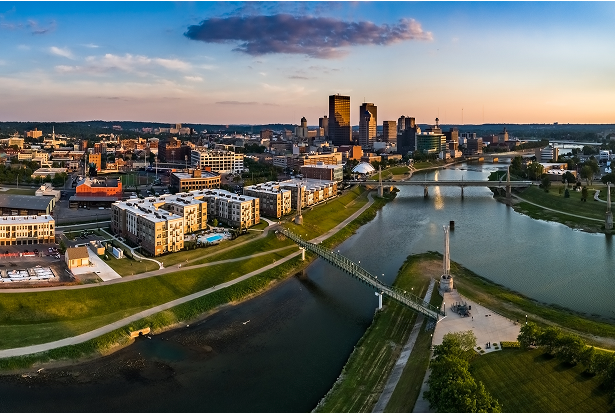
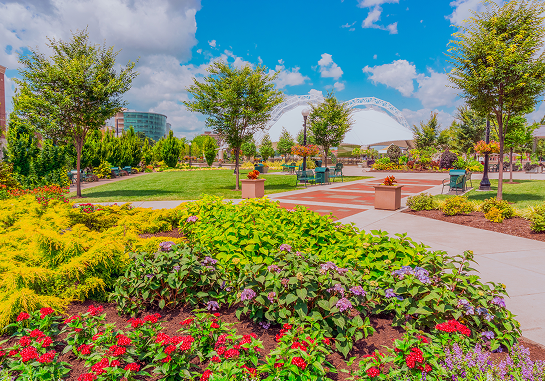
As the birthplace of aviation, Dayton is a city where innovation takes flight, and the quality of life is just as inspiring. The region offers diverse neighborhoods, excellent schools, top-ranked health care and plenty of recreation and culture.
Dayton is consistently ranked among the nation’s most affordable cities, making it a great place to build a career, raise a family, or enjoy your next chapter. Located at the “Crossroads of America,” Dayton’s central location and extensive highway network make it easy to get anywhere you need, from work and school to parks, dining and weekend getaways.
Dayton offers rich cultural experiences, from world-class art to aviation history.
- Dayton Art Institute and Boonshoft Museum of Discovery
- Schuster Performing Arts Center – home to the Philharmonic, Opera, and Ballet
- National Museum of the U.S. Air Force – the world’s largest aviation museum
- Dayton History sites including Carillon Historical Park and Hawthorn Hill
The Five Rivers MetroParks system features 19 parks with:
- Hiking, biking, and fishing
- Children’s gardens and waterfalls
- Family-friendly spaces for picnics and play
Dayton’s food scene has something for every taste — from local favorites to upscale dining. You’ll find hidden gems, family-friendly spots, and unique flavors across the city.
Dayton combines big-name retailers with local shopping experiences.
- Dayton Mall
- Mall at Fairfield Commons
- The Greene and Austin Landing
- 2nd Street Market – a European-style market with local growers, bakers, and artisans
Dayton is a sports town with something for everyone.
- Dayton Dragons – minor league baseball, record-breaking sellouts
- University of Dayton basketball – home of NCAA March Madness First Four
- Wide range of college and community sports events year-round
chief residents
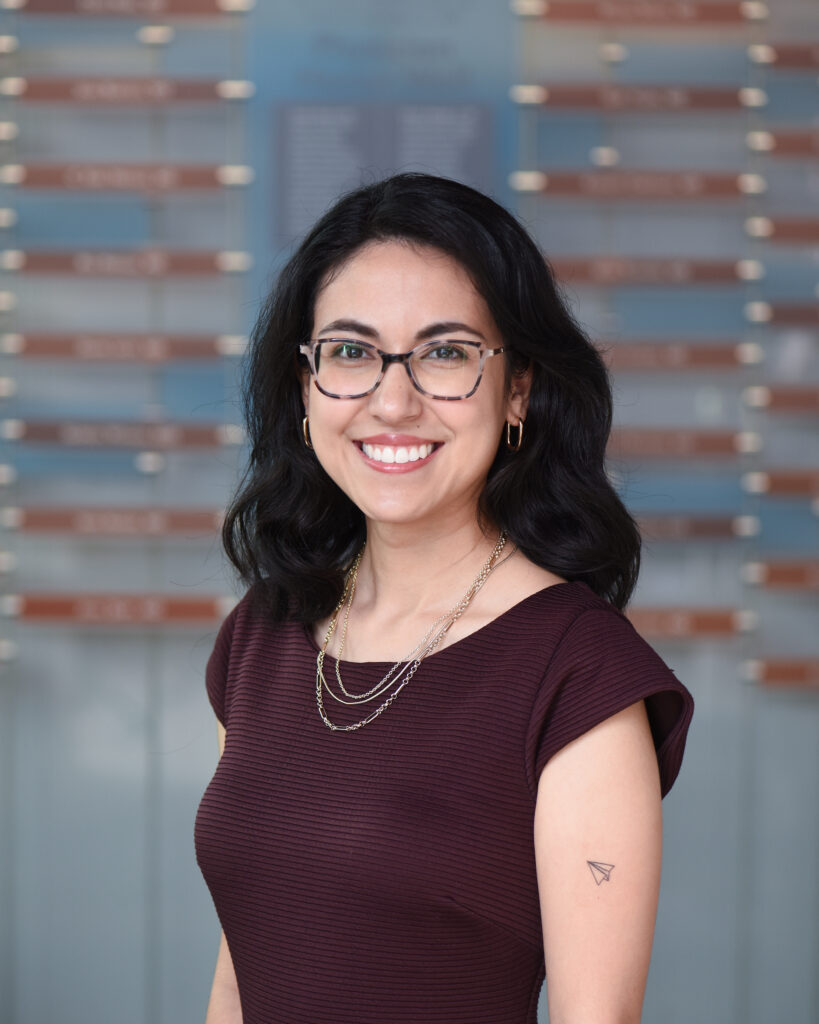
Kyra Bufi, MD
Medical school: Wright State University Boonshoft School of Medicine
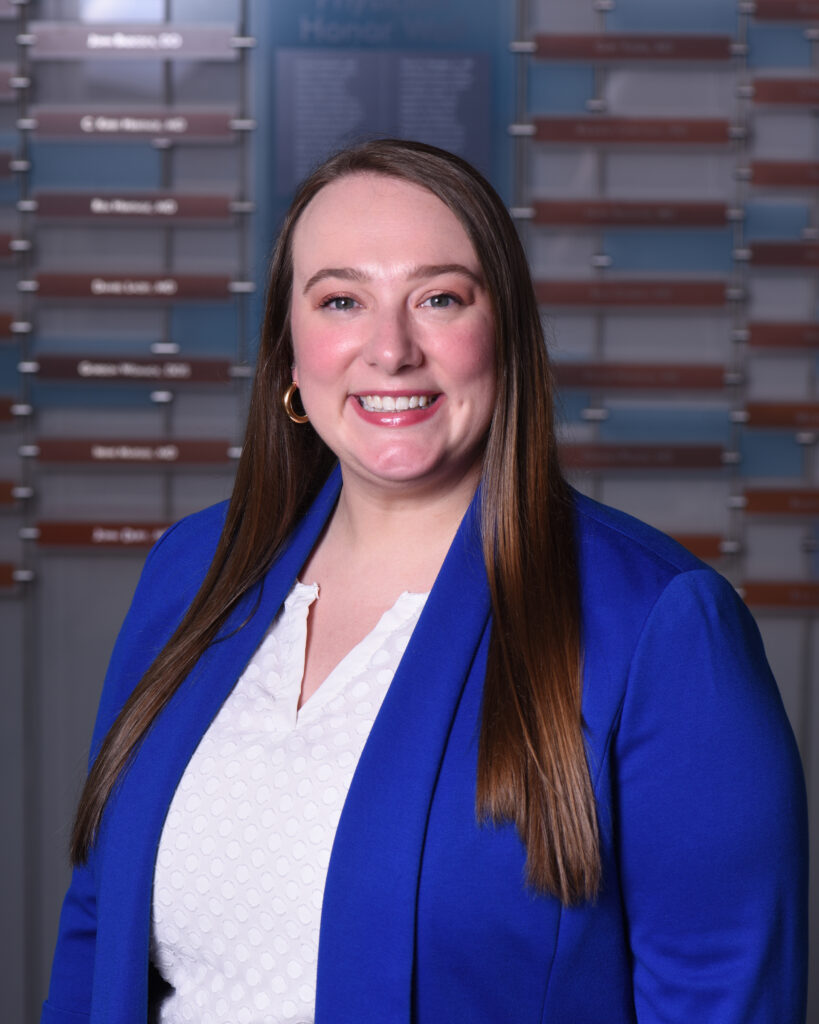
Suzette Grindle, DO
Medical school: Ohio University Heritage College of Osteopathic Medicine
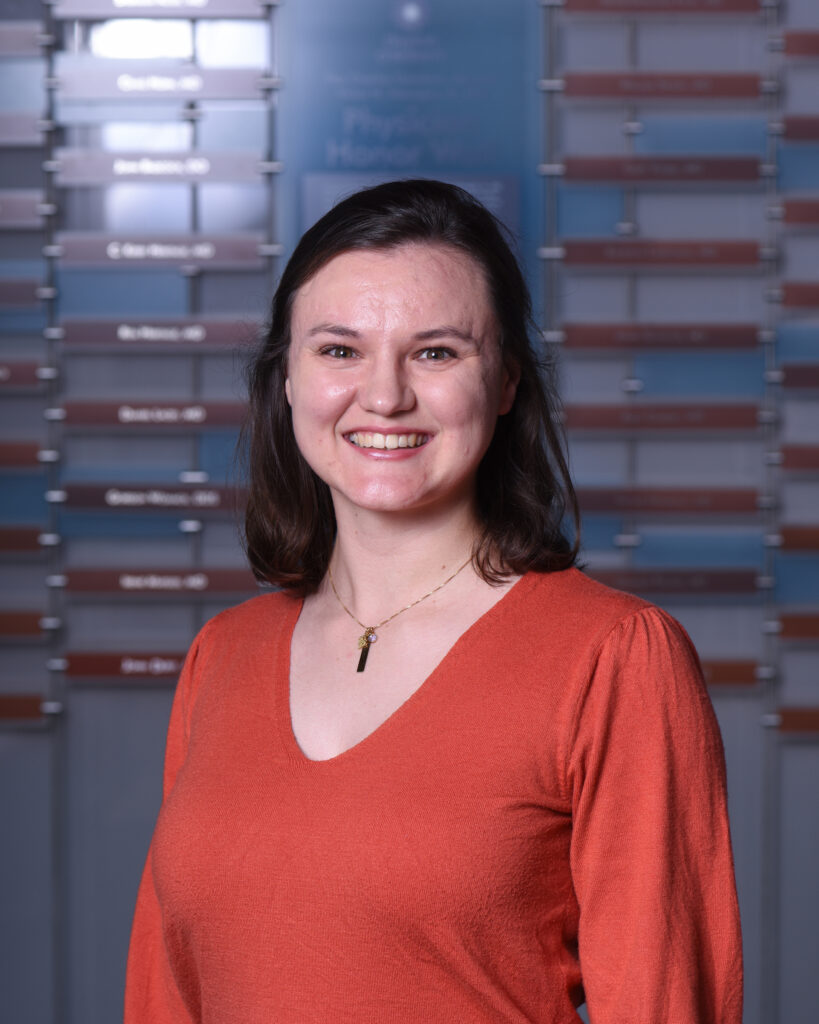
Rachel Patterson
Medical school: Oregon Health and Science University School of Medicine
fellowship matches for our residents
We take pride in being part of our residents’ journey to achieving their goals. Our residents have matched for a variety of fellowships, including the following listed below.
- Children’s Mercy Kansas City (Cardiology)
- Cincinnati Children’s Hospital Medicine Center (Sports Medicine)
- Dayton Children’s Hospital (Pediatric Hospital Medicine)
- Dayton Children’s Hospital (Pediatric Emergency Medicine)
- Duke University (Hematology Oncology)
- Johns Hopkins All Children’s Hospital (Neonatology)
- Joint Base San Antonio (Neonatology, Hematology Oncology)
- Madigan Army Medical Center (Developmental and Behavioral Pediatrics)
- Riley Children’s Hospital (Pediatric Hospital Medicine)
- San Antonio Military Medical Center (Adolescent Medicine)
- San Antonio Military Medical Center (Allergy and Immunology)
- University of California Los Angeles (Hematology Oncology)
- University of Illinois (Pediatric Hospital Medicine)
- University of Louisville (Endocrinology)
- Vanderbilt University Medical Center (Pediatric Critical Care)
application and interview process
Wright State University Boonshoft School of Medicine Integrated Pediatric Program at Dayton Children’s Hospital and Wright Patterson Air Force Base has 51 residents (including our chief residents) with 16 residents per class. Through the National Resident Matching Program (NRMP), approximately eight categorical pediatric appointments are made to the PL-1 class every year. The other eight categorical positions are matched via the military system.
Our program participates in ERAS (Electronic Residency Application Service). As part of your ERAS application, we ask for your USMLE score report, medical school transcript, dean’s letter, personal statement, and three letters of recommendation. The Thalamus system will be utilized for scheduling and virtual interviews.
An ideal candidate would have:
- Finished medical school within the past four years (i.e. not out of clinical practice for an extended period)
- USMLE score above 245 and COMLEX above 520
- Above-average grades
- Permanent U.S. residence, U.S. citizenship or green card holder
- A definite commitment to pediatrics
International medical graduates are welcome to apply through ERAS. The same standards as above apply. We abide by Section 201 of the Wright State University Boonshoft School of Medicine Resident & Fellow Manual (view here) In addition, International Medical Graduates need ECFMG certification.
Virtual interviews will be conducted this application season using Thalamus for scheduling and interview sessions. Invitations will be sent through Thalamus in mid-September, and applications are due by December 1.
questions?
For questions or additional information about the pediatric residency program, contact Robin Green, Manager, Medical Education at 937-641-3433 or greenr2@childrensdayton.org
ready to take the next step?
Join a program that values your growth, challenges your skills and celebrates your calling to care for kids. Discover why Dayton Children’s is the ideal place to train, learn and lead in pediatrics.