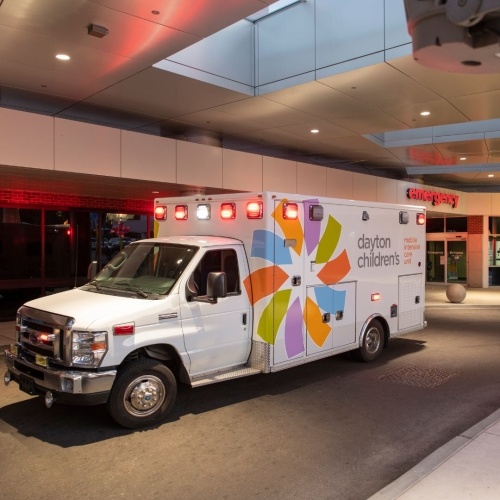
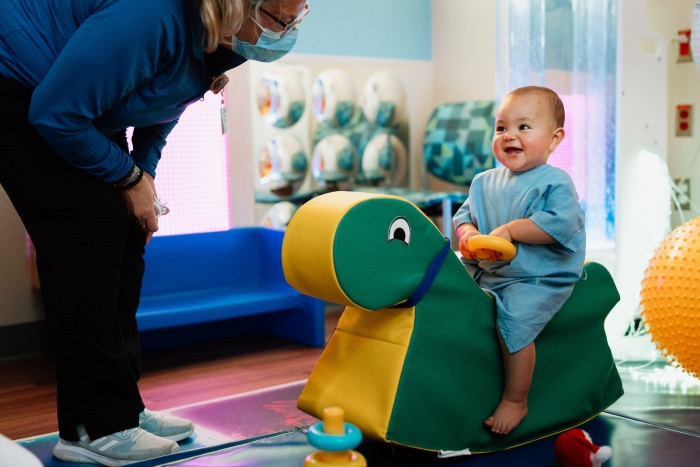
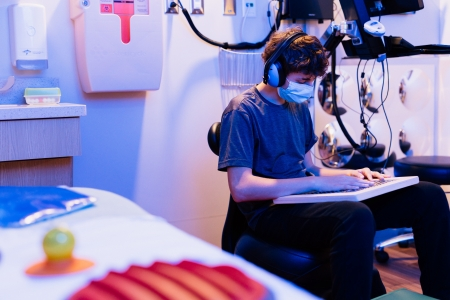
Dayton Children’s has flu shots available and is encouraging everyone 6 months and older to get theirs by October 31 for the best protection. Getting vaccinated at least two to three weeks before flu season starts is key to staying healthy this season.
where to get your child’s flu vaccine
1. Call your child’s pediatrician (always the best option)
2. Kids Express - Beavercreek, Centerville, Springboro or West Chester
4. Xenia Community School students can go to their Dayton Children’s Health Clinic
“We’re excited to offer expanded access to flu shots at Dayton Children’s and our four Kids Express locations, in advance of this year’s flu season.” said Lisa Ziemnik, MD, division chief of Dayton Children’s Kids Express and urgent care.
“We know what matters most to families is keeping their children healthy and having access to the flu vaccine in a way that is quick, convenient and done by caregivers that know kids. We hope families choose Dayton Children’s to get their vaccine this year.”
quick care for minor conditions
If you think your child needs to be seen for a minor condition and you can’t get into your child’s doctor, bring them to Kids Express. Kids Express is the only pediatric-focused retail clinic in the region. Save your spot online before you come and wait from home!
Because every child deserves care that goes above and beyond, Dayton Children’s provides compassionate, expert care for kids of all ages. Find a provider, schedule an appointment, or learn more about conditions we treat today.
measles: what every parent needs to know right now
two points to remember:
Get your child vaccinated. It’s the only proven way to prevent getting measles. Ask your pediatrician to talk through the facts with you.
If you suspect your child might have measles, call before you go to the doctor or the hospital. They will have special protocols to help you get the help you need safely.
At the time of this blog, at least 700 people so far have tested positive for the disease across 6 states, including Ohio – 97% of those infected were unvaccinated, and 70% were age 19 or younger.
You might think measles is just a rash and a fever, but it can lead to other serious problems and is very contagious.
“If someone is exposed to measles and isn’t vaccinated, there is a 90% chance they will get infected. If not vaccinated, measles can cause pneumonia, brain swelling and even death.“
The good news? If you are vaccinated, it is very unlikely you will get the disease even if exposed.
how does measles spread?
Measles spreads quickly through coughing and sneezing and is much more contagious than a cold or the flu.
Measles can stay in the air and on surfaces for up to two hours after an infected person leaves. This means someone can catch measles even without directly being around an infected person!
Because measles spreads so easily, just one infected person can cause an outbreak if people are not vaccinated.
how can I protect my child?
The only proven way to protect your child and the community from measles is by getting the measles, mumps and rubella (MMR) vaccine.
The MMR vaccine is a routine childhood shot given around 12 to 15 months of age and again at 4 to 6 years of age.
Two doses of the MMR vaccine are 97% effective at stopping the disease, but even one dose is 93% effective, according to the Centers for Disease Control and Prevention (CDC).
I thought measles was eliminated? What happened?
Because the vaccine is so effective, if vaccination rates are high we can eliminate measles all together.
In 2000, measles was declared eliminated in the US, meaning that there were 0 cases of measles in 12 months. But measles has been coming back as vaccine rates have decreased.
This is why making sure your child gets their measles vaccine is so important.
Getting vaccinated not only protects your child, but it also helps protect others in the community, especially babies who are too young to be vaccinated.
what are the signs and symptoms of measles?
It’s important to know the signs and symptoms of measles, especially if you aren’t vaccinated.
Symptoms usually appear 7 to 14 days after exposure and can include:
High fever (sometimes over 104 degrees Fahrenheit)
Cough
Runny nose
Red, watery eyes (conjunctivitis)
Tiny white spots inside the mouth (called Koplik spots)
A red rash that starts on the forehead and spreads down the body
If you notice these symptoms, especially if your child hasn’t been vaccinated, contact your pediatrician immediately.
Treating measles when you first see symptoms can make a big difference. People who are vaccinated are highly unlikely to be infected with measles.
it’s not too late to get vaccinated!
Getting your child vaccinated is the only proven way to prevent getting measles. We know there’s some hesitation in getting vaccines. The MMR vaccine is safe and effective.
If you have questions, reach out to your child’s pediatrician. Share your concerns and talk through the facts together.
Vaccination is a simple step that can save lives.
related posts
No posts found.
care that goes above and beyond
Because every child deserves care that goes above and beyond, Dayton Children’s provides compassionate, expert care for kids of all ages. Find a provider, schedule an appointment, or learn more about conditions we treat today.
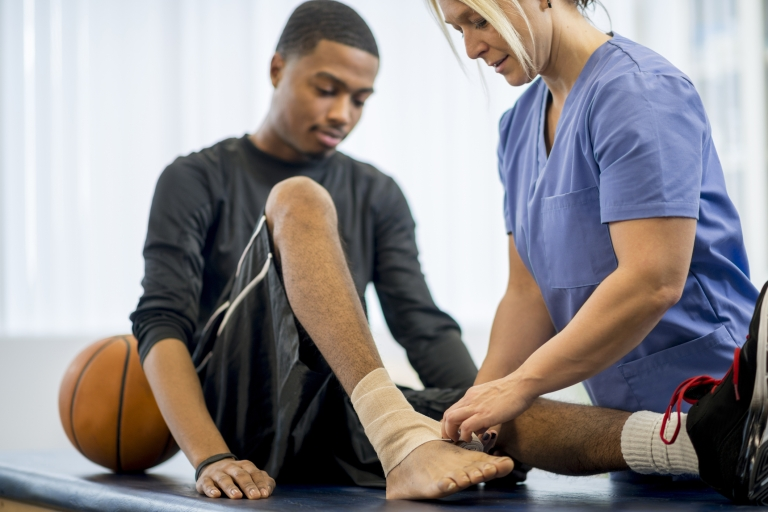
sports injuries in teen athletes: why pediatric care makes a difference
Did you know that kids and teens have unique needs when it comes to growth and development? When an injury happens, it’s natural to want the fastest recovery possible, but seeing a pediatric specialist matters.
From diagnosis to treatment and rehabilitation, Dayton Children’s orthopedic and sports medicine specialists specialize in caring for the whole athlete – physically, mentally and emotionally – so they can get back to doing what they love safely and confidently.
benefits of pediatric care for sports injuries
Teens aren’t just young adults! Children’s bodies continue to grow and develop until they hit puberty, which for some can extend into their early 20s. At Dayton Children’s, we are specially trained to diagnose and treat injuries with a young athlete’s long-term health in mind.
growth plates – a key difference
Growth plates are areas of soft cartilage at the end of long bones. This is where growth occurs. For girls, growth plates are typically fully formed between 13 and 15 years old, but for boys this can continue into their early 20s. Injuries that affect growth plates need a pediatric specialist for a few reasons:
A child’s bones, joints and muscles function differently than those of adults.
If not treated properly, an injury to a growth plate can impact a child’s future growth and development.
Pediatric specialists go through extra training to spot these subtle yet critical differences in growing bones.
nutrition fuels performance and recovery
To play and compete at their best your child should incorporate all players in sports nutrition: offensive and defensive (and leave some players on the bench).
Offensive: Incorporate macronutrients to help your child to be the best athlete they can be. These are things like carbohydrates, protein and heart-healthy fat fuel.
Defensive: Keep your child’s athletic performance strong and prolonged with hydration, vitamins and minerals.
Players to keep on the bench: Stay away from supplements and energy drinks.
When it comes to an athletic event, it’s important for your child’s nutrition to start before the event. Proper nutrition before, during and after supports performance and overall health, while decreasing the risk of nutrient deficiencies, injuries and slowed growth.
Follow this suggested plan for proper nutrition when it comes time for the big competition:
3-4 hours before: Your child should eat a carbohydrate-rich meal before a game or sporting event
30-60 minutes before: Have your child eat a quick snack like fruit with water.
During: Make sure your child stays hydrated! Water, carbohydrate-rich foods and sport drinks that contain electrolytes are important for staying hydrated and keeping their energy levels up.
15-30 minutes after: Your child should have a mix of protein and carbohydrates after a game or practice.
For more information on incorporating all the players of sports nutrition click here.
At Dayton Children’s, we incorporate nutrition into your child’s treatment plan to ensure your young athlete is properly fueled.
mental health is just as important as physical health
While competitive athletes may feel much of their schedule is taken up by their sport, it is crucial they carve out intentional time for routine self-care. This can be as simple as:
Scheduling 5-10 minutes every day to reflect using a journal
Practice mindfulness – it not only boosts your athlete’s outlook, but it also enhances awareness of their emotional and physical wellbeing.
Athletes are just as human as everyone else and require regular maintenance and recovery to reach their long-term goals.
Emotional investment builds resilience: Athletes who prioritize their health find strength in making touch choices, like taking a break from their sport.
Challenges of sitting out: Time away from their sport can lead to frustration, anxiety about falling behind and a sense of lost identity.
Teach self-awareness: Encourage your child to listen to their body and mind.
It’s okay to get help: Taking a break to get help could be the healthiest choice for your child.
Our pediatric orthopedic and sports medicine specialists understand the psychological impact of injuries and provide age-appropriate support to help your child stay engaged and motivated during recovery.
getting your child back in the game safely
The goal isn’t just a quick recovery – it’s a safe and complete recovery. Getting back to the game too soon can lead to re-injury or long-term complications. We work with you and your child to create an individualized treatment plan that prioritizes healing while maintaining strength, mobility and confidence to get them back to doing what they love.
At Dayton Children’s, we don’t just treat injuries – we care for the whole athlete. We believe every athlete deserves care just for them. When it comes to your child’s health, expertise matters.
If an injury happens, we’re here to help. Easily schedule an orthopedics or sports medicine appointment online today.
Because every child deserves care that goes above and beyond, Dayton Children’s provides compassionate, expert care for kids of all ages. Find a provider, schedule an appointment, or learn more about conditions we treat today.
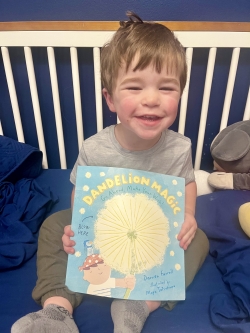
celebrating 5 Years of the Montgomery County Imagination Library
our journey of literacy and community impact
In December 2024, the Montgomery County Imagination Library celebrates an incredible milestone—5 years of delivering the joy of reading to children across our community! Since 2019, the program has partnered with Dayton Children’s Hospital as its affiliate, providing access to high-quality, age-appropriate books to children ages 0-5, completely free of charge.
What began as a vision to improve early childhood literacy has blossomed into a community-wide effort, reaching thousands of families. In the last five years, we’ve seen firsthand how the simple act of receiving a book in the mail can spark a lifelong love of reading in children.
The excitement of opening the mailbox and discovering a new story to share at bedtime is more than just a routine—it’s an opportunity for families to bond, create lasting memories and build a foundation for future learning success.
the power of books for kids
The impact of the Imagination Library is undeniable. Research has shown that early exposure to books helps develop critical language and cognitive skills in young children, preparing them for kindergarten and beyond.
For many families, this program has made books more accessible, bridging the gap for children who might not have easy access to reading materials at home.
Over the past five years, our program has distributed thousands of books, helping children grow their home libraries, one book at a time. Families like Andrew Spoon’s have expressed how much the program has enriched their lives.
“Receiving books from the Imagination Library program has been such a blessing to my little family,” shares Andrew.
“My son, Odin, loves checking the mailbox for his Dolly books, and the countless memories we’ve shared reading together at bedtime are truly priceless.”
looking ahead as a community
As we celebrate this milestone, we’re also excited for what the future holds. Our goal is to continue expanding our reach, ensuring that every eligible child in Montgomery County has the chance to participate in the Imagination Library.
But we can’t do it alone. As a community, we rely on the generous support of donors, volunteers and partners who believe in the power of books to shape a child’s future. To help us mark this special occasion, we invite you to join us in continuing this mission. Your donation to the program through the Dayton Foundation helps us deliver books to more children for years to come. For just $66, you can provide a child with books for 5 years—an investment that will spark a lifelong love of reading and learning.
As we reflect on the past five years, we want to express our deepest gratitude to the families, community partners and donors who have made this journey possible. Together, we’ve helped build a brighter future for the children of Montgomery County, one book at a time.
Here’s to many more years of fostering a love of reading and making a lasting impact in our community. Thank you for being a part of this incredible journey!
Because every child deserves care that goes above and beyond, Dayton Children’s provides compassionate, expert care for kids of all ages. Find a provider, schedule an appointment, or learn more about conditions we treat today.
what to do while waiting for your child’s first gastroenterology appointment
10 tips to help prepare
If your child is suspected of having a gastrointestinal (GI) issue, you may be eager to see a gastroenterologist and get an evaluation. Waiting for the first appointment can be stressful, but there are things you can do to help manage your child’s symptoms and make them more comfortable.
1. Keep a symptom journal: Track your child’s symptoms, diet and anything else that seems important. This will help the gastroenterologist understand what’s happening and identify any patterns.
2. Encourage a balanced diet: Offer gentle, easy-to-digest foods and avoid anything that seems to trigger symptoms. Pay attention to how certain foods affect your child.
3. Ensure they stay hydrated: Make sure your child drinks plenty of fluids, especially if they’re experiencing diarrhea.
4. Monitor medication and supplements: If your child is taking any medications or supplements, keep a detailed list of them, including doses and any side effects.
5. Adjust activities as needed: Encourage your child to listen to their body and rest when needed. Avoid pushing through fatigue or discomfort.
6. Help reduce stress: Introduce relaxation techniques such as deep breathing exercises or gentle activities like walking to help ease anxiety.
7. Create a comfortable environment at home: Make your child’s environment as comfortable as possible. This could include easy access to the bathroom, cozy resting areas and favorite comfort items like books or toys.
8. Stay in touch with your primary care provider: Keep your child’s primary care provider updated on their condition. They can help manage symptoms while you wait for the gastroenterology appointment.
9. Prepare for the appointment: Write down any questions or concerns you have so you’re ready to discuss them with the gastroenterologist.
10. Know when to seek immediate care: If your child experiences severe pain, significant weight loss, or other serious symptoms, don’t wait for the appointment – seek emergency medical attention.
By taking these steps, you can help support your child while you wait to see the gastroenterologist.
Still need to make an appointment? Use our online scheduling tool to choose a date and time that works best for you!
Because every child deserves care that goes above and beyond, Dayton Children’s provides compassionate, expert care for kids of all ages. Find a provider, schedule an appointment, or learn more about conditions we treat today.
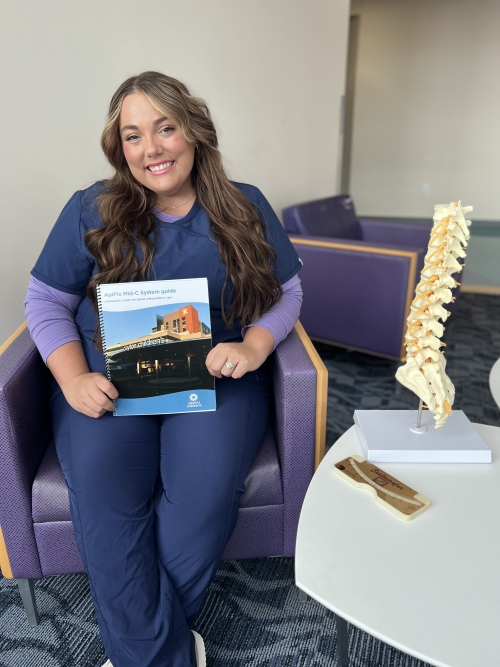
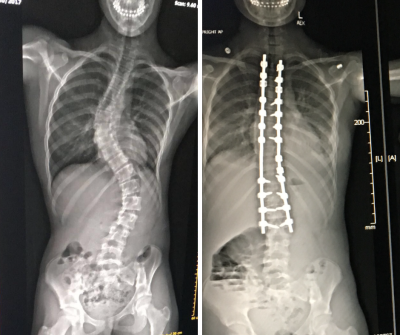
We specialize in all types of treatment for scoliosis, including innovative surgical techniques like ApiFix and the BandLoc spinal procedure. And, helping us care for these patients is Taylor Powell, spine nurse navigator.
Taylor serves as an educator and liaison throughout a patient’s entire spine surgery journey. This position is unique to our program and sets us apart from other scoliosis programs.
We sat down with Taylor to learn more about her role on Dayton Children’s spine team.
What is your role on Dayton Children’s spine team? I am the spine nurse navigator here at Dayton Children’s. My job is to help make your spine surgery journey above & beyond your expectations! I am here to help support you, guide you, educate you, and prepare you & your family for upcoming spine surgery.
How do you work with patients/families that have spine surgery at Dayton Children’s? Once the decision is made that a patient needs spine surgery, that is when I become part of their care team! I will call and introduce myself to the family and create a care plan with them to ensure all clearances, imaging, and appointments are completed before surgery to verify they are in their best shape for surgery. Then, I will have them come in for a pre-op teaching appointment with me where we discuss education that pertains to pre-surgery, surgery day, inpatient stay and post-operative care.
I give them a tour of the unit they will be going to after surgery and make sure they feel confident for surgery day. After surgery, I follow them every day while they are in the hospital and will visit them during their stay.
When they go home, I call and check in with them to make sure they are doing okay and review care details. My favorite part of my role is the relationship I build with my patients and their families.
“I am their advocate and liaison throughout their entire spine surgery journey and I get to watch how resilient they are!”
It means so much to me to see my patients recover and get back to their daily activities. I am always there to answer questions, help navigate any problems, and cheer them on.
What is something you want your colleagues and the community to know about the spine team at Dayton Children’s? The Dayton Children’s spine team is here for YOU! Everything we do is patient-centered and is designed to ensure that our patients have the best possible outcomes. We truly care about our patients and their families during what can be a scary time for them and always strive to give them the best possible care and experience they can receive.
I am so lucky to work with incredible, compassionate physicians who are committed to always going above and beyond for our kids. Our spine team is innovative and always improving our practice to ensure we bring in the latest and most relevant treatment for scoliosis.
I am truly so proud of our team and care we provide!
make an appointment with our spinal and scoliosis program
Few pediatric hospitals see as many pediatric patients with scoliosis and other spinal conditions as the orthopedic center at Dayton Children’s.
We specialize in all types of treatment for scoliosis and other spinal problems, including non-surgical and minimally invasive.
Our doctors are at the forefront of cutting-edge research and innovation, including being involved in the early development of ApiFix and BandLoc spinal surgery.
Because every child deserves care that goes above and beyond, Dayton Children’s provides compassionate, expert care for kids of all ages. Find a provider, schedule an appointment, or learn more about conditions we treat today.
the anesthesia team behind the “connected” documentary
One of the most critical aspects of any surgery is anesthesia. Putting kids asleep and ensuring they stay asleep through surgery and wake up safely is a delicate balance that the anesthesiology team at Dayton Children’s manages each day with surgery patients.
The anesthesiology team at Dayton Children’s prepares for and treats each child and their unique needs. For Pedro and Augusto, the same rules applied.
All of the anesthesiologists at Dayton Children’s are pediatric board certified and only take care of children. Children have very different physiology as they grew from infants to adults. Therefore, they need an anesthesiologist who is trained in their special needs and how their bodies react differently to medications typically used during surgery.
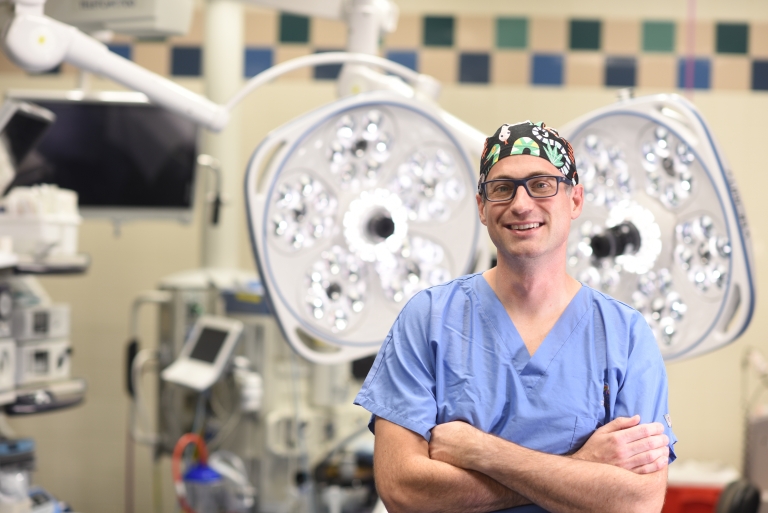
Once the team knew the boys were coming to Dayton for surgery, the preparations began. We sat down with Dr. Sean Antosh, MD, pediatric anesthesiologist and lead for all things anesthesia when it came to the twins, to learn more about his approach for this case.
Tell us about the team involved in Pedro and Augusto’s care.
There was a dedicated team of six anesthesiologists and four nurse anesthetists who donated their time for the cases. The team rotated from case to case and I lead the team for every anesthetic.
Teams were always separated by blue and grey, to make sure we had a dedicated team per twin. We needed to have two anesthesia setups for every anesthetic, to include ventilators, medications, medication machines, etc. Additionally, we always had to be prepared for emergency separation if there was an issue where one or both twins needed resuscitation.
What planning did you have to do prior to the surgeries?
The team planned for more than a year through extensive literature review of previous craniopagus twins and their anesthesia management.
We also discussed with colleagues at other institutions about how they have taken care of similar patients in the past.
How was medical imaging involved?
We created detailed step-by-step plans to walk through the anticipated course of events. We also conducted multiple practice sessions for each imaging study due to changes in location and setups.
During the first several anesthetics, we tested how long it took for a medication given to one twin to reach the other twin. This allowed us to determine the extent of the blood connection between the two and how each affected the other’s anesthetic.
How did you practice in case of an emergency?
At the core of our training were departmental and hospital wide mock codes to practice resuscitating the twins in case of an emergency.
A new “code blue double” was developed to notify the team that a code blue requiring more resources than typical was occurring. Specific color-coded team member role stickers were developed to facilitate the resuscitation of the twins and throughout the twin’s hospital stay, two defibrillators were always available at bedside, in case they were needed.
What was involved when it came time for surgery?
We always started anesthesia with blue twin (Augusto) to go off to sleep, followed by grey twin (Pedro). Each team worked independently; however, we were in constant communication with one another.
Pedro’s blood pressure was always lower than Augusto’s, so we had to be cognizant of the level of anesthesia for Pedro. Additionally, we were always prepared for massive transfusion of blood products for both boys – which required constant communication and collaboration with the blood bank.
For the final separation, we had a rotating schedule which was extended for 72+ hours. Due to the critical nature, we had anesthesiologists in the operating rooms overnight to provide care even though surgery was not underway.
Because every child deserves care that goes above and beyond, Dayton Children’s provides compassionate, expert care for kids of all ages. Find a provider, schedule an appointment, or learn more about conditions we treat today.
Dayton Children’s releases documentary following the unprecedented separation surgeries of exceptionally rare conjoined twins
Boys beat the odds time and time again to be separated in a two-year, multi-surgery process
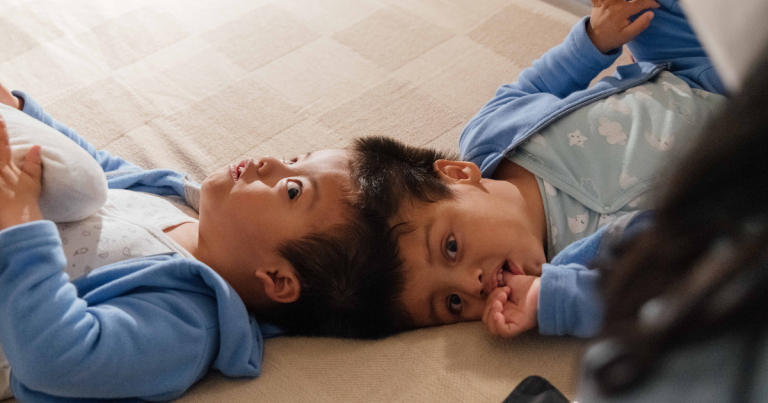
In a groundbreaking, unprecedented series of surgeries, twin boys joined at the head were separated successfully.
This type of connection is one of the rarest conditions; this surgery greatly enriches the slim body of knowledge available on successful separation for this condition.
Extensive collaboration and planning helped give these boys the chance at more fulfilling and enriching lives.
Dayton Children’s Hospital premieres the hour-long documentary connected: the seemingly impossible separation of Pedro and Augusto, that follows the separation journey of the conjoined twins.
The 5-year-old boys came to Dayton Children’s in July 2021 joined at the top of the head with a 90 degree turn, classified as craniopagus O’Connell class III.
The condition is incredibly rare with an estimated 50 craniopagus twins born every year, with only an estimated 15 of those surviving more than a few months. The boys were separated over the course of two years and four major surgeries and returned home to their native country of Guatemala in June 2023.
“While we all fell in love with Pedro and Augusto during their time here, we are excited for them to return to their home country and culture,” says Ben Goodstein, vice president and chief ambulatory officer. “We will continue to keep an eye on them as their recovery process continues and enjoy their bright future ahead.”
The documentary chronicles the two years that surgeons and staff spent preparing and executing the series of separation surgeries for this rare and complex condition.
The documentary was produced and directed by Flyback Productions, a Chicago-based production company.
watch the trailer
“There is very little research or practical knowledge in medical literature about how to separate craniopagus twins, especially those who are connected at this angle,” says Robert Lober, MD, PhD, pediatric neurosurgeon for Dayton Children’s. “This documentary shows the real, sometimes overwhelming process of preparation, discovery and decisions that we went through for these boys, hopefully helping others born with this condition in the future.”
“While we prepared diligently, there were still surprises,” says Christopher Gordon, MD, chief of craniofacial and plastic surgery at Dayton Children’s. “Through it all, the boys were incredibly strong and their safety was our utmost concern.”
“The boys will steal your heart with their sweet giggles and dance parties,” says Elise Huntley, certified child life specialist. “They were incredibly strong – and sassy!”
the separation
Less than a third of craniopagus twins survive the first 30 days of life. Pedro and Augusto proved strong in beating those odds, but they were already starting to show signs of medical distress from sharing blood, brain and body functions.
Their family prayed for a way they could be separated, but it didn’t look likely. There have been very few surgeries on this type of connection and very little data available to gauge the likelihood of a successful separation.
After extensive testing, study and review, Drs. Lober and Gordon determined separation would be possible in a series of surgeries. The Dayton Children’s board of trustees agreed to the humanitarian effort that brought the boys to Dayton.
After two years, four surgeries and help from more than half a dozen organizations, the boys were officially separated at 5:43 am on April 8, 2022.
our deepest gratitude
Dayton Children’s thanks the world-class staff who dedicated their skills, minds and hearts to Pedro and Augusto. Our deepest gratitude also goes to the organizations without which this surgery would not have been possible:
Kettering Health Network
Hospital Roosevelt, Guatemala City
The Connor Group
3D Systems
Hologic
Hope for Home Ministries
The boys begin the next chapter of their lives back home in Guatemala as separate individuals but remain connected to the lives they touched here.
“Pedro and Augusto are forever in our hearts and will always have a second home in Dayton,” says Deborah A. Feldman, president and CEO for Dayton Children’s.
conjoined twin fast facts
The type of connection, the degree of connection, the sex of the children and their age at the time of the surgery make this one of the rarest separation surgeries in the world.
Only an estimated 50 craniopagus conjoined twins are born every year. That’s 5% of all conjoined twins. Normally only 15 live longer than a month after birth
Because every child deserves care that goes above and beyond, Dayton Children’s provides compassionate, expert care for kids of all ages. Find a provider, schedule an appointment, or learn more about conditions we treat today.
Do you ever ask yourself, “How do I motivate my teen?” Or maybe you’d say your teen is plenty motivated – to spend as much time as possible playing video games and to avoid undesired tasks like cleaning their room! Maybe you’ve tried offering incentives like hanging out with a friend, or maybe you’ve tried taking away privileges, like screen time.
Although these strategies can help short-term to increase motivation, it’s likely not kept up over time. This may be because teens go through a developmental shift from being motivated by external sources to being motivated by internal sources. What does that mean?
External sources: Things like extra allowance, access to the family car, screen privileges
Internal sources: Becoming good at something, achieving milestones related to future goals
External rewards will give your teen some momentum and are a starting point. But, they likely will not sustain motivation in the same way that internal sources will.
In other words, how do I get my teen to want to do better for themselves?
Talk with your teen to find things they’re interested in and explore those. For example, maybe your teen’s school performance leaves something to be desired, but they want to go to a certain college. To help create internal motivation, you and your teen may meet with admissions from that college. They learn the GPA and course requirements for admission, and know that they have to achieve those to be accepted into that school. That desire to achieve their goal of being accepted is intrinsic motivation.
Set up your teen to experience positive learning experiences and successes. During the teenage years, executive functions are still developing. These executive functions play a large role in long-term motivation. Help increase self-motivation and influence further brain development by:
Recognizing your teen’s strengths
Relate current information to personally relevant material and situations
Set achievable goals that allow your teen to see progress. For instance, teens required to read a book each month can divide the number of pages over 20 days, write the pages on a chart and mark them off each day to observe their progress. Recognizing and seeing progress may help to increase your teen’s perseverance.
Balance necessary tasks with exploring personal interests. Help your teen find purpose in doing the “mundane” things they have to do, like doing chores or getting a job. Earning a paycheck is an external motivator. But also encourage your teen to explore their interests. This will help them develop a sense of independence and be more of an internal motivator.
Allow teens to set time to accomplish goals and responsibilities. Allowing teens to manage their time shifts the responsibility from parent to teen. Parents can provide specific expectations about what needs to be completed and a deadline for when it must be done. As teens demonstrate increased responsibility, they can be rewarded with additional desired privileges.
Make room for open discussion. Explore with your teen other factors that might be impacting their motivation or perseverance. Encourage conversations about the possibility of depression symptoms, bullying and academic or extracurricular pressures. Provide support, if needed, in these situations. Consider scheduling with a therapist if it seems like there is something underlying your teen’s low motivation.
By allowing your teen more autonomy, setting achievable goals that result in positive learning experiences, connecting current demands with their personal interests and shifting the responsibility from parent to teen, you may help your teen experience a renewed sense of motivation and perseverance!
Because every child deserves care that goes above and beyond, Dayton Children’s provides compassionate, expert care for kids of all ages. Find a provider, schedule an appointment, or learn more about conditions we treat today.
our sensory program sets the gold standard for patient care
Did you know that Dayton Children’s has a sensory program for children who need a surgery or procedure?
What started as a program specifically for children with autism spectrum disorder, has expanded to assisting all children who have special needs and higher anxieties around coming to the hospital for a surgical procedure.
Surgery can be scary for any child, but it is especially traumatic for children with special needs. Some children may not understand what’s going on which can cause them to act out and become very irritated.
In the past, the answer to this was to provide a pre-surgery calming medication to help the child cope. But today we have different options!
so how do we combat this without medication?
In 2017, 90% of children requiring surgery at Dayton Children’s required pre-surgery calming medication prior to the implementation of our sensory-friendly surgery experience.
A team of Dayton Children’s employees led by pediatric anesthesiologist, Sean Antosh, MD, knew that there was a better way to meet the needs of these children without resorting to medication. Together they found a way to create a more relaxed, sensory friendly environment to soothe and distract kids before surgery, by creating our pre-op sensory-friendly rooms!
These rooms may include:
Sensory rover that includes fiber optics appealing to touch, a water feature appealing to sight and more
Projectors that can display a child’s favorite calming remedy (i.e., fish in the ocean)
Quiet with low lighting
Color mood lighting through a marble LED wall and wall light tiles
Fidget objects for children that are hyperactive
Liquid color changing floor tiles to walk on and explore
Bouncy chairs and floor cushions
White noise machines
Personal headphones
Weighted blankets
“Our sensory program for surgical patients has really evolved over the last six years,” Dr. Antosh explains.
“By creating a sensory-friendly experience for kids before surgery, it removes triggers and allows kids to feel more comfortable and calmer while the medical team prepares them for surgery.”
Dr. Anotsh goes on to explain, “the perioperative staff has been extensively trained in the needs of those with sensory processing issues and how to best accommodate the care we give on a daily basis.”
Click the video below to watch our sensory room in action
how does the program work?
During our routine call before surgery, the scheduler will ask you a series of questions to determine if your child is a candidate for our sensory friendly pre-operative room.
If the room is determined necessary, one of our child life specialists will reach out to develop a coping plan that is specific to your child!
5 benefits of the sensory program:
Reduction of pre-surgery calming medication
Quicker recovery times
When patients are calm going into surgery, they typically wake up calm after surgery
Parents feel more at ease bringing their special needs child in for surgery
Patients are able to overcome their fear of coming to the hospital
Since the start of our sensory program in 2017, the experience has helped reduce the amount of pre-surgery calming medicine from 90% to 20% of patients.
We have also been able to expand the sensory program to other areas of the hospital including in our lab and imaging department, our south campus surgery center, as well as offer the experience to kids with other special needs and higher anxieties coming to the hospital.
national recognition
In 2021, Parent’s Magazine named Dayton Children’s as one of top 15 children’s hospitals in innovation and technology for our sensory program.
Parents are in awe of how we are transforming care for their child with sensory needs.
One mom said, “We walked in and immediately felt more at ease. The lights were turned down low. There was a projection of fish on the wall. They had a fiberoptic bubble machine. There were markers for Declan to color on the bed. Basically, anything they could do to help Declan not think about being at the hospital.”
If you think that your child may benefit from a sensory friendly surgery experience, please let the scheduler know during your pre-operative call.
Because every child deserves care that goes above and beyond, Dayton Children’s provides compassionate, expert care for kids of all ages. Find a provider, schedule an appointment, or learn more about conditions we treat today.
To provide the best experiences, we use technologies like cookies to store and/or access device information. Consenting to these technologies will allow us to process data such as browsing behavior or unique IDs on this site. Not consenting or withdrawing consent, may adversely affect certain features and functions.
Functional
Always active
The technical storage or access is strictly necessary for the legitimate purpose of enabling the use of a specific service explicitly requested by the subscriber or user, or for the sole purpose of carrying out the transmission of a communication over an electronic communications network.
Preferences
The technical storage or access is necessary for the legitimate purpose of storing preferences that are not requested by the subscriber or user.
Statistics
The technical storage or access that is used exclusively for statistical purposes.The technical storage or access that is used exclusively for anonymous statistical purposes. Without a subpoena, voluntary compliance on the part of your Internet Service Provider, or additional records from a third party, information stored or retrieved for this purpose alone cannot usually be used to identify you.
Marketing
The technical storage or access is required to create user profiles to send advertising, or to track the user on a website or across several websites for similar marketing purposes.