As you start the school season, you may notice your child is having more trouble pooping. You’re not alone. Here are some tips to help your child feel more comfortable, whether at school or in other settings
why won’t my child poop at school?
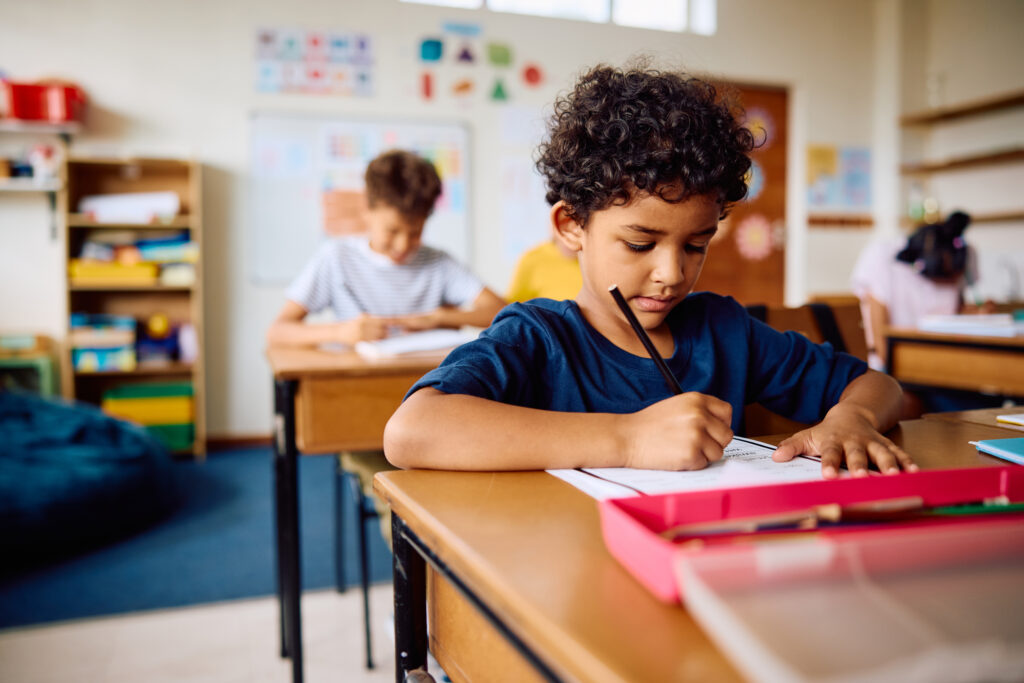
Your child could be nervous about pooping at school for these reasons:
- Bathroom anxiety – Public or shared bathrooms can feel overwhelming. Lack of privacy, noise or fear of teasing can make kids nervous to poop during school.
- Not enough time – Rushed schedules, short bathroom breaks or limited teacher permission mean kids often do not have enough time to relax and go.
- Lack of routine – Pooping is often tied to home routines – after breakfast, after sitting on the toilet. School disrupts that natural rhythm.
- Poor bathroom conditions – Dirty stalls, lack of toilet paper or automatic flushers that startle kids are common reasons for avoiding the school bathrooms.
how are my child’s brain and body connected?
It’s important to know what can trigger the body’s stress response. We often talk about stress in terms of how we think and feel emotionally, but the body makes sense of it more broadly. Being worried about pooping at school can trigger a stress response, which can lead to physical problems. When we think about controlling the stress response in the body, we want to think about healthy habits the body needs to work well, as well as taking care of our emotional and social stress.
how can I help my child feel more comfortable pooping?
- Normalize pooping – Let your child know that everyone poops, including teachers and classmates.
- Problem solve – Help them determine the cleanest or least busy bathrooms.
- Set up a morning poop – Give a cup of warm liquid, then 5-10 minutes of relaxed toilet time before leaving for school.
- Pack fiber and hydration into lunch – Send a water bottle and remind your child to drink throughout the day. Dehydration can cause pooping to be harder. Pack things like fruits and whole grain bread to help keep poop soft.
- Talk to the teacher – If your child is struggling, ask the teacher to allow flexible bathroom breaks. Many teachers understand once they know it is a medical issue not a behavioral issue.
when do I need to seek medical help for my child?
In rare cases, constipation can be caused by a larger physical problem. If your child is experiencing any of these symptoms, call your primary care provider. If they are not available, consider a visit to the urgent care or the emergency department:
- Fever (constant high fever)
- Blood in the stool
- Vomiting blood or dark green fluid – this may need an emergency department visit
- Swollen stomach
- Pain when the stomach is touched
- Pain in groin or testicles
- Pain or burning with urinating