This guide will provide you with youth sports coaching tips on preventing injuries, avoiding burnout and promoting a positive environment where your players can thrive. Together, we’ll help you feel confident and ready to lead your team to success!
injury prevention, first aid essentials and tips on leading a team
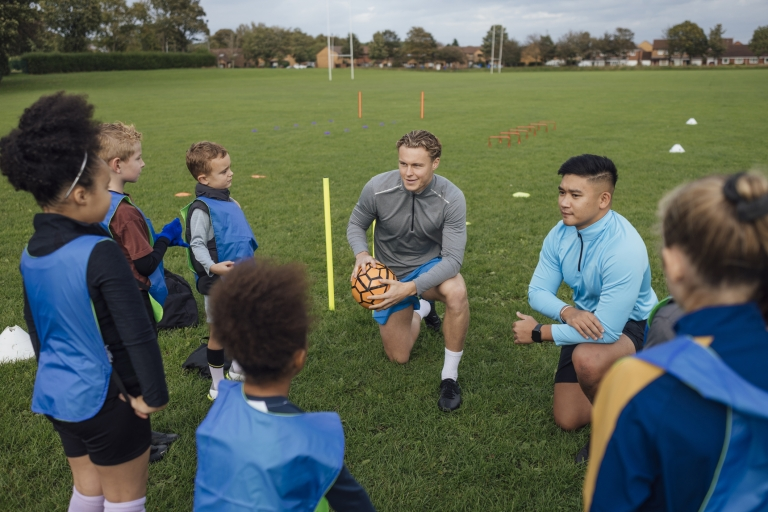
Stepping into the role of a coach as a parent volunteer can feel exciting and a little overwhelming – especially if you don’t have much coaching experience. But don’t worry; you don’t need to be an expert to make a positive impact. As a coach, you’ll play an important role in helping young athletes grow, stay safe and enjoy their sport. Consider Dayton Children’s as part of your team; we’re here to help make your coaching experience as easy as possible.
first aid kit essentials
As a coach, you should always have a well-stocked first aid kit on hand at all times. Here’s what your kit should include:
- Band-Aids of various sizes
- Athletic tape and pre-wrap
- Instant cold packs
- Compression wraps
- Sterile gauze and adhesive tape
- Tweezers and scissors
- Latex-free gloves
- Pain relievers
- EpiPen (if necessary for one of your players)
- Emergency contact information for all athletes
Keeping these essentials easily accessible can help you respond quickly to minor injuries and stabilize more serious ones until medical help arrives.
preventing burnout and injuries
Preventing youth sports injuries before they ever happen is the goal. Follow these tips to keep your athletes in tip top shape while lowering the risk of burnout:
- Always include a warm-up and cool-down – A good warm-up helps prepare the body for activity and cooling down supports recovery.
- Focus on strength and conditioning – incorporating a balanced training program that’s focused on strength, mobility and endurance reduces the risk of injury.
- Keep an eye on workload and recovery – overtraining leads to fatigue and increased risk of injury. Make sure your athletes have rest days and are getting enough sleep and adequate nutrition. Click here for a comprehensive guide on nutrition for athletes.
- Encourage communication – make sure your athletes feel comfortable coming to you with pain or fatigue without fear of losing playing time.
- Teach proper technique – A lot of injuries are a result of incorrect mechanics. Whatever the sport is, make sure your athletes know the correct technique. Practice proper technique with drills and scrimmages.
injuries happen – know how to handle them
Unfortunately, we know that injuries are an inevitable part of sports. As a coach, your ability to respond to an injury can make a difference in an athlete’s recovery and confidence. Here are some tips for handling injuries as a coach:
- Stay calm – This is essential for your athlete and their parents. Keep your composure and evaluate the severity of the injury.
- Follow emergency protocols – if the injury is serious (concussion, broken bone, dislocation, etc.), seek medical attention immediately and avoid moving the athlete if possible.
- Encourage proper rest and recovery – Make sure your athlete gets appropriate rest after an injury. Rushing back into play too soon can lead to re-injury. Follow the medical professional’s advice to ensure proper healing time.
- Provide education on pain vs. injury – Soreness comes with training, but pain caused by specific movements or pain that worsens over time should never be ignored.
If an injury happens, we’re here to help! Click here to easily schedule an appointment online today with an orthopedics or sports medicine specialist.
how to be a great coach
As a youth sports coach, preparing your athletes for a game or activity is just one part of being a coach. Being a leader, mentor and creating a positive environment for your team is another important aspect of being a great coach. Here are some best practices to keep in mind as you lead your team:
- Lead by example – show the same discipline, respect and attitude that you expect from your athletes.
- Communication is key – Always provide clear instructions, constructive feedback and have an open door to athletes’ concerns.
- Develop trust – your athletes will perform better when they know their coach has their best interests at heart.
- Adapt to individual needs – no two athletes are the same. Provide training and feedback specific to each person’s abilities and goals.
- Promote a positive culture – a supportive team environment encourages better performance and personal growth.
Coaching is more than leading a team to victory – it’s about creating a safe, positive and motivating environment for your athletes to thrive. By understanding injury prevention and burnout and providing a space for your athletes to be their best self, you can set your team up for long-term success. Implement these strategies and watch your athletes grow their skills and confidence.