July 27, 2023 | blog post

the anesthesia team behind the “connected” documentary

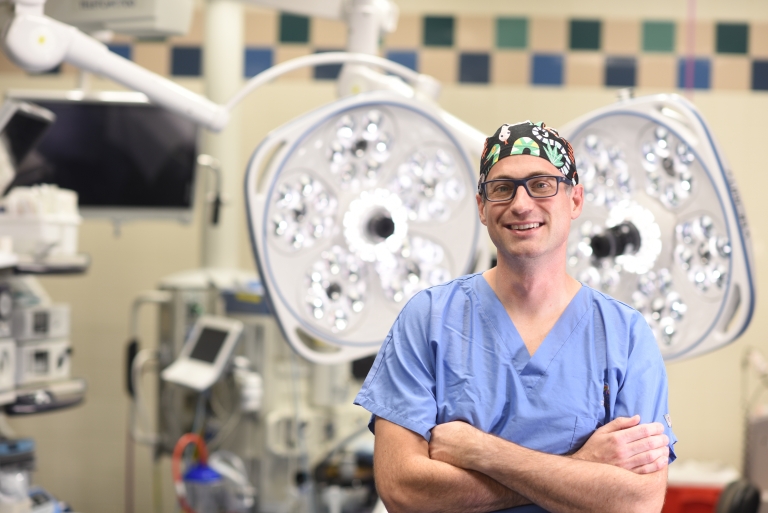
Dr. Antosh poses for a photo at Dayton Children's Hospital while wearing his scrubs

One of the most critical aspects of any surgery is anesthesia. Putting kids asleep and ensuring they stay asleep through surgery and wake up safely is a delicate balance that the anesthesiology team at Dayton Children’s manages each day with surgery patients.

The anesthesiology team at Dayton Children’s prepares for and treats each child and their unique needs. For Pedro and Augusto, the same rules applied.

All of the anesthesiologists at Dayton Children’s are pediatric board certified and only take care of children. Children have very different physiology as they grew from infants to adults. Therefore, they need an anesthesiologist who is trained in their special needs and how their bodies react differently to medications typically used during surgery.

Once the team knew the boys were coming to Dayton for surgery, the preparations began. We sat down with Dr. Sean Antosh, MD, pediatric anesthesiologist and lead for all things anesthesia when it came to the twins, to learn more about his approach for this case.

Tell us about the team involved in Pedro and Augusto’s care.

There was a dedicated team of six anesthesiologists and four nurse anesthetists who donated their time for the cases. The team rotated from case to case and I lead the team for every anesthetic.

Teams were always separated by blue and grey, to make sure we had a dedicated team per twin. We needed to have two anesthesia setups for every anesthetic, to include ventilators, medications, medication machines, etc. Additionally, we always had to be prepared for emergency separation if there was an issue where one or both twins needed resuscitation. 

What planning did you have to do prior to the surgeries?

The team planned for more than a year through extensive literature review of previous craniopagus twins and their anesthesia management. 

We also discussed with colleagues at other institutions about how they have taken care of similar patients in the past. 

How was medical imaging involved?

We created detailed step-by-step plans to walk through the anticipated course of events. We also conducted multiple practice sessions for each imaging study due to changes in location and setups.

During the first several anesthetics, we tested how long it took for a medication given to one twin to reach the other twin. This allowed us to determine the extent of the blood connection between the two and how each affected the other’s anesthetic. 

How did you practice in case of an emergency?  

At the core of our training were departmental and hospital wide mock codes to practice resuscitating the twins in case of an emergency.

A new “code blue double” was developed to notify the team that a code blue requiring more resources than typical was occurring. Specific color-coded team member role stickers were developed to facilitate the resuscitation of the twins and throughout the twin’s hospital stay, two defibrillators were always available at bedside, in case they were needed. 

simple graphic explaining the codes that doctors used in Augusto and Pedro's surgery

What was involved when it came time for surgery?

We always started anesthesia with blue twin (Augusto) to go off to sleep, followed by grey twin (Pedro). Each team worked independently; however, we were in constant communication with one another.

Pedro’s blood pressure was always lower than Augusto’s, so we had to be cognizant of the level of anesthesia for Pedro. Additionally, we were always prepared for massive transfusion of blood products for both boys – which required constant communication and collaboration with the blood bank.

For the final separation, we had a rotating schedule which was extended for 72+ hours. Due to the critical nature, we had anesthesiologists in the operating rooms overnight to provide care even though surgery was not underway.

watch the connected documentary

To learn more about Pedro and Augusto, watch the connected documentary today.

care that goes above and beyond

Because every child deserves care that goes above and beyond, Dayton Children’s provides compassionate, expert care for kids of all ages. Find a provider, schedule an appointment, or learn more about conditions we treat today.

April 27, 2023 | blog post

our sensory program sets the gold standard for patient care

Did you know that Dayton Children’s has a sensory program for children who need a surgery or procedure?

What started as a program specifically for children with autism spectrum disorder, has expanded to assisting all children who have special needs and higher anxieties around coming to the hospital for a surgical procedure.

Surgery can be scary for any child, but it is especially traumatic for children with special needs. Some children may not understand what’s going on which can cause them to act out and become very irritated.

In the past, the answer to this was to provide a pre-surgery calming medication to help the child cope. But today we have different options! 

so how do we combat this without medication?

In 2017, 90% of children requiring surgery at Dayton Children’s required pre-surgery calming medication prior to the implementation of our sensory-friendly surgery experience.

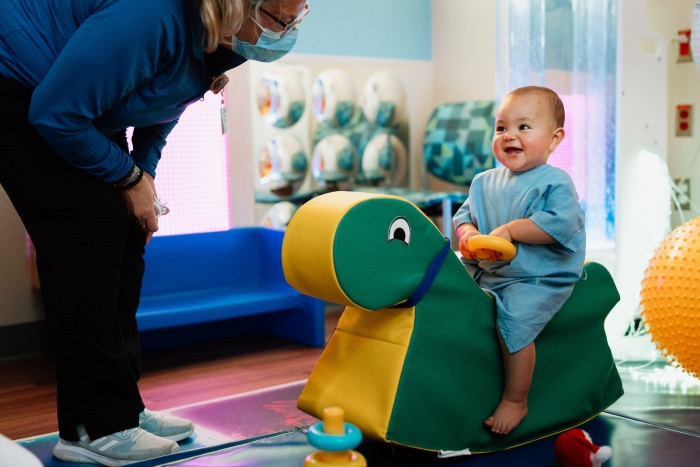
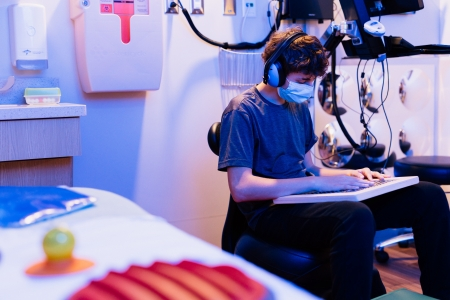
A team of Dayton Children’s employees led by pediatric anesthesiologist, Sean Antosh, MD, knew that there was a better way to meet the needs of these children without resorting to medication. Together they found a way to create a more relaxed, sensory friendly environment to soothe and distract kids before surgery, by creating our pre-op sensory-friendly rooms!

These rooms may include:

  • Sensory rover that includes fiber optics appealing to touch, a water feature appealing to sight and more
  • Projectors that can display a child’s favorite calming remedy (i.e., fish in the ocean)
  • Quiet with low lighting
  • Color mood lighting through a marble LED wall and wall light tiles
  • Fidget objects for children that are hyperactive
  • Liquid color changing floor tiles to walk on and explore
  • Bouncy chairs and floor cushions
  • White noise machines
  • Personal headphones
  • Weighted blankets

“Our sensory program for surgical patients has really evolved over the last six years,” Dr. Antosh explains.

“By creating a sensory-friendly experience for kids before surgery, it removes triggers and allows kids to feel more comfortable and calmer while the medical team prepares them for surgery.”

Dr. Anotsh goes on to explain, “the perioperative staff has been extensively trained in the needs of those with sensory processing issues and how to best accommodate the care we give on a daily basis.”

Click the video below to watch our sensory room in action

how does the program work?

During our routine call before surgery, the scheduler will ask you a series of questions to determine if your child is a candidate for our sensory friendly pre-operative room.

If the room is determined necessary, one of our child life specialists will reach out to develop a coping plan that is specific to your child!

5 benefits of the sensory program:

  • Reduction of pre-surgery calming medication
  • Quicker recovery times
  • When patients are calm going into surgery, they typically wake up calm after surgery
  • Parents feel more at ease bringing their special needs child in for surgery
  • Patients are able to overcome their fear of coming to the hospital

Since the start of our sensory program in 2017, the experience has helped reduce the amount of pre-surgery calming medicine from 90% to 20% of patients.

We have also been able to expand the sensory program to other areas of the hospital including in our lab and imaging department, our south campus surgery center, as well as offer the experience to kids with other special needs and higher anxieties coming to the hospital.
 

national recognition 
 

In 2021, Parent’s Magazine named Dayton Children’s as one of top 15 children’s hospitals in innovation and technology for our sensory program.

Parents are in awe of how we are transforming care for their child with sensory needs.

One mom said, “We walked in and immediately felt more at ease. The lights were turned down low. There was a projection of fish on the wall. They had a fiberoptic bubble machine. There were markers for Declan to color on the bed. Basically, anything they could do to help Declan not think about being at the hospital.”

If you think that your child may benefit from a sensory friendly surgery experience, please let the scheduler know during your pre-operative call.

Learn more about our sensory program here.

care that goes above and beyond

Because every child deserves care that goes above and beyond, Dayton Children’s provides compassionate, expert care for kids of all ages. Find a provider, schedule an appointment, or learn more about conditions we treat today.

April 2, 2021 | blog post

sensory room in surgery helps children on the autism spectrum

Toddler boy with his mother and grandmother doing a jigsaw puzzle at home.

For many children, going into a hospital for a procedure or surgery is a scary, unknown experience. But for children on the autism spectrum, it is often a traumatic event. Not only do they not understand what’s going on, but they enter an environment where triggers are all around them leading to extreme agitation. Their only way of coping is to act out in an effort to try and make the intense stimulation go away. Traditionally, the only answer to help these children calm down has been to prescribe medication in the pre-operative environment.

But in 2017, a group of surgery employees including Sean Antosh, MD, anesthesiologist; Katelyn Shellabarger, CCLS, child life; and Robin Lawson, RN, pre-operative nursing liaison, started looking at ways to create a more relaxed, sensory friendly environment to distract kids with autism before surgery. 

Dr. Antosh knows firsthand that medicine plays an important role in surgery. However, if a child remains calm in the pre-operative area beforehand without the use of medication, they tend to wake up post-surgery in the same way, which leads to a better recovery. He tapped into other resources. Katelyn is the first child life specialist dedicated to surgery and Robin is retired special education teacher who worked with autistic kids in elementary and middle school.

The result: a dedicated sensory focused pre-operative room for kids with autism that can be individually tailored to the child’s needs.

“If we can take out the triggers and insert activities and items that sooth and distract the patient, it’s was a win for everyone,” Dr. Antosh explains. “It allows the patient to remain calm while the medical team does what we need to do to prepare the child for surgery. Let’s save the medication for when it’s truly necessary – back in the operating room itself.”

Prior to this program 49 percent of children with special needs received pre-anesthesia calming medication. Now only 36 percent do.

Katelyn in child life greets the patient and family in the room, prepares their masks and helps with the coping plan. “Surgery can be a traumatic experience for children with special needs, which is painful for parents, too,” Katelyn says. “The coping plans allow us to be proactive and get to know the child more so we can care for the patient in a more holistic way.”

With Robin’s help, the rooms are individualized for each patient prior to arrival at the hospital.

“Patients with autism are not like every other child,” Robin says. “We had to figure out away where we could meet them where they are. We truly are changing the way care is delivered.”

Providing innovative care for kids is just one reason Parent’s Magazine named Dayton Children’s as one of the top 15 children’s hospitals in innovation and technology in 2020.

The article features our sensory-friendly surgery experience. When kids come in on surgery day, they enter a space with familiar music, LED lighting in their favorite color, color changing floor tiles, headphones, fidget spinners or weighted blankets. They can even drive our remote-controlled airplane off to surgery!

Today there are three sensory-friendly rooms in preoperative services at our main campus. 

care that goes above and beyond

Because every child deserves care that goes above and beyond, Dayton Children’s provides compassionate, expert care for kids of all ages. Find a provider, schedule an appointment, or learn more about conditions we treat today.

October 5, 2020 | blog post

the pediatric difference in anesthesiology

Kids are not “little adults” and deserve care designed for them. When your child has surgery at Dayton Children’s, they’re being treated by a team of healthcare professionals that are specifically trained to care for children. This is especially important when your child requires anesthesia for their surgery or procedure.

Dayton Children’s is uniquely prepared to care for your child before, during and after surgery

All of the anesthesiologists at Dayton Children’s are pediatric board certified and only take care of children. Pediatric anesthesiologist Sean Antosh, MD, explains why this is important and why Dayton Children’s is uniquely prepared to care for your child before, during and after surgery. 

Why is it important for kids undergoing surgery to be treated by a pediatric anesthesiologist?

Children have very different physiology as they grew from infants to adults. Therefore, they need an anesthesiologist who is trained in their special needs and how their bodies react differently to medications typically used during surgery. 

What are potential risks associated with using an anesthesiologist that does not typically treat kids? 

While most anesthesiologists are capable of taking care of all patients, pediatric anesthesiologists are acutely aware of the common heart and breathing issues that may arise during surgery. We are able to accurately diagnosis and treat these issues before they become an emergency. 

What education and training are required to be a pediatric anesthesiologist? 

Board certified pediatric anesthesiologists have been through four years of undergraduate education, four years of medical school, four years of general anesthesiology and critical care training, and an additional one to two years of pediatric anesthesiology fellowship. After all of this training, they then complete board certification for general anesthesiology, as well as an additional certification for pediatrics. 

What does Dayton Children’s do to make kids that have to undergo anesthesia more comfortable? 

As pediatric anesthesiologists, we interact with the patients and their parents to find out what the child likes and dislikes to help avoid anxiety. Sometimes we play games, use distraction devices (such as an iPad) or use remote controlled airplanes to take them to the operating room. Occasionally, we will have to give a drinkable medication to help them relax during the process. 

For our autism spectrum and special needs patients, we have one of a kind sensory rooms that patients can relax in prior to surgery. We also have a pediatric acute pain service, which provides nerve blocks for common orthopedic and general pediatric surgeries to help decrease discomfort and need for pain medications postoperatively. 

related posts


No posts found.

care that goes above and beyond

Because every child deserves care that goes above and beyond, Dayton Children’s provides compassionate, expert care for kids of all ages. Find a provider, schedule an appointment, or learn more about conditions we treat today.