pediatric anesthesiology
Expert anesthesia care designed just for kids—keeping them safe, comfortable, and supported during procedures, surgeries, and tests.

what is pediatric anesthesiology
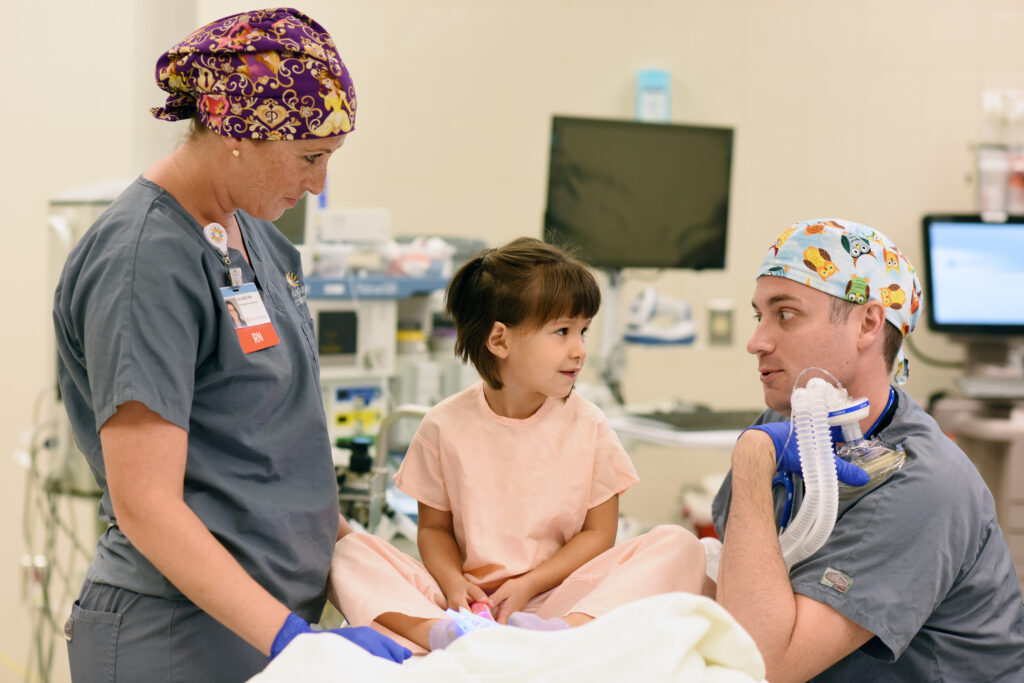
Pediatric anesthesiology focuses on the safe and effective use of anesthesia for infants, children, and teens. At Dayton Children’s Hospital, our expert team includes pediatric anesthesiologists, nurse anesthetists, and advanced practice nurses who care for children during surgery, diagnostic imaging, and other procedures. They use kid-friendly approaches and age-appropriate medications to ensure your child stays as calm and comfortable as possible—before, during, and after their procedure.
why should I have a pediatric anesthesiologist?
Children aren’t just small adults—and that’s especially true when it comes to anesthesia. Pediatric anesthesiologists are specially trained to understand how a child’s age, size, and health affect how their body responds to medication. They create personalized anesthesia plans tailored to each child’s unique needs, ensuring safe and effective care at every stage of development. During procedures, they’re also experts at recognizing even the smallest signs of discomfort or complications, so they can respond quickly and keep your child safe and comfortable.
meet the anesthesiology team
The Dayton Children’s pediatric anesthesiology team includes board-certified pediatric anesthesiologists and certified registered nurse anesthetists (CRNA) with advanced training in safely managing anesthesia and pain relief for children of all ages. Whether a child is undergoing surgery, a diagnostic test or a non-surgical procedure, they tailor care to each patient’s unique needs–ensuring every child is comfortable, safe and supported before, during and after their procedure.
anesthesiology programs and clinics
sensory friendly surgery experience
At Dayton Children’s, we understand that surgery can be overwhelming – especially for children with autism or high anxiety. That’s why we’ve created a one-of-a-kind sensory-friendly experience. Developed through a partnership between anesthesiology and our child life team, the experience transforms the surgical journey into one of comfort, calm and care. From personalized coping plans to soothing sensory rooms, our team is dedicated to making every child feel safe and supported. Discover how our innovative approach is changing the way kids experience surgery.
chronic pain clinic
Dayton Children’s pediatric chronic pain management clinic brings together experts from psychology, physical therapy, anesthesiology, and other specialties, all in one place. The clinic focuses on non-opioid treatments and includes a 10-week program designed to help kids build strong coping skills through physical therapy, mental health support and holistic techniques like massage and relaxation. For some patients, interventional procedures may also be part of their care plan. Our goal is to help your child manage pain in a safe, supportive and lasting way.
news and blogs
Stay up-to-date with the latest insights from Dayton Children’s. We’re always working to share helpful, real-world content for families needing pediatric anesthesiology for a surgery, diagnostic test or non-surgical procedure.
patient stories
When your child is facing surgery, hearing from other families who’ve walked a similar path can offer comfort and reassurance. These stories are shared to remind you that you’re not alone – and that our team is here to support you and your child every step of the way.
Explore how Dayton Children’s pediatric anesthesiology has gone above and beyond for kids just like yours.
for your visit
what to expect for your child’s non-surgical procedure
Sometimes, children need to be calm and remain still for a diagnostic test or a non-surgical procedure. For many kids, this is difficult! Our anesthesiology team can help by providing a local anesthetic, sedation or general anesthesia. Your child’s anesthesiologist will talk about the options with you beforehand.
- A local anesthetic can be given as a shot, spray or ointment. It often is used for minor outpatient procedures, such as getting stitches. This medicine can numb the area during the procedure and for a short time afterward, helping to minimize pain. The numbing medicine may wear off in about two to four hours.
- Sedation can be administered orally (in liquid or pill form) or through an intravenous tube (IV). It’s typically used for procedures or tests that take an hour or less, and for children who do not have a complex medical history.
- General anesthesia provides a deeper sleep than sedation. The anesthetic can be delivered using a breathing mask or intravenous tube. It produces a state of controlled unconsciousness.
what to expect before and after the procedure or test
before the procedure or test
A member of the anesthesiology team will provide an evaluation and ask you some questions about your child’s medical history, allergies, past experiences with anesthesia, etc.
After giving the anesthesia, a member of our anesthesia team will monitor your child closely to ensure their well-being and see if more medication is needed.
after the procedure or test
If your child is asleep for the procedure or test, he or she will continue to sleep in a recovery area until waking up naturally. This usually takes about one hour, but the time can vary depending on your child’s condition and the procedure performed. The drowsiness will wear off gradually over the next several hours.
what to expect before and after your child’s surgery
Pediatric anesthesiologists play two very important roles for children undergoing surgery at Dayton Children’s. One is to administer general anesthesia to help them sleep through the surgery. The other is to help minimize pain after surgery by using other pain relief therapies, including regional nerve blocks.
- General anesthesia: Most children receive a general anesthetic to help them sleep through surgery safely. The anesthetic can be delivered using a breathing mask or intravenous tube. It produces a state of controlled unconsciousness.
- Regional nerve blocks: Your child’s anesthesiologist may recommend that your child have a regional nerve block during surgery to numb part of the body. A regional nerve block takes effect during surgery, and continues to provide pain relief after surgery. Not all children receive a regional nerve block during surgery, and many of those who do also receive general anesthesia.
Before surgery, an anesthesiologist will review your child’s medical record and start making a plan. On the day of surgery, this anesthesiologist will meet with you to talk about the anesthesiology care your child will receive. If your child has complex medical needs, the conversation may take place a few days before surgery, either at the hospital or on the phone.
The type and amount of anesthesia your child receives will depend on many factors, including the type of surgery, how long it will last, medications your child is taking and your child’s age, height, weight and general health.
The anesthesiologist, surgeon or someone on the nursing staff will talk to you about what your child can eat or drink before surgery. Please follow these instructions very carefully! They are meant to keep your child safe.
Our team works closely with child life specialists at Dayton Children’s who are specially trained to help kids who are feeling anxious or scared before surgery. The child life specialist might visit with your child on the day of surgery to chat, play games or do other activities to help provide a distraction.
If you have any questions about your child’s anesthesiology prior to surgery, or if any significant changes in your child’s health occur before the day of the procedure, please contact us.
Your child will receive the general anesthetic either through an intravenous tube, or through a breathing mask placed over the mouth and nose. Our anesthesia staff will monitor your child closely as the anesthesia is being given, and observe your child during the procedure to ensure their wellbeing and see if more medication is needed.
If your child is receiving a regional nerve block, additional anesthesiology team members will provide that. They are part of the acute pain team, which includes pediatric anesthesiologists and an advanced practice nurse.
At least one member of the anesthesiology team will be in the operating room at all times during your child’s surgery.
After surgery, it usually takes about an hour for kids to wake up from general anesthesia. A specially trained nurse will monitor your child in the post-anesthesia care unit (PACU) or recovery room. During recovery, your child will still be under the care of the anesthesiologist.
The pediatric anesthesiology team at Dayton Children’s is committed to keeping your child’s post-surgery pain under control using a variety of techniques. This benefits your child in many ways:
- Less use of narcotic medication
- Less post-surgery nausea/vomiting
- A faster return of appetite and return of bowel function
- The ability to start rehabilitation therapy sooner
- Better rest and sleep during recovery
- Earlier discharge from the hospital
Pain relief strategies may include providing medication or a sedative through an intravenous tube. Another option is a computerized pump, which delivers pain relief medication on demand.
Before discharge, we will talk to you about how to minimize your child’s pain after returning home.
FAQs
Pediatric anesthesiologists are physicians who provide general anesthesia, sedation and post-surgery pain relief for infants, children and adolescents who are having surgery. They also offer sedation and pain relief for children who are undergoing certain diagnostic tests or minor procedures. These highly trained specialists know how to examine and treat children in a way that helps them relax and be cooperative. They use equipment and facilities specifically designed for children.
In order to become a pediatric anesthesiologist, a physician must complete a four-year anesthesiology residency program and then receive additional training to subspecialize in anesthesia care for infants, children and adolescents. These physicians must also earn certification from the American Board of Anesthesiologists.
A certified registered nurse anesthetist is an anesthesia professional who provides anesthesia in collaboration with surgeons, anesthesiologists and other qualified healthcare professionals. At Dayton Children’s, these highly trained advanced practice nurses specialize in pediatric anesthesiology.
Caudal block
A caudal block numbs the lower half of the body (from the belly button down) for three to 12 hours. It is used for surgery on the lower trunk, groin or legs.
Epidural nerve block
An epidural nerve block involves putting pain medicine into the space around your child’s spinal cord. The medicine is delivered through a temporary catheter (thin, flexible tube). It is used for surgery on the trunk, groin or legs.
Peripheral nerve block
A peripheral nerve block involves injecting pain medicine near a cluster of nerves to numb the area of the body being operated on. The anesthesiologist uses ultrasound imaging guidance to make sure the injection is given as precisely as possible.
Depending on your child’s condition, surgical procedure and pain control needs, the anesthesiologist may consider other types of pain relief strategies during surgery. These may include using a peripheral nerve catheter or a spinal anesthetic.
hours & locations – anesthesiology
View our locations offering anesthesiology services at multiple locations.
supporting your family through every procedure
Our pediatric anesthesiology team is here to ensure every child’s procedure is as safe and comfortable as possible. If your child is scheduled for surgery or a test that requires anesthesia, we’ll guide you through what to expect and answer any questions along the way—so you feel confident and supported from start to finish.