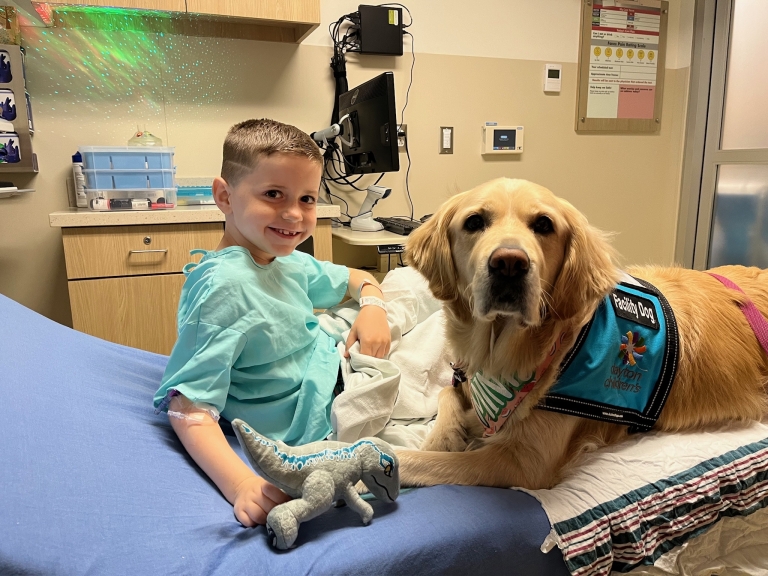
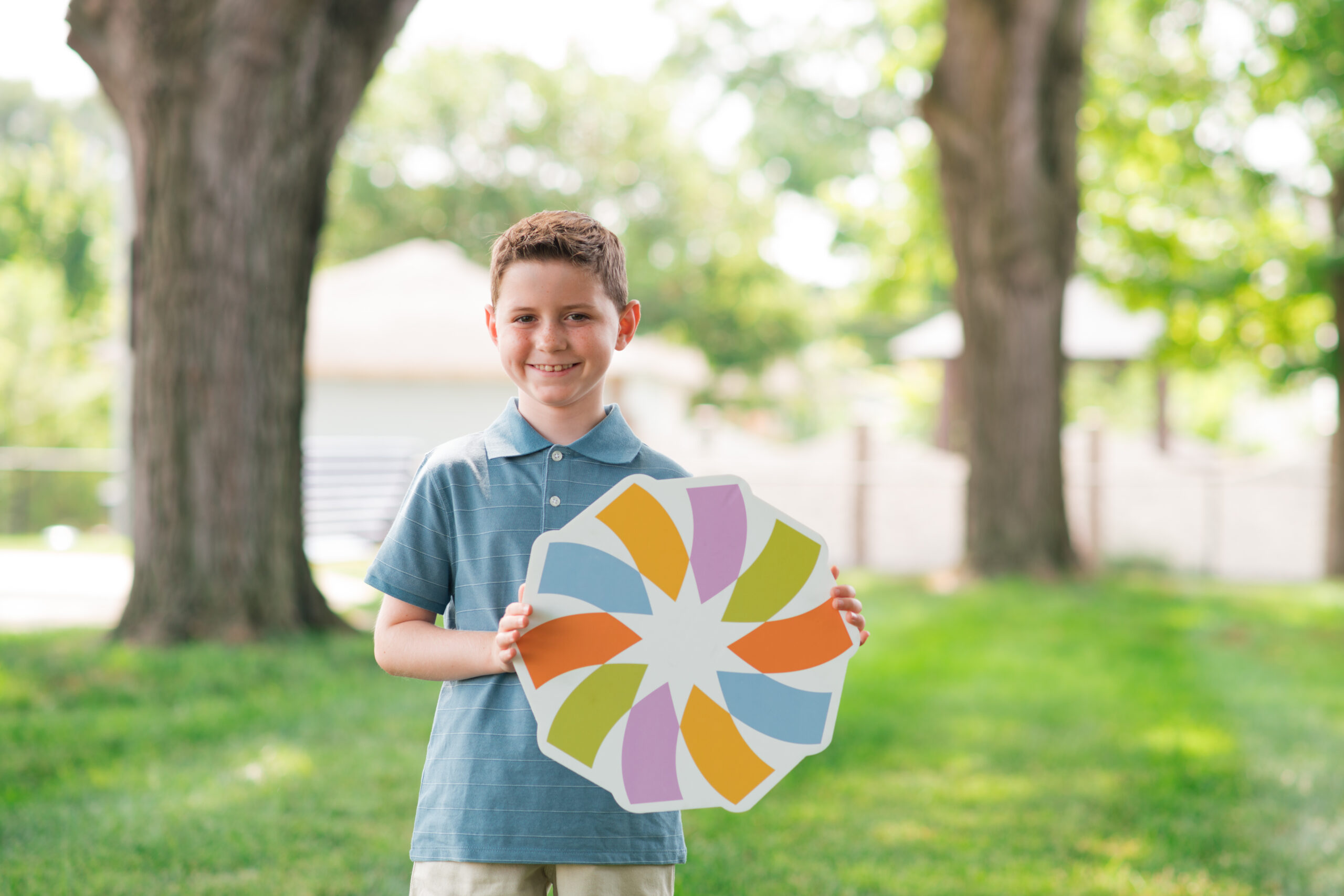
- patient name: Eric Mustaine
- age: 9
- condition: medulloblastoma
- seen in: neurosurgery, hematology oncology
- providers: Lionel Chow, MD, Shobhan Vacchrajani, MD, PhD, FRCSC
surrounded by the best care
When 7-year-old Eric Mustaine hit his head while kicking a ball at his sister’s softball practice, his parents, Sarah and Eric Sr., thought it was nothing serious. He wasn’t one to complain, and after some ice and rest he seemed fine. But the next morning, things changed. At school, Eric had a severe headache and started vomiting. Sarah, who is also a nurse, thought it may be a concussion. She reached out to a trusted colleague, who encouraged her to head to the emergency department just to be safe.
That decision would prove lifesaving.
answers in the hardest moment
At Dayton Children’s south campus, Eric’s initial exam looked normal. But the provider explained the pros and cons of doing a scan and left the decision up to Sarah. She chose to go ahead. Within the hour, their family’s life turned upside down.
“It took a long time for them to come back to our room, and I kept getting more nervous. When they came in and they had tissues, they had a notebook and everything, I just knew it was something bad,” Sarah remembers.
The CT scan revealed a mass in Eric’s brain; news that took Sarah’s breath away and felt like an out-of-body experience. By the time the care team had come into Sarah and Eric’s room, they had called neurosurgery, started a plan, and arranged to transfer Eric to the main campus intensive care unit.
a team that felt like family
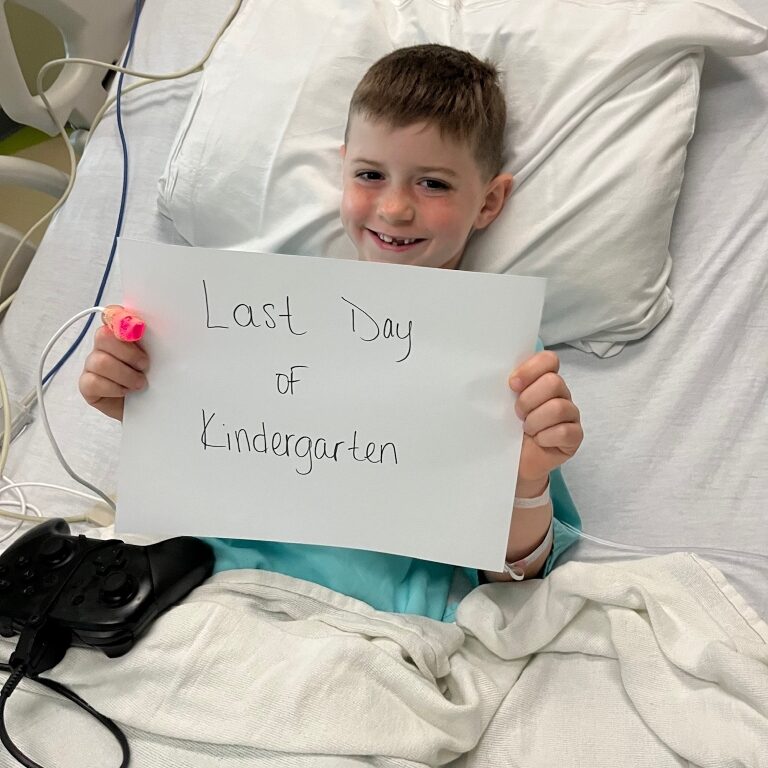
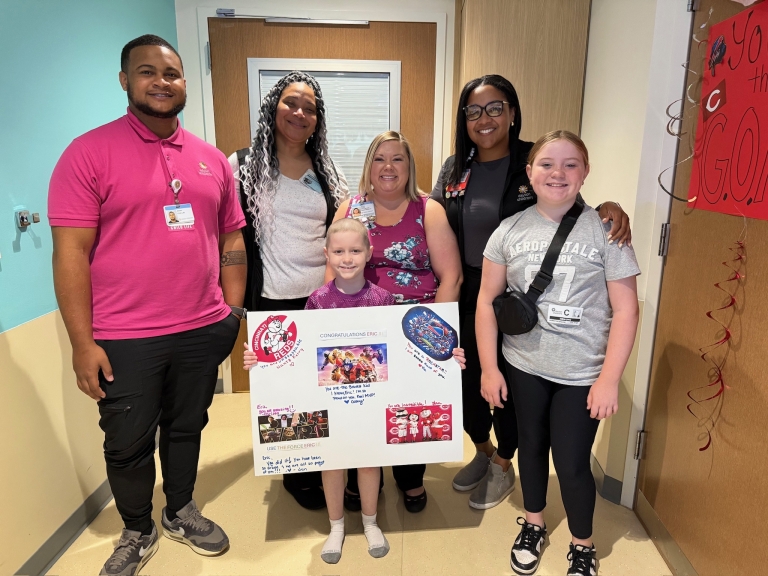
At the same time, child life specialist, Jamie, gently prepared Eric for what was ahead, using kid-friendly language to describe the surgery. An ICU nurse, Ben, made sure Eric felt safe, even staying after his shift to play video games and personally walk Eric to surgery so he saw a familiar face in a scary situation.
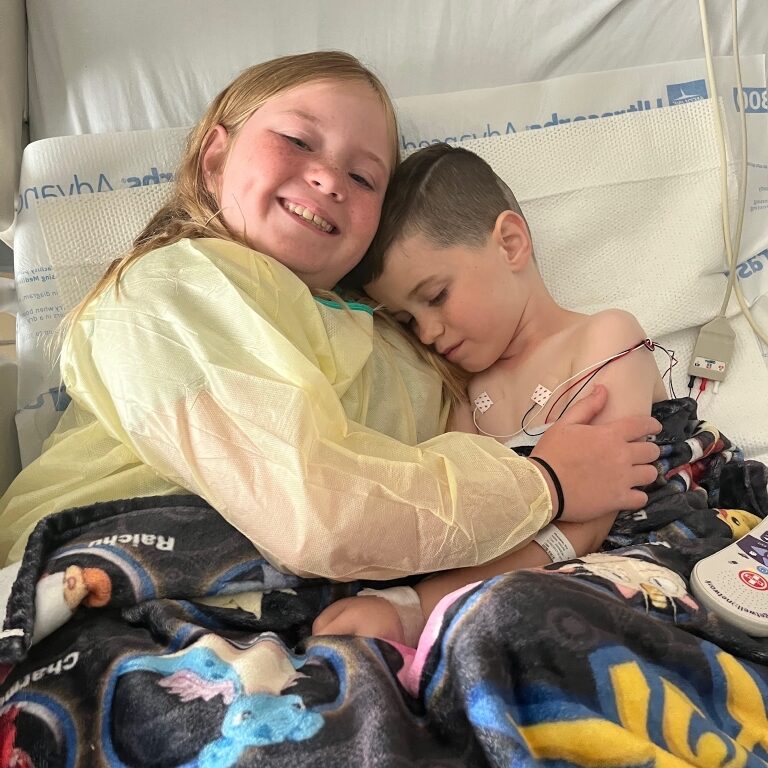
“Knowing the people around us cared about Eric too, I was like ‘OK, we’re okay.’ We have a whole group of people here that are loving him as much as I do, and it’s going to help us get through this,” Sarah said. “It truly felt just like a safe second home.”
skilled surgery, personal support
The next day, Eric’s first pediatric neurosurgeon was joined by pediatric neurosurgeon Shobhan Vacchrajani, MD, PhD, FRCSC to remove the mass and send it for testing.
While the surgery went as planned, for Sarah and Eric Sr., the waiting felt endless, and the scariest part lay ahead. Friends and colleagues from Dayton Children’s stopped in the waiting area to pray, bring them comfort. Eric woke up from surgery unable to move the right side of his body, unable to stand and had difficulty speaking.
“They explained these were all common complications to surgery, but it is still shocking and so hard to see your child like that,” Sarah said.
To help Eric start to rebuild those connections and regain his ability to walk and speak more clearly, he started working with inpatient rehabilitation.
A couple days after surgery, the results of the testing came back: Eric had medulloblastoma, a rare and fast-growing brain tumor that mostly affects children and teens.
expertise and compassion from the neuro-oncology team
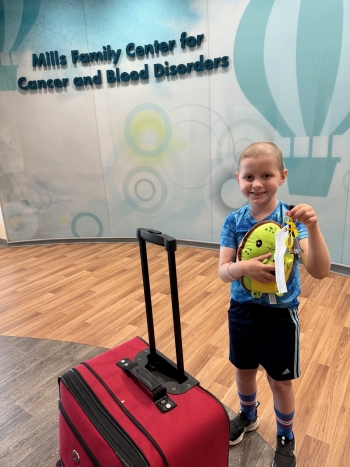
Lionel Chow, MD, PhD, joined Eric’s care team as his neuro-oncologist.
Dr. Chow patiently and thoroughly explained the type of tumor and the initial plan to treat Eric. This was incredibly difficult news for the Mustaines, and Dr. Chow and the rest of the care team once again surrounded the Mustaines with support, encouragement and expertise.
“Dr. Chow was spending what felt like an unlimited amount of time with us; he made us feel like we were his only patients” Sarah said. “As a nurse, I could rationalize what was happening with Eric. But when it’s your son, all of that goes out the window. I was like ‘I need five people to tell me it’s okay.’ The team calmed my nerves, explained what was happening and what they would look for. I just felt really confident that Eric had the best people and teams surrounding him.”
Dayton Children’s neuro-oncology program includes specialists from hematology/oncology (including Dr. Chow and a nurse navigator), neurosurgery, neurology, endocrinology, psychology and more. The nurse navigator helps bring together all these different experts to make treatment as seamless as possible and help manage all potential side effects a child may have.

undergoing treatment
For Eric, treatment would include six weeks of radiation, a month to recover, and then almost a year of chemotherapy.
Proton radiation is less available than standard radiation, with fewer than 50 centers in the United States. Luckily, a neighboring children’s hospital offers this treatment, and Eric’s nurse navigator, Kari, closely collaborated with that team to coordinate Eric’s needs.
The six weeks of radiation were some of the toughest for Eric. “Radiation was really bad. I felt sick nearly every day,” Eric shared. Despite how difficult it was, he completed every session without sedation. After radiation, Eric returned to Dayton Children’s for the rest of his treatment.
back on the field
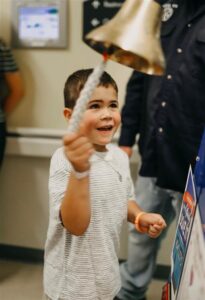
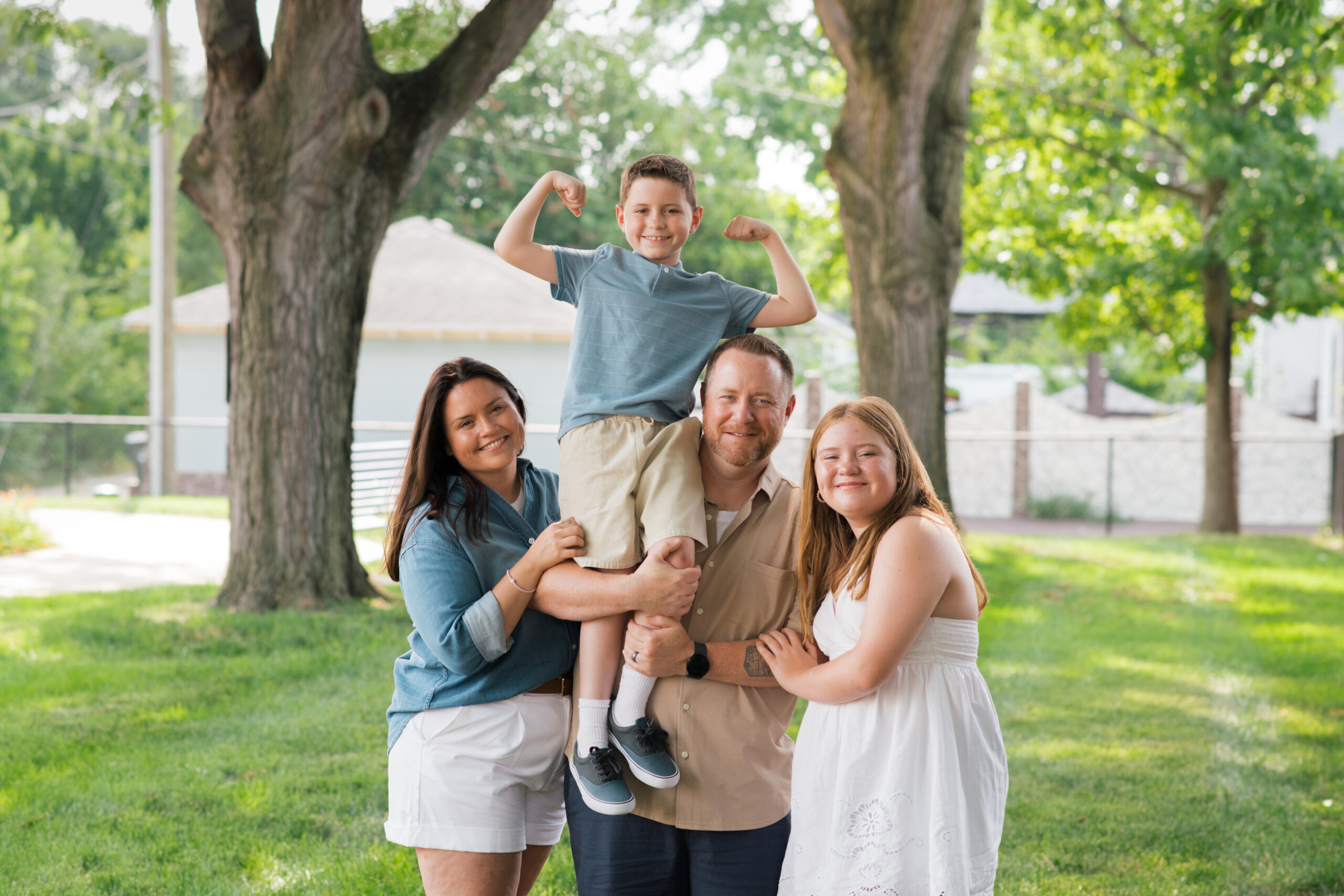
Eric finished treatment and rang the bell in summer 2025. One year later, his scans continue to show no signs of cancer, and he is back on the field playing the sports he loves, including lacrosse and flag football.
Seeing Eric back on the field recently was an emotional moment for the Mustaines.
“He couldn’t even stand on his own just months ago, and now to see him running around with kids his age and not being able to tell how much he has struggled to get back there. He is so strong and has had such a positive attitude about it all. He’s always used where he’s at like motivation to continue to get better.”
Off the field, Eric loves drawing, spending time with friends and family, cheering for the Buffalo Bills, and building LEGO sets. He is currently halfway through building the LEGO Death Star he saved for an entire year to buy.
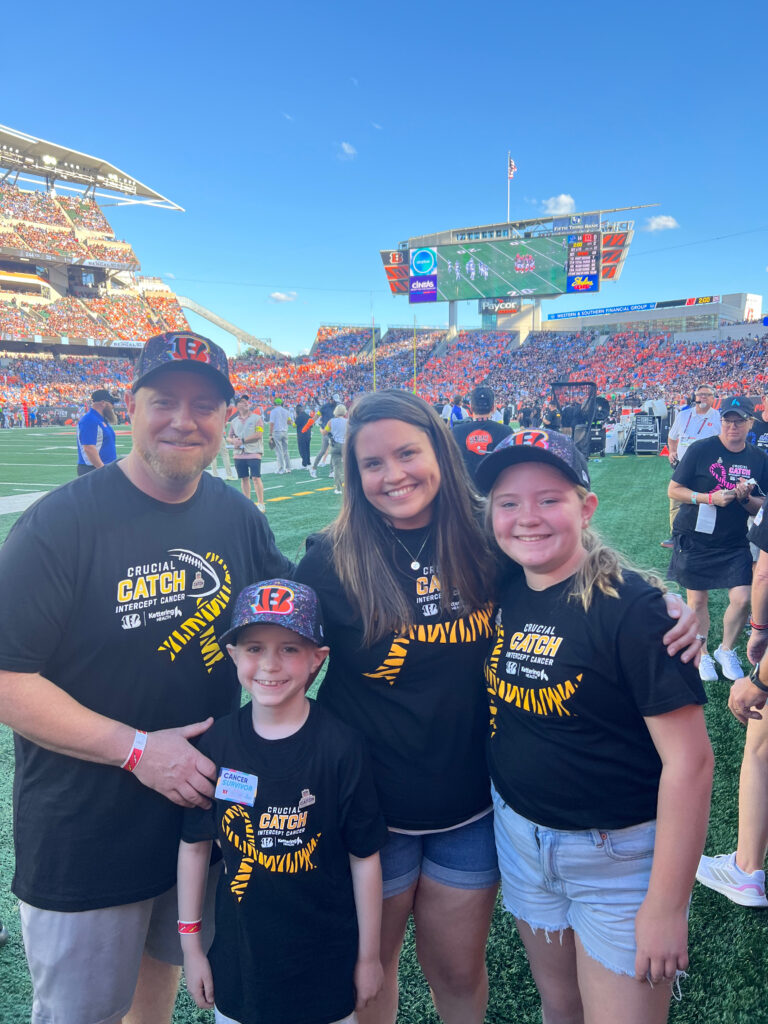
Sharing Eric’s story has also given the Mustaines an opportunity to raise awareness of pediatric cancer. In October 2025, Eric participated in the Cincinnati Bengals’ Crucial Catch game, presented by Kettering Health. In 2026, he was selected as a Dayton Children’s ambassador.
Through his ambassador role, Eric and his family hope to raise awareness of pediatric cancer and encourage families who are still in the hardest part of their journey.
“At the time, it felt impossible to get through this,” Sarah says. “But we took it day by day, and we ended up on the other side.”