
mental health and learning difficulties
how to show support to make kids feel confident and included

Learning challenges do not just affect how a child does in school. They can also affect how a child feels about themselves and whether they feel like they belong in their classroom or school. Learning challenges can look different for every child. Some children may struggle with reading, while others may find math especially hard. These challenges can sometimes make kids feel worried, sad or frustrated.
The good news is that there are ways to help. With the right support, children can build confidence, feel more included and keep moving forward. Here are five simple ways you can help your child.
five ways to help build kids’ mental wellness if they have a learning difficulty
1. Focus on the effort, not the outcome. Kids really want to know that you are proud of them or impressed by them. Instead of focusing on the grade or how quickly they get something done, zoom in on their efforts. You can say something like:
- “You really worked hard on that and didn’t give up!”
- “I appreciate you starting on your math homework without being reminded.”
2. Allow them to pause as needed. Some kids may need time when they go from one task to another. Others may need a timer set so that they know there’s a short break coming.
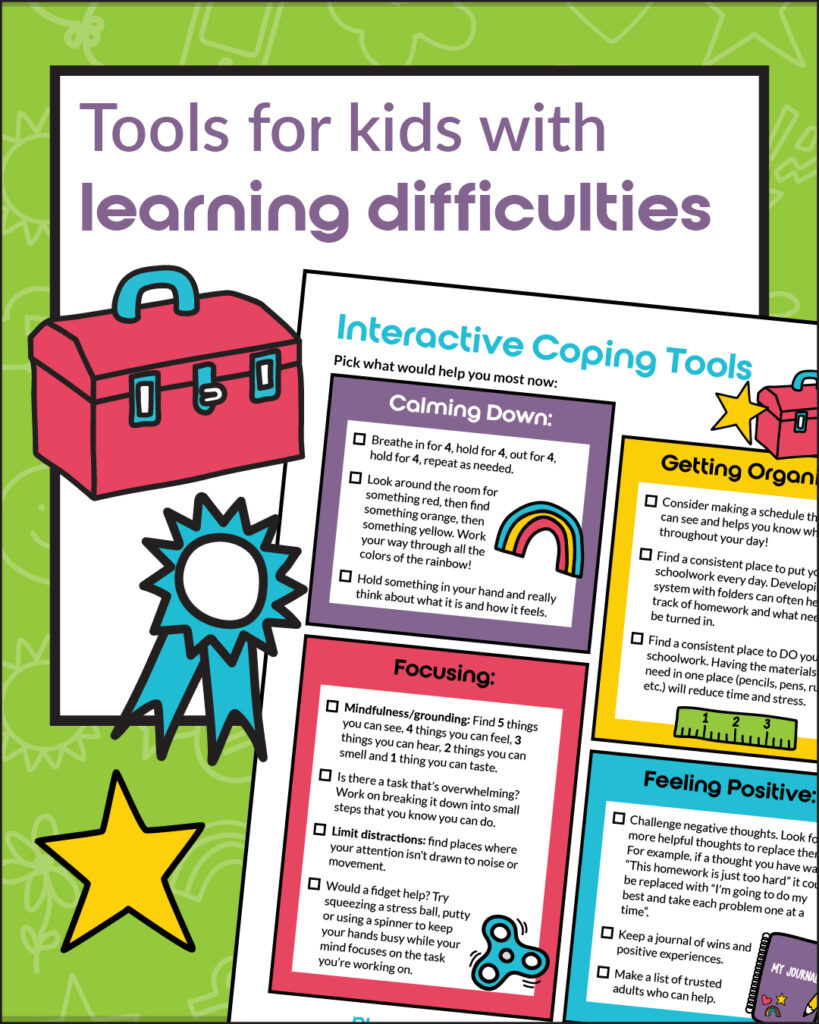
- Explore the coping tools download, created by the experts at On Our Sleeves. It includes ideas that may help your child during study or homework time.
- Consider giving a set number of “break tickets” that they can use during schoolwork so that they know they can take some breaks. Breaks should be short, 5 minutes or less. Longer breaks can make it hard to come back to learning, but a good, short brain break can be helpful.
- Help them break down homework into smaller parts. You may want to cover up the second prompt that they’re supposed to respond to so that they focus only on the first.
3. Recognize what they’re good at. Just because they learn differently doesn’t mean that they don’t learn at all.
- Find activities (sports, clubs or hobbies) that they feel good about and encourage their efforts. Having a sense of being good at something can improve their self-esteem.
- Acknowledge their struggles and remind them of what they have already learned. Point out both small wins, like tying their shoes, and bigger ones. For example, “Timed tests were really hard at first, but you kept practicing and now you know how to handle them.”
- If your child starts using negative self-talk like, “I’m terrible at this,” help them reframe it. You can say, “This is really hard, but you’ve gotten through hard things before.”
4. Encourage habits to keep them healthy and strong. Getting enough sleep, staying physically active, eating well and keeping consistent routines can build the mental health skills they need to handle learning challenges.
- When kids have a hard time at school, they may need some relaxation, a physical activity or a break (like a shower) before starting homework. Consider whether they need time after completing homework before moving on to the next thing.
- Keeping kids moving can help them reduce stress. Consider spending time outside or joining a sports team when possible.
- Have a regular sleep schedule and bedtime routine to help them wind down at the end of the night.
5. Consider the school as part of your team. Studies have shown that one of the best predictors of school success is the strength of the school-home relationship. You will need to talk with your child’s teacher, and maybe their school counselor and school administration, to make sure your child is getting the support they need.
- Share the routines and habits that you do at home that seem to help.
- Share concerns that you have about the school day and problem solve together.
when should I worry about my child with learning challenges?
If you notice new behaviors or if your child seems to have increased isolation for more than 2 or 3 weeks, contact your child’s doctor, school counselor or a mental health professional.
takeaway tips for helping children through learning challenges
You can support your child through their learning challenges by giving them space to pause and praising their effort—both small and big wins help build confidence.
Offering opportunities to succeed, whether in sports, hobbies or other interests, shows them that they are more than their homework, grades or time in the classroom. These experiences help children develop resilience and inner strength that will serve them well into adulthood.
free download: coping tools to help your child manage stress
Help your child explore which coping tools work best for them in challenging moments.
This Interactive Coping Tools worksheet (also available to download en Español) includes more than a dozen ideas to help kids calm down, stay focused, get organized, and feel positive when times are tough. Download your copy today to start supporting your child’s emotional growth!
join the On Our Sleeves movement
The mission of On Our Sleeves is to provide every community in America access to free, evidence-informed educational resources necessary for breaking stigmas about child mental health and educating families and advocates. For more information, visit OnOurSleeves.org.
related posts




care that goes above and beyond
Because every child deserves care that goes above and beyond, Dayton Children’s provides compassionate, expert care for kids of all ages. Find a provider, schedule an appointment, or learn more about conditions we treat today.
