
helping kids master responsibility in the house
why responsibility matters for kid’s mental health
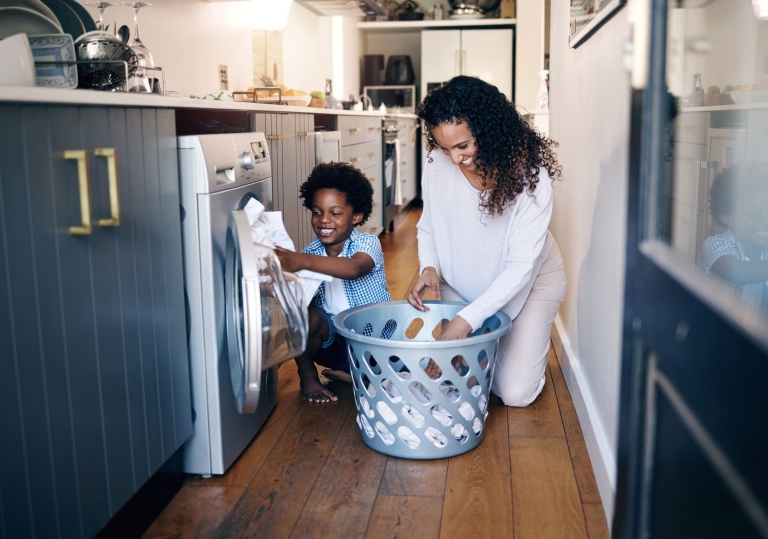
When kids learn responsibility, their self-esteem grows, their sense of independence expands and they enhance their problem-solving, time management and accountability skills!
Simply put, assuming responsibility for managing one’s own daily life is a key aspect of transition to adulthood according to an official study done by the National Library of Medicine.
And just like everything else in parenting, teaching your kids responsibility takes time, intention and work. You can start with small tasks and build upon these as they accomplish learning new skills.
There are many types of responsibilities that you can teach your child. There is responsibility for household chores, responsibility for our actions, work and school responsibilities and responsibility to take care of ourselves.
On Our Sleeves is exploring the many types of responsibilities in our Helping Kids Master Responsibility series to help caregivers learn and understand the best ways to promote responsibility, confidence and growth in their child!
choosing the right responsibilities at every age
So now that you know how important responsibilities are to your child’s development, you may be wondering how to start. If you need help figuring out what is an appropriate task to give your child, look at these ideas based on your child’s life stage.
Note that not all kids fit into the “box” of their age group so use your best judgement when assigning them responsibilities.
Toddlers: You can start introducing your toddler to household responsibilities by having them watch and help you with simple tasks such as putting away their toys or helping with making their bed. For example, you could say “Can you grab that sheet corner and put it over here?”
Preschoolers: If your child is preschool age, you can start letting them pick out their clothes (provide guidance and boundaries on seasonally appropriate items i.e. wearing pants in the winter). At this age, you can continue to help them pick up their toys and other belongings in their room and show them how to hang clothes on a hanger. Try giving them a sponge to wipe down the kitchen table before dinner or ask them to bring their dishes to the sink.
Elementary school: Kids at this age can start helping to take care of pets, setting the table, clearing the dishes, packing lunch for school, making their own bed, putting away clean laundry and cleaning up their room.
Middle school/Jr. high: Older kids can start helping to empty and reload the dishwasher, help with making meals, vacuum/mop main areas of the house, take the trash out and to the curb on trash day.
High School: Older teenagers can now build on all their responsibilities. Now you can add more responsibility like cleaning the car (inside and outside), making sure there is gas in the car, doing their own laundry and family towel laundry, cleaning their room, changing sheets and yard chores.
Here are some helpful tips to help you teach household responsibilities to your kids:
- Try to make cleaning the house fun! Put on some tunes and sing along while you work or put a timer on and see if you can beat the clock.
- Once your child has the hang of a few chores, make a chore chart to help keep everyone on track.
- Avoid the temptation to go back and do it “your way.” This will lead to your child feeling that they can’t do the task themselves. They will be less enthusiastic to help out next time.
- When teaching household responsibilities, approach it like a coach teaching little kids how to play soccer or a piano teacher teaching a new student how to read notes — one building block at a time.
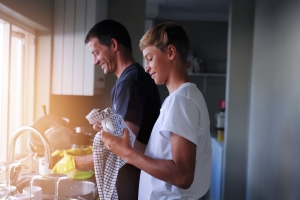
conquer the household responsibility hurdles
We all want our kids to contribute to the household responsibilities but sometimes it can feel easier and quicker to take care of all the chores ourselves. The dish washer gets emptied faster, the laundry is folded and put away neatly, and the windows are washed streak free!
The problem is that this will eventually burn you out while also keeping your child from learning important life skills for adulthood. You could be doing your child a disservice by not taking the time to teach them responsibility.
And, at times we get frustrated with our kids and implore them to “be more responsible” but it is important to reflect on our own role in teaching them how to be responsible. Ask yourself:
“Are my expectations realistic?” “Have I taken the time to teach these skills to my child?”
If your child has not been expected to do chores before, then this can be a tough transition for them! But you can make it easier by continuing to provide positive encouragement and make it fun!
Summing it up: Teaching children household responsibility benefits both your child’s mental wellness as well as your own! When children have responsibility, they feel they contribute to the family and learn importance skills for their future. With a little patience, guidance and enthusiasm, your child can learn skills that last a lifetime.
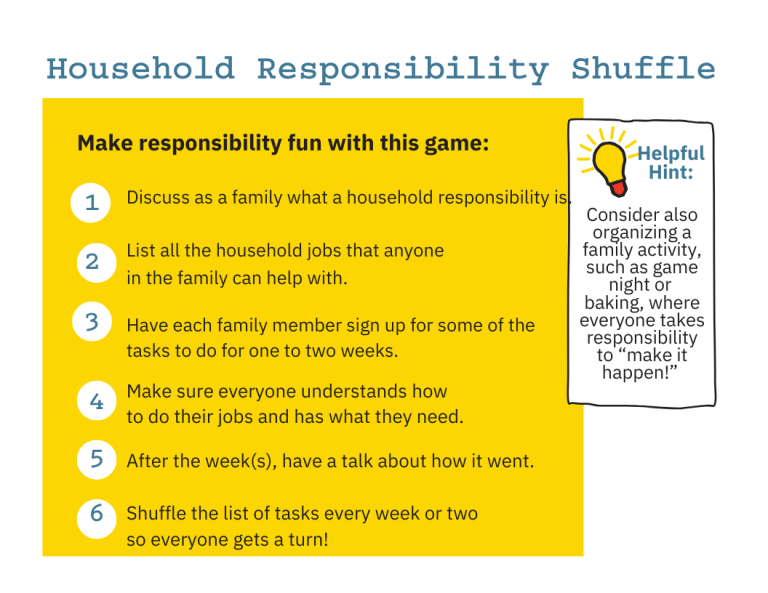
easy ways to make responsibility fun
Try this ‘household responsibility shuffle’ game as a way to discuss and establish household responsibilities as a family!
join the On Our Sleeves community
The mission of On Our Sleeves is to provide every community in America access to free, evidence-informed educational resources necessary for breaking stigmas about child mental health and educating families and advocates. For more information, visit OnOurSleeves.org.
related posts


care that goes above and beyond
Because every child deserves care that goes above and beyond, Dayton Children’s provides compassionate, expert care for kids of all ages. Find a provider, schedule an appointment, or learn more about conditions we treat today.
