- give
- |
- careers
- |
- healthcare professionals
- make a referral
- |
- pay bill
- mychart
- contact us
-
- English
- Türkçe
- Kinyarwanda
- Kiswahili
- Español
- Français
- Français - CA
- Русский
- العربية

Your child's health and safety is our top priority. Please search our resource library for information on health, nutrition, fitness, injury prevention and other important topics.
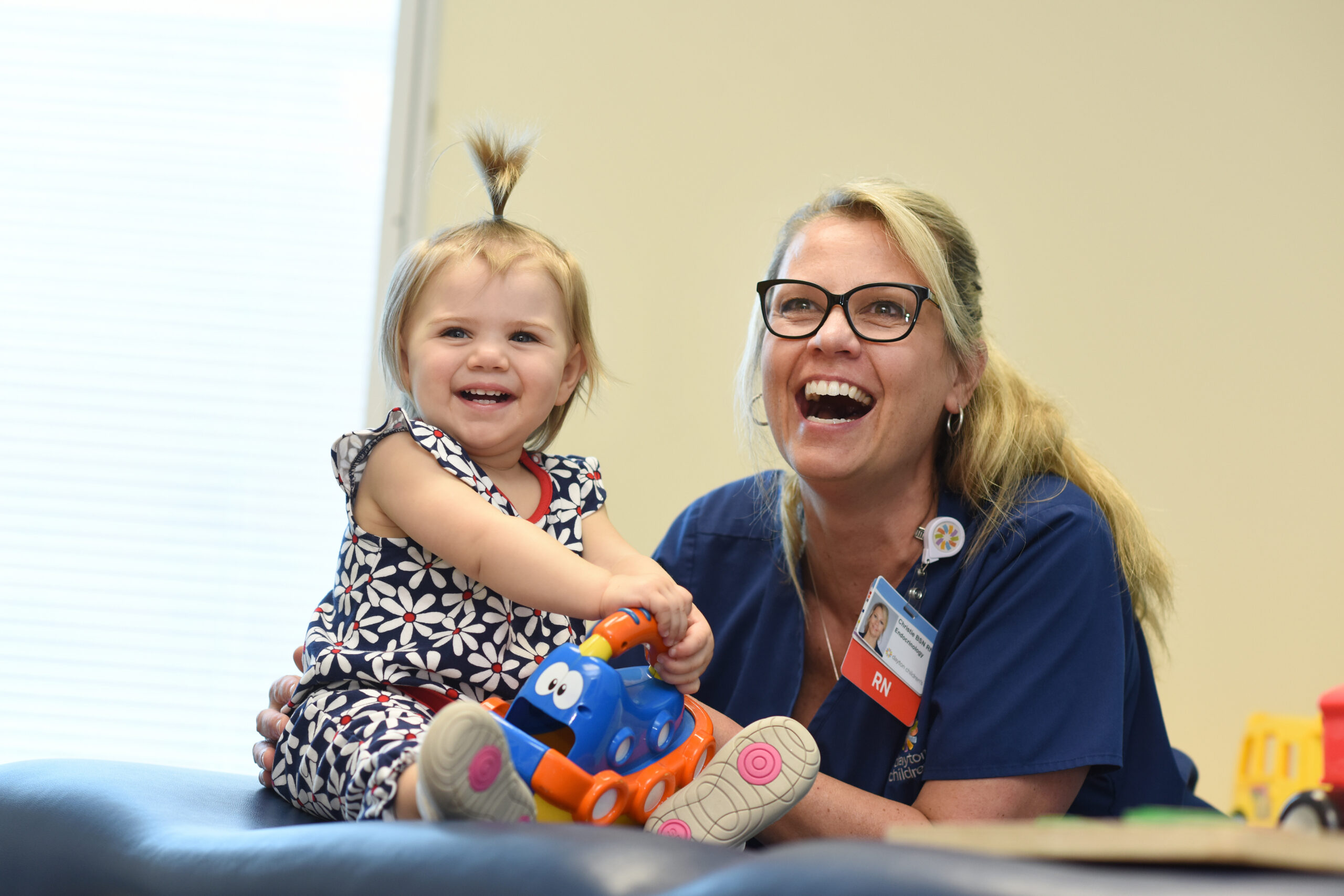
If you’re a new parent, get the basics in this guide about burping, bathing, bonding, and other baby-care concerns.
Failure to thrive refers to a child’s inability to gain weight and grow as expected for kids of the same age and gender. Most diagnoses are made in the first few years of life.
Baths keep your baby clean and help you bond. With some planning and practice, you both will look forward to bath time.
Doctors use milestones to tell if a child is developing as expected. Here are some things your child may be doing at 12 months (1 year).
Most kids grow well but some have ”failure to thrive.” This means they don’t gain weight as expected and may not grow as tall as they should.
When you first meet your newborn, you may be surprised by what you see. Here’s what to expect.
Doctors use growth charts to figure out whether kids’ height and weight measurements are “normal” and whether they’re developing on track. Here are some facts about growth charts.
Toddlers get stronger and more capable, but their growth slows this year. Learn how 1- to 2-year-olds grow and change.
Most toddlers ages 2–3 gain about 4 pounds (1.8 kg) and grow about 2–3 inches (5–8 cm). Learn how doctors track it.
Find out what the experts have to say.