February 21, 2023 | blog post

are martial arts bad for kids?

group of children meditate on yoga mats

Physical activity for children is so important. The impact is staggering, with years of research verifying the positive effects on kids’ mental and physical health. We’d call it a miracle drug if the benefits could be captured in a 10-mg tablet taken twice a day. For kids with depression or so-called ADHD, the effects are particularly beneficial.

Youth sports are the way many kids get exercise at an early age. However, by adolescence talent trumps desire, leaving many children wanting to play but unable to do so because of a lack of skill. In such situations, we may recommend that kids and parents consider dance, yoga and even martial arts.

Martial arts can be met with mixed reactions. Children, particularly aggressive youth, view martial arts as an opportunity to learn how to become better fighters. Parents are concerned that such programs will promote the type of mindless violence that they are trying to eliminate.

Well-respected martial arts programs promote self-discipline, emotional stability and respect, along with the enhancement of various physical skills. There has been lots of research that document the positive impact of martial arts programs on kids’ psychological health. For many kids, these programs are a way to learn the self-control skills that they cannot acquire in a therapist’s office.

Even so, while this might be true for some kids, parents are concerned that it doesn’t intuitively make sense to recommend that aggressive kids learn to become more skillful fighters.

Recently published research by Anna Harwood and her colleagues in the journal Aggression and Violent Behavior has now answered that concern. They analyzed twelve studies involving 507 kids, studying the impact of marital arts on aggressive and violent behavior. In nine of the twelve studies, martial arts had a positive effect and no impact in the other three studies.

These results make sense because good martial arts programs focus as much on positive psychology as they do on self-defense and fighting techniques. Instructors expect high standards of behavior during the class, and may even require that kids bring in their report cards for review. They focus on recognizing and controlling your emotional state and teaching alternatives to hurting others as a way to relieve your momentary frustration.

Good martial arts instructors teach in their studios many of the same skills we use in psychology. However, be as careful in selecting the right teacher as you would be in picking a psychologist. Observe several classes, ask about how misbehavior is managed and talk with other parents. Involve your child in that decision, and monitor their progress.

care that goes above and beyond

Because every child deserves care that goes above and beyond, Dayton Children’s provides compassionate, expert care for kids of all ages. Find a provider, schedule an appointment, or learn more about conditions we treat today.


February 9, 2023 | blog post

3 reasons to sign up for Imagination Library and start getting free books today

Celebrate National Library Lover’s month by building your family’s library

Mother and daughter read a book before bed

There’s so much to love about the library. Reading not only creates positive moments between family members, it’s also been proven to help children learn more and be better prepared for school!

start building your family’s library

This National Library Lover’s month, you can start creating your own family’s library for free thanks to Dolly Parton’s Imagination Library of Ohio.  

Dolly Parton’s Imagination Library is dedicated to inspiring a love of reading by gifting books free of charge to children from birth to age five, through funding shared by Dolly Parton and local community partners. If you start at birth, that’s 60 free books in total you’ll be getting and a lifetime of memories! So what are you waiting for? Get signed up today!

why is reading important?

Research has shown that signing up for Imagination Library has many benefits including: 

  1. Increasing the bond between caregivers and children: 81 percent of parents participating in Imagination Library say they’ve increased the frequency of reading with their children. 
  2. Making children more interested in reading: Children who read at an early age will become better students and live happier, healthier lives. Through reading, children begin to learn words and sounds, recognize pictures, and understand emotions. Reading better prepares children to start kindergarten by strengthening their vocabulary, expanding their speech, helping to create a regular routine, and so much more.
  3. Preparing children for Kindergarten and developing their early literacy skills: Research shows an increase and improvement in kindergarten readiness when children are involved with the Imagination Library program. The longer a child is enrolled in the program, the greater the outcome. Currently, only 34% of children in Montgomery County are demonstrating kindergarten readiness. Dayton Children’s Hospital is working to address this statistic by supporting early literacy to improve kindergarten readiness as the Montgomery County affiliate for Imagination Library of Ohio. 

signing up for Imagination Library

What to expect when you sign up: Each month, Dolly Parton’s Imagination Library mails a high quality, age appropriate book to all registered children, addressed to them, at no cost to the child’s family.  

The books are chosen by the Blue Ribbon Book Selection Committee who make sure that each book that the child receives will contain certain characteristics that are specific for the child’s age 

The first book every child receives is “The Little Engine That Could.” Then, the month that a child turns 5 years old, they will receive “Look Out Kindergarten, Here I Come!” Several bilingual English/Spanish titles are included each year. 

Want to learn more about the books your child can expect to receive this year? Check out the 2023 book list categorized by age group. 

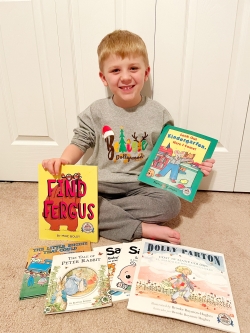
child poses with new books he got from the Imagination Library

how to sign up

Click here to enroll!

The simple enrollment process allows families with children under the age of 5 to sign up online at OhioImaginationLibrary.org/Enroll or by using a paper form available at partner locations. Typically, the first book arrives 8-10 weeks after sign-up, and then monthly after that. Children graduate out of the program at their 5th birthday as they prepare to enter kindergarten. By signing children up for this program, parents and caregivers can show their children the value of books and set an incredible foundation for learning. 

more about Imagination Library of Ohio

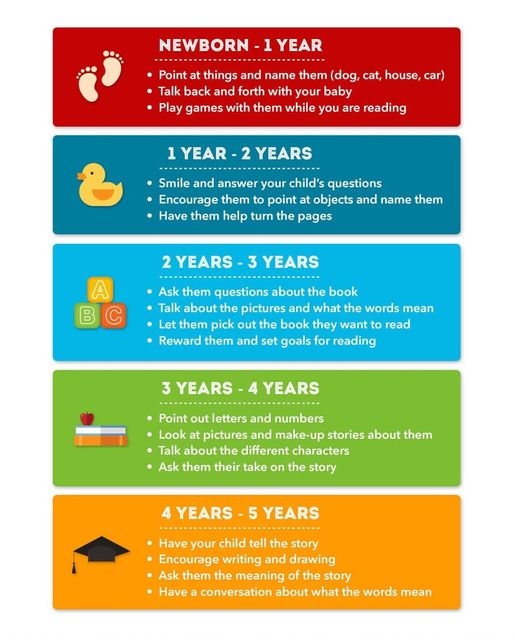
Check out the graphic here for some helpful tips to make storytime more engaging!

care that goes above and beyond

Because every child deserves care that goes above and beyond, Dayton Children’s provides compassionate, expert care for kids of all ages. Find a provider, schedule an appointment, or learn more about conditions we treat today.
January 30, 2023 | blog post

what’s this red bump that won’t go away?


Have you noticed a small red bump on your child’s face or body? They could have molluscum contagiosum. 

what is molluscum contagiosum?

These are small bumps 1-5 mm in size and are caused by a virus in the poxvirus family. They occur mostly in children aged 1-10 years,  though people of any age can get molluscum. They can show up anywhere on the body and are firm and flesh/white/pink color. Molluscum bumps may come alone or in groups and have the signature umbilicated (dimpled) appearance.

As the name suggests, molluscum contagiosum is contagious. They can spread by person-to-person contact or through objects such as toys and towels. The virus lives in the skin so it does not spread through saliva or sneezing. Children with atopic dermatitis (eczema) or whose immune systems are suppressed are at increased risk for more severe cases. Because lesions persist for so long, the best way to prevent spread is good hand washing. Keeping lesions on the hands covered may also help prevent the spread to others.

Treatment for molluscum is typically watchful waiting. Lesions will go away on their own and typically resolve within 6-12 months, but they can persist for up to four years!  For more severe cases, doctors can treat the lesions with cryotherapy, laser therapy or curettage.

Topical treatments such as Cantharidin, salicylic acid, tretinoin and imiquimod can also be used. The goal of these topical treatments is to irritate the skin around the molluscum as a way to “alert” the body to the virus and start attacking it. Unfortunately, molluscum being a poxvirus, it can scar with or without treatment but luckily they typically do not!

related posts

No posts found.

care that goes above and beyond

Because every child deserves care that goes above and beyond, Dayton Children’s provides compassionate, expert care for kids of all ages. Find a provider, schedule an appointment, or learn more about conditions we treat today.

December 12, 2022 | blog post

could your baby have a tongue or lip tie?

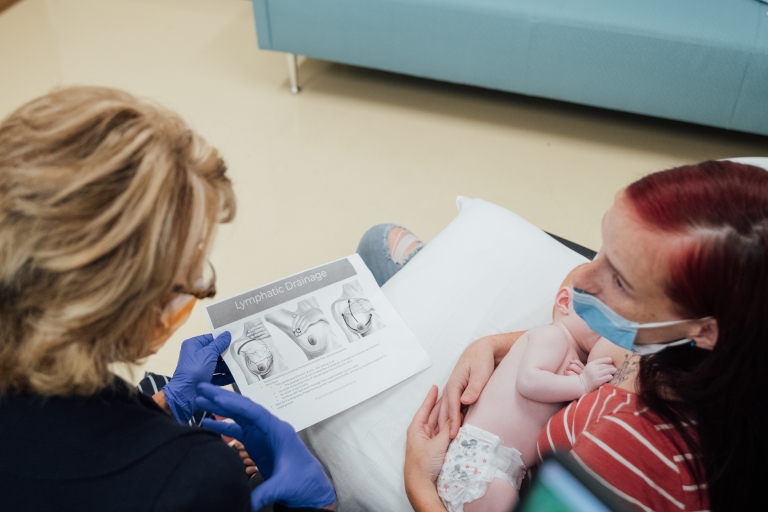
a lactation consultant meets with a new mother

Search “tongue and lip ties” and you will get numerous articles claiming it is the cause of breastfeeding issues or fussy babies. However, there is little evidence to support it. So who is right? Is it worth investigating? This article discusses what is important to assess when feeding your baby.

common concerns

  • Baby is not able to stay latched or not latching to breast deeply, becoming unsettled/upset
  • Maternal nipple pain with feeding or damage or compressed nipple shape after feeding
  • Baby is not able to remove adequate milk volume; very long feeds or very short feeds; baby may fall asleep at breast due to fatigue or not being able to get milk flowing well
  • Weight loss/poor weight gain in baby
  • Excessive gas
  • Decreased milk supply
  • Tension in oral cavity, oral motor dysfunction; tension in back or neck, open mouth at rest

lactation support

First, we suggest trying non-invasive measures to address any issues. Some of the issues commonly thought to be attributed to ties can be greatly improved with oral exercises and massage, in addition to breastfeeding positions, techniques and supply management. A thorough breastfeeding assessment, pumping guidance/assessment, oral assessment, supplementation guidance and bottle-feeding technique guidance/assessment, if needed, is important to help get to the root cause of the issue(s).

“tongue and/or lip tie” procedure

Sometimes it is necessary to have a lip or tongue frenotomy (the procedure in which the lip or tongue tie is cut). This can be an immediate game changer for some, and of great help for current and longer-term issues. However, releasing a tongue tie or lip tie may only be the first step in getting the baby to actually use their new anatomical ability. They likely also need a combination of lactation support, “body work” (stretching/massage/etc.), oral exercises/suck training and time to learn a new oral motor pattern. Many babies have developed compensations related to their tongue or lip tie that continue as muscle memory and have leftover muscle tightness that continue to impact feeding.

get help

Whether it is uncertain if an anatomical “tie” exists or if one has already been diagnosed and referred to an ENT or dentist, lactation support can usually help improve feeding issues in the meantime or even eliminate the need for a procedure and/or improve the outcome after a procedure.

At Dayton Children’s, our outpatient lactation clinic specializes in helping with feeding issues. Our staff has additional training in oral exercises and infant massage/relaxation/range of motion and tummy time techniques to help improve feeding issues.

Schedule a consultation with a lactation specialist online today.

care that goes above and beyond

Because every child deserves care that goes above and beyond, Dayton Children’s provides compassionate, expert care for kids of all ages. Find a provider, schedule an appointment, or learn more about conditions we treat today.
November 1, 2022 | blog post

How do you find developmentally appropriate toys?

Check out this toy list!

Whether it’s a birthday or Christmas present, how do you find developmentally appropriate toys? Navigating the toy aisle can be overwhelming with so many options and with online retailers like Amazon the options are almost limitless. Here are a few tips to help you out.

  1. Video or electronic games. These limit a child’s imagination.
  2. Beware of “educational” claims. Many of these claims are not supported.
  3. Avoid “close-end” toys like board games that have set rules and don’t allow for imagination.

Remember, the more a toy does (lights, music, sounds, batteries), the less your child has to do.

Tips for finding the right toy

The more children have to use their minds and bodies to make something work, the more they learn. Below is a list of tips to help you find the right toy for any child.

  • Choose toys that can be used in a variety of ways.  Toys should be “open-ended” in the sense that your child can play many different games with them (for example, wooden blocks can be used to make a castle). Open-ended toys benefit your child’s imagination and help them develop problem-solving and logical thinking skills.
  • Find toys that will grow with your child. Look for toys that will have different uses and be fun in different ways at various developmental stages.
    • Plastic animals
    • Action figures
    • Toddler-friendly playhouse
    • Vehicles such as trains, planes, and trucks
    • Stuffed animals and dolls
  • Select toys that encourage exploration and problem-solving. Toys that give your child a chance to figure something out on his or her own build logical thinking skills and will help your child become a better problem-solver.
    • Puzzles
    • Shape-sorters
    • Art materials like clay, paint, crayons or play-dough
  • Look for toys that spark your child’s imagination. Your child’s creativity is blooming. Pretend play builds language and literacy skills, problem-solving skills and the ability to sequence (put events in a logical order).
    • Dress-up clothes
    • Toy food and plastic plates
    • Toy tools or doctor’s kit
  • Provide toys for nurturing literacy. Look for things to help your child develop early writing and reading skills.
    • Books
    • Foam bath letters
    • Art supplies like markers, crayons and finger-paints 
  • Select toys that encourage your child to be active. Look for toys that help your child practice gross motor development.
    • Balls of different shapes and sizes
    • Tricycles or age-appropriate scooters
    • Pull or push toys (toy lawn mower)
    • Wagon
    • Gardening tools to dig and rake with (in sand or dirt at the park)

Need more help? We have a list by age too!

Group of adorable student clapping hands at nursery school. Adorable schoolboy and girl feel happy and enjoy back to school, learning with teacher in classroom at elementary kindergarten.
  • Soft cuddly items (stuffed animals, cloth dolls)
  • Water play toys for bath time
  • Crib gyms
  • Floor activity quilts
  • Soft mats to pat
  • Plastic-coated books
  • Rattles and sound-makers such as squeak toys
  • Foam blocks
  • Stacking toys
  • Push-pull toys
  • Pop-up toys
  • Board books
  • Two- to four-piece puzzles
  • Balls
  • Wooden blocks
  • Construction toys
  • Pretend-play toys
  • Nesting table toys
  • Wheeled toys and train sets
  • Nontoxic art and clay-like modeling materials
  • Up to 16-piece puzzles
  • Activity play stations such as airport, farm or zoo
  • Jigsaw puzzles
  • Complex card and board game
  • Arts and crafts kits
  • Car or airplane model kits
  • Natural science collections
  • Jump rope
  • Bike or scooter
  • Chapter books and short novels
  • Sports equipment
  • Musical instruments

related posts


No posts found.

care that goes above and beyond

Because every child deserves care that goes above and beyond, Dayton Children’s provides compassionate, expert care for kids of all ages. Find a provider, schedule an appointment, or learn more about conditions we treat today.

October 3, 2022 | blog post

does my child have sleep-disordered breathing?

Does your child have recurring strep throat? Do they snore? Take our 30-second quiz below to see if your child might have sleep-disordered breathing. They may benefit from having their tonsils and adenoids removed by a pediatric ENT specialist at Dayton Children’s.

related posts

No posts found.

contact us

For more information about pediatric ENT at Dayton Children’s, please call 937-641-4647

care that goes above and beyond

Because every child deserves care that goes above and beyond, Dayton Children’s provides compassionate, expert care for kids of all ages. Find a provider, schedule an appointment, or learn more about conditions we treat today.

September 16, 2022 | blog post

what does a Gait Lab engineer do?

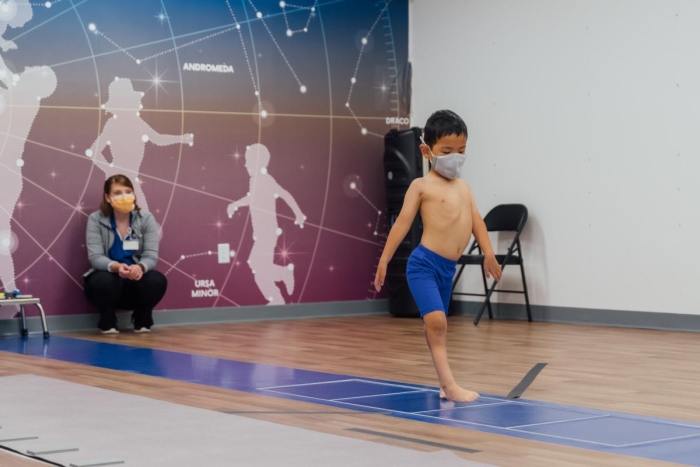
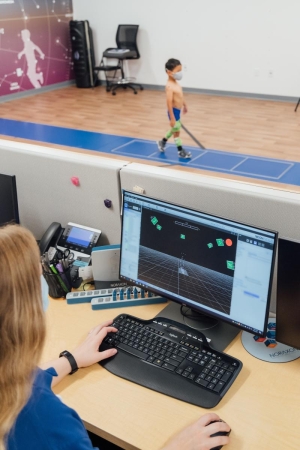
Dayton Children’s is one of the few hospitals in the world that offers patients a gait and motion analysis laboratory. The Gait Lab’s state-of-the-art computer technology can identify problems that are not always detectable in a typical clinical exam and offer children more specific treatment options for movement issues with better results. 

To do this work, it takes a multidisciplinary team that includes an orthopedic surgeon, physical therapists, and a biomedical engineer. That’s right, an engineer!  

We sat down with Tessa Hill, Gait Lab engineer, to talk more about the Gait Lab and her role on the team. 

what is the Gait Lab? 
The Gait Lab uses high-tech cameras and sensors to analyze how people move. Children are often referred to the Gait Lab if they have orthopedic/musculoskeletal conditions that impact their gait and functional mobility. Information from the lab can help with surgical planning, brace/spasticity management, and other recommended treatments.  

The Gait Lab sees children with a variety of diagnoses such as:  

  • Cerebral palsy 
  • Spina bifida 
  • Muscular dystrophies 
  • Spasticity 
  • Femoral/tibial torsion 
  • Leg length discrepancy 

what is the role of a Gait Lab engineer? 
The Gait Lab engineer oversees preparing the patients and the equipment for data collections. Before the collection, I turn on and calibrate the equipment in the lab. I place small reflective markers on the patients so the cameras can track their movement. This is sometimes challenging with our wiggly little patients! After I collect the data, I process it into a comprehensive report that I present to our multidisciplinary team. This data helps the team decide the best treatment options for the patient.  

what kind of training did you have to become a Gait Lab engineer? 

I received my training at the University of Dayton (UD) where I obtained a bachelor’s degree in mechanical/ biomechanical engineering. I have conducted research at UD in various topics like bracing in multiple sclerosis, virtual reality’s effect on balance, and therapies in spinal cord injuries. I am currently working towards a master’s degree at UD and continue to learn more every day!  

what types of technology and/or equipment is utilized in the Gait Lab? The Gait Lab uses high- tech cameras to track how people move. These are the same cameras that are used to create animated movies! There are force plates in the ground that the patient walks over to show the forces in the child’s joints. EMG sensors are placed on the skin to see how the muscles are activating underneath. There is also a pressure-sensitive walkway that can show how weight is being distributed on the foot with walking. All of this equipment gives us information to help illustrate the child’s gait and function.  

what is your favorite part about working in the Gait Lab? 
I really love working with the children we help. It’s amazing to see the world through the eyes of a child. Our patients say the funniest things in the lab that crack me up! To know that I play a small part in helping these children receive better care, is incredibly rewarding to me.  

The Gait Lab is currently “under review” for the national accreditation through the Commission for Motion Laboratory Accreditation (CMLA). Only 14 other labs in the world have received this prestigious recognition.

care that goes above and beyond

Because every child deserves care that goes above and beyond, Dayton Children’s provides compassionate, expert care for kids of all ages. Find a provider, schedule an appointment, or learn more about conditions we treat today.
June 18, 2022 | blog post

3 tips for talking to your kids about Juneteenth

Juneteenth design

By: Latisha Gathers-Hutchins, PhD.

The holiday Juneteenth (short for June 19th) will be here soon. If your school experience was similar to mine, you might have never heard about Juneteenth in your history classes. Nonetheless, it is an important holiday to be aware of and to talk to your kids about.

Juneteenth is a holiday commemorating the day, June 19th of 1865, when slaves in Texas learned about their freedom. This was about 2 and a half years after the Emancipation Proclamation went into effect (January 1st, 1863). Though slaves were free “on paper,” many were not aware of the news, especially in the states close to the southern border. Thus, Juneteenth represents the day when all slaves were free and commemorates the ending of slavery in the United States.

This holiday is important because it reminds us that the process of ending slavery was not one moment in time but multiple moments. The process continues today as we are still addressing the consequences of our history. It is also a story of hope for change, even though the process may belong. It is an important reminder that freedom is essential for all.

Juneteenth is also sometimes called Freedom Day, Black Independence Day, Jubilee Day, and others. Juneteenth is celebrated in several ways, including cook-outs/barbeques, religious services, festivals and parades.

3 tips for talking to your kids about Juneteenth

1. Educate yourself about Juneteenth before talking to your child.  You do not have to complete an in-depth study of the holiday before you start the conversation. Just familiarize yourself with the history and importance. If your child asks questions, it is okay to say, “I don’t know.” You can always look up the answer later to provide to your child. There are so many resources available from books, TV shows, articles, and podcasts. You can also review kids’ books about the holiday before discussing it with your children.

2. Share the information you’ve learned with your child. Make sure to review these resources to ensure they fit your child’s developmental level. Read books together, look at online videos, watch shows about Juneteenth. There are resources for children of every age, from Sesame Street Juneteenth videos for the younger children to books and tv shows for older children/teens. For a list of book resources check out this website. Also, please look on YouTube for videos, including videos from PBS kids and Sesame Street.

3. Celebrate and learn as a family! 

  • Participate in a community event: There are events in Dayton and surrounding areas celebrating Juneteenth this weekend. Be sure to take appropriate precautions to keep you and your family safe.
  • Have an outdoor cook-out or barbeque: Incorporate red foods that are traditionally used in Juneteenth celebrations. There are a few theories regarding the use of red foods. Still, most agree that red represents the strength and resilience of Black Americans.
  • Have a read-a-thon: Read books as a family about Juneteenth and Black American culture
  • Explore museum programs:The National Underground Railroad Freedom Center is offering an online presentation for the holiday. There may be other options available as well
  • Watch Juneteenth events on TV: this may include live music shows and the reading of the emancipation proclamation.

There are so many ways to celebrate this holiday, and these only represent a few examples.

Happy Juneteenth, everyone!

care that goes above and beyond

Because every child deserves care that goes above and beyond, Dayton Children’s provides compassionate, expert care for kids of all ages. Find a provider, schedule an appointment, or learn more about conditions we treat today.
May 5, 2022 | blog post

3 tips quick tips to help your child’s brain development

Dad with child on phone and computer

Helping your little one’s brain and language development is easier than you may think with these easy tips!

  1. Do lots of talking. The more words your child hears, the better!
  2. Be a tuned-in communication partner. When your child cries, coos, smiles, and laughs, they are trying to tell you something. Talk back!
  3. Give your full attention. This means dedicated screen-free time. So much learning happens when you notice your child’s interests and respond (“Oh, you see that ball? It’s bouncing.”)  

Did you know the use of screens—both by you and by your child—can interrupt your child’s healthy development? Here’s why screen-free time is important: 

  • Studies have shown that parents speak fewer words when they are using a smartphone. Find time to put screens away so you can talk about your activities.
  • Looking down at your device makes it harder to notice your child’s smiles and sounds, leading to missed opportunities to connect and communicate. Your child wants to see your face!
  • Use of screens by children can delay their speech and language development. They may not be talking yet, but they are learning words by interacting with you.
  • When babies and toddlers use screens, it can be harder for them to learn how to soothe themselves. Giving your fussy baby or toddler your phone may help in the moment, but not in the long run.
  • Talk with your partner about how you can both create technology-free spaces.
  • Commit to tech-free times each day—such as meal times, caregiving, and play times.

While zero screen time for your child’s early development is best, it’s not always realistic. What’s most important is that you do your best to achieve a healthy balance. Turn to your pediatrician, speech-language pathologist, and other trusted experts for guidance about screen-time use.

care that goes above and beyond

Because every child deserves care that goes above and beyond, Dayton Children’s provides compassionate, expert care for kids of all ages. Find a provider, schedule an appointment, or learn more about conditions we treat today.

May 3, 2022 | blog post

could my child’s tummy aches be celiac disease?

Young girl holds stomach symbolizing a tummy ache

When our children complain of stomach pain, or experience diarrhea after eating, it’s hard to know as parents if it is a typical childhood reaction, or if your child has a sensitivity or intolerance to certain foods. If your child regularly shows symptoms of stomach pain, diarrhea, tiredness or skin rashes after eating foods such as pizza, fried chicken or pasta, they may be experiencing an intolerance to gluten known as celiac disease. About 1 in every 133 people in the United States has celiac disease. Many people who have celiac disease do not know it.

what is celiac disease?

Celiac disease is an autoimmune condition triggered by gluten that leads to damage in the small intestine. Gluten is the general name of the proteins found in wheat, rye and barley and other grains.

In kids with celiac disease, gluten damages villi. Villi are the finger-like projections in the small intestine responsible for absorbing nutrients from food. When the villi are damaged, the body can’t absorb nutrients the body needs. If that happens, a child can become underweight and grow poorly.

Some people who eat gluten can have symptoms such as diarrhea, abdominal pain and bloating, weight loss, tiredness, and skin rashes. Some people with celiac disease have no symptoms at all, but still have gluten-induced damage to their small intestine.

People with celiac disease are at risk of malnutrition, anemia (fewer red blood cells due to lack of iron) and osteoporosis (weakened bones from lack of calcium). There is currently no cure for celiac disease, but there are ways to minimize symptoms and damage to the intestines.

what is the difference between a gluten intolerance and celiac disease?

Some people experience symptoms found in celiac disease, but they do not test positive for celiac disease. This is usually referred to as non-celiac gluten sensitivity (NCGS) or non-celiac wheat sensitivity (NCWS).

The difference between a gluten intolerance and celiac disease is that a gluten intolerance causes short-term symptoms and doesn’t usually cause long-term harm to the body. Individuals with gluten intolerance may find relief by the volume of gluten in their diet or eliminating gluten from their diet entirely.

what are the signs and symptoms of celiac disease?

According to KidsHealth, some common symptoms of celiac disease are:

  • diarrhea
  • decreased appetite 
  • stomachache and bloating
  • poor growth
  • weight loss.

Someone with celiac disease may feel tired and could be irritable. Some may develop skin rashes and mouth sores. Celiac disease is sometimes mistaken for other digestive problems called inflammatory bowel disease (IBD) or lactose intolerance. And in some cases, a kid won’t have any symptoms and then will suddenly start having problems during a time of stress, such as after an injury.

when are kids diagnosed with celiac disease?

Many kids are diagnosed with it when they’re between 6 months and 2-years-old, which is when most kids get their first taste of gluten in foods.

For some people, the problems start slowly, and the symptoms may be terrible one week and not as bad the next. Because of this, some people aren’t diagnosed with celiac disease until they’re older. The problem is chronic, which means that although symptoms may come and go, people who have celiac disease will always have it.

when should I take my child to see a specialist?

If your child is having a lot of stomachaches, diarrhea, weight loss, or any of the other symptoms of celiac disease you should talk to their primary care provider or schedule an appointment with one of our pediatric gastroenterologists. Their symptoms may or may not be related to celiac disease, but your child’s provider can help sort it out and will usually order a simple blood test that measures the level of antibodies to gluten and other proteins involved in celiac disease. If high levels of these antibodies are found, a pediatric gastroenterologist will likely order an upper endoscopy of the small intestine and send it to a laboratory for testing.

If your child is diagnosed with celiac disease, they will be paired with a physician and a dietitian specialized in treating children with this disorder. The dietitian will work with you and your child on implementing a new gluten-free lifestyle.

care that goes above and beyond

Because every child deserves care that goes above and beyond, Dayton Children’s provides compassionate, expert care for kids of all ages. Find a provider, schedule an appointment, or learn more about conditions we treat today.