February 10, 2026 | blog post

5 heart-healthy add-ins to support kids’ growing hearts 

Mother figure makes heart hands with young girl in a park

If you have a young child, heart health is probably not at the top of your list to think or even worry about. But the habits kids build early can shape their health for years to come. How children move, eat, sleep and handle stress all play a role in keeping their hearts strong.

Caring for your child’s heart doesn’t mean changing everything or giving up foods and activities they love. At Dayton Children’s Hospital, our heart experts recommend adding small, positive habits into your every day life to help kids have healthy hearts as they grow! 

“Heart health is built little by little,” says Smita Mehta, MD, pediatric cardiologist at Dayton Children’s. “Research shows that adding positive habits, rather than trying to stop negative habits, can help the changes stick over time.” 

Here are five easy, family-friendly add-ins you can start today! 

1. Add small moments of movement in your day 

Kids don’t need long workouts to help their hearts. Short bursts of movement through the day can help boost heart health and energy. Activities like these help kids stay active and build healthy movement habits in a fun, simple way.  

  • Jumping jacks between doing homework
  • A short family walk after dinner 
  • Dancing or stretching between commercial breaks 
  • 15 minutes of activity for every 15 minutes of screen time  

2. Add more whole foods and plant-based foods

Instead of taking away your favorite foods, focus on adding healthier ones. These foods support heart health and overall wellness while keeping meals enjoyable.

  • Add fruit to breakfast or after-school snacks
  • Add vegetables to meals your child already enjoys
  • Add beans, nuts, or seeds to lunches or snacks

Families can find even more healthy eating tips here.

3. Add better sleep by turning off screens 

Sleep is important for your child’s heart, mood and energy. One helpful habit is turning off screens an hour before bedtime. Reading, listening to music or gentle stretching are great adds for a screen-free bedtime routine. Have your child pick their favorite screen-free option, so they can relax and get the rest they need. Better sleep can: 

  • Reduce sugar cravings 
  • Improve focus and behavior 
  • Support healthy growth

Discover more practical tips for helping kids get better sleep here.

4. Add calm with mindfulness and relaxation 

Kids and teens feel stressed, too. Learning simple ways to slow down can help their hearts and emotions. These small moments can help kids feel calmer, more focused, and more connected. Dr. Mehta suggests: 

  • A few minutes of calm breathing or stretching twice a day
  • Adding three positive thoughts for every negative thought 
  • Adding mindfulness activities that you can practice together and do in moments of stress

5. Ask important questions at medical visits

Heart health also means helping kids make safe choices as they grow. One simple step is to ask your child’s doctor questions like, “Can we talk about how to avoid tobacco, alcohol or vaping?” These conversations give kids clear, honest information and support healthy choices now and later. 

Supporting heart health doesn’t have to feel overwhelming. With small, steady add-ins and guidance from pediatric experts, families can build healthy habits that last.  If you have questions about your child’s heart health or notice symptoms that concern you, our pediatric cardiology team is here to help.

Pediatric cardiologist poses with patient and smiles

care that goes above and beyond

Because every child deserves care that goes above and beyond, Dayton Children’s provides compassionate, expert care for kids of all ages. Find a provider, schedule an appointment, or learn more about conditions we treat today.


October 25, 2024 | blog post

4 tips to prepare your kiddo for the upcoming time change

Time change with clock on blue background

The time change is notorious for messing with everyone’s sleep schedule, but it really messes with our kiddos because they can’t adjust to a new schedule in just one night.

The time change can cause kids to be cranky because their sleep cycle will be slightly “off” for a little bit of time. To help prepare for the upcoming time change, Khalid Safi, MD, chief of sleep medicine at Dayton Children’s Hospital, is providing tips for parents to get their kiddo ready for the extra hour.

tips to prepare for the time change

1. Start the transition early.

  • For falling back an hour, start putting your little one to bed 10 to 15 minutes later every night starting a week before the time change.
  • For springing forward an hour, starting putting your little one to bed 10 to 15 minutes earlier every night starting a week before the time change. 
  • The extra 10-15 minutes each night will get them prepared for the hour difference they will have the night of the time change.

2. Maintain routines. Even though you’re moving your sleep schedule 10-15 minutes, it’s important to maintain your normal bedtime routine. Whether it’s a bath before bed, reading a book together, or snuggling, just make sure that your child’s routine remains intact.

3. Use “okay to wake” systems. Okay to wake alarm clocks and night lights provide your child with a time when it’s okay to wake up or come out of their room. Start setting the time 10-15 min later each day for a week leading up to the time change.

4. Limit screen time before bed. Children should stop using electronics at least 30 minutes before their bedtime routine starts. Electronics mess with the brains ability to produce melatonin which can make falling asleep harder.

By following these four steps your child should adjust to the time change within a week or so. If your child is taking longer than that, talk with their pediatrician about possibly seeing a pediatric sleep specialist.

To learn more about sleep medicine at Dayton Children’s, or to schedule an appointment online click here.

care that goes above and beyond

Because every child deserves care that goes above and beyond, Dayton Children’s provides compassionate, expert care for kids of all ages. Find a provider, schedule an appointment, or learn more about conditions we treat today.
February 26, 2024 | blog post

a day in the life of a same-day surgery patient

Have you ever wondered what happens if your child has same-day surgery? How long does it take, and what does it entail? Maybe you’ve never heard of the program and now you’re curious. Well, you’re not alone!

The same-say surgery program at Dayton Children’s is intended for patients with inguinal and umbilical hernias, as well as undescended testicles, circumcision, ingrown toenails and tongue ties. The program allows families the ability to schedule a surgical consult and the operation on the same day at Dayton Children’s convenient south campus in Springboro.

Program benefits:

  • Minimizes time away from school and work
  • Surgery is performed on a Friday; most kids recover over the weekend and return to school the following Monday
  • Reduced office visits and time spent in a healthcare setting. Most same-day surgery patients are in and out of the hospital within 3 to 4 hours, and that includes their surgery!

To help understand the process, we shadowed Logan from start to finish during his same-day surgery, documenting each step along the way.

before surgery

A week before Logan’s big day at Dayton Children’s, his mom receives a call from the surgery clinic after receiving a referral from Logan’s pediatrician. The kind voice on the other end wanted to make sure Logan was an eligible candidate for same-day surgery. After several questions and determining that he would make a perfect patient for the program, she provided detailed instructions regarding eating, drinking, taking medications and what to do if Logan developed an illness prior to surgery.

day of surgery

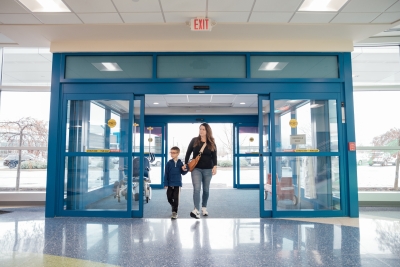
8:15 am – Filled with excitement and nerves, Logan and his mom arrive at Dayton Children’s south campus in Springboro. Logan is immediately distracted by the playful decorations and colorful lights and forgets why he is at the hospital. Mom, however, reminds him they must head to the second floor and check in for his clinic consultation.

8:30 am – Logan’s name is called from the door to the clinic space by a welcoming voice. Kalista, a patient care assistant (PCA) for the surgery clinic leads Logan and his mom to their consultation room. Here she measures his weight and height and gets the other necessary vitals to make sure he is healthy and ready for surgery. Shortly after Kalista collects Logan’s vitals, Dr. Arturo Aranda, division chief of pediatric surgery, enters the room. He begins his evaluation to determine if Logan is a candidate for same-day surgery. While evaluating Logan, Dr. Aranda answers questions mom has about the surgery and recovery, making her feel more at ease. After completing his evaluation, Dr. Aranda agrees that Logan will make an excellent candidate for same-day surgery, and he asks Kalista to put him on the surgery schedule for later that morning.

9:30 am – After Kalista coordinates Logan’s surgery details, she walks him and his mom to the surgery center where they meet Christine, who walks them through the surgery registration process. She gives both Logan and mom special bracelets so everyone knows who they are and that they belong together. She also gives mom a code that is unique to Logan. The code will appear on monitors throughout the surgery center and mom will be able to tell where he is in the surgical process based on the color of his code.

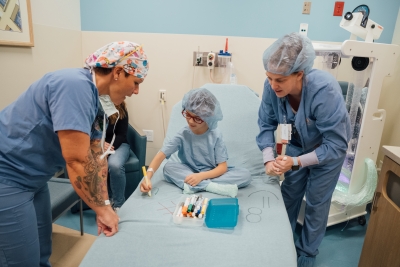
9:40 am –  Logan and his mom are led back to his pre-op room. He changes into a surgical gown, Kristen and Sunshine record Logan’s vitals and answer any lingering questions mom has. To keep Logan occupied, Kristen and Sunshine hand him a box of markers and begin playing tic-tac-toe on his bed. One thing leads to another, and Logan’s sheet is transformed into a canvas of colors, once again making him forget about his pre-surgery nerves.

10:00 am – It’s time for surgery! After an infinite amount of hugs and kisses (and maybe a few tears from mom), Logan climbs into a cool blue car and pretends to drive through the operating room doors. While Logan is in the good hands of Dr. Aranda and the rest of the surgical staff, mom remembers passing the UpCafe on their way to the surgery center. With Logan’s special code in hand, she grabs a cup of coffee and finds a place to wait where she can watch his progress on the monitors.

11:00 am – Logan’s mom watches the monitors as his code moves from surgery to recovery. The surgical staff calls her name and leads her to a consultation room where Dr. Aranda joins her. He goes over the details of Logan’s surgery and lets her know that she will be able to see him as soon as he wakes up from the anesthesia. Shortly after speaking with Dr. Aranda, mom is taken back to recovery where she finds Logan being attended to by staff with warm blankets and a slushy in his favorite flavor, blue raspberry!

Noon – It’s time to go home! Logan gets dressed and the nursing team goes over discharge instructions with mom. Logan’s mom receives a printout with wound care instructions and a direct phone number to call if an issue occurs. Minutes later, they are walking out of the hospital.

post-surgery

Home recovery – Once home, Logan settles in on the couch with a snack and his favorite movie. He isn’t in much pain, but he does feel worn out from the day’s activities. Over the weekend it will be important that Logan rests as much as possible, so he is ready to return to school on Monday.

Monday morning – Logan is feeling great, and he is ready to go back to school. Mom is grateful that he was able to recover over the weekend and they only had to take one day off from school and work.

two weeks later

Follow-up call – After two weeks have passed since Logan’s surgery, mom receives a call from a nurse in the surgery clinic. She checks in to make sure Logan’s recovery is going well and asks mom if she has any questions. Mom shares that Logan is doing great! He is completely healed and back to his regular activities.

The same-day surgery program was a blessing for our family. It meant less time away from school and work, a smooth journey from clinic to recovery and the comfort of knowing our child was in expert hands every step of the way. Grateful for a program that truly puts families first!” – Logan’s mom

care that goes above and beyond

Because every child deserves care that goes above and beyond, Dayton Children’s provides compassionate, expert care for kids of all ages. Find a provider, schedule an appointment, or learn more about conditions we treat today.
June 23, 2023 | blog post

10 tips for raising independent kids

Father and son put garlic and herbs on a chicken and vegetable dish they are preparing to cook

One goal most parents have is to raise confident, independent children who are eventually capable of taking care of themselves. Here are a few tips on how to foster independence in our children.

1. Let children do things for themselves.

While it may be easier to do things yourself, this doesn’t teach your children anything about the tasks at hand. Show them, teach them, and then let your children do things on their own.

2. Give children responsibilities.

Everyone lives in your home and makes messes, so everyone should help to keep the house clean. Chores help teach children valuable life skills, responsibility, and respect for themselves and others.

3. Teach children life skills.

Knowledge of basic life skills including cooking, laundry, and managing money (how to save and spend) will help children grow into independent adults.

4. Teach children how to care for others.

By caring for others, children learn important lessons regarding responsibility and the need to think of others. Start by allowing your children to care for a pet (you can begin small with a fish), or allowing older children to care for a younger sibling.

5. Allow children to work out conflicts themselves.

Teach your children how to resolve conflicts with siblings or peers (e.g., negotiating, compromising) so they will know how to handle these situations without your help.

Nut-aware environments put a lot of effort into preventing cross contamination through proper handling of food and proper hygiene. They will usually have a nut-free table for children with an allergy to eat at during mealtime. Many districts have made these tables optional for the food allergic child.

6. Create an independent environment.

Allow your children to make some of their own choices (this can range from choosing their clothing for the day to picking between a “regular” class and an “honors” class in school). Give your children space when they need it. Alone time can be healthy, allowing children to gather their thoughts and create their own plans.

7. Show confidence in your children.

Acknowledge your pride in your children’s accomplishments. Be sure to praise effort and work put into something rather than just praising success. If you only praise success, your children with learn to think failure is bad.

8. Teach children to advocate for themselves.

Don’t immediately rush in to “rescue” your children when a conflict or problem arises. Talk your children through different ways they can advocate for themselves, even engaging in some role-playing so your children can practice what they will say to stand up for themselves.

9. Encourage children to get outside their comfort zone.

Growth occurs when children take risks and step outside their comfort zones. Encourage your children to take risks, even when the possibility of failure is very real.

10. Let your children make mistakes and fail.

Teach your children that failure is one possible outcome that happens to everyone at times. It is not something that needs to be feared or avoided at all costs. Teaching your children it is okay to keep trying at something will give them the confidence to try new things in their adult life.

care that goes above and beyond

Because every child deserves care that goes above and beyond, Dayton Children’s provides compassionate, expert care for kids of all ages. Find a provider, schedule an appointment, or learn more about conditions we treat today.
February 9, 2023 | blog post

busting the myth on coconut oil

is coconut oil heart healthy?

coconut oil on table with spoon

If you use coconut oil as a healthy alternative to vegetable oil, olive oil or butter during cooking, you’re not alone. In 2020, over 497,000 tons of coconut oil were sold in the United States. These impressive sales could be contributed to the alleged health benefits coconut oil claims to provide. Reducing belly fat and improving Alzheimer’s disease are among the most popular. But what do we really know about this popular cooking substitute?

Coconut oil is entirely made up of fat, 80-90% of which is saturated fat. Fat is made up of smaller molecules called fatty acids, and there are several types of fatty acids in coconut oil. Lauric acid is the most predominant type of fatty acid and it makes up about 44% of the saturated fat in coconut oil. Lauric acid is known to increase your cholesterol, which could lead to early cardiovascular disease.

what does this mean for our children?

Since most children are not concerned with their waistlines or Alzheimer’s disease, they probably aren’t the ones making the decision to use coconut oil in their diet. The biggest concern with children consuming coconut oil is that over their lifetime, their organs and arteries will be exposed to it for a longer duration since they start at a younger age. An adult will have fewer years of exposure since they start consuming it later in life. This increased duration of exposure causes more damage to a child’s heart and arteries.

what type of oil is better to cook with?

As far as a heart healthy diet is concerned, olive oil is the cooking substitute of choice. Only about 14% of olive oil is made up of saturated fat. The predominant fat in olive oil is a monounsaturated fat called oleic acid. Oleic acid has properties that are suggested to reduce inflammation. In addition to fatty acids, olive oil is packed full of vitamins E and K, and powerful antioxidants that may reduce your risk of chronic diseases.

Olive oil is also one of the key ingredients in the Mediterranean diet, which has been shown to significantly reduce heart disease. Olive oil is thought to reduce inflammation but has also been shown to protect “bad” LDL cholesterol from oxidation, improve the lining of your blood vessels and may prevent excessive blood clotting. Olive oil has also been shown to lower blood pressure, which is a strong risk factor for heart disease.

what can I do with all my coconut oil if I shouldn’t eat it?

Don’t throw out your coconut oil just because it’s not a heart healthy cooking alternative. There are several other ways to use your coconut oil without eating it! The possibilities are endless, but here are a few of our favorite ways to use it:

  1. Coconut oil is great for your skin. It can be used as a moisturizer to relieve skin irritations and eczema. This includes cracked heels, cuticles and sunburn.
  2. You can also apply it to your hair before shampooing to reduce protein loss and improve hair health.
  3. Rub it on stubborn crayon marks to remove them from your walls.
  4. Remove gum from hair or clothing by rubbing the area with a generous amount of coconut oil.

If your family has a history of heart disease and you want to set your child on the right path to a healthier future, Dayton Children’s preventive cardiology clinic can help. Our judgement-free team helps identify early warning signs and shows your child and family how to reverse some negative changes that may already have set in. Schedule an appointment in the preventive cardiology clinic today!

care that goes above and beyond

Because every child deserves care that goes above and beyond, Dayton Children’s provides compassionate, expert care for kids of all ages. Find a provider, schedule an appointment, or learn more about conditions we treat today.
December 12, 2022 | blog post

does my baby need a helmet?

Have you noticed the development of a flat spot on your baby’s head? Before you start down the rabbit hole of endless online research, rest assured that you are not alone. Flat head syndrome, also known as plagiocephaly or brachycephaly, occurs in nearly 40% of infants. In many cases, flat head syndrome resolves on its own with time and natural development.

To better understand how to prevent flat head syndrome and what to do if your baby has already developed a flat spot, we asked pediatric neurosurgery nurse practitioner, Stephanie Smith to answer the most asked questions about flat head syndrome.

what can I do to prevent my baby from getting a flat spot?

Limit the time your baby spends in reclined devices* such as swings and bouncer seats, as this can lead to flattening on the back of the head. Provide at least 60 minutes of tummy time each day as recommended by the American Academy of Pediatrics. When first starting tummy time, some babies may not enjoy it. The use of interactive tummy time playmats and placing toys in front of the baby may help them tolerate this position better. Tummy time can be broken up into five-to-ten-minute increments spread throughout the day. Without adequate tummy time, babies can be delayed in learning to roll and crawl.

*Please remember that although a car seat is a reclined device, your baby should always be secured in an appropriately sized car seat when your car is in motion.

what should I do if my baby has already developed a flat spot?

If using reclined devices for sleep or play, discontinue the use of these items immediately. Reposition your baby off the flat side of his or her head while awake. Do not place any pillows or repositioning devices in your baby’s bed. Your baby should always be placed on their back for sleep; however, you can encourage your baby to turn their head to the non-flat side with toys and/or lights placed in their room nearby. You should not place any items in your baby’s bed.

In babies who keep their head turned to one side, this often means that they have torticollis. Torticollis is a condition in which the neck muscles contract, causing the head to twist to one side. Contact your pediatrician to determine if your baby should be referred to neurosurgery and/or physical therapy to treat this condition.

how is flat head syndrome treated?

If the flattening of the head is determined to be moderate or severe, your baby may be placed in a helmet to help reshape the head. The helmets are worn for 23 hours per day and depending on the severity, helmets can be worn for up to six months. The average time in a helmet is approximately four to five months. To meet the eligibility for insurance companies to pay for helmet therapy, the following criteria must be met:

  • Two months of repositioning out of swings and other reclined seating devices
  • 60 minutes of tummy time per day
  • If the baby has torticollis, two months of physical therapy or neck stretching exercises prescribed by the pediatrician or performed by the chiropractor that have resulted in effective treatment of the torticollis

why is flat head syndrome treated by neurosurgery at Dayton Children’s?

Although rare, there can be other causes for flattening or mishappenings of the baby’s head that may require surgical intervention. Neurosurgery providers are experts in evaluating the baby’s head to determine the cause of the flattening and if needed, order the appropriate diagnostic work-up needed to rule out any potential surgical concern.

If you believe your baby has flat head syndrome, and would like an evaluation by our neurosurgery experts, schedule an appointment online.

care that goes above and beyond

Because every child deserves care that goes above and beyond, Dayton Children’s provides compassionate, expert care for kids of all ages. Find a provider, schedule an appointment, or learn more about conditions we treat today.

November 8, 2022 | blog post

caring for your child during a surge in respiratory illnesses

in this article:

By now, you’ve seen the headlines or you’ve experienced firsthand the respiratory illnesses currently affecting children in our region. At Dayton Children’s, we’re seeing a record number of children in our emergency departments, urgent cares, and inpatient units seeking care for RSV, flu, COVID, and other respiratory viruses that are circulating.

According to the Centers for Disease Control, these viruses are at levels higher than usual for this time of year. And for many children, this may be their first fall and winter without masking or social distancing protocols in place, exposing them to these viruses for the first time.

when to be concerned

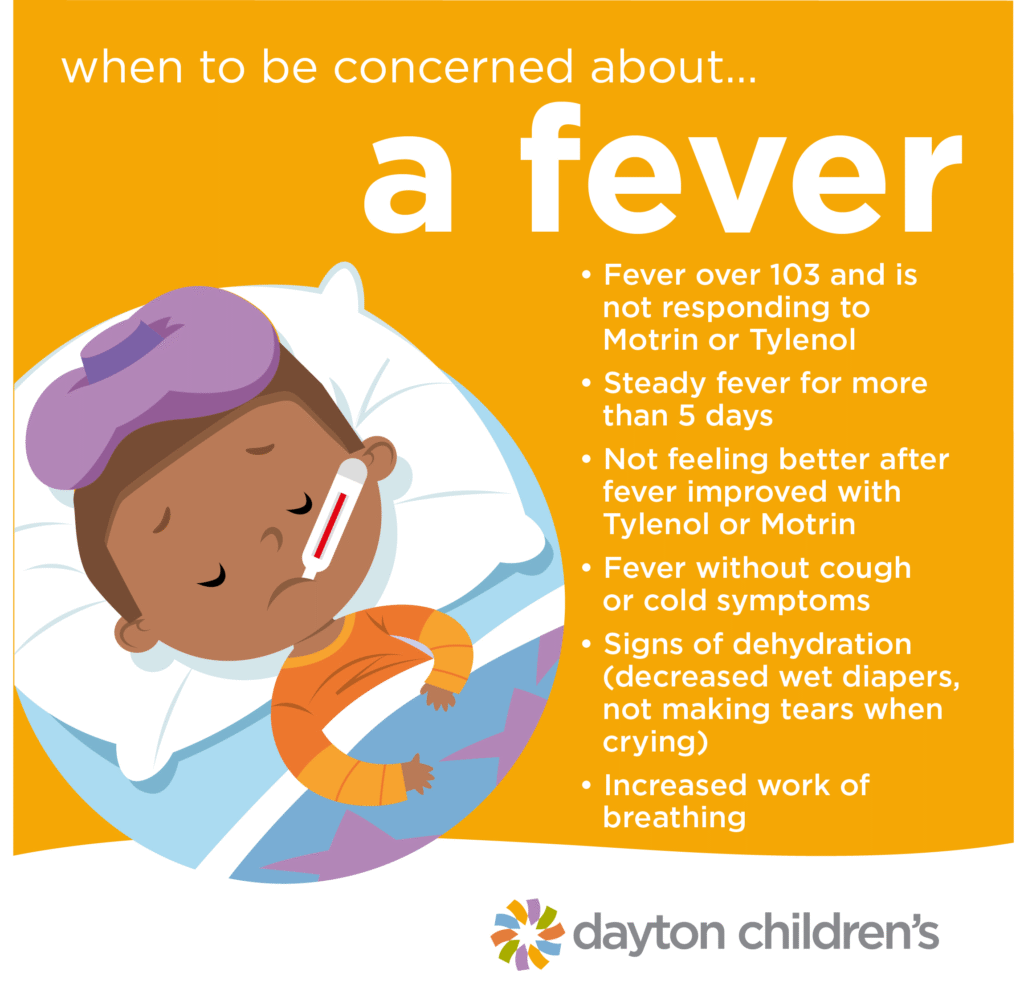
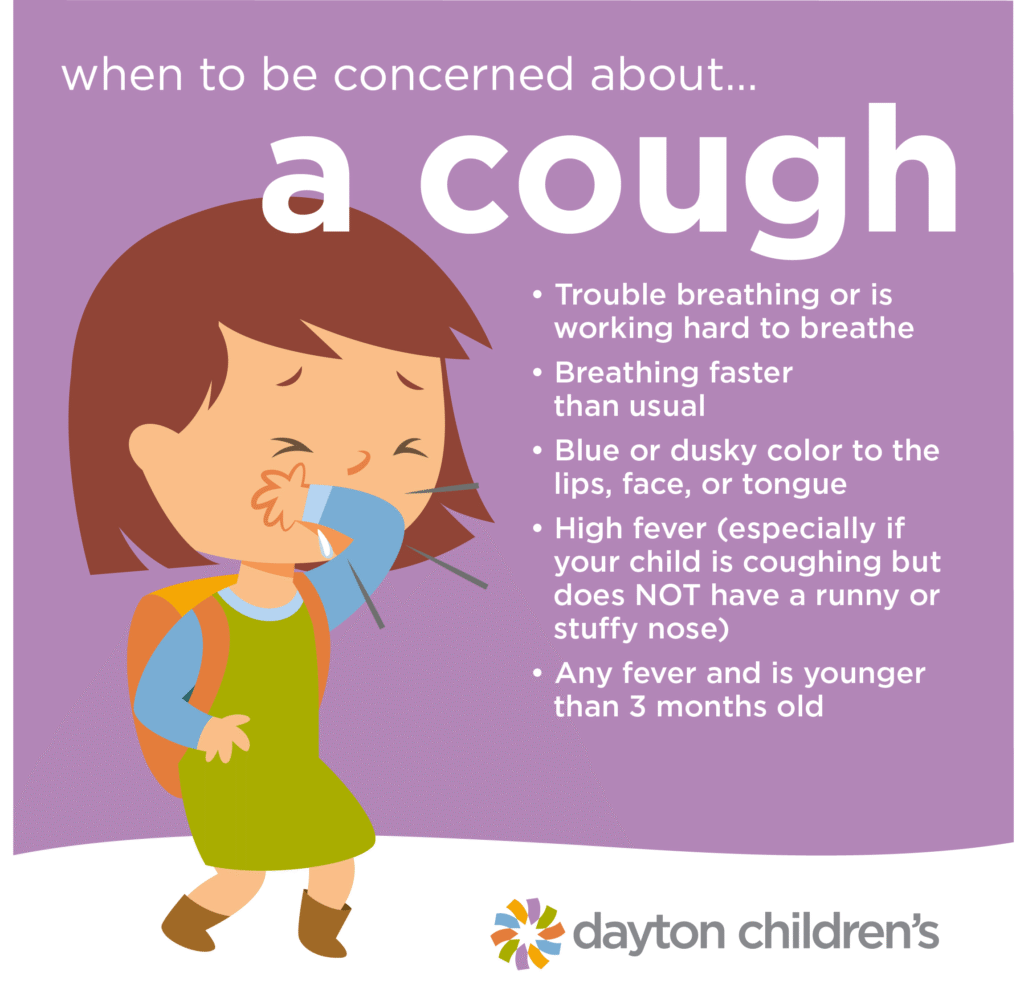
As a parent, it’s easy to feel helpless when your kiddo isn’t feeling well. We get it! The most common symptoms we’re seeing at our care sites are complaints of fever and cough. The graphics below can help you decide when to seek care for either of these conditions:

how to help your child

If your child is experiencing these symptoms, but doing relatively well, there are a few ways to provide “comfort care” at home to get them back on their feet. They include:

  • Motrin (ibuprofen) or Tylenol (acetaminophen) for fever or discomfort
  • Nasal saline spray and suction for little ones that like to breathe out of their nose
  • A warm shower or humidifier if they have a barky-sounding cough

Above all look at the behavior of your child. If they are playful, active, and eating and drinking well, even with medicine, then they are doing okay. If they are not acting like themselves or their behavior has you concerned, consult with a medical provider.

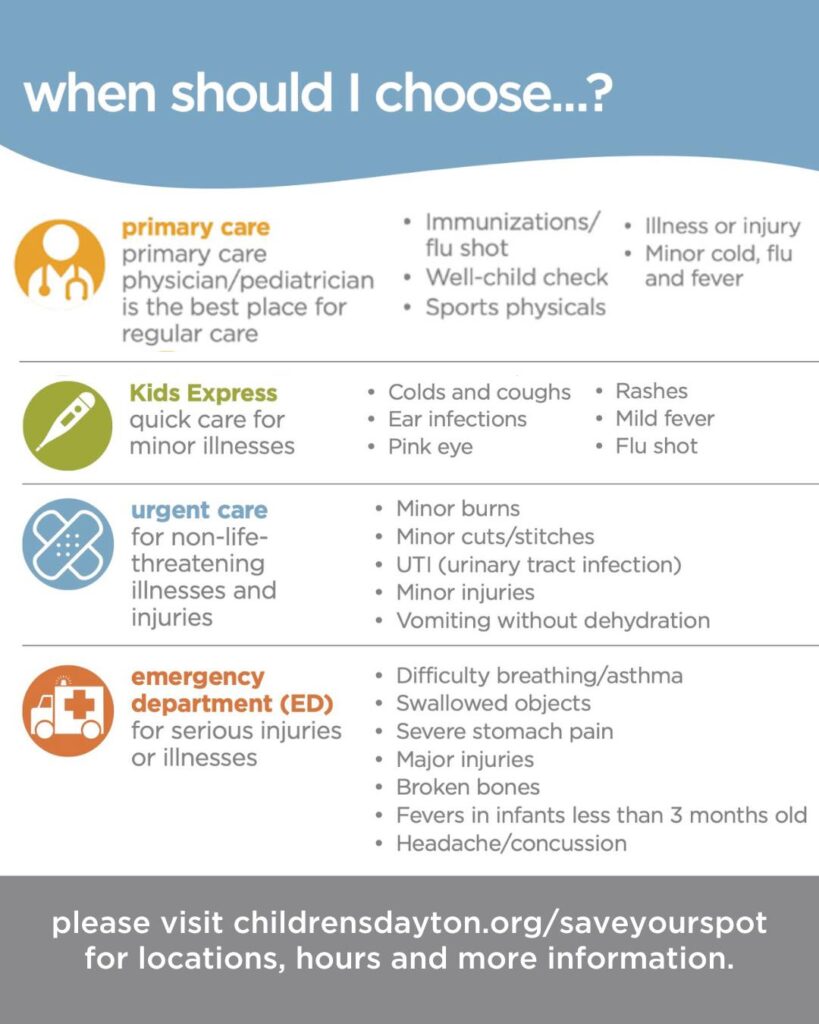
where to go for care

The large number of children seeking care means there may be a long wait time to be seen. Everyone seeking emergency treatment at our emergency department will be seen. Urgent cares and Kids Express locations may stop accepting walk-in patients when they reach capacity for the day. We ask that families be patient and kind as our staff work to ensure each child has the care they need.

If your child is sick, please contact their pediatrician first, even if it is after office hours. They can help direct you to the best care for your child’s condition.

Kids Express

Please check the website for updates for each of our locations.

protecting your family

Dayton Children’s is encouraging families to use this time to get their child’s flu shot and COVID-19 vaccine series. It’s not too late!

Kids Express can provide the flu vaccine for age 6 months and up and the COVID vaccine for age 5 and up. For kids age 5 and up, the flu vaccine and COVID vaccine can also be given at the same time. Learn more

Families should also be washing their hands regularly, avoiding large crowds, when possible, and staying home when sick.

care that goes above and beyond

Because every child deserves care that goes above and beyond, Dayton Children’s provides compassionate, expert care for kids of all ages. Find a provider, schedule an appointment, or learn more about conditions we treat today.

September 19, 2022 | blog post

can I give my child melatonin?

little girl sleeping with teddy bear

The short answer is yes, melatonin can be given to children. But it is important to know when and why a sleep aid, like melatonin, should be considered. We sat down with Samuel Dzodzomenyo, MD, sleep medicine provider at Dayton Children’s, to get the 411 on children and sleep aids, specifically melatonin.

when can melatonin be given?

There are a few instances when a sleep aid, like melatonin, should be considered.

  1. When a child is suffering from delayed sleep phase syndrome (sometimes called “night owl” syndrome) a sleep aid can be given. This is typically common in teenagers and is when the body’s internal clock doesn’t switch to night-mode. Naturally, everyone makes melatonin in their bodies, but as a child’s body begins to change and develop during puberty, the natural production of the sleep hormone, melatonin, is produced later in the night which can cause trouble falling asleep.
    • If a child is suffering from delayed sleep phase syndrome, your child’s provider may recommend a small dose of melatonin to be given about four hours before their expected bedtime. The idea is that this will not put a child to sleep but help prepare their body to switch to night-mode at the appropriate time.
  2. A short-term method to help get a child back on a routine sleep schedule. This could possibly be used after a family vacation or break from school, such as summer break, to help get a child back on their routine. Once a child starts staying up later and sleeping in, it can be difficult to fall asleep on their own. A small dose of melatonin may help get a child back on schedule.
  3. Melatonin may also be given to children with autism spectrum disorder or attention-deficit hyperactivity disorder (ADHD). Children with autism or ADHD may have problems falling asleep and staying asleep, and lack of sleep tends to cause behavioral issues. A small dose of melatonin may be considered for these kiddos.

how much melatonin can be given?

This is the question that you’ve all been waiting for! Melatonin comes in many different forms and dosages. It can come in liquid, chewable gummies, dissolvable pills, capsules and more. The other thing that parents should know about melatonin dosage is that labels can be confusing and sometimes misleading. There is no standardization when it comes to the active ingredient level making it difficult to know how much melatonin you are actually getting. Look for products that are labeled with “USP Verified.” This means that the product has met safety and quality standards, contains the ingredients listed on the label and will provide guidance on appropriate dosage. Please be aware of excessively high doses that can lead to toxicity.

Before giving your child melatonin, talk to your child’s primary care provider about products and dosage. It’s also important to make sure the melatonin won’t interfere with any other medications your child may be on.

how long can I give my child melatonin?

Short-term use (anywhere from three months to two years) has proved to be safe and effective in getting children back on a sleep schedule, but there are no long-term studies of melatonin usage in kiddos.

Talk to your child’s pediatrician about dosage and when it’s an appropriate time to give melatonin. Remember that sleep aids, such as melatonin, should not be given as an alternative to a good bedtime routine. Over 50% of children with sleep problems may benefit from some type of bedtime behavior modification requiring no sleep aid.

If you have other sleep related concerns for your child, check out our online scheduling options for sleep medicine.

care that goes above and beyond

Because every child deserves care that goes above and beyond, Dayton Children’s provides compassionate, expert care for kids of all ages. Find a provider, schedule an appointment, or learn more about conditions we treat today.

August 1, 2022 | blog post

10 safe food options to pack if your child attends a nut-free school

peanut products with a sign that says "no peanuts allowed"

Did you know that about 1 in 50 children has an allergy to nuts? For some children, consumption of a small amount of peanut can cause a severe allergic reaction.*

A nut allergy is a serious thing and is becoming more common in children. Many schools and camps have started to implement nut-free or nut-aware environments to keep kids with allergies safe. A nut-free or nut-aware environment may prove to make lunchtime a challenge for parents whose kids are PB&J fanatics.

So, what is safe to send, and what should be avoided when packing lunch for your child or sending in snacks? We checked in with Dr. David Morris, division chief of allergy and immunology at Dayton Children’s to get answers to the questions we all want to know.

what is the difference between nut-free and nut-aware?

Environments with a nut-free policy will typically enforce a ban on peanuts and tree nuts. This means nut products are not allowed on the premises, at all. While nut-aware environments will allow nuts on the premises, but heavily discourage them.

Nut-aware environments put a lot of effort into preventing cross contamination through proper handling of food and proper hygiene. They will usually have a nut-free table for children with an allergy to eat at during mealtime. Many districts have made these tables optional for the food allergic child.

what foods should be avoided if my child is in a nut-free environment?

Every policy may differ based on the type of nut-free environment needed by those with a severe food allergy. To be on the safe side it is generally best to avoid sending any type of peanut or tree nut with your child. This includes:

  • Almonds
  • Brazil nuts
  • Cashews
  • Chestnuts
  • Hazelnuts
  • Hickory nuts
  • Macadamia nuts
  • Pecans
  • Pine nuts
  • Pistachios
  • Walnuts

how do I know if a food is nut-free?

The best way to be sure if a food is nut-free is to read the label and check the ingredient list. Foods sold in the Unites States are required to state on their labels if the food contains peanuts or tree nuts (per the Food Allergy Labeling and Consumer Protection Act of 2004). After checking the ingredients list, look on the label for phrases like “may contain tree nuts” or “produced on shared equipment with tree nuts or peanuts.” Foods with these warnings on the label may be consumed by children without food allergies as these are unlikely to cause reactions in food allergic children from cross contamination (when eaten by other children). Parents should check their specific school regulations.

other high-risk foods

When thinking about classroom treats or field trips, parents should read labels carefully. According to KidsHealth there are other high-risk foods for people with peanut or tree nut allergies because of potential cross-contamination that may not be mentioned on the food label.

  • Cookies and baked goods. Even if baked goods don’t contain nut ingredients, it is possible that they came into contact with peanut or tree nuts through cross-contamination. Unless you know exactly what went into a food and where it was made, it’s safest to avoid store-brought or bakery cookies and other baked goods.
  • Candy. Candies made by small bakeries or manufacturers (or homemade candies) may contain nuts as a hidden ingredient. The safest plan is to eat only candies made by major manufacturers whose labels show they are safe.
  • Ice cream. Unfortunately, cross-contamination is common in ice cream parlors because of shared scoops. It’s also a possibility in soft-serve ice cream, custard, water ice, and yogurt shops because the same dispensing machine and utensils are often used for lots of different flavors. Instead, do as you would for candy, buy tubs of ice cream at the grocery and be sure they’re made by a large manufacturer and the labels indicate they’re safe.
  • Asian, African and other cuisine. African and Asian (especially Thai, Chinese and Indian) foods often contain peanuts or tree nuts. Mexican and Mediterranean foods may also use nuts, so the risk of cross-contamination is high with these foods.
  • Sauces. Many cooks use peanuts or peanut butter to thicken chili and other sauces.

what can my child pack for a nut-free lunch?

For starters, you don’t have to veer too far from your child’s love of PB&J. Try using a sunflower seed butter instead of peanut butter, almond butter or hazelnut spread. Your child probably won’t even notice a difference. Lunch meat is also a safe option if your child likes a little variety.

If sandwiches aren’t your child’s “jam,” below is a list of other healthy and safe food options your child could enjoy in a nut-free environment.

  1. String cheese
  2. Fruit: fresh, dried, freeze-dried, fruit leathers, dried fruit bars, fruit cups
  3. Vegetables
  4. Individual guacamole and hummus cups
  5. Hard-boiled eggs
  6. Yogurt cups/tubes
  7. Cottage cheese
  8. Meat sticks/jerky
  9. Pretzels
  10. Animal crackers

As a best practice we still recommend you always check a food’s ingredient label. One brand of a certain type of snack may be safe, while another may contain nut ingredients.

what is the future of nut-free schools?

In May 2021, new guidelines recommended against bans of specific foods including nuts. There is not enough evidence for or against site wide (nut free schools) bans. Concerns surround the impact of site wide food bans on the psycho-social well being of not only the children with food allergies but also children without these allergies. These impacts were measured against the mitigation of risks provided by site wide food bans. Unfortunately, there is not enough evidence that these bans prevent reactions. These concerns are what prompted the recommendation against the ban.

so what can parents do to help, now?

As stated, evidence for site wide food bans is low. Dr. Morris encourages parents to “stay tuned” as more evidence will be forthcoming. Until that time, he recommends the five tenets set out by the CDC in their voluntary guidelines for schools regarding food allergy:

  1. Ensure the daily management of food allergies in individual children.
  2. Prepare for food allergy emergencies.
  3. Provide professional development on food allergies for staff members.
  4. Educate children and family members about food allergies.
  5. Create and maintain a healthy and safe educational environment.

Education about food allergy is important to help all our children (allergic and non-allergic) to thrive.

*Note: severe allergic reactions do not occur with only contact exposure.

care that goes above and beyond

Because every child deserves care that goes above and beyond, Dayton Children’s provides compassionate, expert care for kids of all ages. Find a provider, schedule an appointment, or learn more about conditions we treat today.