your guide to coaching youth sports

This guide will provide you with youth sports coaching tips on preventing injuries, avoiding burnout and promoting a positive environment where your players can thrive. Together, we’ll help you feel confident and ready to lead your team to success!  

injury prevention, first aid essentials and tips on leading a team
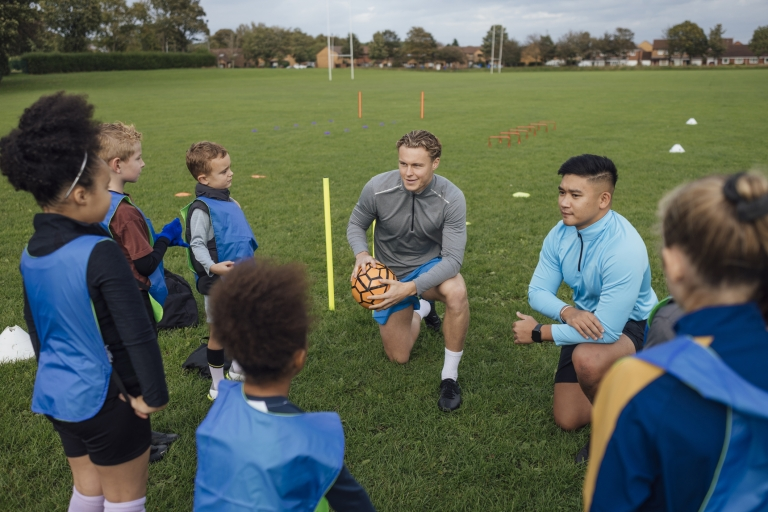
Stepping into the role of a coach as a parent volunteer can feel exciting and a little overwhelming – especially if you don’t have much coaching experience. But don’t worry; you don’t need to be an expert to make a positive impact. As a coach, you’ll play an important role in helping young athletes grow, stay safe and enjoy their sport. Consider Dayton Children’s as part of your team; we’re here to help make your coaching experience as easy as possible.  

first aid kit essentials

As a coach, you should always have a well-stocked first aid kit on hand at all times. Here’s what your kit should include:  

  • Band-Aids of various sizes 
  • Athletic tape and pre-wrap  
  • Instant cold packs  
  • Compression wraps  
  • Sterile gauze and adhesive tape 
  • Tweezers and scissors  
  • Latex-free gloves 
  • Pain relievers  
  • EpiPen (if necessary for one of your players) 
  • Emergency contact information for all athletes  

Keeping these essentials easily accessible can help you respond quickly to minor injuries and stabilize more serious ones until medical help arrives.  

preventing burnout and injuries

Preventing youth sports injuries before they ever happen is the goal. Follow these tips to keep your athletes in tip top shape while lowering the risk of burnout:  

  1. Always include a warm-up and cool-down – A good warm-up helps prepare the body for activity and cooling down supports recovery.  
  2. Focus on strength and conditioning – incorporating a balanced training program that’s focused on strength, mobility and endurance reduces the risk of injury.  
  3. Keep an eye on workload and recovery – overtraining leads to fatigue and increased risk of injury. Make sure your athletes have rest days and are getting enough sleep and adequate nutrition. Click here for a comprehensive guide on nutrition for athletes.  
  4. Encourage communication – make sure your athletes feel comfortable coming to you with pain or fatigue without fear of losing playing time.  
  5. Teach proper technique – A lot of injuries are a result of incorrect mechanics. Whatever the sport is, make sure your athletes know the correct technique. Practice proper technique with drills and scrimmages.  

injuries happen – know how to handle them

Unfortunately, we know that injuries are an inevitable part of sports. As a coach, your ability to respond to an injury can make a difference in an athlete’s recovery and confidence. Here are some tips for handling injuries as a coach:  

  • Stay calm – This is essential for your athlete and their parents. Keep your composure and evaluate the severity of the injury.  
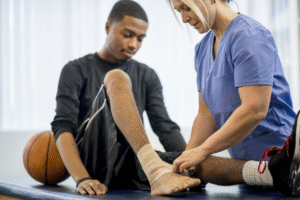
  • Follow emergency protocols – if the injury is serious (concussion, broken bone, dislocation, etc.), seek medical attention immediately and avoid moving the athlete if possible.  
  • Encourage proper rest and recovery – Make sure your athlete gets appropriate rest after an injury. Rushing back into play too soon can lead to re-injury. Follow the medical professional’s advice to ensure proper healing time.  
  • Provide education on pain vs. injury – Soreness comes with training, but pain caused by specific movements or pain that worsens over time should never be ignored.  

If an injury happens, we’re here to help! Click here to easily schedule an appointment online today with an orthopedics or sports medicine specialist.

how to be a great coach

As a youth sports coach, preparing your athletes for a game or activity is just one part of being a coach. Being a leader, mentor and creating a positive environment for your team is another important aspect of being a great coach. Here are some best practices to keep in mind as you lead your team:  

  • Lead by example – show the same discipline, respect and attitude that you expect from your athletes.  
  • Communication is key – Always provide clear instructions, constructive feedback and have an open door to athletes’ concerns.  
  • Develop trust – your athletes will perform better when they know their coach has their best interests at heart.  
  • Adapt to individual needs – no two athletes are the same. Provide training and feedback specific to each person’s abilities and goals.  
  • Promote a positive culture – a supportive team environment encourages better performance and personal growth.  

Coaching is more than leading a team to victory – it’s about creating a safe, positive and motivating environment for your athletes to thrive. By understanding injury prevention and burnout and providing a space for your athletes to be their best self, you can set your team up for long-term success. Implement these strategies and watch your athletes grow their skills and confidence.  
last reviewed

care that goes above and beyond

Because every child deserves care that goes above and beyond, Dayton Children’s provides compassionate, expert care for kids of all ages. Find a provider, schedule an appointment, or learn more about conditions we treat today.

5 tips to help student athletes adapt to the college environment

soccer players celebrate on field by jumping together

By: Dr. Tiffany Ofili Porter

Regardless of what stage you are in life, having to deal with transitions is inevitable. As intimidating as it may seem, looking at change as an opportunity instead of something to be feared will make life’s transitions that much easier.

As someone who has been through every transition along my athletic journey, I have first hand experience with the difficulty of walking into the unknown. I know what it feels like to go from a preschooler racing in the streets all the way to a world championship medaling hurdler competing at three consecutive Olympic Games.

There are several lessons I learned along the way, and I have tips on how to help student-athletes cope with the transition to college.

1) Understand that you will become a “small fish in a big pond”

If you’re an athlete preparing to compete at the college level, chances are you’re one of the best, if not the best athlete in your high school. Maybe even in your state. And that’s incredible, congratulations.

But be prepared to be surrounded by other amazing athletes who are also standouts just like you. Some of your fellow incoming freshman teammates may be better than you, and it’s likely that many of the upperclassmen probably will be. And that’s ok. It should even be welcomed and embraced.

If you come into collegiate sports with the understanding that you’re going to be up against much stiffer competition both on your team and rival teams, it will make the transition smoother and less of a shock. I encourage you to approach this shift as an opportunity to learn new techniques from your college coach(es) on how to improve and step up your game. Ask lots of questions, and remember that everyone has to start somewhere; even the best athletes were rookies at one time.

2) Establish your tribe

Have you ever heard the saying “you’re the sum total of the 5 people you spend the most time with”? Well it is very true and we must be intentional with who we surround ourselves with because they can have a profound impact on your success as a student-athlete.

The college experience comes with a lot of freedom to make your own decisions, and that can be good, or bad, depending on how you use it. Will you choose friends who will encourage you to kill it at practice everyday, or friends who will pressure you to party every day and neglect your sport? Life is about balance, and with good time management, you can have a fulfilling college social life while still striving for greatness in your sport. With the right people in your corner, finding this balance will be so much easier.

I found while I was in college the majority of my friends were also athletes because they understood my lifestyle, and we were able encourage each other in ways that non athletes may not fully understand.

3) Utilize the available resources

Many colleges and universities recognize how difficult it can be to successfully juggle work in the classroom, and in your sport simultaneously.  As a result, they will have resources available to help lessen the burden. These include special tutoring sessions, designated study times or study venues and trained counselors/advisors, just to name a few. When these resources become available to you, use them! You will learn very quickly that it’s easy to become overwhelmed with the demands from coaches and professors so when there’s an opportunity to get help do not be afraid to take it. In fact, it’s a very useful skill to know how and when to ask for help.

This is not unique to athletes because many professors offer office hours to help students master the material, and they often complain that students never come. Don’t be that person. If you have questions, ask. If you need guidance, seek it out. You’ll be a better student and a better athlete for it.

4) Remember that you’re a STUDENT-athlete for a reason

A big part of college is finding your identity and it’s easy for student-athletes to fall into the trap of being so wrapped up in sport that they forget they’re also there to get an education. If you’ve made it to the college sports level, it means you’re very committed to excellence in athletics, but it’s imperative to keep that same energy in the classroom. As someone who was able to successfully achieve a very high level of success in the classroom and on the track, use my experience as proof that it can be done.

Were there times I felt discouraged about a bad race or bad exam grade? Sure. Were there days I doubted if I would actually be able to pull off becoming a pharmacist and professional athlete simultaneously? Yes. Were there moments I felt inadequate and incapable of achieving the insanely large goals I set? Absolutely.

But I surrounded myself with people who encouraged me and uplifted me when I needed it the most. This goes back to the importance of having a good support system.

5) Keep an open mind

The quicker you realize that things will look different than they did in high school, the quicker you will be able to adjust to college life as a student-athlete. Your teammates will be different. Your coach(es) will have different styles. Your professors will instruct in a different way. Your classes will be structured differently. The pressures will be different. The expectations will be different. And these differences should be embraced.

The good news is, you already have what it takes to be successful, otherwise you wouldn’t be where you are right now. Take that confidence with you, but also keep in mind that you will have to adjust and you will be taken out of your comfort zone regularly. Keeping an open mind when learning your new coach’s methods, or your professors’ quirks will help ease the transition.

Congratulations on all of your accomplishments thus far, and I hope that the next chapter in your story is even better than the previous one. Change can be a little frightening, but with the right mindset and perspective, it doesn’t have to be. I hope you find these tips useful as you prepare for the next stage in your sports career. Here’s to smashing goals, fostering life long friendships, embracing change and making great memories. You’ve got this!

Dr. Tiffany Ofili Porter poses for a photo

meet the author

Dr. Tiffany Ofili Porter is a Michigan native and currently works as a pharmacist, digital content creator and sports broadcaster. She is a former world class Olympic hurdler and ran track professionally for 12 years. During that time, Tiffany competed in the 2012, 2016, and 2020 Olympic Games, earned four world championship medals and currently holds the British National records in the 60 and 100 meter hurdles. She was also European Champion, Commonwealth Games silver medalist, Continental Cup silver medalist, World Junior Championship silver medalist and earned several European medals during her tenure.

Tiffany graduated from the University of Michigan in 2012 where she earned her Doctorate of Pharmacy. During her time at U of M she was a five-time NCAA champion, team captain, school record holder, Big Ten Medal of Honor recipient, Academic All-American, Vice President of SNPhA and a member of the pharmacy school Leadership Scholars Program. In 2014 Tiffany was inducted into the University of Michigan Track and Field Hall of Fame.

To learn more about Tiffany & follow her journey, please visit: www.tiffofili.com 

last reviewed

care that goes above and beyond

Because every child deserves care that goes above and beyond, Dayton Children’s provides compassionate, expert care for kids of all ages. Find a provider, schedule an appointment, or learn more about conditions we treat today.

get to know: Jamie Broz, MEd, ATC, athletic trainer

Jamie Broz, MEd, ATC, poses for a photo at Dayton Children's Center for the Female Athlete

The Center for the Female Athlete at Dayton Children’s is led by a group of physicians, specialists, dietitians and athletic trainers dedicated to the current and future health and wellness of the female athlete. Each caregiver plays an important role on the team, providing total wellness of the young female athlete and the unique situations that affect them.

Name: Jamie Broz

Role on the center for the female athlete team: Manager

Why is it important to have your specialty as part of the center for the female athlete team?

Having an Athletic Trainer on the team is very helpful in relating to the athlete’s needs, and concerns.  We are typically engaging with the athlete’s in their moments and can help identify what needs to be addressed for them to reach their goals.  I personally have experience with all types, ages, and levels of athletes and can help navigate their path to get the help they need.  I can also provide care that includes manual treatment, functional assessment, and injury prevention as they return to their sport and will benefit them along with the other aspects of the program.   

What are your goals for the program?

To reach each athlete on their level, to join them where they are and help them get to where they want to go athletically, socially, emotionally, and beyond.

What do you want female athletes to know about the program? 

Not many programs are specifically designed for the adolescent female athlete, but this one is and even more so to the individual adolescent female athlete. 

The athletes are the experts on what they are feeling and accomplishing now, we need to listen to them and offer our expertise for them to incorporate into their methods. 

last reviewed

care that goes above and beyond

Because every child deserves care that goes above and beyond, Dayton Children’s provides compassionate, expert care for kids of all ages. Find a provider, schedule an appointment, or learn more about conditions we treat today.

get to know: Lora Scott, MD, program director, sports medicine

Lora Scott, MD, poses for a photo at Dayton Children's Center for the Female Athlete

The Center for the Female Athlete at Dayton Children’s is led by a group of physicians, specialists, dietitians and athletic trainers dedicated to the current and future health and wellness of the female athlete. Each caregiver plays an important role on the team, providing total wellness of the young female athlete and the unique situations that affect them.

Name: Lora Scott, MD

Role on the center for the female athlete team: I am trained in General Pediatrics and Sports Medicine. My role is to manage medical conditions and minor injuries in young athletes. In the center for the female athlete, I usually treat medical problems and injuries which occur when female athletes have a mismatch between how they are eating and how they are exercising. This often impacts their menstrual health and bone health, as well as exercise tolerance and energy levels.

Why is it important to have your specialty as part of the center for the female athlete team?

I help connect the dots between all the other individuals involved with the team. For example, we may see an athlete who is currently out for injury. Our team looks at how her nutritional support, exercise habits, and coping skills are helping or hurting her recovery, plus how they could have contributed to the original injury. My role is to look at how all of these fit together and whether or not her body is fully supporting her athletic demands. I look into things such as vitamin D levels, iron, hormone levels, and bone density. After chronic mismatches in training demands and nutrition, these are often abnormal. We treat these abnormalities and help the girls correct what caused them. Our goal is that the girls learn how to equip their bodies and minds for their sports demands before they leave the program.

What are your goals for the program?

For each individual, we want to empower these young athletes to address and treat medical and psychological issues which may otherwise prevent her from meeting her goals. We want her to realize that her needs and her teammates needs may not be the same, and that’s ok! For the community, we want to build awareness of conditions which uniquely affect female athletes.

What do you want female athletes to know about the program?

We understand that injuries are just the tip of the iceberg, and that everything under the surface needs to be addressed in order to prevent future injuries. We are here for everything under the surface as well. Training habits, coping skills, nutritional challenges, menstrual health, and bone health all contribute to injuries, whether they already happened or could happen in the future. We address all of these.

last reviewed

care that goes above and beyond

Because every child deserves care that goes above and beyond, Dayton Children’s provides compassionate, expert care for kids of all ages. Find a provider, schedule an appointment, or learn more about conditions we treat today.

get to know: Linh-Han Ikehara, MSW, LISW-S

Linh-Han Ikehara poses for a photo at the Center For The Female Athlete

The Center for the Female Athlete at Dayton Children’s is led by a group of physicians, specialists, dietitians and athletic trainers dedicated to the current and future health and wellness of the female athlete. Each caregiver plays an important role on the team, providing total wellness of the young female athlete and the unique situations that affect them.

Name: Linh-Han Ikehara

Role on the center for the female athlete team: Behavioral Health Therapist

Why is it important to have your specialty as part of the center for the female athlete team?
Now more than ever, it is important that our youth, particularly our teen female athletes see emotional health as part of our overall health and wellbeing. Together, the two promote optimal wellness and resilience in facing challenges.

The two systems of mind and body are intimately connected and reap reciprocal benefits of affecting each other.

“It is helpful to think of an athlete with depression, anxiety or another mental health concern as “injured” – just as you would of a student athlete who has a physical or medical problem that requires patience for recovery.”

As with physical injuries, mental health problems may, by their severity, affect athletic performance and limit or even preclude training and competition until successfully managed and treated. In other cases, teen female athletes often will experience depression or anxiety as they struggle to cope with an injury placing them at increased risk or re-injuring. It is important that our teen athletes see their wellbeing a priority that enables them to enjoy the sport, as well as perform.  

What are your goals for the program?
My vision is for our teen female athletes to recognize and utilize their personal strengths that will enable them to be healthy and confident individuals and athletes. These strengths are the catalyst to transforming negative self-beliefs into positive and realistic ones and the development of stress management. My focus is to promote our girls’ overall wellness and empower them to see that their self-worth is connected to who they are as a person, rather than their sports performance.  

What do you want female athletes to know about the program?
“She can do this“ is our motto. That means our girls don’t have to have all the answers to what’s going on with them, but they can work with the team to identify the areas for continued growth and make intentional plans in the development of a healthy mindset and habits.

One final thought
Although mainly an athlete in high school, I continue to strive to keep myself and my family active on a daily basis through trail running, biking, and hiking. It brings me joy to see my son experiencing the benefits of developing healthy habits and enjoying himself. I see now how exercise has a positive impact on the emotional well-being for myself and others. I am honored to have the opportunity to empower our teen female athletes to also invest in themselves. 

last reviewed

care that goes above and beyond

Because every child deserves care that goes above and beyond, Dayton Children’s provides compassionate, expert care for kids of all ages. Find a provider, schedule an appointment, or learn more about conditions we treat today.

get to know: Maria Brumfield, MS, RDN, LD

Maria Brumfield poses for a photo at Dayton Children's Center for the Female Athlete

The Center for the Female Athlete at Dayton Children’s is led by a group of physicians, specialists, dietitians and athletic trainers dedicated to the current and future health and wellness of the female athlete. Each caregiver plays an important role on the team, providing total wellness of the young female athlete and the unique situations that affect them.

Name: Maria Brumfield, MS, RDN, LD

Role on the center for the female athlete team: Registered Dietitian

Why is it important to have your specialty as part of the center for the female athlete team?

Spreading the message that food is fuel can allow the female athlete to nourish their mind and body and allow them to adequately fuel for their unique energy needs. Working with females to share the joy of nutrition and discuss ways that we can allow them to embrace the power of nutrition to fuel them and their unique needs, is the most rewarding feeling as a provider.

Viewing food as fuel can allow the female athlete to take charge of their wellbeing to nourish their mind, their bodies and fuel them for all of their life goals — sports and beyond.

What are your goals for the program?

As a registered dietitian my goal is to allow female athletes to embrace the power of nutrition. My goal is to allow the girls to become as excited about fueling their body, as they are about competing in their sport. My goal is to share the message that the female has unique nutrition needs, and just as going to practice is a part of training, adequate nutrition is, too! My goal is for females to become excited about embracing the power of all food groups and embracing their unique nutrition needs, as a whole, while promoting their overall well being. I want to empower the female to take charge in having the knowledge to adequately fuel their bodies. 

What do you want female athletes to know about the program?

As a former high school, college and post collegiate athlete, I want female athletes to know that the opportunity to participate in the center for female athlete at Dayton Children’s is a special opportunity. To have endless resources at your finger tips to promote well being, confidence and to empower is second to none. I want female athletes to know that they are special in so many ways, on and off the field, court, course, etc. “She can do this!”

One final thought

I am a former high school, college and post collegiate athlete. Being a female athlete myself, I hope to connect with female athletes in the program about fueling, and being a female athlete. I have done sports my entire life, I hope having that personal connection to the female athlete allows our female athletes to feel the support that this amazing team has for them, as the team is female-led!

last reviewed

care that goes above and beyond

Because every child deserves care that goes above and beyond, Dayton Children’s provides compassionate, expert care for kids of all ages. Find a provider, schedule an appointment, or learn more about conditions we treat today.