do certain foods upset your child’s stomach?

girl drinks milk in a sunlit kitchen

Has your child ever eaten something and not felt great afterwards? Depending on the symptoms, this could be a sign of a food intolerance (also known as a sensitivity) or an allergy. And you might be wondering, what is the difference between a food allergy and intolerance? David Morris, MD, division chief of allergy and immunology at Dayton Children’s Hospital is here to help us identify the differences.

food allergy versus intolerance

A food intolerance, such as lactose intolerance, can make someone feel ill with symptoms such as nausea, gas, cramping in the stomach, diarrhea and/or headaches.

A food allergy, such as a peanut allergy, can also make someone feel ill but with more serious symptoms such as hives, vomiting, throat tightness, difficulty breathing and more.

food intolerance broken down further

A food intolerance, means that our body can’t digest a certain food the right way. For instance, someone who is lactose intolerant has trouble digesting the type of sugar that is typically in milk and other dairy products. This does not mean that they are allergic to milk, it just means that they probably won’t feel good after eating something that contains milk.

If your child has an intolerance to a food, they will probably notice symptoms within two hours of eating or drinking. Everyone reacts differently and a food intolerance can start out of nowhere – even if they’ve never had trouble with a certain food before.

There are some at-home food sensitivity tests that you can buy over the counter that will measure the body’s response to foods that commonly cause an intolerance. Unfortunately, data has not consistently shown these tests as a valid way to evaluate triggers. I would recommend a food diary recording symptoms after consumption. 

food allergy broken down further

A food allergy is when the body’s immune system sees a type of food as an invader. This is what leads to an allergic reaction. According to KidsHealth, an allergic reaction is the immune systems response in which chemicals like histamine are released in the body. An allergic reaction can cause symptoms that can be life-threatening.

A person with a food allergy is always at risk for the next allergic reaction being a life-threatening one. Eating even a small amount of the food can lead to anaphylaxis. Anaphylaxis is a severe allergic reaction that can cause many problems at the same time. People with a food allergy must always avoid the problem food and carry an emergency injectable epinephrine (also known as an epi-pen).

Some of the most common food allergies include:

  • Peanuts and other tree nuts
  • Seafood, such as shrimp
  • Fish
  • Milk (usually cow’s milk)
  • Eggs
  • Soy
  • Wheat
  • Sesame

If you think your child may have a food allergy, talk to their pediatrician. You will probably be referred to an allergist (a doctor who specializes in allergies). The allergist may want to do a skin test. A skin test will see how the body reacts to a small amount of the food that you think may be causing the problem.

Unfortunately, there is currently no medication available to make food allergies go away. Sometimes food allergies can be outgrown, and others may last forever. The best treatment is to avoid the food that is causing the problem – this is for allergies and sensitivities!

If you have more questions about allergies or think your child may need to see an allergist, click here.
last reviewed

care that goes above and beyond

Because every child deserves care that goes above and beyond, Dayton Children’s provides compassionate, expert care for kids of all ages. Find a provider, schedule an appointment, or learn more about conditions we treat today.

3 tips quick tips to help your child’s brain development

Dad with child on phone and computer

Helping your little one’s brain and language development is easier than you may think with these easy tips!

  1. Do lots of talking. The more words your child hears, the better!
  2. Be a tuned-in communication partner. When your child cries, coos, smiles, and laughs, they are trying to tell you something. Talk back!
  3. Give your full attention. This means dedicated screen-free time. So much learning happens when you notice your child’s interests and respond (“Oh, you see that ball? It’s bouncing.”)  

Did you know the use of screens—both by you and by your child—can interrupt your child’s healthy development? Here’s why screen-free time is important: 

  • Studies have shown that parents speak fewer words when they are using a smartphone. Find time to put screens away so you can talk about your activities.
  • Looking down at your device makes it harder to notice your child’s smiles and sounds, leading to missed opportunities to connect and communicate. Your child wants to see your face!
  • Use of screens by children can delay their speech and language development. They may not be talking yet, but they are learning words by interacting with you.
  • When babies and toddlers use screens, it can be harder for them to learn how to soothe themselves. Giving your fussy baby or toddler your phone may help in the moment, but not in the long run.
  • Talk with your partner about how you can both create technology-free spaces.
  • Commit to tech-free times each day—such as meal times, caregiving, and play times.

While zero screen time for your child’s early development is best, it’s not always realistic. What’s most important is that you do your best to achieve a healthy balance. Turn to your pediatrician, speech-language pathologist, and other trusted experts for guidance about screen-time use.

last reviewed

care that goes above and beyond

Because every child deserves care that goes above and beyond, Dayton Children’s provides compassionate, expert care for kids of all ages. Find a provider, schedule an appointment, or learn more about conditions we treat today.

could my child’s tummy aches be celiac disease?

Young girl holds stomach symbolizing a tummy ache

When our children complain of stomach pain, or experience diarrhea after eating, it’s hard to know as parents if it is a typical childhood reaction, or if your child has a sensitivity or intolerance to certain foods. If your child regularly shows symptoms of stomach pain, diarrhea, tiredness or skin rashes after eating foods such as pizza, fried chicken or pasta, they may be experiencing an intolerance to gluten known as celiac disease. About 1 in every 133 people in the United States has celiac disease. Many people who have celiac disease do not know it.

what is celiac disease?

Celiac disease is an autoimmune condition triggered by gluten that leads to damage in the small intestine. Gluten is the general name of the proteins found in wheat, rye and barley and other grains.

In kids with celiac disease, gluten damages villi. Villi are the finger-like projections in the small intestine responsible for absorbing nutrients from food. When the villi are damaged, the body can’t absorb nutrients the body needs. If that happens, a child can become underweight and grow poorly.

Some people who eat gluten can have symptoms such as diarrhea, abdominal pain and bloating, weight loss, tiredness, and skin rashes. Some people with celiac disease have no symptoms at all, but still have gluten-induced damage to their small intestine.

People with celiac disease are at risk of malnutrition, anemia (fewer red blood cells due to lack of iron) and osteoporosis (weakened bones from lack of calcium). There is currently no cure for celiac disease, but there are ways to minimize symptoms and damage to the intestines.

what is the difference between a gluten intolerance and celiac disease?

Some people experience symptoms found in celiac disease, but they do not test positive for celiac disease. This is usually referred to as non-celiac gluten sensitivity (NCGS) or non-celiac wheat sensitivity (NCWS).

The difference between a gluten intolerance and celiac disease is that a gluten intolerance causes short-term symptoms and doesn’t usually cause long-term harm to the body. Individuals with gluten intolerance may find relief by the volume of gluten in their diet or eliminating gluten from their diet entirely.

what are the signs and symptoms of celiac disease?

According to KidsHealth, some common symptoms of celiac disease are:

  • diarrhea
  • decreased appetite 
  • stomachache and bloating
  • poor growth
  • weight loss.

Someone with celiac disease may feel tired and could be irritable. Some may develop skin rashes and mouth sores. Celiac disease is sometimes mistaken for other digestive problems called inflammatory bowel disease (IBD) or lactose intolerance. And in some cases, a kid won’t have any symptoms and then will suddenly start having problems during a time of stress, such as after an injury.

when are kids diagnosed with celiac disease?

Many kids are diagnosed with it when they’re between 6 months and 2-years-old, which is when most kids get their first taste of gluten in foods.

For some people, the problems start slowly, and the symptoms may be terrible one week and not as bad the next. Because of this, some people aren’t diagnosed with celiac disease until they’re older. The problem is chronic, which means that although symptoms may come and go, people who have celiac disease will always have it.

when should I take my child to see a specialist?

If your child is having a lot of stomachaches, diarrhea, weight loss, or any of the other symptoms of celiac disease you should talk to their primary care provider or schedule an appointment with one of our pediatric gastroenterologists. Their symptoms may or may not be related to celiac disease, but your child’s provider can help sort it out and will usually order a simple blood test that measures the level of antibodies to gluten and other proteins involved in celiac disease. If high levels of these antibodies are found, a pediatric gastroenterologist will likely order an upper endoscopy of the small intestine and send it to a laboratory for testing.

If your child is diagnosed with celiac disease, they will be paired with a physician and a dietitian specialized in treating children with this disorder. The dietitian will work with you and your child on implementing a new gluten-free lifestyle.

last reviewed

care that goes above and beyond

Because every child deserves care that goes above and beyond, Dayton Children’s provides compassionate, expert care for kids of all ages. Find a provider, schedule an appointment, or learn more about conditions we treat today.

no matter where, Pam just wanted to be in nursing care


From the windy city to the gem city, no matter where, Pam just wanted to be in nursing care!

After Pam Bucaro’s husband was offered a job with the City of Dayton, relocating six hours south east from their Chicago home came with one condition – that there was a children’s hospital nearby. 

Nine minutes down the road sat Dayton Children’s Hospital. Pam walked through the hospital doors and thirty-three years later, she’s never walked out. Prior to her current role as a clinical nurse specialist in emergency services, Pam worked in Dayton Children’s PICU, almost home unit, home care and the emergency department.

“The patients and their families, the front line staff and our excellent leadership team, both in the emergency department and throughout the hospital, are what inspire me to continue to go above and beyond,” said Pam.

Other above and beyond motivators happen when we least expect them. One of these random moments, those that remind staff why they fell in love with pediatric health care, happened to Pam early in her career. She manually ventilated a baby that stopped breathing. Her efforts allowed the baby to return home.

“The attending on-call that night told me that I saved that patient’s life,” said Pam. “That was really meaningful.”

In 2013, Pam was nominated and named the Emergency Nurses Association’s Clinical Nurse Specialist of the Year. The award recognizes a clinical nurse specialist who makes significant contributions to nursing practice and the professional development of others.

“I love my job because I am part of a team that works tirelessly to deliver the most up-to-date, high quality, evidence-based care to our patients,” said Pam.

“I enjoy problem solving, developing processes for care delivery and educating the clinical staff, ” she said.

These talents have shined house wide.

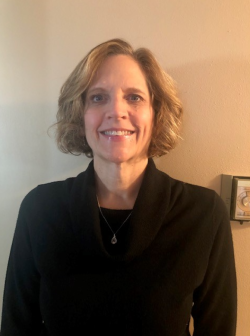
Pam Bucaro, Dayton Children's employee, poses for a photo

Pam helped develop our outreach nurse program. Debuting in 2007, the program designates nurses to provide post-discharge follow up to families after discharge from one of our emergency services locations. In 2021, she co-founded Dayton Children’s first comprehensive staff support program, flight support and was named as the program’s official coordinator. 

“I am privileged to work closely with the outreach nurses, trauma nurse leaders, family support team and staff support colleagues,” said Pam. “My colleagues provide continuous motivation, support, leadership and assistance with so many projects and clinical initiatives.”

Thank you, Pam, for 33 years of service to Dayton Children’s!

last reviewed

let your career take flight at Dayton Children’s!

Dayton Children’s careers offer rewarding opportunities in health care, support services and more, all with one mission: going above and beyond. Learn more about career opportunities at Dayton Children’s and the hospital’s commitment to employee growth here.

care that goes above and beyond

Because every child deserves care that goes above and beyond, Dayton Children’s provides compassionate, expert care for kids of all ages. Find a provider, schedule an appointment, or learn more about conditions we treat today.

A smiling young girl in a pink top sits in a bright clinic space, representing a happy patient at Dayton Children’s.

one decision paved Kyle’s 17-year long career at Dayton Children’s


Have you ever thought about how every choice and split-second decision has led you to where you are today? Every day for the last 17 years, Kyle Frysinger, emergency department assistant nurse manager, has walked through the hospital doors thankful that these life moments brought him to Dayton Children’s. 

Kyle originally went to school for his EMT-B to become an emergency medical technician. During his studies, he was assigned to complete clinical time at Dayton Children’s emergency department. This is where he fell in love with pediatrics, dropped out of the EMT program, applied for a PCA position and changed his degree to nursing – and he’s never looked back.

“It was one of the best decisions I have ever made,” said Kyle.

Kyle says that he’s motivated by our mission and vision – working so that every child receives the highest level of care to restore an optimal level of health. In fact, one of his very first patients continues to be a reminder of this.

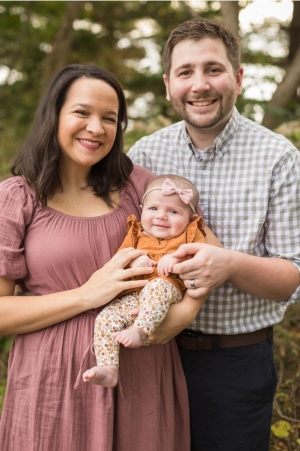
Kyle Frysinger poses with his family for a photo

What first appeared to be a minor illness, progressed into a 33-day long hospital admission in the PICU, where Kyle and the patient developed a close bond. Today, the patient sports #33 on his jersey, playing division II college basketball.

“The patient truly is a miracle child,” shared Kyle. “I am honored I was able to care for them.” 

Since this patient, a lot has happened in 17 years (including Kyle having four children of his own!) At Dayton Children’s, Kyle’s watched new buildings grow from the ground up and a new name placed on the exterior. Despite these differences and growths, Kyle says our internal family-like atmosphere has never wavered.

“When I pass someone in the hallway, there is always the friendly ‘hello’ or ‘how are you doing,'” said Kyle. “The culture at Dayton Children’s has always been this way and I’m glad it hasn’t changed as we’ve grown.”

Thank you, Kyle, for 17 years of above and beyond service!

last reviewed

let your career take flight at Dayton Children’s!

Dayton Children’s careers offer rewarding opportunities in health care, support services and more, all with one mission: going above and beyond. Learn more about career opportunities at Dayton Children’s and the hospital’s commitment to employee growth here.

care that goes above and beyond

Because every child deserves care that goes above and beyond, Dayton Children’s provides compassionate, expert care for kids of all ages. Find a provider, schedule an appointment, or learn more about conditions we treat today.

A smiling young girl in a pink top sits in a bright clinic space, representing a happy patient at Dayton Children’s.

embrace, expose and empathize – discussing disabilities with your child

on International Day of Persons with Disabilities, remember the 3 e’s to discuss disabilities with your child

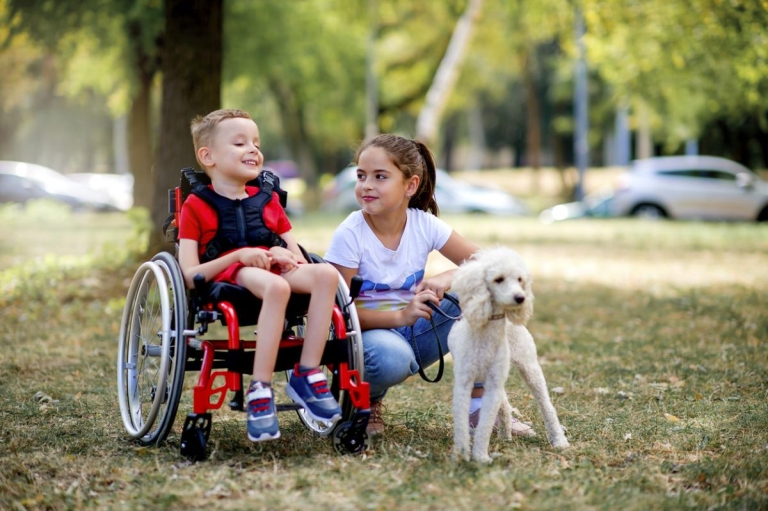
Boy in wheelchair smiles at a park with his friend and a dog

December 3 is International Day of Persons with Disabilities. This day is for promoting the rights and well-being of people with disabilities and increasing awareness of people with disabilities in all aspects of life.  

In the U.S., 1 in 4 adults lives with a disability. In 2017, about 1 in 6 children (17%) aged 3-17 were diagnosed with a developmental disability according to the CDC. So, it is likely that your child will come into contact with people who have disabilities. It is important to ensure that your children are mindful of how they treat others and are inclusive of all people. Today is the perfect day to start having these conversations in order to make our society more welcoming for people with disabilities.  

Dayton Children’s pediatric psychologist Dr. Latisha Gathers-Hutchins says children should be encouraged to explore their curiosity about people with disabilities. Teaching children to be more inclusive, use inclusive language and empathize with people who have differing abilities has a psychological effect on their being ready to engage with and accept others.  

To encourage inclusivity, it is important to remember the three E’s with your child:  

  1. Embrace Curiosity.  

Kids are going to ask questions. While it may be mortifying when they verbalize their curiosities about a person with a disability in a public setting, it is important to not give in to the natural inclination of hushing your child. Instead, acknowledge the child’s curiosity and redirect the child to having the discussion later.  

An example of this may look like: 

“I see you’ve noticed that person is in a wheelchair, we can talk about this when we get home.”  

This creates an environment in which the child knows that it is okay to notice what makes people different, and that differences between people are not “bad,” or “wrong.”  

  1. Expose to Inclusivity  

Creating an inclusive environment and teaching your children how to be more accepting can be influenced by what you expose your child to. Watching TV shows featuring people with differing abilities, reading books about people who are different and otherwise normalizing the experience can help a child to understand our diverse society.  

Also remember to use matter-of-fact language when discussing people with disabilities with your children. Staying away from colloquialisms, metaphors or other unclear language will help your child feel equipped to discuss and include others who are different from them.  

Dr. Gathers-Hutchins gave an example of a first-grade class with a student who had autism. Prior to the student joining the class, the teacher shared books with the other students about how a child with autism may think, speak or act. As a result, the students were excited to play with, and include this student in their activities. 

  1. Introduce Empathy 

Empathy is the idea of understanding that all people have differences. Teaching your children how to empathize with all people can help them understand and include those who may have differing abilities. For younger children, empathy may be a harder concept to grasp. Try practicing empathy with your child while reading stories. Ask them what a story book character might be thinking or encourage them to guess what the character will do next. Hopefully, your child will soon start to learn how to put themselves in someone else’s shoes.  

Gathers-Hutchins says, with her own children, she might say “this person has trouble with xx, just like sometimes you have trouble with xx. We are all different in many ways.”  

She also emphasizes using “people first language” at all times when discussing those who may have differing abilities. Make sure that you do not label that person as their disability. For example, it is important to say, “this person has autism,” instead of “an autistic person.” 

Dayton Children’s is committed to striving for an environment in which all people feel welcomed, valued and fairly treated in order to reach our full potential.  Share with us how you and your family are promoting inclusivity in your community or how a more inclusive community has impacted your day-to-day life. 

last reviewed

care that goes above and beyond

Because every child deserves care that goes above and beyond, Dayton Children’s provides compassionate, expert care for kids of all ages. Find a provider, schedule an appointment, or learn more about conditions we treat today.

parental leave allows Ben to bond with his daughter


We understand that every employee is a part of two families – the one surrounding them inside our hospital walls and the one they go home to at the end of the day. The people you go home to are just as important as those you greet at the beginning. 

Dayton Children’s Hospital realizes the importance of family and taking care of your own children – so that you can continue taking care of our region’s. We offer six weeks of paid parental leave for eligible full-time and part-time employees.

When Ben Heil, PICU nurse, found out his wife was expecting their first baby, he looked into this benefit.

“I learned about the parental leave from my coworkers who have all had babies. It was surprisingly easy,” described Ben.

“The Dayton Children’s benefits are really great, especially compared to some of my friends who work elsewhere. They barely received any leave when their children were born.”

He was able to take six weeks paid parental leave, plus an additional four under the Family and Medical Leave Act (FMLA). Having an extra sent of hands for middle of the night feeding and diaper changes was something Ben says his wife was especially appreciative of.

“I spent the time on leave bonding with my daughter,” Ben said. “I wouldn’t trade those first ten weeks for anything. It was amazing to be there for my family.”

After taking care of his daughter and entering his fifth year at Dayton Children’s, Ben is back in the PICU to take care of our region’s children.

Because we care, Dayton Children’s is a leader when it comes to the benefits we provide our staff. Learn more about our employee benefits here.

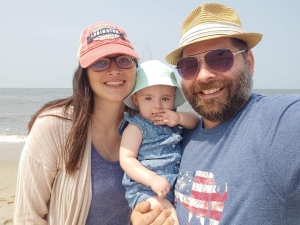
Ben Heil poses for a photo with his wife and daughter
last reviewed

let your career take flight at Dayton Children’s!

Dayton Children’s careers offer rewarding opportunities in health care, support services and more, all with one mission: going above and beyond. Learn more about career opportunities at Dayton Children’s and the hospital’s commitment to employee growth here.

care that goes above and beyond

Because every child deserves care that goes above and beyond, Dayton Children’s provides compassionate, expert care for kids of all ages. Find a provider, schedule an appointment, or learn more about conditions we treat today.

A smiling young girl in a pink top sits in a bright clinic space, representing a happy patient at Dayton Children’s.

get to know: Jamie Broz, MEd, ATC, athletic trainer

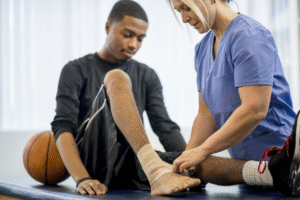
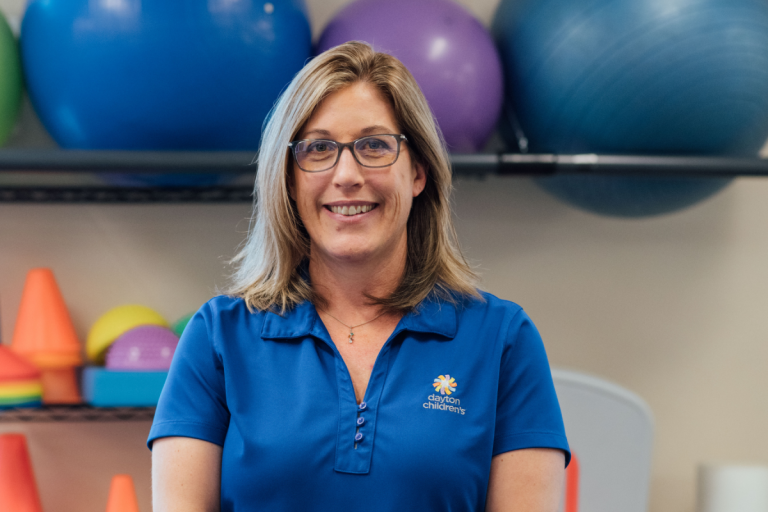
Jamie Broz, MEd, ATC, poses for a photo at Dayton Children's Center for the Female Athlete

The Center for the Female Athlete at Dayton Children’s is led by a group of physicians, specialists, dietitians and athletic trainers dedicated to the current and future health and wellness of the female athlete. Each caregiver plays an important role on the team, providing total wellness of the young female athlete and the unique situations that affect them.

Name: Jamie Broz

Role on the center for the female athlete team: Manager

Why is it important to have your specialty as part of the center for the female athlete team?

Having an Athletic Trainer on the team is very helpful in relating to the athlete’s needs, and concerns.  We are typically engaging with the athlete’s in their moments and can help identify what needs to be addressed for them to reach their goals.  I personally have experience with all types, ages, and levels of athletes and can help navigate their path to get the help they need.  I can also provide care that includes manual treatment, functional assessment, and injury prevention as they return to their sport and will benefit them along with the other aspects of the program.   

What are your goals for the program?

To reach each athlete on their level, to join them where they are and help them get to where they want to go athletically, socially, emotionally, and beyond.

What do you want female athletes to know about the program? 

Not many programs are specifically designed for the adolescent female athlete, but this one is and even more so to the individual adolescent female athlete. 

The athletes are the experts on what they are feeling and accomplishing now, we need to listen to them and offer our expertise for them to incorporate into their methods. 

last reviewed

care that goes above and beyond

Because every child deserves care that goes above and beyond, Dayton Children’s provides compassionate, expert care for kids of all ages. Find a provider, schedule an appointment, or learn more about conditions we treat today.

get to know: Lora Scott, MD, program director, sports medicine

Lora Scott, MD, poses for a photo at Dayton Children's Center for the Female Athlete

The Center for the Female Athlete at Dayton Children’s is led by a group of physicians, specialists, dietitians and athletic trainers dedicated to the current and future health and wellness of the female athlete. Each caregiver plays an important role on the team, providing total wellness of the young female athlete and the unique situations that affect them.

Name: Lora Scott, MD

Role on the center for the female athlete team: I am trained in General Pediatrics and Sports Medicine. My role is to manage medical conditions and minor injuries in young athletes. In the center for the female athlete, I usually treat medical problems and injuries which occur when female athletes have a mismatch between how they are eating and how they are exercising. This often impacts their menstrual health and bone health, as well as exercise tolerance and energy levels.

Why is it important to have your specialty as part of the center for the female athlete team?

I help connect the dots between all the other individuals involved with the team. For example, we may see an athlete who is currently out for injury. Our team looks at how her nutritional support, exercise habits, and coping skills are helping or hurting her recovery, plus how they could have contributed to the original injury. My role is to look at how all of these fit together and whether or not her body is fully supporting her athletic demands. I look into things such as vitamin D levels, iron, hormone levels, and bone density. After chronic mismatches in training demands and nutrition, these are often abnormal. We treat these abnormalities and help the girls correct what caused them. Our goal is that the girls learn how to equip their bodies and minds for their sports demands before they leave the program.

What are your goals for the program?

For each individual, we want to empower these young athletes to address and treat medical and psychological issues which may otherwise prevent her from meeting her goals. We want her to realize that her needs and her teammates needs may not be the same, and that’s ok! For the community, we want to build awareness of conditions which uniquely affect female athletes.

What do you want female athletes to know about the program?

We understand that injuries are just the tip of the iceberg, and that everything under the surface needs to be addressed in order to prevent future injuries. We are here for everything under the surface as well. Training habits, coping skills, nutritional challenges, menstrual health, and bone health all contribute to injuries, whether they already happened or could happen in the future. We address all of these.

last reviewed

care that goes above and beyond

Because every child deserves care that goes above and beyond, Dayton Children’s provides compassionate, expert care for kids of all ages. Find a provider, schedule an appointment, or learn more about conditions we treat today.

get to know: Linh-Han Ikehara, MSW, LISW-S

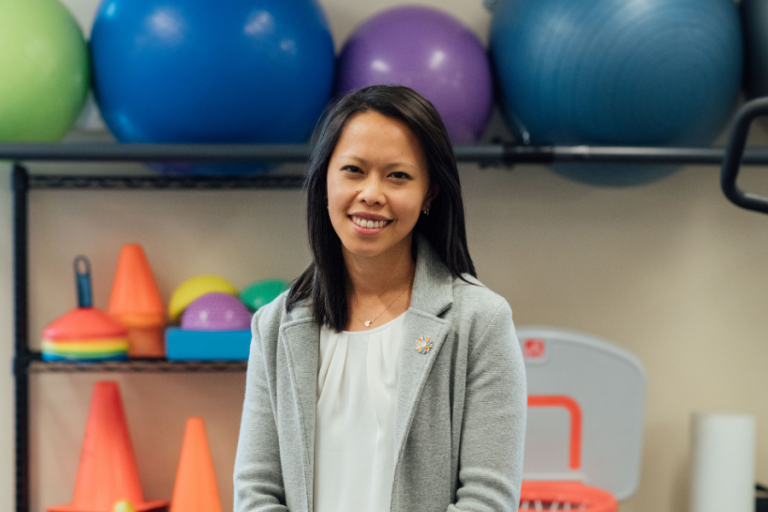
Linh-Han Ikehara poses for a photo at the Center For The Female Athlete

The Center for the Female Athlete at Dayton Children’s is led by a group of physicians, specialists, dietitians and athletic trainers dedicated to the current and future health and wellness of the female athlete. Each caregiver plays an important role on the team, providing total wellness of the young female athlete and the unique situations that affect them.

Name: Linh-Han Ikehara

Role on the center for the female athlete team: Behavioral Health Therapist

Why is it important to have your specialty as part of the center for the female athlete team?
Now more than ever, it is important that our youth, particularly our teen female athletes see emotional health as part of our overall health and wellbeing. Together, the two promote optimal wellness and resilience in facing challenges.

The two systems of mind and body are intimately connected and reap reciprocal benefits of affecting each other.

“It is helpful to think of an athlete with depression, anxiety or another mental health concern as “injured” – just as you would of a student athlete who has a physical or medical problem that requires patience for recovery.”

As with physical injuries, mental health problems may, by their severity, affect athletic performance and limit or even preclude training and competition until successfully managed and treated. In other cases, teen female athletes often will experience depression or anxiety as they struggle to cope with an injury placing them at increased risk or re-injuring. It is important that our teen athletes see their wellbeing a priority that enables them to enjoy the sport, as well as perform.  

What are your goals for the program?
My vision is for our teen female athletes to recognize and utilize their personal strengths that will enable them to be healthy and confident individuals and athletes. These strengths are the catalyst to transforming negative self-beliefs into positive and realistic ones and the development of stress management. My focus is to promote our girls’ overall wellness and empower them to see that their self-worth is connected to who they are as a person, rather than their sports performance.  

What do you want female athletes to know about the program?
“She can do this“ is our motto. That means our girls don’t have to have all the answers to what’s going on with them, but they can work with the team to identify the areas for continued growth and make intentional plans in the development of a healthy mindset and habits.

One final thought
Although mainly an athlete in high school, I continue to strive to keep myself and my family active on a daily basis through trail running, biking, and hiking. It brings me joy to see my son experiencing the benefits of developing healthy habits and enjoying himself. I see now how exercise has a positive impact on the emotional well-being for myself and others. I am honored to have the opportunity to empower our teen female athletes to also invest in themselves. 

last reviewed

care that goes above and beyond

Because every child deserves care that goes above and beyond, Dayton Children’s provides compassionate, expert care for kids of all ages. Find a provider, schedule an appointment, or learn more about conditions we treat today.