Physical activity for children is so important. The impact is staggering, with years of research verifying the positive effects on kids’ mental and physical health. We’d call it a miracle drug if the benefits could be captured in a 10-mg tablet taken twice a day. For kids with depression or so-called ADHD, the effects are particularly beneficial.
Youth sports are the way many kids get exercise at an early age. However, by adolescence talent trumps desire, leaving many children wanting to play but unable to do so because of a lack of skill. In such situations, we may recommend that kids and parents consider dance, yoga and even martial arts.
Martial arts can be met with mixed reactions. Children, particularly aggressive youth, view martial arts as an opportunity to learn how to become better fighters. Parents are concerned that such programs will promote the type of mindless violence that they are trying to eliminate.
Well-respected martial arts programs promote self-discipline, emotional stability and respect, along with the enhancement of various physical skills. There has been lots of research that document the positive impact of martial arts programs on kids’ psychological health. For many kids, these programs are a way to learn the self-control skills that they cannot acquire in a therapist’s office.
Even so, while this might be true for some kids, parents are concerned that it doesn’t intuitively make sense to recommend that aggressive kids learn to become more skillful fighters.
Recently published research by Anna Harwood and her colleagues in the journal Aggression and Violent Behavior has now answered that concern. They analyzed twelve studies involving 507 kids, studying the impact of marital arts on aggressive and violent behavior. In nine of the twelve studies, martial arts had a positive effect and no impact in the other three studies.
These results make sense because good martial arts programs focus as much on positive psychology as they do on self-defense and fighting techniques. Instructors expect high standards of behavior during the class, and may even require that kids bring in their report cards for review. They focus on recognizing and controlling your emotional state and teaching alternatives to hurting others as a way to relieve your momentary frustration.
Good martial arts instructors teach in their studios many of the same skills we use in psychology. However, be as careful in selecting the right teacher as you would be in picking a psychologist. Observe several classes, ask about how misbehavior is managed and talk with other parents. Involve your child in that decision, and monitor their progress.
Because every child deserves care that goes above and beyond, Dayton Children’s provides compassionate, expert care for kids of all ages. Find a provider, schedule an appointment, or learn more about conditions we treat today.
If you use coconut oil as a healthy alternative to vegetable oil, olive oil or butter during cooking, you’re not alone. In 2020, over 497,000 tons of coconut oil were sold in the United States. These impressive sales could be contributed to the alleged health benefits coconut oil claims to provide. Reducing belly fat and improving Alzheimer’s disease are among the most popular. But what do we really know about this popular cooking substitute?
Coconut oil is entirely made up of fat, 80-90% of which is saturated fat. Fat is made up of smaller molecules called fatty acids, and there are several types of fatty acids in coconut oil. Lauric acid is the most predominant type of fatty acid and it makes up about 44% of the saturated fat in coconut oil. Lauric acid is known to increase your cholesterol, which could lead to early cardiovascular disease.
what does this mean for our children?
Since most children are not concerned with their waistlines or Alzheimer’s disease, they probably aren’t the ones making the decision to use coconut oil in their diet. The biggest concern with children consuming coconut oil is that over their lifetime, their organs and arteries will be exposed to it for a longer duration since they start at a younger age. An adult will have fewer years of exposure since they start consuming it later in life. This increased duration of exposure causes more damage to a child’s heart and arteries.
what type of oil is better to cook with?
As far as a heart healthy diet is concerned, olive oil is the cooking substitute of choice. Only about 14% of olive oil is made up of saturated fat. The predominant fat in olive oil is a monounsaturated fat called oleic acid. Oleic acid has properties that are suggested to reduce inflammation. In addition to fatty acids, olive oil is packed full of vitamins E and K, and powerful antioxidants that may reduce your risk of chronic diseases.
Olive oil is also one of the key ingredients in the Mediterranean diet, which has been shown to significantly reduce heart disease. Olive oil is thought to reduce inflammation but has also been shown to protect “bad” LDL cholesterol from oxidation, improve the lining of your blood vessels and may prevent excessive blood clotting. Olive oil has also been shown to lower blood pressure, which is a strong risk factor for heart disease.
what can I do with all my coconut oil if I shouldn’t eat it?
Don’t throw out your coconut oil just because it’s not a heart healthy cooking alternative. There are several other ways to use your coconut oil without eating it! The possibilities are endless, but here are a few of our favorite ways to use it:
Coconut oil is great for your skin. It can be used as a moisturizer to relieve skin irritations and eczema. This includes cracked heels, cuticles and sunburn.
You can also apply it to your hair before shampooing to reduce protein loss and improve hair health.
Rub it on stubborn crayon marks to remove them from your walls.
Remove gum from hair or clothing by rubbing the area with a generous amount of coconut oil.
If your family has a history of heart disease and you want to set your child on the right path to a healthier future, Dayton Children’s preventive cardiology clinic can help. Our judgement-free team helps identify early warning signs and shows your child and family how to reverse some negative changes that may already have set in. Schedule an appointment in the preventive cardiology clinic today!
Because every child deserves care that goes above and beyond, Dayton Children’s provides compassionate, expert care for kids of all ages. Find a provider, schedule an appointment, or learn more about conditions we treat today.
3 reasons to sign up for Imagination Library and start getting free books today
Celebrate National Library Lover’s month by building your family’s library
There’s so much to love about the library. Reading not only creates positive moments between family members, it’s also been proven to help children learn more and be better prepared for school!
start building your family’s library
This National Library Lover’s month, you can start creating your own family’s library for free thanks to Dolly Parton’s Imagination Library of Ohio.
Dolly Parton’s Imagination Library is dedicated to inspiring a love of reading by gifting books free of charge to children from birth to age five, through funding shared by Dolly Parton and local community partners. If you start at birth, that’s 60 free books in total you’ll be getting and a lifetime of memories! So what are you waiting for? Get signed up today!
why is reading important?
Research has shown that signing up for Imagination Library has many benefits including:
Increasing the bond between caregivers and children: 81 percent of parents participating in Imagination Library say they’ve increased the frequency of reading with their children.
Making children more interested in reading: Children who read at an early age will become better students and live happier, healthier lives. Through reading, children begin to learn words and sounds, recognize pictures, and understand emotions. Reading better prepares children to start kindergarten by strengthening their vocabulary, expanding their speech, helping to create a regular routine, and so much more.
Preparing children for Kindergarten and developing their early literacy skills: Research shows an increase and improvement in kindergarten readiness when children are involved with the Imagination Library program. The longer a child is enrolled in the program, the greater the outcome. Currently, only 34% of children in Montgomery County are demonstrating kindergarten readiness. Dayton Children’s Hospital is working to address this statistic by supporting early literacy to improve kindergarten readiness as the Montgomery County affiliate for Imagination Library of Ohio.
signing up for Imagination Library
What to expect when you sign up: Each month, Dolly Parton’s Imagination Library mails a high quality, age appropriate book to all registered children, addressed to them, at no cost to the child’s family.
The books are chosen by the Blue Ribbon Book Selection Committee who make sure that each book that the child receives will contain certain characteristics that are specific for the child’s age
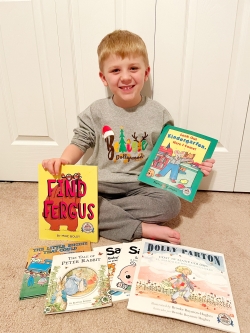
The first book every child receives is “The Little Engine That Could.” Then, the month that a child turns 5 years old, they will receive “Look Out Kindergarten, Here I Come!” Several bilingual English/Spanish titles are included each year.
Want to learn more about the books your child can expect to receive this year? Check out the 2023 book list categorized by age group.
The simple enrollment process allows families with children under the age of 5 to sign up online at OhioImaginationLibrary.org/Enroll or by using a paper form available at partner locations. Typically, the first book arrives 8-10 weeks after sign-up, and then monthly after that. Children graduate out of the program at their 5th birthday as they prepare to enter kindergarten. By signing children up for this program, parents and caregivers can show their children the value of books and set an incredible foundation for learning.
Because every child deserves care that goes above and beyond, Dayton Children’s provides compassionate, expert care for kids of all ages. Find a provider, schedule an appointment, or learn more about conditions we treat today.
Search “tongue and lip ties” and you will get numerous articles claiming it is the cause of breastfeeding issues or fussy babies. However, there is little evidence to support it. So who is right? Is it worth investigating? This article discusses what is important to assess when feeding your baby.
common concerns
Baby is not able to stay latched or not latching to breast deeply, becoming unsettled/upset
Maternal nipple pain with feeding or damage or compressed nipple shape after feeding
Baby is not able to remove adequate milk volume; very long feeds or very short feeds; baby may fall asleep at breast due to fatigue or not being able to get milk flowing well
Weight loss/poor weight gain in baby
Excessive gas
Decreased milk supply
Tension in oral cavity, oral motor dysfunction; tension in back or neck, open mouth at rest
lactation support
First, we suggest trying non-invasive measures to address any issues. Some of the issues commonly thought to be attributed to ties can be greatly improved with oral exercises and massage, in addition to breastfeeding positions, techniques and supply management. A thorough breastfeeding assessment, pumping guidance/assessment, oral assessment, supplementation guidance and bottle-feeding technique guidance/assessment, if needed, is important to help get to the root cause of the issue(s).
“tongue and/or lip tie” procedure
Sometimes it is necessary to have a lip or tongue frenotomy (the procedure in which the lip or tongue tie is cut). This can be an immediate game changer for some, and of great help for current and longer-term issues. However, releasing a tongue tie or lip tie may only be the first step in getting the baby to actually use their new anatomical ability. They likely also need a combination of lactation support, “body work” (stretching/massage/etc.), oral exercises/suck training and time to learn a new oral motor pattern. Many babies have developed compensations related to their tongue or lip tie that continue as muscle memory and have leftover muscle tightness that continue to impact feeding.
get help
Whether it is uncertain if an anatomical “tie” exists or if one has already been diagnosed and referred to an ENT or dentist, lactation support can usually help improve feeding issues in the meantime or even eliminate the need for a procedure and/or improve the outcome after a procedure.
At Dayton Children’s, our outpatient lactation clinic specializes in helping with feeding issues. Our staff has additional training in oral exercises and infant massage/relaxation/range of motion and tummy time techniques to help improve feeding issues.
Schedule a consultation with a lactation specialist online today.
Because every child deserves care that goes above and beyond, Dayton Children’s provides compassionate, expert care for kids of all ages. Find a provider, schedule an appointment, or learn more about conditions we treat today.
The short answer is yes, melatonin can be given to children. But it is important to know when and why a sleep aid, like melatonin, should be considered. We sat down with Samuel Dzodzomenyo, MD, sleep medicine provider at Dayton Children’s, to get the 411 on children and sleep aids, specifically melatonin.
when can melatonin be given?
There are a few instances when a sleep aid, like melatonin, should be considered.
When a child is suffering from delayed sleep phase syndrome (sometimes called “night owl” syndrome) a sleep aid can be given. This is typically common in teenagers and is when the body’s internal clock doesn’t switch to night-mode. Naturally, everyone makes melatonin in their bodies, but as a child’s body begins to change and develop during puberty, the natural production of the sleep hormone, melatonin, is produced later in the night which can cause trouble falling asleep.
If a child is suffering from delayed sleep phase syndrome, your child’s provider may recommend a small dose of melatonin to be given about four hours before their expected bedtime. The idea is that this will not put a child to sleep but help prepare their body to switch to night-mode at the appropriate time.
A short-term method to help get a child back on a routine sleep schedule. This could possibly be used after a family vacation or break from school, such as summer break, to help get a child back on their routine. Once a child starts staying up later and sleeping in, it can be difficult to fall asleep on their own. A small dose of melatonin may help get a child back on schedule.
Melatonin may also be given to children with autism spectrum disorder or attention-deficit hyperactivity disorder (ADHD). Children with autism or ADHD may have problems falling asleep and staying asleep, and lack of sleep tends to cause behavioral issues. A small dose of melatonin may be considered for these kiddos.
how much melatonin can be given?
This is the question that you’ve all been waiting for! Melatonin comes in many different forms and dosages. It can come in liquid, chewable gummies, dissolvable pills, capsules and more. The other thing that parents should know about melatonin dosage is that labels can be confusing and sometimes misleading. There is no standardization when it comes to the active ingredient level making it difficult to know how much melatonin you are actually getting. Look for products that are labeled with “USP Verified.” This means that the product has met safety and quality standards, contains the ingredients listed on the label and will provide guidance on appropriate dosage. Please be aware of excessively high doses that can lead to toxicity.
Before giving your child melatonin, talk to your child’s primary care provider about products and dosage. It’s also important to make sure the melatonin won’t interfere with any other medications your child may be on.
how long can I give my child melatonin?
Short-term use (anywhere from three months to two years) has proved to be safe and effective in getting children back on a sleep schedule, but there are no long-term studies of melatonin usage in kiddos.
Talk to your child’s pediatrician about dosage and when it’s an appropriate time to give melatonin. Remember that sleep aids, such as melatonin, should not be given as an alternative to a good bedtime routine. Over 50% of children with sleep problems may benefit from some type of bedtime behavior modification requiring no sleep aid.
Because every child deserves care that goes above and beyond, Dayton Children’s provides compassionate, expert care for kids of all ages. Find a provider, schedule an appointment, or learn more about conditions we treat today.
Toddlers and pre-school aged children tend to experience the most extreme feelings of anxiety, sometimes related to separation. It is also at this age that parents tend to begin dropping their children off at day care during the work day. Naturally, the transition into a new and unfamiliar routine can prompt tantrums caused by your child’s anxiety.
No parent wants to see their child stressed. When your child is upset and begging you not to leave, the temptation to give in to their demands can be very real. Knowing whether to stay or leave during your child’s emotional outbursts is a challenging decision for parents.
We suggest these five tips to smooth out the drop-off process and ease your child’s separation anxiety:
Keep goodbyes brief and consistent. Having a routine with your child that you practice at the same time every day can help make the goodbye easier for both parents and children. If you stick around longer, there is more time for anxiety to build up.
Be affectionate and attentive before you leave. This will help comfort your child and build their trust. Even if they beg you to stay longer, keep the goodbye brief but meaningful.
Have a plan your child can understand. When you are telling your child goodbye, explain to them when you will be back in a way that is easy for them to understand. You might tell them you will return after snack or nap time. Communicating a plan to your child in their own terms will make the separation less stressful, because they understand it will come to an end.
Stick to your plan. After you drop your child off, try your best not to return sooner than you promised them you would. If you are missing your child, or are feeling guilty about your child’s anxiety, that is okay! Staying consistent with your drop-off and pick-up routine will help ease the process over time. Going back sooner than planned may only feed into your child’s behaviors at drop-off in the future.
Practice separation at home. Asking grandparents, friends or other family members to watch your child for a short period of time will make separation more normal for both you and your child. If you can do this before dropping your child off at daycare for the first time, it might help reduce feelings of anxiety throughout the new transition.
Designate a transition object. This can be an item that your child carries from home to school as reminder of the process. Some kids take a picture of their family, a stuffed animal that stays in their backpack or maybe a lunch box that signifies that it’s time to go to school.
Take heart in knowing that expressions of separation anxiety in this first big transition for your child is a sign of their love and attachment to you. Day care drop-off is a great opportunity to build your child’s trust in you, along with their own sense of independence. For more information about separation anxiety in children visit the American Academy of Pediatrics.
Because every child deserves care that goes above and beyond, Dayton Children’s provides compassionate, expert care for kids of all ages. Find a provider, schedule an appointment, or learn more about conditions we treat today.
After a summer filled with family adventures and quality time spent with your child, back to school season has rolled back around already. For some children entering elementary and middle school, this may mean the start of riding the bus.
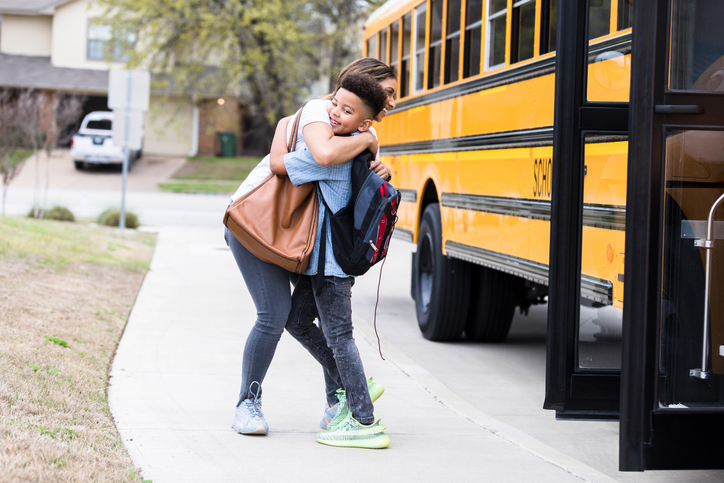
Riding the bus is an important lesson in independence for children. It can also be a source of separation anxiety for both parents and kids. This transition in your child’s educational journey requires significant trust in your child, their peers, and the bus driver to get them to school safe and sound.
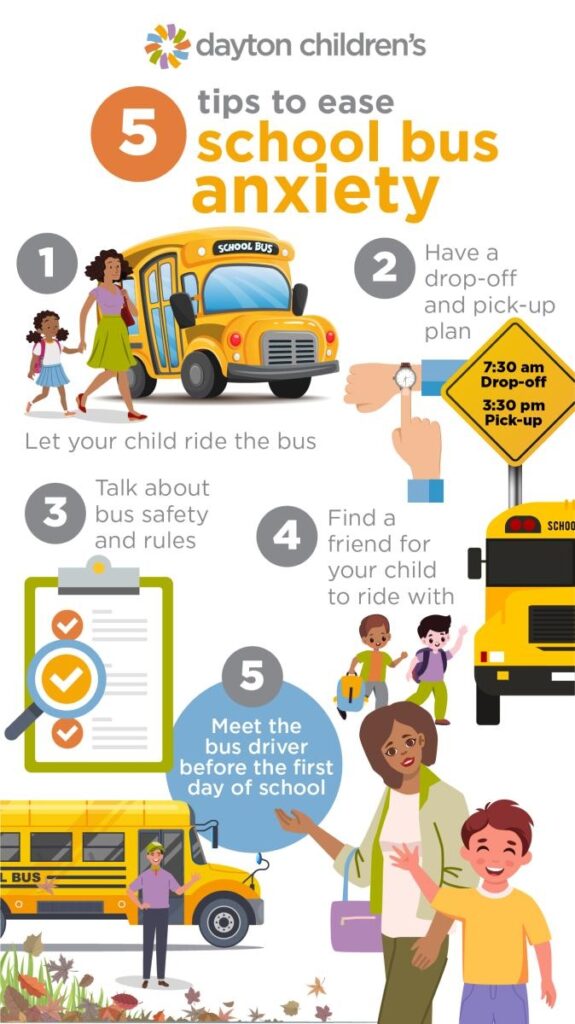
5 tips to help ease anxiety related to your child’s first bus ride
1. Let your child ride the bus. It is normal for parents to want to drive their child on the first day of school, especially if either parent or child is experiencing back-to-school related anxiety. However, having your child ready at the bus stop on the first day will help establish their routine, your routine, and even the bus driver’s routine. Be caring and understanding of your child’s fears, but encourage them to be brave in trying something new.
2. Have a pick-up and drop-off plan. Come up with a plan to take your child to the bus stop and be there when they return. If work or other obligations make this impossible, try to have another familiar adult, sibling or friend there for your child. This can help ease your anxiety and comfort your child as they get used to a new routine.
3. Talk about bus safety and rules. Make sure your child knows how to be safe around the road and other vehicles. Talking about safety rules with your child before the first day of school can help both of you feel more comfortable with bus transportation. You might talk to them about:
Waiting for the bus to stop completely before walking toward it
Always looking both ways to be sure traffic has stopped before crossing the street
Only walking in front of the bus when it is stopped and the driver says it is safe
Staying in their seat while the bus is moving
Using a quiet voice on the bus to avoid causing distractions for the bus driver
4. Find a friend for your child to ride with. Having a friend who will be riding the same bus as your child can help ease their anxiety as they leave home on the first day of school. Encourage your child to talk to the other children at the bus stop or on the bus.
If possible, find a time for your child to meet their bus driver before the first day of school. This may help them feel more comfortable with the new transition.
5. Meet the bus driver before the first day of school. If possible, arrange a time to meet your child’s bus driver prior to the first day. Most bus drivers practice their routes leading up to the start of the new year.
Get in contact with your child’s school to find out when your bus driver will be doing this and see if it’s possible for you and your child to meet the bus driver at the bus stop. This can help ease first day jitters.
If your child is experiencing extreme anxiety about riding the bus for the first time or returning to school this year, try these tips to help your child work through these feelings.
Because every child deserves care that goes above and beyond, Dayton Children’s provides compassionate, expert care for kids of all ages. Find a provider, schedule an appointment, or learn more about conditions we treat today.
10 safe food options to pack if your child attends a nut-free school
Did you know that about 1 in 50 children has an allergy to nuts? For some children, consumption of a small amount of peanut can cause a severe allergic reaction.*
A nut allergy is a serious thing and is becoming more common in children. Many schools and camps have started to implement nut-free or nut-aware environments to keep kids with allergies safe. A nut-free or nut-aware environment may prove to make lunchtime a challenge for parents whose kids are PB&J fanatics.
So, what is safe to send, and what should be avoided when packing lunch for your child or sending in snacks? We checked in with Dr. David Morris, division chief of allergy and immunology at Dayton Children’s to get answers to the questions we all want to know.
what is the difference between nut-free and nut-aware?
Environments with a nut-free policy will typically enforce a ban on peanuts and tree nuts. This means nut products are not allowed on the premises, at all. While nut-aware environments will allow nuts on the premises, but heavily discourage them.
Nut-aware environments put a lot of effort into preventing cross contamination through proper handling of food and proper hygiene. They will usually have a nut-free table for children with an allergy to eat at during mealtime. Many districts have made these tables optional for the food allergic child.
what foods should be avoided if my child is in a nut-free environment?
Every policy may differ based on the type of nut-free environment needed by those with a severe food allergy. To be on the safe side it is generally best to avoid sending any type of peanut or tree nut with your child. This includes:
Almonds
Brazil nuts
Cashews
Chestnuts
Hazelnuts
Hickory nuts
Macadamia nuts
Pecans
Pine nuts
Pistachios
Walnuts
how do I know if a food is nut-free?
The best way to be sure if a food is nut-free is to read the label and check the ingredient list. Foods sold in the Unites States are required to state on their labels if the food contains peanuts or tree nuts (per the Food Allergy Labeling and Consumer Protection Act of 2004). After checking the ingredients list, look on the label for phrases like “may contain tree nuts” or “produced on shared equipment with tree nuts or peanuts.” Foods with these warnings on the label may be consumed by children without food allergies as these are unlikely to cause reactions in food allergic children from cross contamination (when eaten by other children). Parents should check their specific school regulations.
other high-risk foods
When thinking about classroom treats or field trips, parents should read labels carefully. According to KidsHealth there are other high-risk foods for people with peanut or tree nut allergies because of potential cross-contamination that may not be mentioned on the food label.
Cookies and baked goods. Even if baked goods don’t contain nut ingredients, it is possible that they came into contact with peanut or tree nuts through cross-contamination. Unless you know exactly what went into a food and where it was made, it’s safest to avoid store-brought or bakery cookies and other baked goods.
Candy. Candies made by small bakeries or manufacturers (or homemade candies) may contain nuts as a hidden ingredient. The safest plan is to eat only candies made by major manufacturers whose labels show they are safe.
Ice cream. Unfortunately, cross-contamination is common in ice cream parlors because of shared scoops. It’s also a possibility in soft-serve ice cream, custard, water ice, and yogurt shops because the same dispensing machine and utensils are often used for lots of different flavors. Instead, do as you would for candy, buy tubs of ice cream at the grocery and be sure they’re made by a large manufacturer and the labels indicate they’re safe.
Asian, African and other cuisine. African and Asian (especially Thai, Chinese and Indian) foods often contain peanuts or tree nuts. Mexican and Mediterranean foods may also use nuts, so the risk of cross-contamination is high with these foods.
Sauces. Many cooks use peanuts or peanut butter to thicken chili and other sauces.
what can my child pack for a nut-free lunch?
For starters, you don’t have to veer too far from your child’s love of PB&J. Try using a sunflower seed butter instead of peanut butter, almond butter or hazelnut spread. Your child probably won’t even notice a difference. Lunch meat is also a safe option if your child likes a little variety.
If sandwiches aren’t your child’s “jam,” below is a list of other healthy and safe food options your child could enjoy in a nut-free environment.
String cheese
Fruit: fresh, dried, freeze-dried, fruit leathers, dried fruit bars, fruit cups
Vegetables
Individual guacamole and hummus cups
Hard-boiled eggs
Yogurt cups/tubes
Cottage cheese
Meat sticks/jerky
Pretzels
Animal crackers
As a best practice we still recommend you always check a food’s ingredient label. One brand of a certain type of snack may be safe, while another may contain nut ingredients.
what is the future of nut-free schools?
In May 2021, new guidelines recommended against bans of specific foods including nuts. There is not enough evidence for or against site wide (nut free schools) bans. Concerns surround the impact of site wide food bans on the psycho-social well being of not only the children with food allergies but also children without these allergies. These impacts were measured against the mitigation of risks provided by site wide food bans. Unfortunately, there is not enough evidence that these bans prevent reactions. These concerns are what prompted the recommendation against the ban.
so what can parents do to help, now?
As stated, evidence for site wide food bans is low. Dr. Morris encourages parents to “stay tuned” as more evidence will be forthcoming. Until that time, he recommends the five tenets set out by the CDC in their voluntary guidelines for schools regarding food allergy:
Ensure the daily management of food allergies in individual children.
Prepare for food allergy emergencies.
Provide professional development on food allergies for staff members.
Educate children and family members about food allergies.
Create and maintain a healthy and safe educational environment.
Education about food allergy is important to help all our children (allergic and non-allergic) to thrive.
*Note: severe allergic reactions do not occur with only contact exposure.
Because every child deserves care that goes above and beyond, Dayton Children’s provides compassionate, expert care for kids of all ages. Find a provider, schedule an appointment, or learn more about conditions we treat today.
5 tips to help student athletes adapt to the college environment
By: Dr. Tiffany Ofili Porter
Regardless of what stage you are in life, having to deal with transitions is inevitable. As intimidating as it may seem, looking at change as an opportunity instead of something to be feared will make life’s transitions that much easier.
As someone who has been through every transition along my athletic journey, I have first hand experience with the difficulty of walking into the unknown. I know what it feels like to go from a preschooler racing in the streets all the way to a world championship medaling hurdler competing at three consecutive Olympic Games.
There are several lessons I learned along the way, and I have tips on how to help student-athletes cope with the transition to college.
1) Understand that you will become a “small fish in a big pond”
If you’re an athlete preparing to compete at the college level, chances are you’re one of the best, if not the best athlete in your high school. Maybe even in your state. And that’s incredible, congratulations.
But be prepared to be surrounded by other amazing athletes who are also standouts just like you. Some of your fellow incoming freshman teammates may be better than you, and it’s likely that many of the upperclassmen probably will be. And that’s ok. It should even be welcomed and embraced.
If you come into collegiate sports with the understanding that you’re going to be up against much stiffer competition both on your team and rival teams, it will make the transition smoother and less of a shock. I encourage you to approach this shift as an opportunity to learn new techniques from your college coach(es) on how to improve and step up your game. Ask lots of questions, and remember that everyone has to start somewhere; even the best athletes were rookies at one time.
2) Establish your tribe
Have you ever heard the saying “you’re the sum total of the 5 people you spend the most time with”? Well it is very true and we must be intentional with who we surround ourselves with because they can have a profound impact on your success as a student-athlete.
The college experience comes with a lot of freedom to make your own decisions, and that can be good, or bad, depending on how you use it. Will you choose friends who will encourage you to kill it at practice everyday, or friends who will pressure you to party every day and neglect your sport? Life is about balance, and with good time management, you can have a fulfilling college social life while still striving for greatness in your sport. With the right people in your corner, finding this balance will be so much easier.
I found while I was in college the majority of my friends were also athletes because they understood my lifestyle, and we were able encourage each other in ways that non athletes may not fully understand.
3) Utilize the available resources
Many colleges and universities recognize how difficult it can be to successfully juggle work in the classroom, and in your sport simultaneously. As a result, they will have resources available to help lessen the burden. These include special tutoring sessions, designated study times or study venues and trained counselors/advisors, just to name a few. When these resources become available to you, use them! You will learn very quickly that it’s easy to become overwhelmed with the demands from coaches and professors so when there’s an opportunity to get help do not be afraid to take it. In fact, it’s a very useful skill to know how and when to ask for help.
This is not unique to athletes because many professors offer office hours to help students master the material, and they often complain that students never come. Don’t be that person. If you have questions, ask. If you need guidance, seek it out. You’ll be a better student and a better athlete for it.
4) Remember that you’re a STUDENT-athlete for a reason
A big part of college is finding your identity and it’s easy for student-athletes to fall into the trap of being so wrapped up in sport that they forget they’re also there to get an education. If you’ve made it to the college sports level, it means you’re very committed to excellence in athletics, but it’s imperative to keep that same energy in the classroom. As someone who was able to successfully achieve a very high level of success in the classroom and on the track, use my experience as proof that it can be done.
Were there times I felt discouraged about a bad race or bad exam grade? Sure. Were there days I doubted if I would actually be able to pull off becoming a pharmacist and professional athlete simultaneously? Yes. Were there moments I felt inadequate and incapable of achieving the insanely large goals I set? Absolutely.
But I surrounded myself with people who encouraged me and uplifted me when I needed it the most. This goes back to the importance of having a good support system.
5) Keep an open mind
The quicker you realize that things will look different than they did in high school, the quicker you will be able to adjust to college life as a student-athlete. Your teammates will be different. Your coach(es) will have different styles. Your professors will instruct in a different way. Your classes will be structured differently. The pressures will be different. The expectations will be different. And these differences should be embraced.
The good news is, you already have what it takes to be successful, otherwise you wouldn’t be where you are right now. Take that confidence with you, but also keep in mind that you will have to adjust and you will be taken out of your comfort zone regularly. Keeping an open mind when learning your new coach’s methods, or your professors’ quirks will help ease the transition.
Congratulations on all of your accomplishments thus far, and I hope that the next chapter in your story is even better than the previous one. Change can be a little frightening, but with the right mindset and perspective, it doesn’t have to be. I hope you find these tips useful as you prepare for the next stage in your sports career. Here’s to smashing goals, fostering life long friendships, embracing change and making great memories. You’ve got this!
meet the author
Dr. Tiffany Ofili Porter is a Michigan native and currently works as a pharmacist, digital content creator and sports broadcaster. She is a former world class Olympic hurdler and ran track professionally for 12 years. During that time, Tiffany competed in the 2012, 2016, and 2020 Olympic Games, earned four world championship medals and currently holds the British National records in the 60 and 100 meter hurdles. She was also European Champion, Commonwealth Games silver medalist, Continental Cup silver medalist, World Junior Championship silver medalist and earned several European medals during her tenure.
Tiffany graduated from the University of Michigan in 2012 where she earned her Doctorate of Pharmacy. During her time at U of M she was a five-time NCAA champion, team captain, school record holder, Big Ten Medal of Honor recipient, Academic All-American, Vice President of SNPhA and a member of the pharmacy school Leadership Scholars Program. In 2014 Tiffany was inducted into the University of Michigan Track and Field Hall of Fame.
To learn more about Tiffany & follow her journey, please visit: www.tiffofili.com
Because every child deserves care that goes above and beyond, Dayton Children’s provides compassionate, expert care for kids of all ages. Find a provider, schedule an appointment, or learn more about conditions we treat today.
The holiday Juneteenth (short for June 19th) will be here soon. If your school experience was similar to mine, you might have never heard about Juneteenth in your history classes. Nonetheless, it is an important holiday to be aware of and to talk to your kids about.
Juneteenth is a holiday commemorating the day, June 19th of 1865, when slaves in Texas learned about their freedom. This was about 2 and a half years after the Emancipation Proclamation went into effect (January 1st, 1863). Though slaves were free “on paper,” many were not aware of the news, especially in the states close to the southern border. Thus, Juneteenth represents the day when all slaves were free and commemorates the ending of slavery in the United States.
This holiday is important because it reminds us that the process of ending slavery was not one moment in time but multiple moments. The process continues today as we are still addressing the consequences of our history. It is also a story of hope for change, even though the process may belong. It is an important reminder that freedom is essential for all.
Juneteenth is also sometimes called Freedom Day, Black Independence Day, Jubilee Day, and others. Juneteenth is celebrated in several ways, including cook-outs/barbeques, religious services, festivals and parades.
3 tips for talking to your kids about Juneteenth
1. Educate yourself about Juneteenth before talking to your child. You do not have to complete an in-depth study of the holiday before you start the conversation. Just familiarize yourself with the history and importance. If your child asks questions, it is okay to say, “I don’t know.” You can always look up the answer later to provide to your child. There are so many resources available from books, TV shows, articles, and podcasts. You can also review kids’ books about the holiday before discussing it with your children.
2. Share the information you’ve learned with your child. Make sure to review these resources to ensure they fit your child’s developmental level. Read books together, look at online videos, watch shows about Juneteenth. There are resources for children of every age, from Sesame Street Juneteenth videos for the younger children to books and tv shows for older children/teens. For a list of book resources check out this website. Also, please look on YouTube for videos, including videos from PBS kids and Sesame Street.
3. Celebrate and learn as a family!
Participate in a community event: There are events in Dayton and surrounding areas celebrating Juneteenth this weekend. Be sure to take appropriate precautions to keep you and your family safe.
Have an outdoor cook-out or barbeque: Incorporate red foods that are traditionally used in Juneteenth celebrations. There are a few theories regarding the use of red foods. Still, most agree that red represents the strength and resilience of Black Americans.
Have a read-a-thon: Read books as a family about Juneteenth and Black American culture
Explore museum programs:The National Underground Railroad Freedom Center is offering an online presentation for the holiday. There may be other options available as well
Watch Juneteenth events on TV: this may include live music shows and the reading of the emancipation proclamation.
There are so many ways to celebrate this holiday, and these only represent a few examples.
Because every child deserves care that goes above and beyond, Dayton Children’s provides compassionate, expert care for kids of all ages. Find a provider, schedule an appointment, or learn more about conditions we treat today.
To provide the best experiences, we use technologies like cookies to store and/or access device information. Consenting to these technologies will allow us to process data such as browsing behavior or unique IDs on this site. Not consenting or withdrawing consent, may adversely affect certain features and functions.
Functional
Always active
The technical storage or access is strictly necessary for the legitimate purpose of enabling the use of a specific service explicitly requested by the subscriber or user, or for the sole purpose of carrying out the transmission of a communication over an electronic communications network.
Preferences
The technical storage or access is necessary for the legitimate purpose of storing preferences that are not requested by the subscriber or user.
Statistics
The technical storage or access that is used exclusively for statistical purposes.The technical storage or access that is used exclusively for anonymous statistical purposes. Without a subpoena, voluntary compliance on the part of your Internet Service Provider, or additional records from a third party, information stored or retrieved for this purpose alone cannot usually be used to identify you.
Marketing
The technical storage or access is required to create user profiles to send advertising, or to track the user on a website or across several websites for similar marketing purposes.