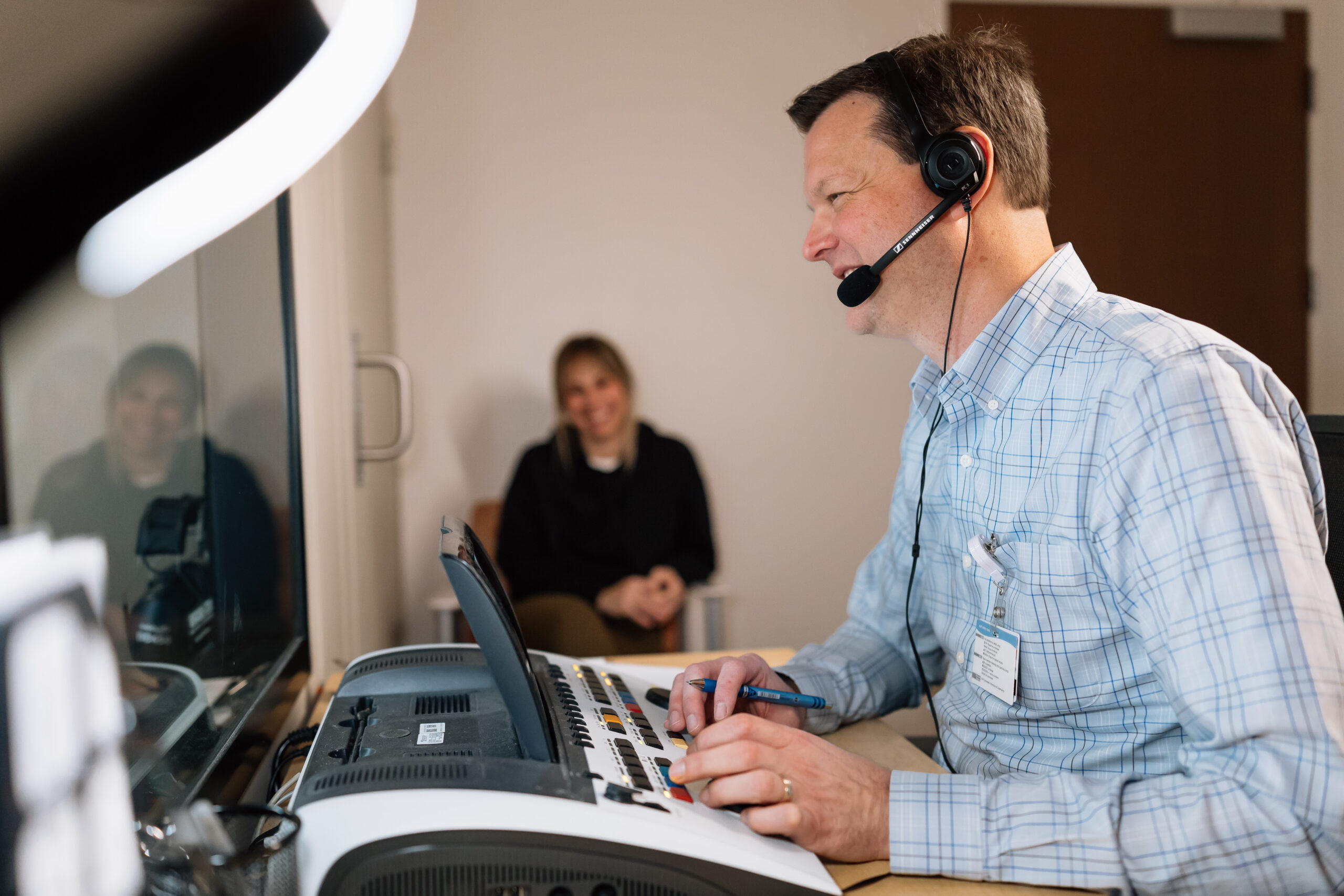
pediatric audiology
Our pediatric audiology team delivers specialized, compassionate care to help every child hear and communicate their best.
what is pediatric audiology?
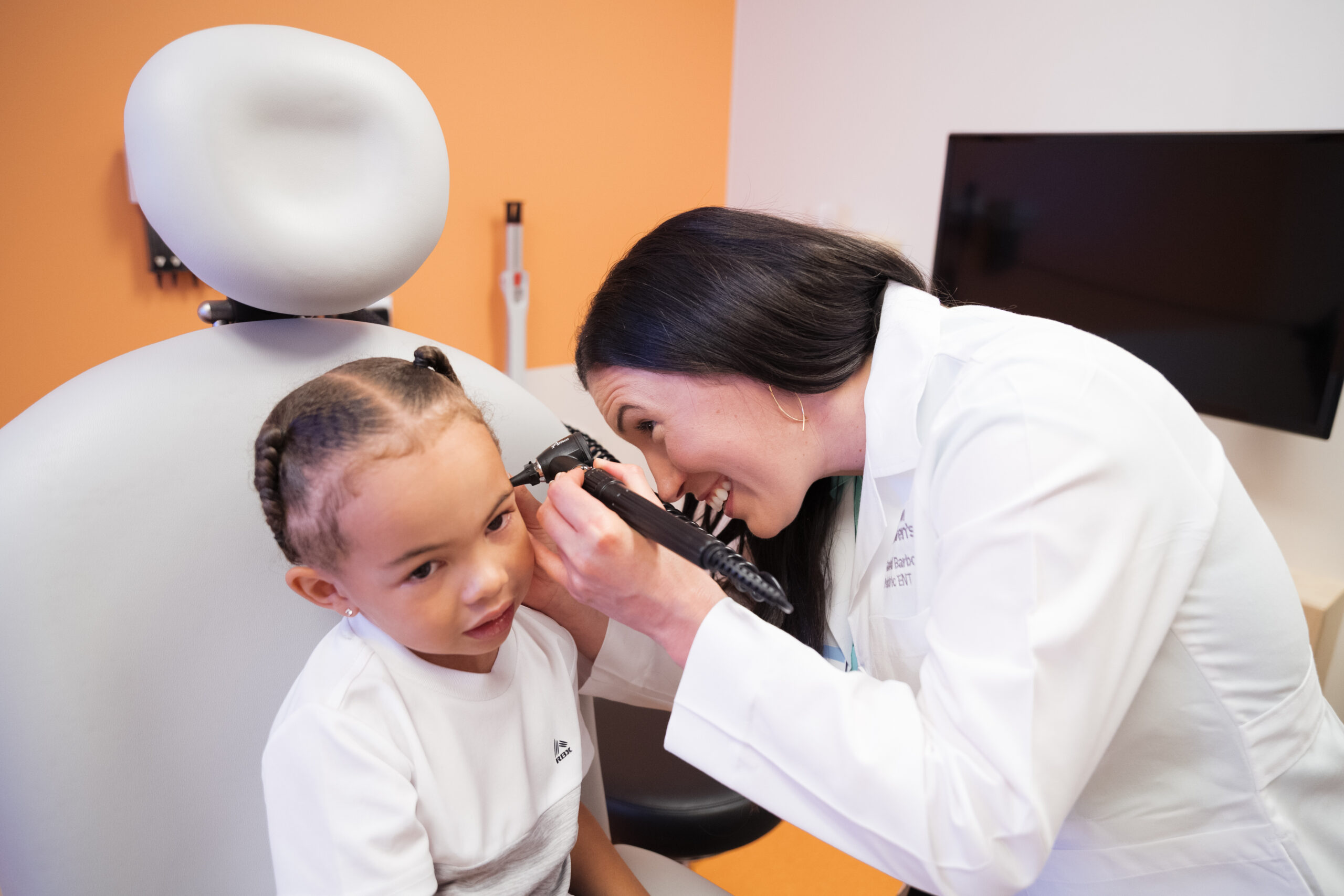
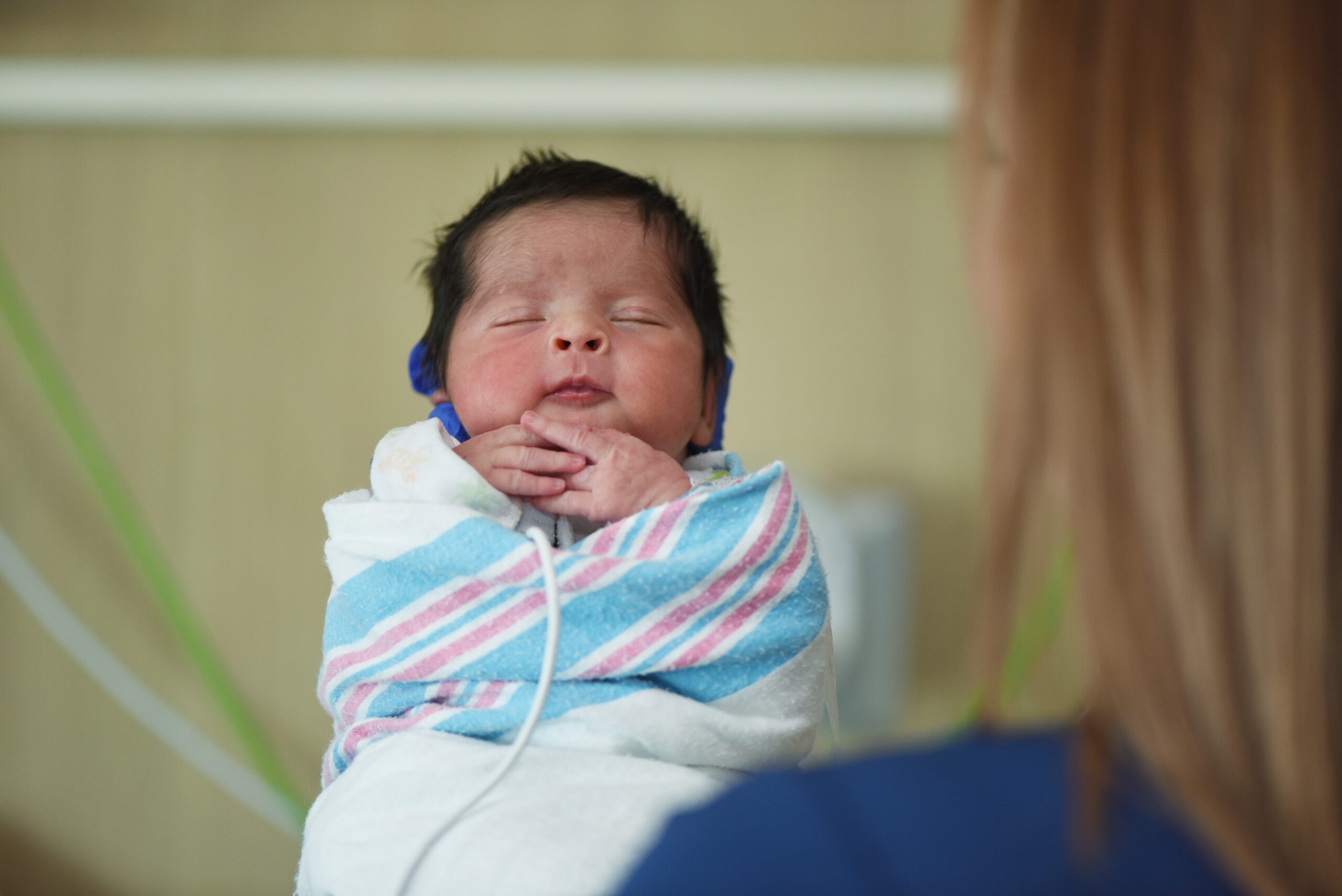
Pediatric audiology focuses on diagnosing and treating hearing problems in children. Hearing loss affects about 4 in every 1,000 babies, and while causes vary, early detection — ideally by 3 months of age — is key. At Dayton Children’s Hospital, we offer everything from newborn hearing screenings to advanced tests like auditory brainstem response evaluations. We also provide hearing aids, cochlear implants and BAHA devices for children with hearing loss. Each evaluation is tailored to a child’s age and needs, and our team works closely with your child’s primary care provider to ensure timely care and the best possible outcome.
why pediatric audiology at Dayton Children’s?
Dayton Children’s offers specialized hearing care designed just for kids, in a setting where children feel comfortable and understood. Our pediatric audiologists have advanced training in working with young patients, allowing us to get accurate results even with the smallest or most active children. We combine state-of-the-art technology with a compassionate approach, collaborating closely with families and physicians to create personalized care plans. As your trusted care partner and the region’s only dedicated pediatric audiology program, we’re committed to giving every child the best chance to hear, learn, and thrive.
hearing loss testing and diagnosis
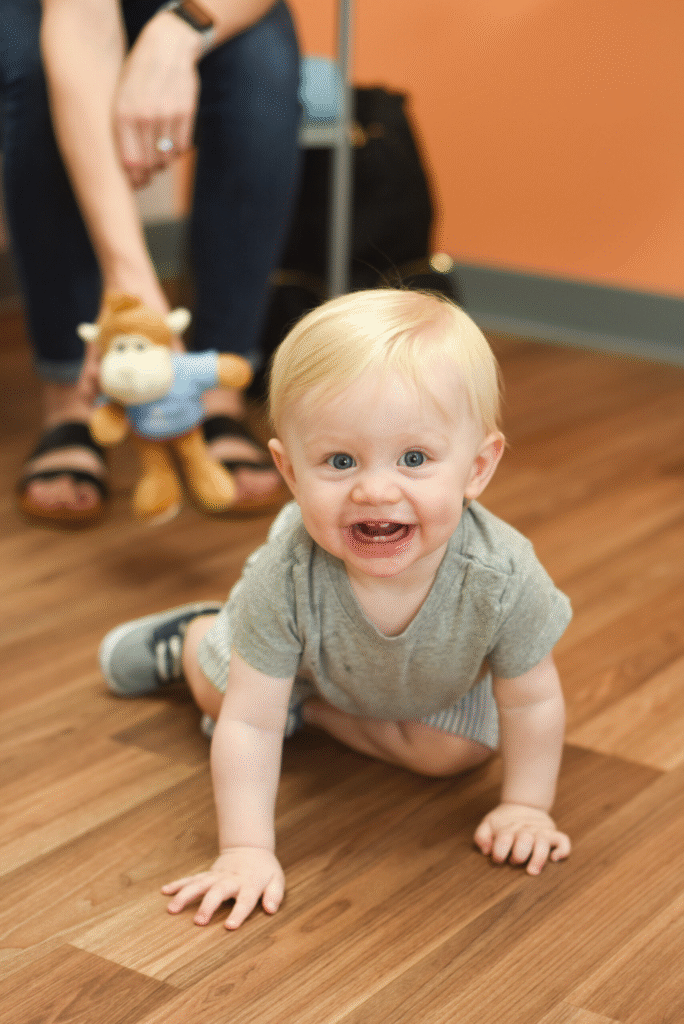
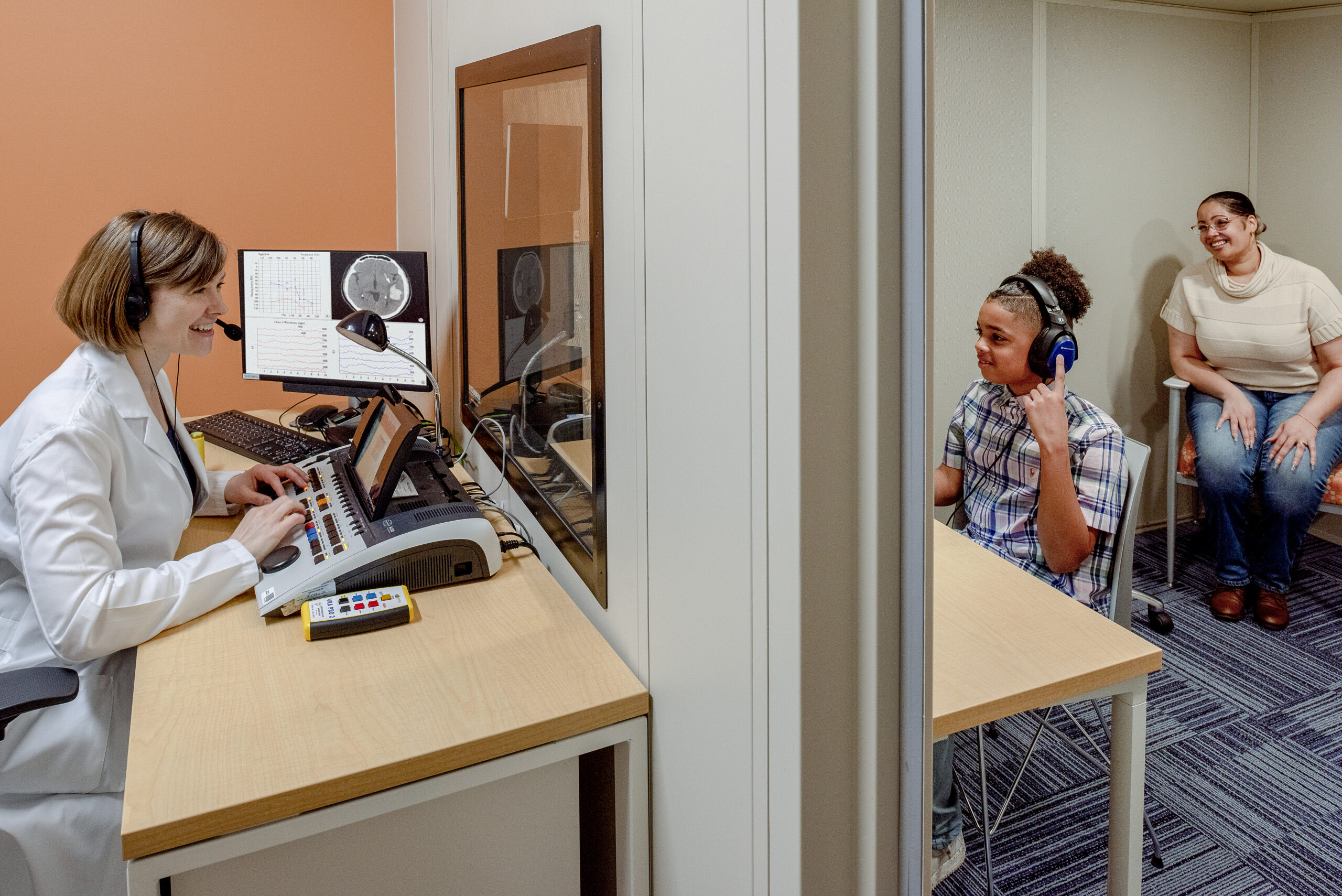
Several methods can be used to test hearing, depending on a child’s age, development, and health status. When we perform a hearing evaluation, we can diagnose the type and degree of your child’s hearing loss. Hearing evaluations for young and/or special needs children often require changes to the standard test format. Once we have determined the type and degree of your child’s hearing loss, we will work with your child’s primary care physician to manage ongoing care. You may also receive a referral to an ear, nose and throat specialist or the Dayton Children’s speech-language department.
If the hearing loss is severe or profound, we may recommend rehab services or cochlear implants.
rehab care for hearing loss
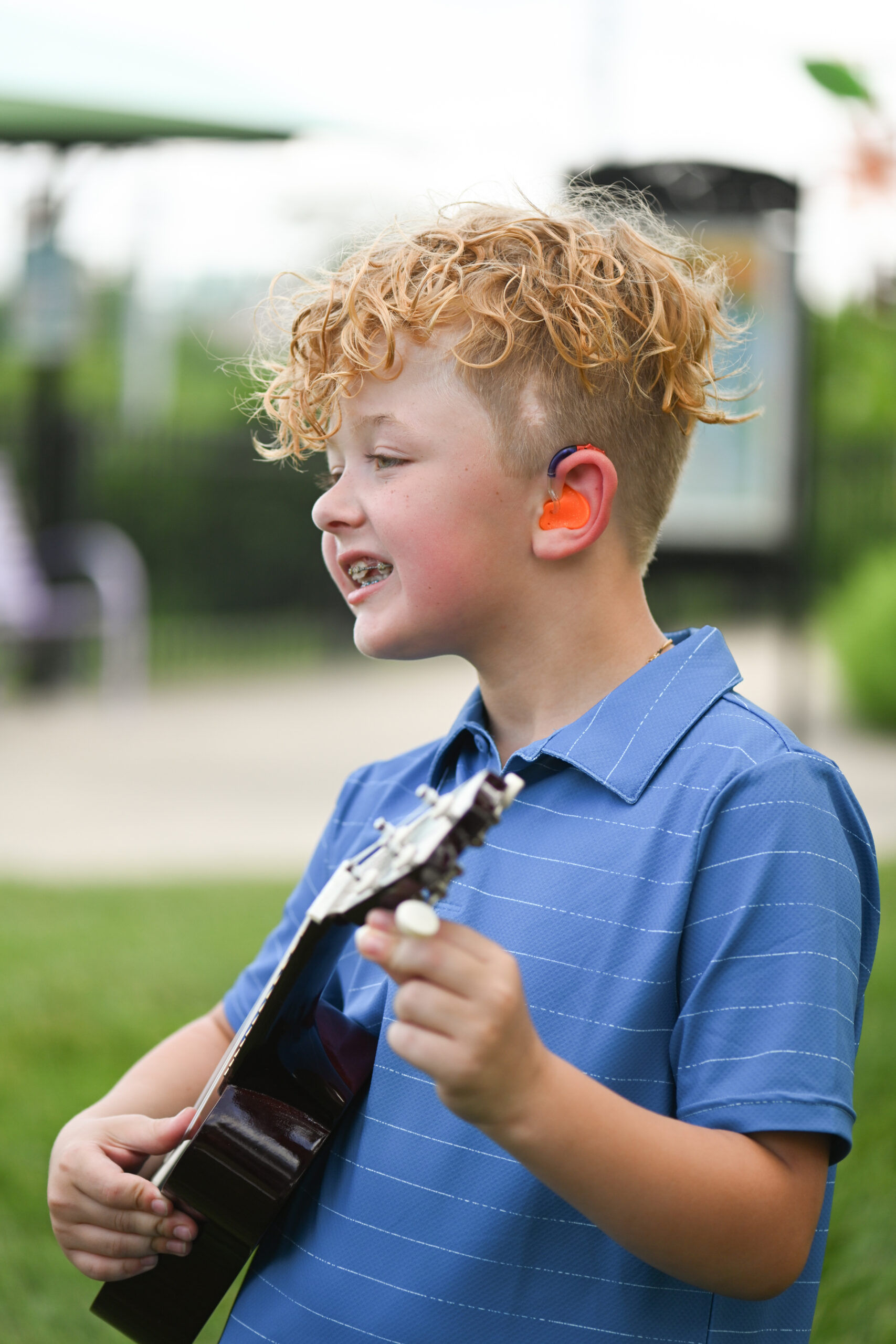
Children with congenital (from birth) and acquired (happens later in their life) severe to profound deafness may need more specialists on their care team. In that case, our audiology team collaborates with any other needed specialties for evaluation and management. Our audiology department offers cochlear implants, hearing aids and BAHA ( bone anchored hearing aid) services when needed.
meet the pediatric audiology team
Our pediatric audiologists and care team specialize in evaluating and treating hearing concerns in children of all ages, from newborns to teens. With advanced training in pediatric care, they provide expert guidance and compassionate support at every visit—helping families understand their child’s hearing needs and take action early, when it matters most.
conditions we treat in audiology
We treat patients for a variety of conditions such as:
hearing loss testing and diagnosis
When we perform a hearing evaluation we are able to diagnose the type and degree of your child’s hearing loss.
Hearing evaluations for young and/or special needs children often require modification of the standard test format. These modifications allow the audiologist to match the test task to the child’s developmental level.
Along with diagnosing children who are showing symptoms of hearing loss, we also monitor children who may be at risk for hearing loss (hematology/oncology patients, children with genetic syndromes, etc.).
types of hearing loss
Conductive hearing loss is caused by an interference in the transmission of sound to the inner ear. Infants and young children frequently develop conductive hearing loss due to ear infections. This loss is usually mild, temporary, and treatable with medicine or surgery.
Sensori-neural hearing loss involves malformation, dysfunction, or damage to the inner ear (cochlea) and is rarely due to problems with the auditory cortex of the brain. The most common type is cochlear hearing loss and this may involve a specific part of the cochlea (inner hair cells or outer hair cells or both). It usually exists at birth, and can be hereditary or the result of a number of medical problems, though sometimes the cause is unknown. This type of hearing loss is usually permanent.
Mixed hearing loss occurs when both conductive and sensorineural hearing loss are present.
Central hearing loss occurs when the cochlea is working properly, but other parts of the brain are not. This is a rare type of hearing loss and is more difficult to treat.
Central auditory processing disorders are not exactly a type of hearing loss because people with APD usually hear well in a quiet environment. However, most have great difficulties hearing in noise, which represents the typical environment we live in. In most cases, this disorder can be managed with daily living strategies and therapy which targets the child’s specific areas of weakness.
The degree of your child’s hearing loss can be mild, moderate, severe, or profound. Sometimes the loss is progressive (hearing gradually becomes poorer) and sometimes unilateral (one ear only).
Once we have determined the type and degree of your child’s hearing loss we will work with your child’s primary care physician to manage the diagnosis. You may also receive a referral to an Ear, Nose and Throat specialist or the Dayton Children’s speech and language department.
If the hearing loss is severe or profound we may recommend rehab services or cochlear implants.
testing for hearing loss
Physiologic tests are not hearing tests but are measures that can partially estimate hearing function. They’re used for kids who can’t be tested behaviorally (due to young age, developmental delay, or other medical conditions) and at any age to find which function of the auditory system is at fault.
For this test, tiny earphones are placed in the ear canals and small electrodes (which look like small stickers) are placed behind the ears and on the forehead. Usually, click-type sounds are introduced through the earphones, and the electrodes measure the hearing nerve’s response to the sounds. A computer averages these responses and displays waveforms.
An infant may be sleeping naturally or may have to be sedated for this test. Older cooperative kids may be tested in a silent environment while they’re visually occupied.
Because there are characteristic waveforms for normal hearing in portions of the speech range, a normal ABR can predict fairly well that a baby’s inner ear and lower part of the auditory system (brainstem) is functioning normally in that part of the range. An abnormal ABR may be due to hearing loss, but it may also be due to some medical problems.
This brief test is performed with a sleeping infant or an older child who may be able to sit quietly. A tiny probe is placed in the ear canal, then many pulse-type sounds are introduced and an “echo” response from the outer hair cells in the inner ear is recorded. These recordings are averaged by a computer.
A normal recording is associated with healthy outer hair cell function. In some cases, despite a healthy outer hair cell function, a hearing loss may be present if it’s due to problems in other parts of the hearing pathways.
ABR or OAE tests are used at hospitals to screen newborns. If a baby fails a screening, the test is usually repeated. If the screening is failed again, the baby is referred for full hearing evaluation.
Tympanometry is not a hearing test but a procedure that can show how well the eardrum moves when a soft sound and air pressure are introduced in the ear canal. It’s helpful in identifying middle ear problems, such as fluid collecting behind the eardrum.
Behavioral tests involve careful observation of a child’s behavioral response to sounds like calibrated speech and pure tones. Pure tones are the distinct pitches (frequencies) of sounds. Sometimes other calibrated signals are used to obtain frequency information.
The behavioral response might be an infant’s eye movements, a head-turn by a toddler, placement of a game piece by a preschooler, or a hand-raise by a gradeschooler. Speech responses may involve picture identification of a word or repeating words at soft or comfortable levels. Very young children are capable of a number of behavioral tests.
audiology programs and clinic
hearing loss clinic
Dayton Children’s offers comprehensive specialty care for children with permanent hearing loss. This clinic offers patients a comprehensive approach to hearing loss through a team of specialists, including pediatric ear, nose and throat (ENT) specialists, pediatric audiologists, developmental pediatrics specialists and speech-language pathologists. Together, they offer:
- Complete evaluation and care for hearing loss
- Referrals to other pediatric specialists who can offer additional care, including neurologists, pulmonologists, endocrinologists, psychologists and others
- Referrals for comprehensive testing, including imaging tests, auditory brainstem response testing and speech-language evaluations
- Cochlear implants
- Bone-anchored hearing aids
- Support to help parents decide how they want to communicate with their child, whether using American Sign Language, cued speech, etc.
- Supportive resources for families and children
- Consultations with the child’s classroom teachers to help address the child’s academic needs
- Genetic testing for families whose child has sensorineural hearing loss, if appropriate. This can help determine whether the child’s hearing loss is associated with inherited genetic factors—factors that may be present in siblings or other family members.
news and blogs
Stay up-to-date with the latest insights from Dayton Children’s Hospital. We’re always working to share helpful, real-world content for families navigating pediatric audiology.
patient stories
During a difficult journey, it can bring comfort to hear from other families who have had similar experiences. These stories are here to do just that, and reassure you that we are here for your child and family every step of the way.
Explore how Dayton Children’s pediatric audiology has gone above and beyond for kids just like yours.

hours & locations – pediatric audiology
View our pediatric audiology locations.
concerned about your child’s hearing?
Whether your child didn’t pass a hearing screening or you’ve noticed signs of hearing trouble, our pediatric audiology team is here to help. We offer specialized testing and treatment options tailored to your child’s age and needs—all in a kid-friendly environment. Schedule an appointment by calling 937-641-4000.