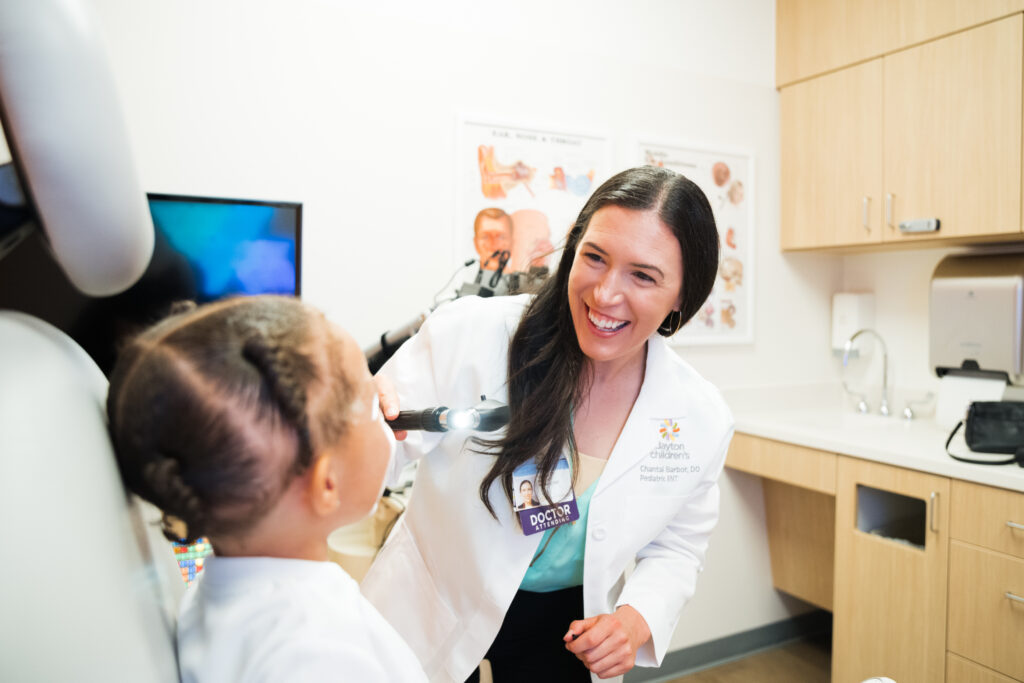
pediatric ear, nose and throat (ENT)

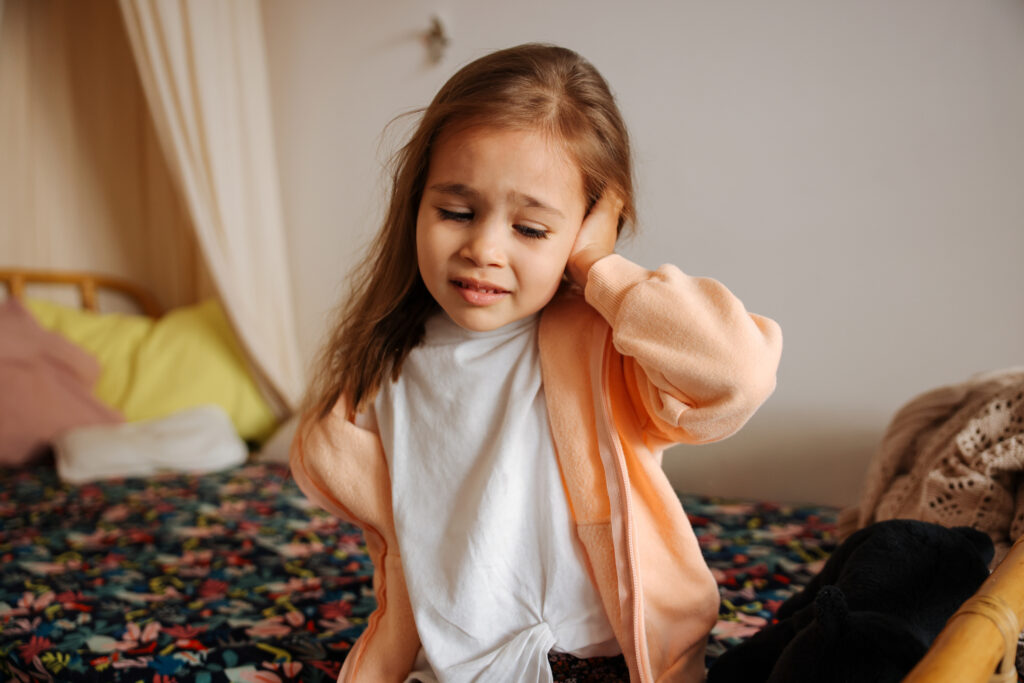
pediatric ear, nose, and throat (ENT care)
At Dayton Children’s Hospital, our pediatric ear, nose and throat specialists provide specialized pediatric care for children with ENT concerns, from common ear infections to complex airway conditions. Whether your child needs testing, surgical care or long-term treatment, we’re here to support your child and family every step of the way.
You can also access helpful resources for families to better understand care options, and we offer resources for physicians to support referrals and coordinated care.
what is pediatric ear, nose and throat care?
Pediatric ENT care focuses on diagnosing and treating conditions related to the ears, nose, throat, head and neck in children. Our ENT specialists understand the unique anatomy and needs of children and teens, offering personalized care using the latest technology and treatment techniques.
Whether your child is dealing with chronic ear infections, hearing problems, tonsil issues or nasal concerns, our team will guide your family with diagnosis, comprehensive testing and tailored care plans that help your child feel better and breathe easier.
when to see an ear, nose and throat specialist
Wondering when to see an ear, nose and throat specialist? Your child’s pediatrician may refer you to an ENT specialist for:
- Repeated ear infections or fluid buildup
- Hearing loss or speech delays
- Snoring, sleep apnea or noisy breathing
- Persistent nasal congestion or sinus infections
- Enlarged tonsils or trouble swallowing
If symptoms affect your child’s daily comfort, sleep or development, an evaluation with a pediatric ENT specialist may help provide answers and effective treatment.
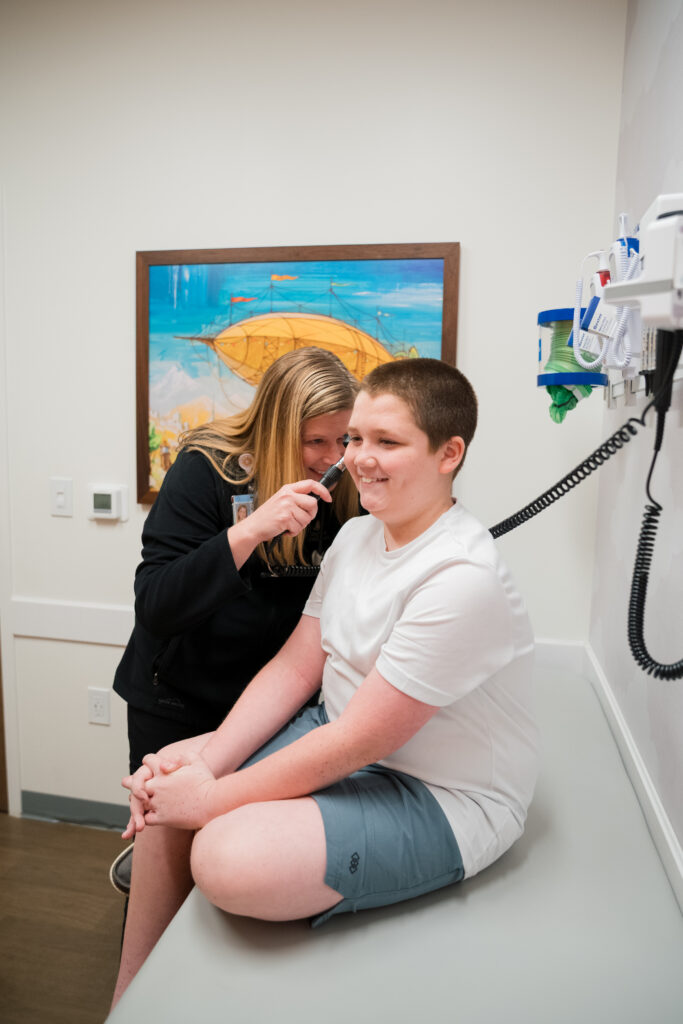
meet our pediatric ENT team
Our pediatric ENT specialists are board-certified and fellowship-trained, offering care tailored to infants, children and teens. With years of experience treating a wide range of ENT conditions, our team is committed to going above and beyond for your child. Meet our providers, and learn how we partner with you to support your child’s ENT care.
conditions that our pediatric ENT specialists can treat
Our pediatric ear, nose and throat specialists treat a wide range of conditions. These include:
programs and clinics for ENT conditions
From routine clinic visits to advanced surgical procedures, our pediatric ENT specialists provide care in a supportive, family-centered environment. Our multidisciplinary clinics address both common and complex issues, bringing together teams of specialists for comprehensive treatment.
Dayton Children’s provides comprehensive diagnostic testing for complex conditions of the ear, nose and throat. Tests can include:
- Hearing testing
- Nasopharyngoscopy, used to examine the airway and vocal cord function. These tests can sometimes be performed in the clinic without any sedation.
- Functional evaluation of swallowing
- Velopharyngeal insufficiency testing
- Fine-needle aspiration, used to help diagnose and evaluate growths in the head and neck.
- Bronchoscopy and microlaryngoscopy are almost always performed in the hospital with the patient under general anesthesia. These procedures allow the physician to obtain highly detailed pictures of the airway.
- Video fluoroscopy to evaluate swallowing disorders.
- Imaging tests such as ultrasound, computed tomography (CT) and magnetic resonance imaging (MRI).
- Cine MRI, a special magnetic resonance imaging test that is used to observe the flow of cerebrospinal fluid
If your child needs any of these testing procedures, the doctor will explain what is involved and how to prepare. Our advanced ENT team will help make the experience as relaxed and kid-friendly as possible!
Our pediatric otolaryngologists provide comprehensive surgical care. This includes everything from common surgeries, such as ear tubes surgery and tonsillectomies, to complex procedures for conditions such as cleft palate and tumors of the head and neck.
Whenever possible, our physicians pursue non-surgical therapies, which can include medication, steroid therapy and minor office procedures. Sometimes, however, surgery is the best option. Surgical suites at Dayton Children’s are designed specifically with equipment and surgical tools that are sized just right for kids.
Our providers have extensive experience in performing minimally invasive techniques, which can reduce post-operative pain, promote faster healing, reduce the risk of infection and minimize damage to surrounding tissue. These surgeries can involve removing foreign bodies and tumors from the airway, reducing scar tissue, treating small defects and treating vascular anomalies, like birthmarks.
The most complex surgeries our specialists perform involve reconstructing the airway. Airway reconstruction is performed to either rebuild or expand segments of the airway, depending on the child’s needs. Doctors may perform an airway reconstruction for conditions including:
- Stenosis (narrowing) of the larynx (“voice box”) and trachea (“windpipe”)
- Laryngomalacia, a birth defect in which floppy tissue above the vocal cords falls into the airway as an infant sleeps.
- Cleft palate, a birth defect in which the roof of the mouth does not fuse properly during fetal development.
- Choanal atresia, a birth defect in which abnormal bony or soft tissue blocks the nasal passage.
- Complications of tracheotomies. Doctors perform a tracheostomy to relieve an obstruction to breathing. Complications can occur during or after the procedure that need immediate attention.
Our providers also perform complex surgeries on the ears, including surgeries to reconstruct damaged eardrums and place cochlear implants.
Dayton Children’s ENT Fast Track program for ear tubes surgery is ideally suited for children who meet the clinical criteria for ear tube placement and for whom any delay in care would add to their suffering.
Utilizing the ENT Fast Track program allows families to eliminate their preoperative visit to the pediatric ENT clinic, without sacrificing communication, education and evidence-based management protocols. This allows for a more convenient process for families while our clinical team delivers high-quality care. Ask your pediatrician if your child might be a good candidate for Fast Track.
Dayton Children’s provides comprehensive care for children who need to be admitted to the hospital for surgery and/or testing. Depending on the severity of the illness, the child may be admitted to a general pediatric floor or one of the hospital’s critical care units.
The aerodigestive clinic at Dayton Children’s is designed for chronically ill children with disorders of the upper airway, lungs and upper digestive tract, including sleep and feeding problems.
Patients come to our clinic to meet with multiple pediatric specialists, including a pulmonologist, ENT specialist and a gastroenterologist. By evaluating your child’s condition together, the physicians can develop an understanding of their overall health and what kind of therapy is needed. This coordination of care is essential to your child’s wellbeing, since children who come to the center often have complex needs.
Dayton Children’s offers a comprehensive cleft lip and cleft palate program, with a team that includes developmental pediatricians, plastic surgeons, an oral surgeon, an orthodontist, a speech-language pathologist and others. Together, they provide a detailed diagnosis, a comprehensive treatment plan and extensive support every step of the way.
Our pediatric ENT specialists evaluate children who require surgery for cleft lip and cleft palate, perform surgical repairs and provide follow-up care. Other surgeons may be involved in a child’s care, depending on the nature of the repair.
Dayton Children’s offers comprehensive specialty care for children with permanent hearing loss. This clinic offers patients a comprehensive approach to hearing loss through a team of specialists, including pediatric ear, nose and throat (ENT) specialists, pediatric audiologists, developmental pediatrics specialists and speech-language pathologists. Together, they offer:
- Complete evaluation and care for hearing loss
- Referrals to other pediatric specialists who can offer additional care, including neurologists, pulmonologists, endocrinologists, psychologists and others
- Referrals for comprehensive testing, including imaging tests, auditory brainstem response testing and speech-language evaluations
- Cochlear implants
- Bone-anchored hearing aids
- Support to help parents decide how they want to communicate with their child, whether using American Sign Language, cued speech, etc.
- Supportive resources for families and children
- Consultations with the child’s classroom teachers to help address the child’s academic needs
- Genetic testing for families whose child has sensorineural hearing loss, if appropriate. This can help determine whether the child’s hearing loss is associated with inherited genetic factors—factors that may be present in siblings or other family members.
The vascular anomalies clinic at Dayton Children’s Hospital is composed of specialists from hematology/oncology, ENT, plastic surgery, pediatric surgery and interventional radiology.
Our comprehensive team has expertise in the diagnosis, management and treatment of vascular anomalies, including hemangiomas and vascular tumors.
Voice and swallowing disorders can occur at any age and involve a wide variety of symptoms. Our multidisciplinary voice and swallowing clinic provides a team approach to care, bringing together an ear, nose and throat specialist and speech-language pathologist to evaluate and treat these patients in a shared clinic.
The initial evaluation may include:
- A thorough physical exam
- Endoscopic testing, which involves using a thin, flexible tube to view the esophagus (sometimes called the “food pipe”)
- Computerized voice analysis instrumentation (for children who are experiencing voice problems)
The doctor and speech/language pathologist will put together a personalized treatment plan based on their findings. The treatment plan may involve care from the physician and our speech/language pathology colleagues.
Voice clinic is for any child experiencing dysphonia (difficulty voicing) and is a candidate for a referral to the voice clinic. Children can be referred to the voice clinic with a diagnosis of “dysphonia” or “hoarseness.” A thorough assessment is completed in the voice clinic and can help to determine the reason for the dysphonia.
Diagnoses include:
- Vocal cord paralysis or paresis (unilateral or bilateral)
- Vocal cord nodules
- Vocal cord edema
- Vocal cord granulomas
- Vocal cord polyps
- Laryngeal edema or laryngitis
Some children with breathing difficulty can also be referred to the voice clinic if there is concern for “paradoxical vocal fold dysfunction” (PVFD), sometimes also referred to as “vocal cord dysfunction” (VCD). It is important for children to be evaluated by a pulmonologist prior to voice clinic referral if there is concern for PVFD.
Children with PVFD may experience:
- Difficulty getting air in or throat tightness during:
- Exercise/exertion
- Chemical exposure (chlorine, perfume, bleach, etc.)
- Weather changes
- Anxiety-invoking situations
- Tightness in the throat with sensation that the airway is being “cut off”
- Inspiratory stridor, especially during exercise
- Difficulty breathing that does not improve with inhaler use
- Voice changes or difficulty during an “attack”
- GERD
- Asthma
ear, nose and throat news and blogs
Stay informed with seasonal health tips, treatment updates and advice on pediatric ear, nose and throat conditions.





patient stories
Our patients motivate everything we do. From stories like children breathing easier after tonsil surgery to those hearing clearly for the first time, each story highlights how our trusted caregivers partner with families to help them find answers and relief.

for your visit
Before your child’s first appointment with us, we will ask you to complete a medical history form to help us better understand your concerns and plan your child’s visit.
Please bring the following to your child’s first visit:
- Test results (unless lab tests were performed at Dayton Children’s, our team has access to those results)
- Any medical records you may have that relate to your child’s condition
your child’s visit to our pediatric ENT clinics
Your child’s first visit may include:
- A physical exam
- Questions about your child’s medical history
- Office procedures to visualize ear, nose and throat conditions
- A conversation about treatment options, including medication or surgery
- Education about managing your child’s condition at home
- Referrals for follow-up tests, such as X-rays or hearing tests
Our pediatric ENT specialists spend time with families to make sure they fully understand the child’s condition, the treatment options and what to expect during and after treatment.
Triage nurses are available at 937-641-4647 from 8:00 am to 5:00 pm. Monday through Friday to talk to parents when their child is ill, answer questions, process pharmacy refills, discuss insurance coverage, explain test results and much more. After hours, parents of established patients can dial 937-641-3000 to reach the hospital’s operator and ask for the ENT specialist on call.
find more resources for your visit
Get checklists, resources, and helpful tips for before, during, and after your visit to Dayton Children’s—so you know exactly what to expect.
ear, nose and throat resources
From diagnosis to recovery, we provide simple, effective tools to support your child’s health.
- Is it time for ear tubes? Take our quiz.
- Ear tube insertion: what to expect before and after surgery
- Adenoidectomy: what to expect before and after surgery
- Tonsillectomy: what to expect before and after surgery
- Tonsillectomy/Adenoidectomy: what to expect before and after surgery
- Does my child have sleep-disordered breathing?
- When to be concerned about frequent ear infections blog
related resources
Other organizations provide extensive educational materials and special events for patients and families dealing with conditions of the ear, nose and throat. We encourage families to find support through the following websites and organizations.
resources for community physicians
Our pediatric ENT specialists partner with community physicians to ensure the best possible outcomes for children with conditions of the ear, nose and throat. They offer the following resources:
- Ear Infection Management Guide
- ENT Referral Guide
- Indications for Polysomnography
- PE Tube Guide
- Tonsillectomy Guidelines
For more information or to discuss a case, please contact us at 937-641-3109.
our locations
Our pediatric ENT specialists see patients at multiple Dayton Children’s locations to ensure families have convenient access to care.
FAQs
The ears, nose and throat are linked through a system of passages and tubes, including the Eustachian tubes and sinuses. That is why infections or inflammation in one area often affect the others.
Some insurance plans require a referral to see a pediatric ENT specialist. It is best to check with your child’s primary care provider or your insurance company before scheduling.
Yes. Chronic ear infections, hearing loss or nasal obstruction can interfere with speech, learning and behavior. Early diagnosis and treatment can help support development.
Most visits take 30–60 minutes, depending on your child’s needs and whether any testing is done during the appointment.
Bring your child’s medical history, a list of symptoms or concerns and any relevant records. You’ll receive clear next steps after your visit.
The ears, nose and throat are linked through a system of passages and tubes, including the Eustachian tubes and sinuses. That is why infections or inflammation in one area often affect the others.
Some insurance plans require a referral to see a pediatric ENT specialist. It is best to check with your child’s primary care provider or your insurance company before scheduling.
Yes. Chronic ear infections, hearing loss or nasal obstruction can interfere with speech, learning and behavior. Early diagnosis and treatment can help support development.
Most visits take 30–60 minutes, depending on your child’s needs and whether any testing is done during the appointment.
Bring your child’s medical history, a list of symptoms or concerns and any relevant records. You’ll receive clear next steps after your visit.
start your child’s ENT care today
Get care from Dayton Children’s pediatric ear, nose and throat team. Whether it’s frequent ear infections, breathing concerns or hearing issues, we’ll help you get the answers and support you need. Schedule an appointment online or call 937-641-4000.