pediatric allergy and immunology

what is pediatric allergy and immunology?
Allergies are a major cause of childhood illness and account for the loss of an estimated 2 million school days per year. Pediatric allergy and immunology focuses on diagnosing and treating allergies and immune system conditions in children.
From food allergies and eczema to recurring infections and immune deficiencies, these conditions can affect your child’s daily life and overall wellbeing. Our specialists use safe, effective testing—like skin or blood tests and food challenges—to find answers. We work closely with families to create personalized care plans that manage symptoms and improve quality of life. The goal is simple: to help your child feel better and stay healthier, every day.
testing and treatment
Our pediatric allergy and immunology provides testing and treatment for a wide variety of allergy and immunology conditions, including:
- Food allergy evaluation and testing
- Allergic rhinitis evaluation and testing and immunotherapy
- Medication allergy testing and evaluation
- Food and medication challenges
- Immune deficiency evaluation and treatment
skin tests
Our pediatric allergy and immunology experts may do a skin or blood test to check for allergies. Skin tests are safe and use a tiny amount of common allergens to check for a reaction, like a small red bump. But small red bumps doesn’t always mean your child is allergic. Your child’s provider will explain what the results mean. If your child has had a serious allergic reaction before, a skin test might not be done. In that case, a blood test – like the RAST (radioallergosorbent) test – can be used to look for allergy antibodies.
food challenge
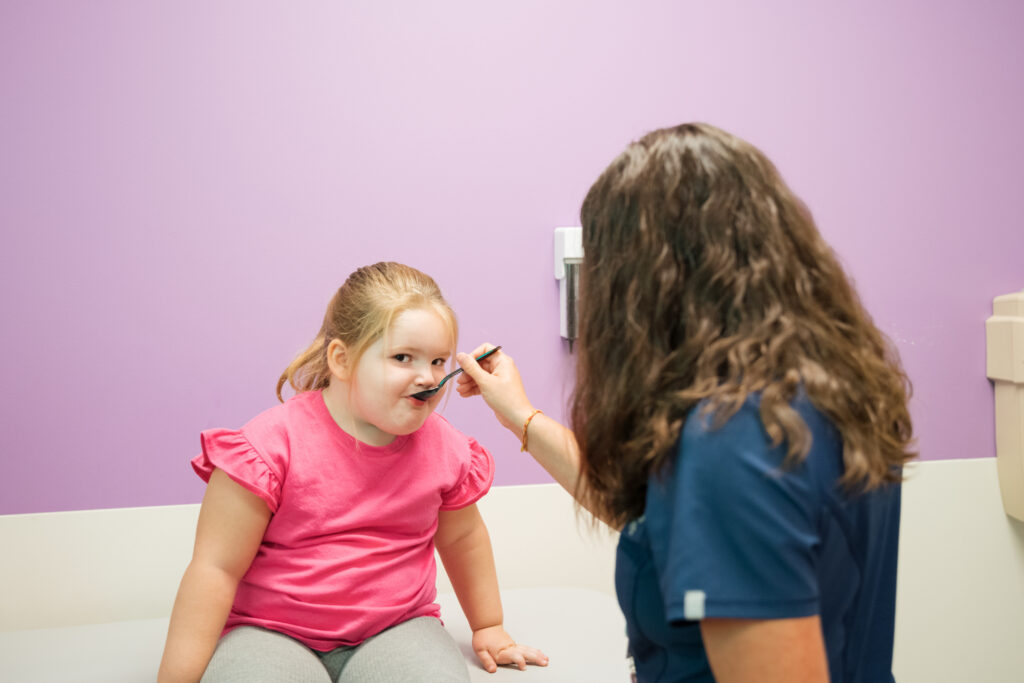
Sometimes, a skin or blood test doesn’t give clear enough answers. When that happens, our pediatric allergy and immunology experts may recommend a special test called an oral food challenge. This test helps find out if your child really has a food allergy. A food challenge is done carefully in our office, just in case a reaction happens. During the test, your child will eat small amounts of the food in question while being closely watched. If there are no symptoms, the amount is slowly increased. The test can help rule out or confirm a food allergy and guide the next steps for care.
Learn more about our food challenge and how to prepare for an upcoming food challenge.
our allergy and immunology team
Our pediatric allergy and immunology specialists are board-certified and fellowship-trained offering specialized care in diagnosing and managing a wide range of allergic and immune system conditions in children. From food allergies and asthma to eczema, drug allergies, and immune deficiencies, our experts create personalized care plans that fit each child’s unique needs. We partner with parents and caregivers to help them manage their child’s condition with confidence — at home, at school, and everywhere in between.
conditions we treat
Our pediatric allergy and immunology team specializes in diagnosing and managing a wide range of allergic and immune system conditions in children such as:
news and blogs
Stay up-to-date with the latest insights from Dayton Children’s Hospital. We’re always working to share helpful, real-world content for families navigating pediatric allergy and immunology care.





patient stories
Real families, real relief. From a child finally enjoying a spring day without allergy flare-ups to a teen managing asthma with confidence, our patients’ journeys inspire us every day. These stories offer hope, insight and reassurance – reminding you that we’re here to support your child’s health every step of the way.
Explore how Dayton Children’s pediatric allergy and immunology care has gone above and beyond for kids just like yours.

for your visit
For all visits, please wear comfortable and loose clothing and bring:
- Your insurance information
- Your physician order (if you have a hard copy)
- Your drivers license
- Any required forms from your school
prepare for the following types of visits
allergy testing
When preparing for allergy testing, there are some very important details to ensure the test can take place and to keep your child safe. If you have any questions regarding discontinuing any medications for allergy testing, please contact the clinic nurse at 937-641-5130, option 3.
- Do not stop your child’s asthma medications. Asthma medications do not affect skin testing.
- Some nasal congestion medication can continue to be taken, such as:
- Any over-the-counter decongestant or saline spray or Nasalcrom
- Any steroid allergy spray – Flonase, Fluticasone, Nasacort, Nasarel, Omnaris, Rhinocort, Qnasl, Zetonna
- Any oral decongestant – Entex, PSE, Guaifed, Humibid, Sudafed (No- SudafedPlus)
- Any medications listed below should stop being taken at least 5 days before your allergy testing. In addition, most over-the-counter sleep aids and allergy or cold medicines should be avoided. Any medications listing drowsiness or sedation as a side effect may also need to be stopped before testing. Call your child’s pharmacy or prescribing physician if you are unsure about the names of your child’s medications.
Actifed
CTM dexbrompheniramine
Alavert
Cyproheptadine
Alka-Seltzer Plus
Dallergy
Allegra
Deconamine
Allerest
Dexbrompheniramine
Astelin
Dimenhydrinate
Astepro
Dimetane
Atarax
Dimetapp
Atrohist
Diphenhydramine
Atrohlst Plus
Doxepln
Axid
Dramamine
Benadryl(generic name is diphenhydramine)
Dristan
Benadryl cream
Drixoral
Bromfed
Duratapp
Brompheniramine
Duratapp
Certirizine
Dymista
Chlorpheniramine
Extendryl
Chlor-Trimeton
Fexofenadine
Clarinex
Hydroxyzine
Claritin
Imipramine
Comhist
Levocetirizine
Contac
Loratadine
Coricidin
Meclizine
Coricidin
Naldecon
Nyquil
Sudafed Plus
Paigic
Tagamet
Patanase
Tanafed
Pepcid
Tannate
Periactin
Tavist
Polaramme
Tnaminic
Poly-Histine
Trinalin
Promethazme
Tripelennamme
Pyribenzamine
Triprolidine
Robitussin CFO
Tylenol Allergy
Rondec
Vistaril
Rondec
Xyzal
R-Tannate
Ru-Tuss
Rynatan
Phenergan
Zantac (generic is Ranitidine)
Zyrtec (generic name is certirizine)
Zyrtec D
Tavist DO
Eye drops
Bepreve
Elestat
Optivar
Pataday
Pantanol
Zaditor/ketotifen
Pazeo
For more information about allergy skin testing, read this article.
immunotherapy (allergy shots)
Allergy shots are an alternative to medications in the treatment of seasonal allergies (hay fever). A large time commitment is necessary, but allergy shots can provide great relief for those children suffering from moderate to severe hay fever. For more information about allergy shots, read this article.
Check with your insurance company to understand what your costs may be for allergy shots. Click here for more information to navigate that conversation.
food challenge
Sometimes, even after performing skin prick and blood tests, an allergist is unable to arrive at a definitive diagnosis. In this case, you may be asked to undergo an oral food challenge (OFC), a highly accurate diagnostic test for a food allergy. This type of testing can result in more severe reactions and should only be performed by an experienced allergist at a medical facility where the appropriate medications and equipment are available.
Learn more about our food challenge and how to prepare for an upcoming challenge.
allergy and immunology
Thank you for choosing Dayton Children’s for your allergy and immunology care. The following resources can help you learn more about your child’s condition and how to provide care at home.
related resources
Other organizations provide extensive educational materials for patients and families dealing with allergy and immunology issues. Our specialists encourage families to find support through the following websites and organizations.
hours & locations – pediatric allergy and immunology
View our pediatric allergy and immunology locations below:
ready to take the next step?
If your child is struggling with allergies or a possible immune condition, we’re here to help. Our pediatric allergy and immunology experts will work with you to find answers and create a care plan that fits your child’s needs. Schedule an appointment online or call 937-641-4000.