pediatric ophthalmology
Little eyes need specialized care. Our ophthalmology team provides expert eye care for kids of all ages.

why choose Dayton Children’s for eye care
Children’s vision needs are different from adults. Our board-certified pediatric ophthalmologists are specially trained to diagnose and treat eye conditions in infants, children, and teens.
We focus on the development of the visual system and the conditions that can disrupt it, ensuring children get the right care during the most important stages of growth. Whether your child needs a simple exam, glasses, or treatment for a complex disorder, we’re here to protect their vision and comfort.
pediatric ophthalmology services available
Dayton Children’s offers a full range of services to support your child’s eye health, including:
- Emergency care for trauma injuries or urgent vision problems
- Inpatient care for hospitalized children
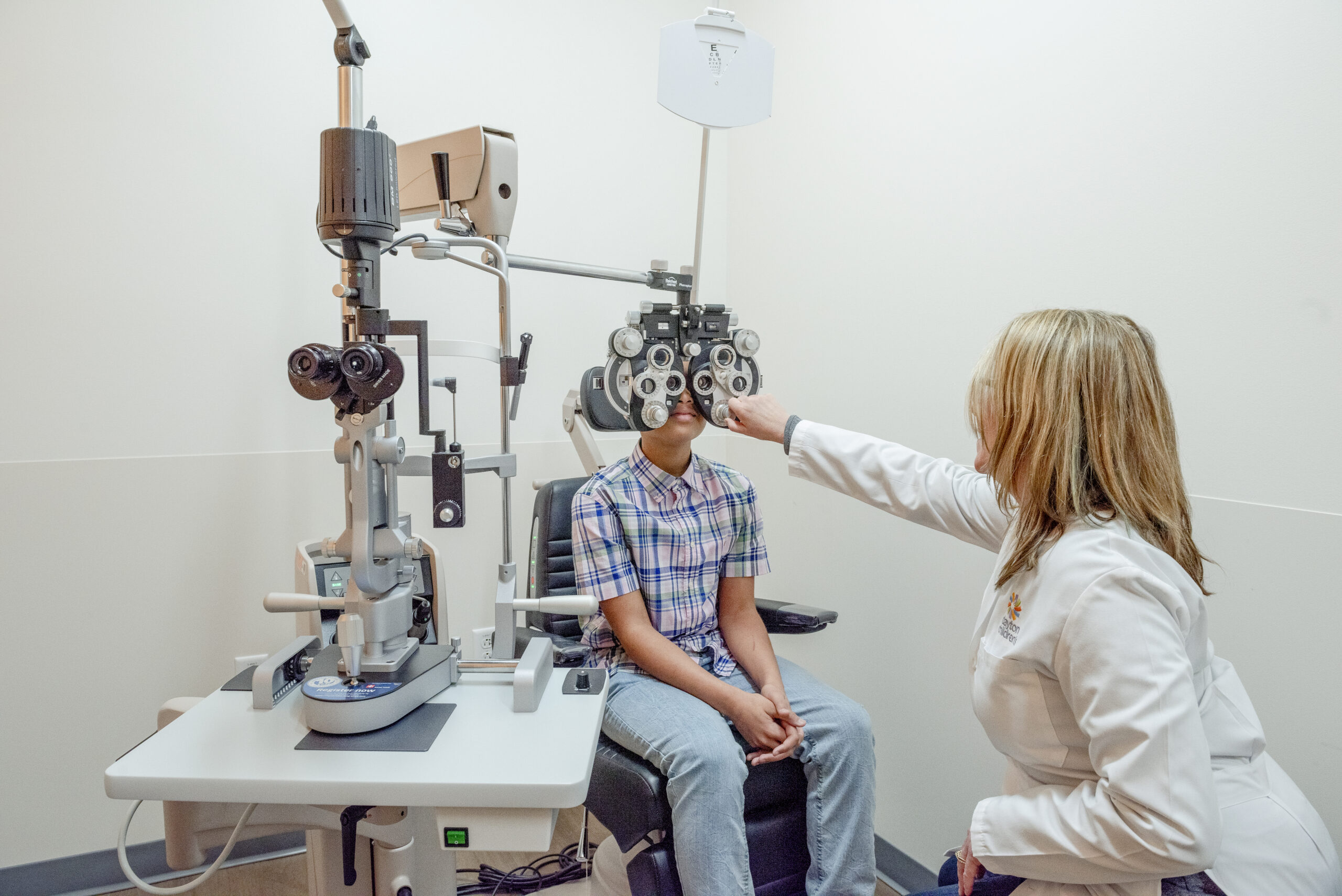
- Medical eye exams and testing for complex diagnoses
- Optical Shop with eyeglass orders and fittings
Your child’s vision plays a big role in their growth and development—our team makes eye health and comfort a top priority.
learn more about the optical shop
learn moreoptical shop
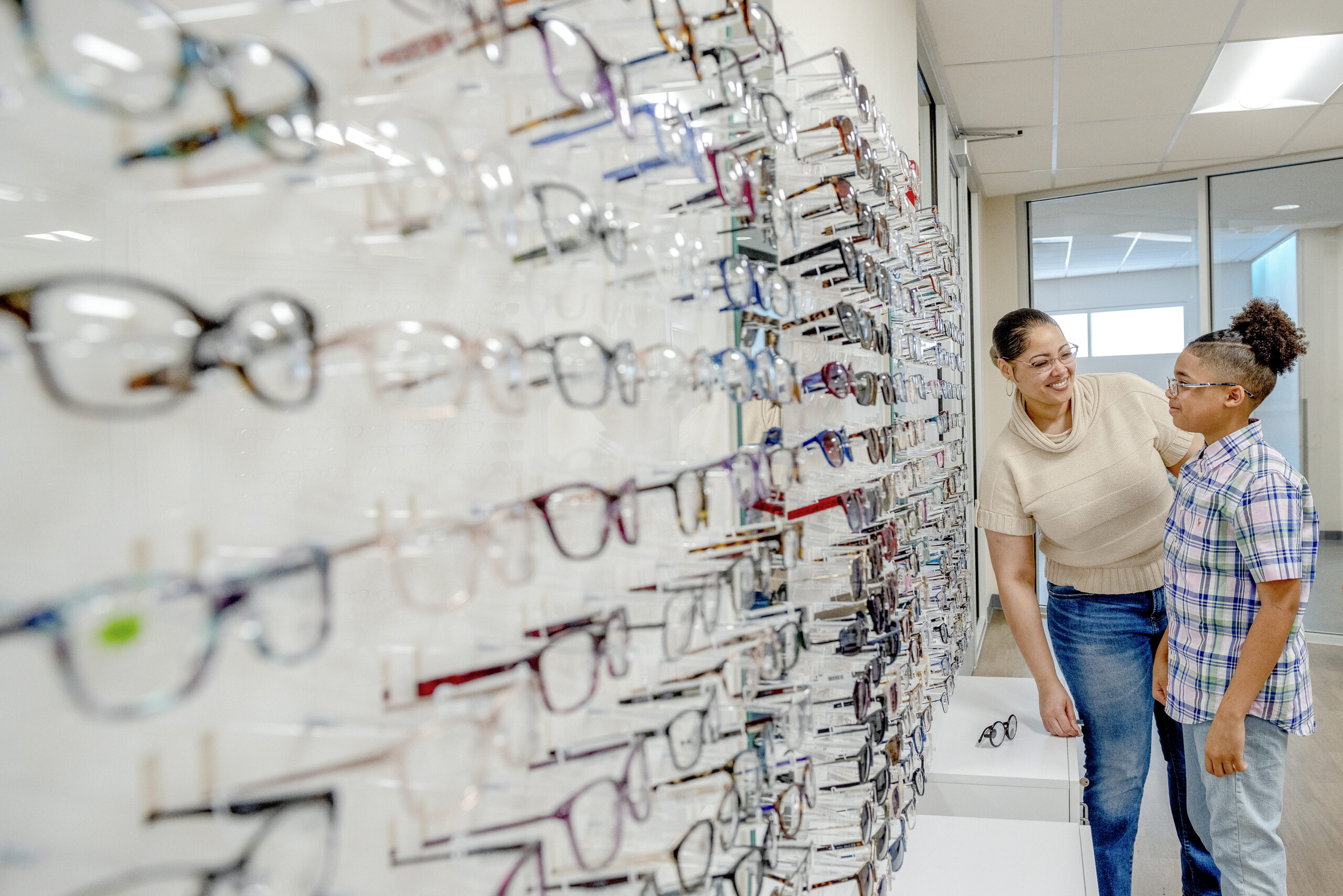
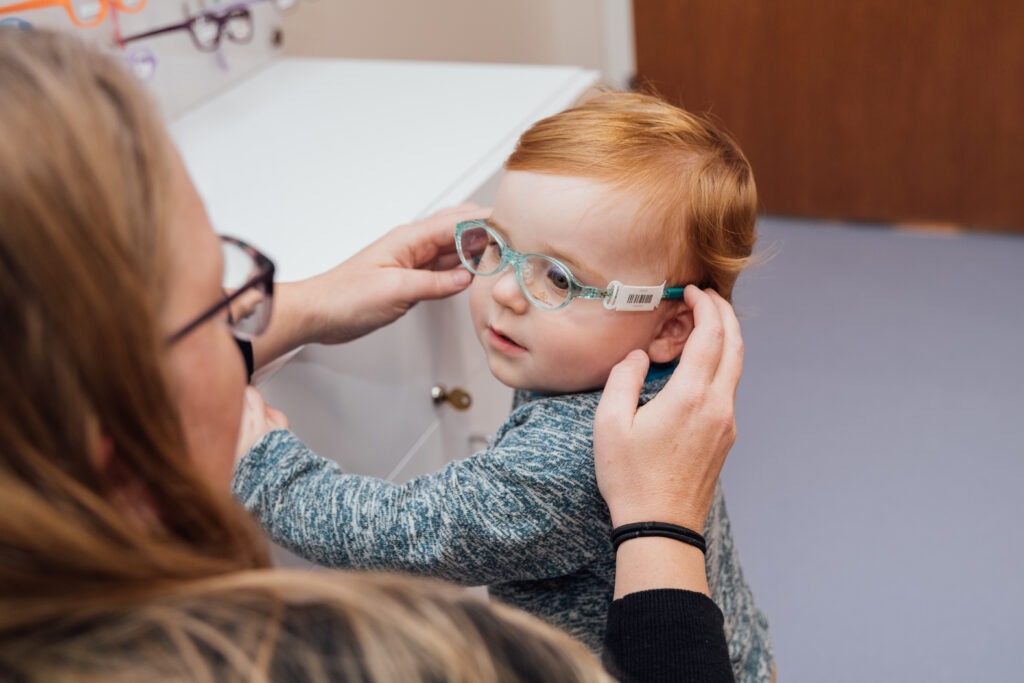
Dayton Children’s optical shop offers the area’s largest selection of pediatric frames for infants to teens, tweens and adults. We can even make glasses on-site while you wait! The optical shop is open Monday through Friday from 9:00 am to 4:30 pm and no appointments are needed. When you bring your prescription from any eye appointment, our trained pediatric optician will make sure your child has the best fit for their vision.
meet our pediatric ophthalmology team
Dayton Children’s pediatric ophthalmology team includes specialists experienced in diagnosing and treating a wide range of eye conditions in kids — from common vision problems to complex surgical needs.
conditions we treat
Dayton Children’s treats a wide range of pediatric ophthalmology conditions, including:
news and blogs
Stay up-to-date with the latest insights from Dayton Children’s Hospital. We’re always working to share helpful, real-world content for families navigating pediatric ophthalmology.
patient stories
Real families, real results. Our patients and families inspire us every day. These stories offer hope, guidance and reassurance that we are here for your child every step of the way. Explore how Dayton Children’s pediatric ophthalmology has gone above and beyond for kids just like yours.
for your visit
Learn more about what to expect for your visit in ophthalmology at Dayton Children’s by reviewing these frequently asked questions.
Ophthalmology appointments typically take longer than a regular doctor’s visit. Your child’s appointment could last over two hours.
-
- During the appointment, your child will receive a comprehensive eye exam and will most likely have his or her eyes dilated with eye drops.
-
- Older children should be told that they may be given eye drops to help them prepare for the visit. These might sting a little and make their vision blurry for a while. The drops may be given one or more times and take about 30 to 45 minutes to work.
These same eye drops also cause a temporary weakness of the eyes’ focusing muscles. This allows the ophthalmologist to determine if your child has a focusing or refractive error that requires glasses. Refractive errors include:
-
- Nearsightedness (myopia)
-
- Farsightedness (hyperopia)
-
- Distorted vision (astigmatism)
Yes, we do require you to stay with your child through the entire examination.
Although we strongly recommend that parents accompany their children to all appointments, we understand that there are times when this is not possible. If your child is accompanied by an adult other than a parent or guardian, please provide us with written permission.
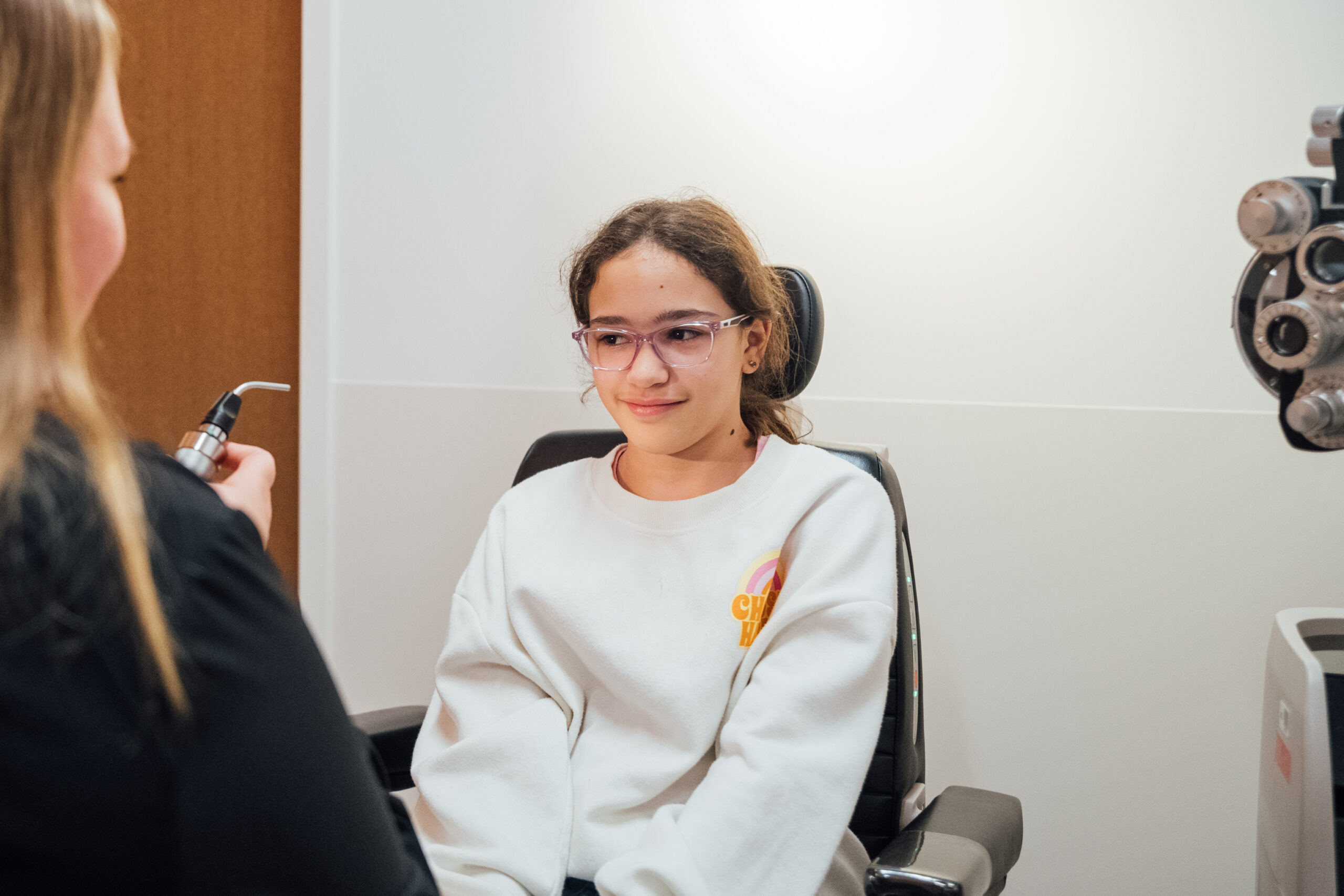
Your child’s ophthalmologist or optometrist will use age-appropriate strategies to examine each eye.
-
- A younger child may be asked to follow lights or toys with their eyes.
-
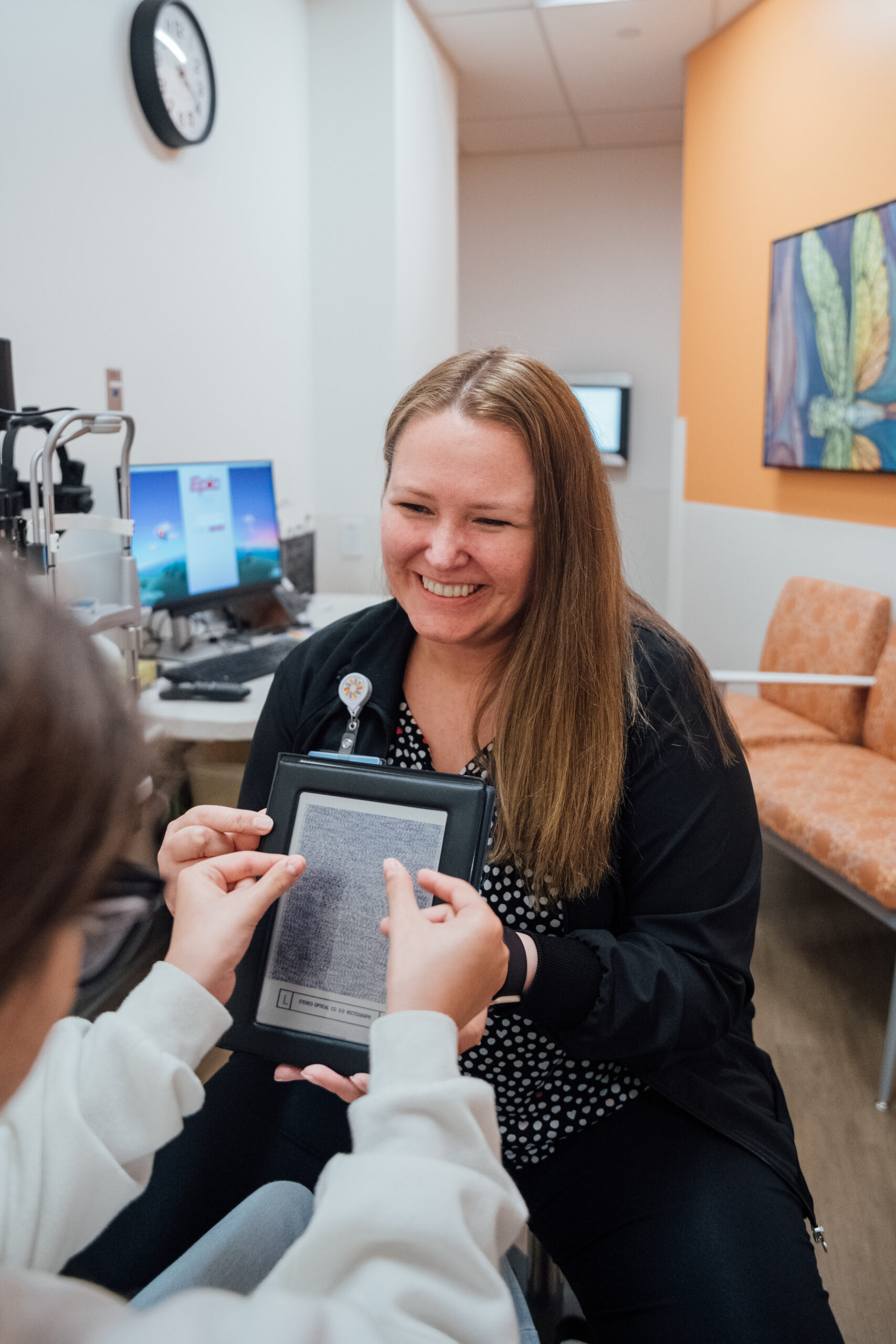
- Children who talk but cannot read or count may be asked to identify pictures of common objects.
-
- Cooperative and verbal older children will have their vision tested using a computerized eye chart.
-
- We can examine infants and small children while they sit on a parent’s lap. Older children are encouraged to sit in the exam chair by themselves.
-
- An overview of your child’s medical history including:
-
- Medical issues/diagnosis
-
- Previous surgical procedures
-
- Any allergies
-
- An overview of your child’s medical history including:
-
- List of medications that your child is taking
-
- Insurance card(s)
-
- Glasses or contact lenses worn by your child
-
- Previous eye exam history
-
- Any questions you may have for your child’s eye care provider
Our eye exams are complete medical evaluations of the eye. We will bill your child’s examination to your medical insurance.
We participate in most major health plans, including Anthem, UnitedHealthcare, Cigna, Aetna and Medical Mutual of Ohio, as well as Medicaid, CareSource and Molina. If you have specific questions about participation, please contact your insurance company.
Please remember to bring the following to your appointment:
- Your medical insurance card(s)
- Copay or coinsurance
find more resources for your visit
Get checklists, resources, and helpful tips for before, during, and after your visit to Dayton Children’s—so you know exactly what to expect.
FAQs
Children will not outgrow truly crossed eyes. A child whose eyes are misaligned (called strabismus) can develop poor vision in one eye (a condition known as amblyopia) because the brain turns off the misaligned or “lazy” eye. The sooner crossed or misaligned eyes are treated, the less likely the child will have permanently impaired vision.
An obstruction of the tear duct will cause tearing or watering of the eye because the tears cannot drain. Symptoms of a blocked tear duct include eyelashes that are stuck together by mucus or a buildup of tears in one or both eyes. The tears trapped within the duct may become infected, causing a painful swelling in the inner corner of the eyelid. In infants, the membrane that causes the obstruction will usually open by six months of age. If this does not occur, your physician will often recommend treatment to open the blockage.
Initial treatment involves massaging the area over the affected tear sac (located under the skin between the eye and nose) to force the tears and mucus from the sac, hopefully pushing open the membrane causing the obstruction. In infants, this massage requires the active involvement of the parent, as it must occur frequently. Massage is generally continued until the tearing resolves. Antibiotic drops or ointments may also be prescribed by the physician if there is an infection. It may be necessary to open the tear duct by probing and irrigation. This is most commonly happens between six months and one year of age.
The term chalazion refers to a cystic swelling with chronic inflammation (ongoing swelling) in an eyelid. A gradual enlargement can be felt near the margin of the lid due to the swelling in one of the eyelid oil glands (meibomian). Treatment may involve any one or combinations of the following: antibiotic and/or steroid drops or injections, warm compresses, massage, or expression of the glandular secretions, surgical incision or excision.
Retinopathy of Prematurity (ROP) damages premature babies’ retinas, the layer of light-sensitive cells lining the back of the eye. ROP usually occurs in both eyes, though one may be more severely affected.
Strabismus refers to misaligned eyes. If the eyes turn inward (crossed), it is called esotropia. If the eyes turn outward (wall-eyed), it is called exotropia. One eye can be higher than the other, which is called hypertropia (for the higher eye) or hypotropia (for the lower eye). Strabismus can be subtle, (occurring occasionally), or constant. It can affect one eye only or shift between the eyes.
Refractive errors are a type of vision problem that makes it hard to see clearly. They happen when the shape of your eye keeps light from focusing correctly on your retina (a light-sensitive layer of tissue in the back of your eye).
Refractive errors are the most common type of vision problem. Below are common types of refractive errors:
- Nearsightedness (myopia) makes far-away objects look blurry
- Farsightedness (hyperopia) makes nearby objects look blurry
- Astigmatism can make far-away and nearby objects look blurry or distorted
hours & locations – opthomology
Our pediatric ophthalmology providers see patients in the following Dayton Children’s locations:
expert eye care for complex conditions
When vision problems become complex, families can count on Dayton Children’s. Our pediatric ophthalmology team provides expert care for everything from urgent eye injuries to rare disorders—tailored to your child’s unique needs. Call 937-641-4000 to schedule today.