pediatric rheumatology
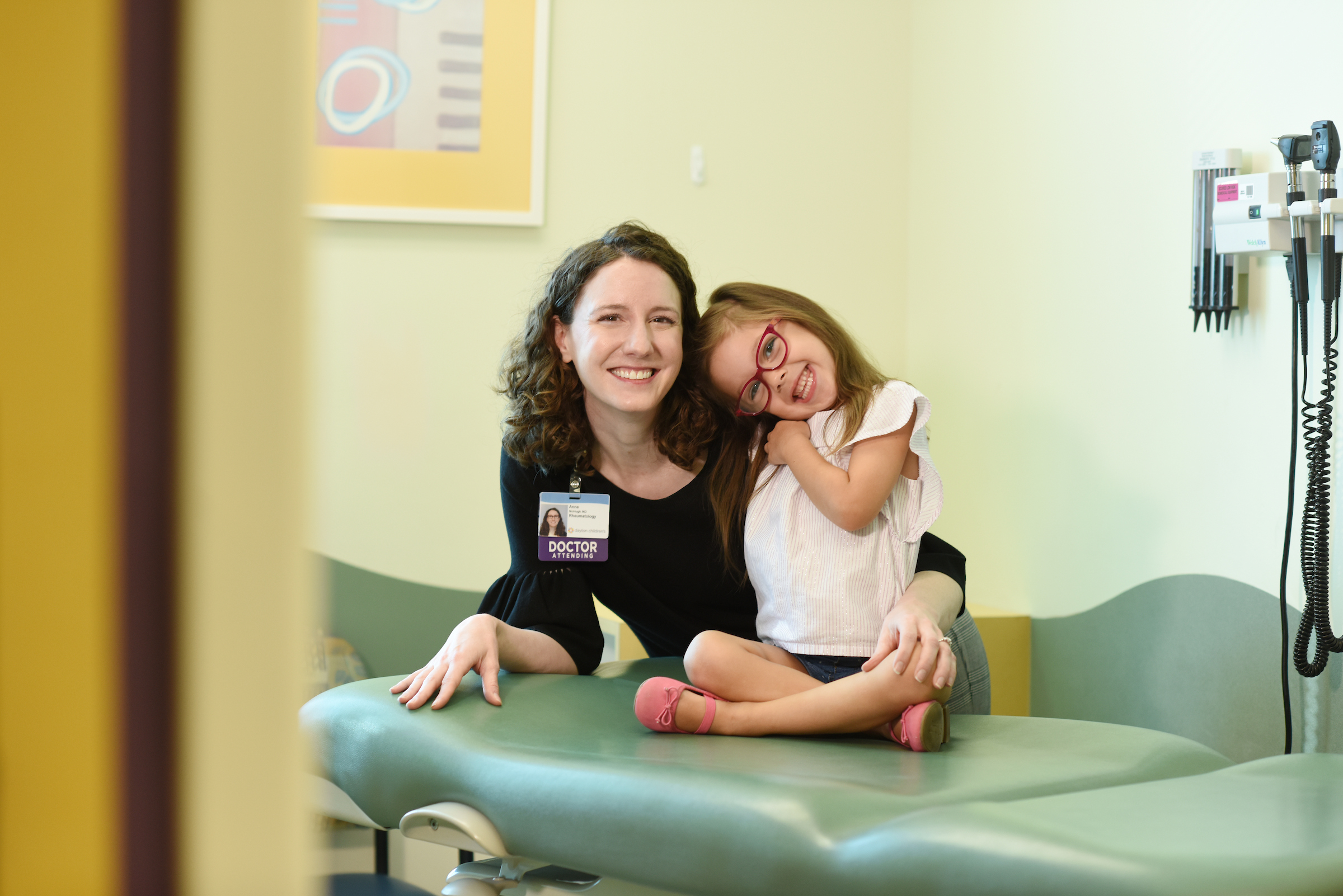
Dayton Children’s rheumatology team cares for kids and teens with autoimmune, musculoskeletal, and inflammatory conditions.


what is pediatric rheumatology
Pediatric rheumatology focuses on diagnosing and treating autoimmune and autoinflammatory conditions that affect the joints, muscles, and connective tissues. These conditions can cause pain, swelling, stiffness, fevers, fatigue, and other symptoms that impact a child’s daily life. Because children are still growing, their care requires a unique approach that considers both their physical and emotional development.
Diagnosis and treatment can be complex, often requiring multiple specialists to work together to fully understand a child’s condition and create the right plan of care.
rheumatology care at Dayton Children’s
At Dayton Children’s, our pediatric rheumatologists provide expert evaluation and treatment tailored to the needs of children and teens. We use a team approach that may include social workers, psychologists, nurse practitioners, and registered nurses who specialize in rheumatic disorders.
Our specialists collaborate closely with other departments across the hospital to build comprehensive care plans that address all of a child’s symptoms and needs. Families can expect compassionate, personalized care designed to support their child’s health, growth, and quality of life.

meet our rheumatology team
Our pediatric rheumatologists specialize in diagnosing and treating autoimmune and inflammatory conditions that affect children’s joints, muscles and connective tissues. With expertise in the unique challenges growing children face, our doctors take the time to understand each child’s symptoms and create personalized care plans that address their medical and developmental needs. Because rheumatologic conditions can be complex, they collaborate closely with other Dayton Children’s specialists to ensure every child receives well-rounded, coordinated care.
conditions we treat
At Dayton Children’s, our specialists can diagnose and manage nearly all pediatric rheumatic diseases. The goal is to decrease or eliminate symptoms so your child can get back to being active.
news and blogs
Stay up-to-date with the latest insights from Dayton Children’s. We’re always working to share helpful, real-world content for families navigating pediatric rheumatology.
patient stories
Real families, real results. Whether it’s a child finding relief from joint pain or a teen regaining strength after a flare-up, our patients and families inspire us every day. These stories offer hope, encouragement and a reminder that we are here for your child every step of the way.
Explore how Dayton Children’s pediatric rheumatology has gone above and beyond for kids just like yours.


for your visit
prepare for your first appointment
Follow these steps to help make sure your first appointment is as helpful as possible.
- Complete the rheumatology patient medical and surgery history form. Bring it with you to the appointment.
- Confirm your appointment location in the text reminder or itinerary that was sent. We see patients at the main and south campuses.
- Arrive at least 15 minutes before your appointment to complete check-in. Bring the completed rheumatology patient medical and surgery history form with you. A parent or legal guardian must attend the appointment to provide consent and medical history. You will also be part of the discussions about your child’s treatment.
Need to reschedule your child’s appointment? Call 937-641-4000 as soon as possible so we can offer the appointment to patients on our wait list.
Have questions? Call 937-641-3805 and select option 2 to speak with a nurse.
find more resources for your visit
Get checklists, resources, and helpful tips for before, during, and after your visit to Dayton Children’s—so you know exactly what to expect.
hours & locations – pediatric rheumatology
Our pediatric rheumatology team is here to support your child’s health at multiple convenient locations.
FAQs
A positive ANA test means that autoantibodies are present and could mean that an autoimmune disease is present. The immune system produces proteins called antibodies. Antibodies are created by white blood cells and help our bodies fight off germs in the body. When germs are recognized in the body, antibodies recruit other proteins and cells to help fight off the infection. This fight is called inflammation.
Sometimes our antibodies make a mistake and fight off the wrong blood cells which creates autoantibodies. Autoantibodies cause the body to attack itself which can lead the body to create large amounts of antinuclear antibodies (ANAs). A large amount of ANAs can be a sign of an autoimmune disease such as lupus, scleroderma, Sjogren’s syndrome, polymyositis/dermatomyositis, missed connective tissue disease, drug-induced lupus, Hashimoto thyroiditis, inflammatory bowel disease and autoimmune hepatitis. Although ANAs can indicate the presence of an autoimmune disease, up to 30% of healthy kids may have a positive ANA. It may be important for a rheumatologist to determine whether further testing is needed based on symptoms.
The most popular test for ANAs is a blood test called the fluorescent antinuclear antibody test (FANA). The FANA blood test is when fluorescent-labeled antibodies are viewed on a glass slide under the microscope and determine the pattern and strength of the fluorescence.
getting started with rheumatology care
If your child is experiencing ongoing joint pain, swelling, or other autoimmune symptoms, schedule an appointment online or call 937-641-4000. We’re here to provide answers, support, and specialized care for your family.