pediatric sleep medicine
Helping kids get the restful sleep they need to grow, heal, and thrive—through expert care for sleep disorders and nighttime challenges.
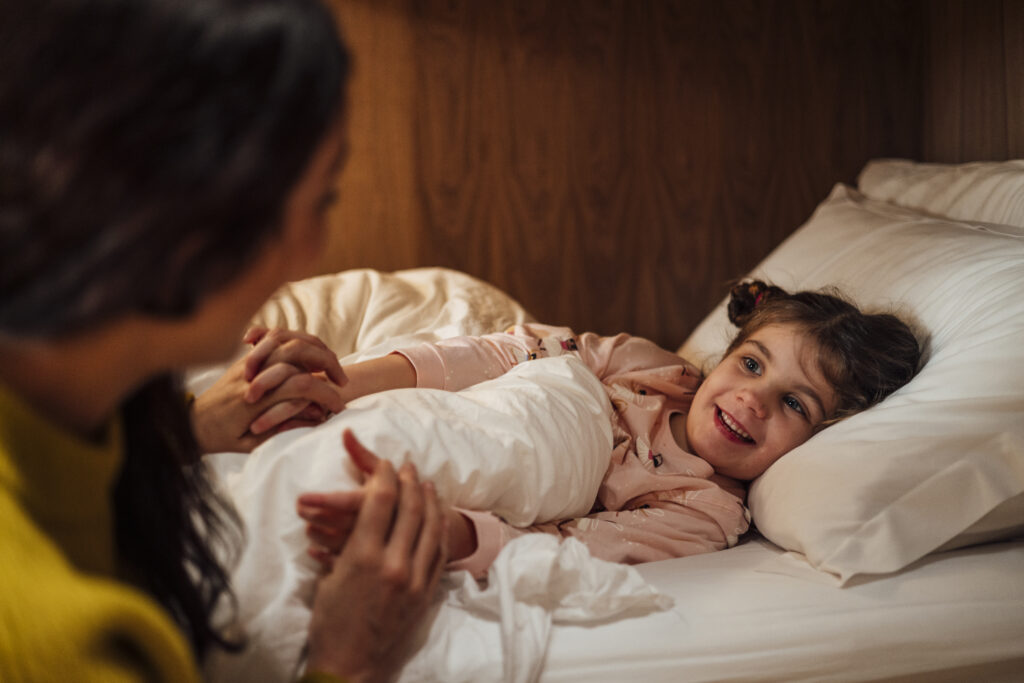

what does pediatric sleep medicine treat?
Quality sleep is important to a child’s health and wellbeing. At Dayton Children’s, our pediatric sleep medicine team specializes in diagnosing and treating sleep disorders that affect infants, children and teens.
From common sleep conditions like snoring, sleep apnea, to more complex conditions, we work to uncover the root cause and improve sleep quality. Our sleep center is accredited by the American Academy of Sleep Medicine and includes board-certified sleep physicians, sleep psychologists, and registered technologists—all trained to work with kids in a safe, supportive setting.
diagnostic testing
Inpatient and outpatient sleep studies are available at both our Dayton and Springboro locations, with flexible scheduling Sunday through Friday to accommodate family needs. These studies help us understand your child’s sleep patterns and detect conditions such as obstructive sleep apnea, restless leg syndrome, and more. Our sleep labs are designed with comfort in mind and are equipped with advanced technology tailored for pediatric patients.
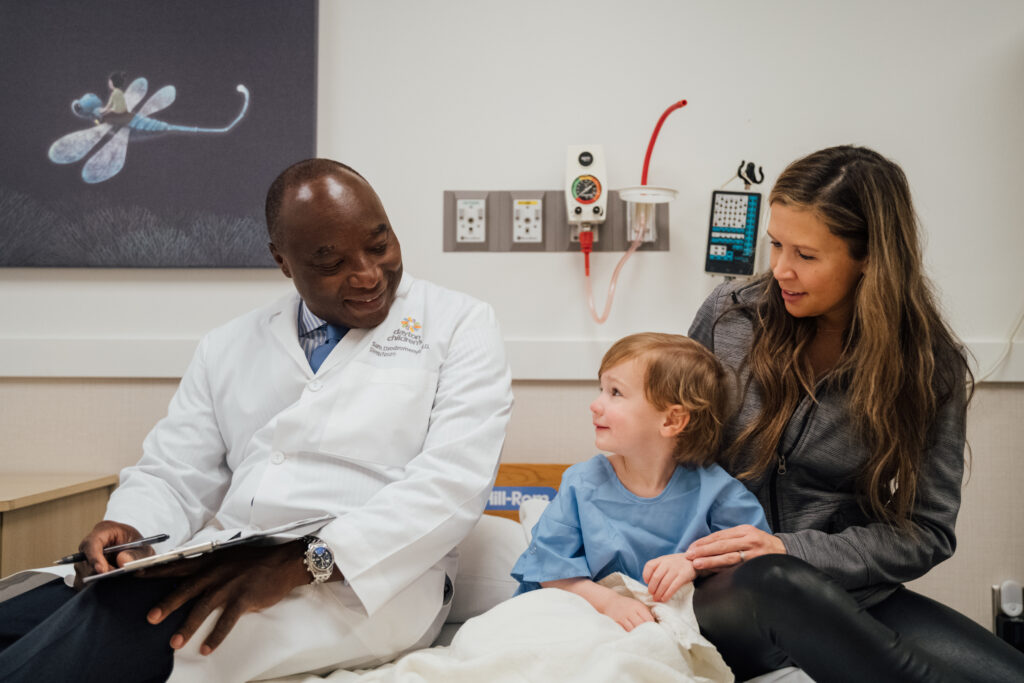
meet our sleep medicine team
Our pediatric sleep medicine physicians are board-certified and highly experienced in identifying and managing sleep disorders that affect children’s health and development. With specialized training in pediatric sleep medicine, they work closely with families to understand each child’s unique sleep challenges and develop personalized treatment plans. Their goal is to help children get the restful, restorative sleep they need to thrive—at home, in school and beyond.
conditions we treat
We treat patients for a variety of conditions, such as:
sleep medicine programs and clinics
Our comprehensive sleep center provides a variety of sleep-related services. Learn more in the sections below.
Our American Academy of Sleep Medicine–accredited sleep laboratories are staffed by licensed and registered technicians dedicated to providing diagnostic testing for babies, children, teens and patients with special needs. Our labs are equipped with state-of-the-art polysomnography technology, and all studies are interpreted by board-certified sleep physicians. Designed with comfort in mind, each sleep lab offers a kid-friendly environment and ensures that a parent or adult caregiver has a comfortable place to stay with their child during an overnight sleep study.
The upper airway program at Dayton Children’s provides a multidisciplinary approach to the diagnosis and management of children with complex obstructive sleep apnea (OSA). OSA in specific populations of children, such as those listed below, often do not respond completely to conventional treatment. In these children, OSA can arise from the collapse at multiple sites in the upper airway. The identification and treatment of these sites of upper airway obstruction requires a multi-disciplinary approach. Specialists from sleep medicine, otolaryngology, radiology, and plastic surgery collaborate to provide comprehensive care for each child. An individualized care plan is developed through weekly virtual meetings and monthly meetings where advanced imaging is reviewed.
Conditions treated include craniofacial anomalies, Down syndrome and persistent obstructive sleep apnea (after tonsillectomy).
Behavioral sleep problems are the most common sleep problems in childhood, with 15-30% of 2- to 5-year-old children experiencing regular difficulties falling asleep or sleeping through the night. Not getting enough sleep can affect the child’s learning, mood and behavior. Parents’ lack of sleep can affect their own daytime functioning.
Dayton Children’s is one of only a small number of pediatric facilities in the country to offer behavioral sleep medicine services.
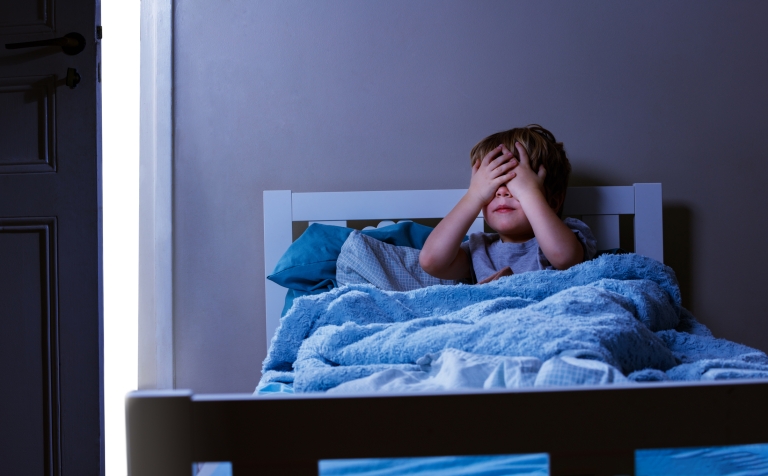
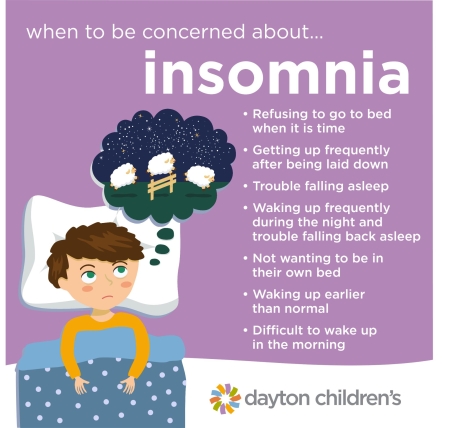
Some of the more common sleep problems evaluated and treated by our behavioral sleep medicine psychologists include bedtime fears, bedtime refusal, difficulty falling asleep alone, nightmares, sleep terrors, sleep walking and delayed bedtime.
Sleep-related problems have been linked to overweight and obese children. Further, both sleep apnea and short sleep duration have been shown to contribute to weight gain. At Dayton Children’s, sleep evaluations are an important part of obesity prevention and management of obese children participating in a medical weight loss program. Patients undergo questionnaire assessments of their sleep quality, daytime sleepiness and if indicated, recording of sleep duration (home actigraphy monitoring) or overnight sleep (sleep study).
Once diagnosed with a sleep disorder, obese children benefit from the expertise of a multidisciplinary team to develop an individualized treatment plan.
To overcome the barrier to how often PAP is used, we have a systematic approach to starting and monitoring PAP therapy support. Our respiratory therapists introduce the patient to the equipment and remotely monitor the device usage. Follow-up phone calls are made to all patients to provide support during the process of getting used to therapy. Patients are closely followed up in the clinic, where problems related to device usage are addressed and the effect of PAP therapy on sleep quality and daytime sleepiness is evaluated.
sleep medicine diagnostic testing
Dayton Children’s offers a variety of testing to diagnose and evaluate sleep-related disorders for babies, children, teens and patients with special needs. Our American Academy of Sleep Medicine–accredited sleep laboratories are staffed by licensed and registered technicians and are equipped with state-of-the-art polysomnography technology. All studies are interpreted by board-certified sleep physicians.
The sleep lab needs a physician order for all sleep lab tests, including sleep studies. Learn more about the types of testing we offer, how to prepare for a sleep study and answers to frequently asked questions below.
types of sleep studies & what to expect
Learn more about sleep studies offered at Dayton Children’s and watch a quick video on what to expect so your child is prepared for their upcoming study.
During a sleep study, a sleep technologist monitors your child throughout the night through sensors placed on your child. Sleep duration, sleep quality, breathing and body movements are recorded on a computer. This detailed monitoring helps us diagnose and treat various sleep disorders in children starting on PAP or oxygen therapy. The study is used to determine the best settings.
During this test, your child will be asked to take a series of naps where the time to fall asleep and the type of sleep are recorded. The purpose of this study is to assess the sleepiness of your child after an overnight study in which the quality of sleep has been monitored.
Actigraphy wrist watches are ambulatory devices that estimate sleep-wake patterns from activity levels. Actigraphy provides a more objective measure than a parent report. It allows providers to measure sleep-wake patterns for extended periods of time in the child’s natural environment. An actigraphy watch is typically worn a week or two before a sleepy study. The watch data combined with the sleepy study results help our providers determine the best course of treatment for your child.
FAQs
A sleep study is a test that monitors your child while they sleep. During the night, a number of things are recorded. These include breathing patterns, heart rate, oxygen levels, body movements and brain waves. Brain waves are used to determine how deep your child is sleeping (depth of sleep). Sleep tests are designed just for your child, depending on their history and what your doctor recommends.
The sleep center team at Dayton Children’s is made up of specialists who are trained and experienced in caring for children with suspected sleep disorders, or sleep-disordered breathing. Your child is scheduled for a sleep study in the sleep center. Before your appointment, please familiarize yourself with the following information.
- Bring completed sleep log sheets and the medical history questionnaire you were provided, if you have not already submitted them to the sleep department. The sleep log is an important tool to track your child’s sleeping pattern and will give the provider an idea of their sleeping habits.
- If your child uses a CPAP/Bilevel machine, please bring the child’s machine and accessories to the sleep lab appointment.
- Let us know if your child is allergic to tape, latex or any medicine.
- Your child should follow normal daily activities and nap schedules.
- Make sure your child eats dinner before coming to the sleep study.
- Avoid foods containing caffeine (chocolate, sugar, certain soft drinks, tea, coffee, etc.) for the entire day of the test.
- If your child usually eats a snack in the evening before going to bed, you may bring a light snack (as long as it doesn’t contain sugar or caffeine).
- Please have your child take a bath and wash and dry their hair before the test.
- Avoid skin lotions and hair oils so that the monitor leads will stay in place during the test.
- Remove fingernail polish and acrylic nails.
One parent or caregiver must accompany all children under 18 years of age and must stay overnight with the child. The technologist team will expect the assistance of a parent/guardian during the night.
- You will be requested to have your child dress in his/her pajamas (two-piece without feet). Nightgowns and one-piece pajama sets are not acceptable attire. If you have questions regarding proper sleepwear, please check in with the lab staff prior to your child’s visit.
- You may bring your child’s books, toys, a favorite stuffed animal, a special pillow and/or blanket, a white noise device or a fan.
- You should bring your child’s medications or special food needed during his/her stay in the clinic, such as milk bottles. The lab does not provide any of these items. A refrigerator for medications only is available upon request. A cooler bag with ice packs can be provided for milk storage overnight.
- You must bring your child’s personal toiletries (diapers, toothpaste, toothbrush, comb, brush, shampoo, etc.), and a change of clothes for the next day. The lab provides towels and bedding, and there is a bathroom and shower available for use in the lab.
- Please leave all valuables at home. The sleep lab is not responsible for any personal items lost.
- Only one parent or guardian is permitted to come with their child for the sleep study.
- No siblings are permitted to stay with the patient overnight.
If you’re coming to the main hospital, you can park in the visitor parking garage for free. Then, come in the main entrance and go to reception area 1A. Tell admitting (1A) you are here for a sleep study. They will check you in and direct you to the sleep lab on the lower level.
If you’re going to the south campus, park by the left side of the building and enter through the specialty care center. Go up the elevator or stairs to the second floor. There will be signage for the sleep lab to the left. The sleep technician will check you in upon entry to the sleep lab.
- A technologist will greet you and your child in the waiting area of the lab.
- We will apply electrodes and sensors with the opportunity for frequent breaks. Your child may watch television or use electronics until the hook-up is complete.
- TVs are in every room but will be turned off at the end of hook up, when the sleep study begins.
- We expect the parents or caregivers to be active participants during the child’s hook-up procedure and remain with the child (under age 18) for the duration of the sleep study. A parent bed is located next to the patient’s bed in every room.
- We will attempt to adhere to your child’s usual bedtime, as much as possible.
- Your child will be in a monitored environment, including audio/video recording, upon arrival to the room and during the testing procedure; under the care of skilled technologists.
Most children sleep well in the lab and having a parent with the child during the sleep test and overnight stay makes them feel comfortable.
They may be uneasy about the hook-up, depending on their age, but our experienced technologists will work to reassure them.
Some children experience temporary discomfort associated with the small tube placed under the nose, similar to an oxygen cannula. All the monitoring devices are held in place by elastic straps, hypoallergenic tape or skin-safe adhesives. The body sensors allow the child to turn and move during sleep.
Call 937-641-5004 Monday through Friday from 8:00 am to 4:30 pm.
Please provide us at least 24-hours notice with rescheduling or cancellation requests. Please contact us if your child is having any signs of illness prior to arriving for your sleep study.
news and blogs
Stay up-to-date with the latest insights from Dayton Children’s Hospital. We’re always working to share helpful, real-world content for families navigating pediatric sleep medicine.

patient stories
Real families, real results. Whether it’s a child learning to manage their sleep apnea or a teen finding relief from insomnia, our patients and families inspire us every day. These stories offer hope, guidance and reassurance that we are here for your child every step of the way. Explore how Dayton Children’s advanced pediatric sleep medicine has gone above and beyond for kids just like yours.
for your visit
Before your visit, there are a few things we’d like you to do. Having this information at your visit helps us provide the best care for your child.
- Fill out the sleep log here. The sleep log asks you to record sleep over a few days, so start tracking right away.
- Please bring the sleep log to your appointment.
- The sleep clinic is located at our specialty care center on our main campus. Enter through the main entrance (floor 2) and take the elevator to floor 4.
- Please arrive 20 minutes early to complete check-in.
Usually, office visits take about 40 to 60 minutes. Here’s what will happen at your first visit:
- A comprehensive office visit with a board-certified sleep medicine physician.
- If needed, lab work or X-rays may be ordered.
- If needed, sleep studies will be scheduled for a later date.
If you have any questions about your child’s visit, please call central scheduling at 937-641-4000.
more resource for your visit
Get checklists, resources, and helpful tips for before, during, and after your visit to Dayton Children’s—so you know exactly what to expect.
FAQs – sleep medicine
A sleep study is a test that monitors your child while they sleep. During the night, a number of things are recorded. These include breathing patterns, heart rate, oxygen levels, body movements and brain waves. Brain waves are used to determine how deep your child is sleeping (depth of sleep). Sleep tests are designed just for your child, depending on their history and what your doctor recommends.
The sleep center team at Dayton Children’s is made up of specialists who are trained and experienced in caring for children with suspected sleep disorders, or sleep-disordered breathing. Your child is scheduled for a sleep study in the sleep center. Before your appointment, please familiarize yourself with the following information.
- Bring completed sleep log sheets and the medical history questionnaire you were provided, if you have not already submitted them to the sleep department. The sleep log is an important tool to track your child’s sleeping pattern and will give the provider an idea of their sleeping habits.
- If your child uses a CPAP/Bilevel machine, please bring the child’s machine and accessories to the sleep lab appointment.
- Let us know if your child is allergic to tape, latex or any medicine.
- Your child should follow normal daily activities and nap schedules.
- Make sure your child eats dinner before coming to the sleep study.
- Avoid foods containing caffeine (chocolate, sugar, certain soft drinks, tea, coffee, etc.) for the entire day of the test.
- If your child usually eats a snack in the evening before going to bed, you may bring a light snack (as long as it doesn’t contain sugar or caffeine).
- Please have your child take a bath and wash and dry their hair before the test.
- Avoid skin lotions and hair oils so that the monitor leads will stay in place during the test.
- Remove fingernail polish and acrylic nails.
One parent or caregiver must accompany all children under 18 years of age and must stay overnight with the child. The technologist team will expect the assistance of a parent/guardian during the night.
- You will be requested to have your child dress in his/her pajamas (two-piece without feet). Nightgowns and one-piece pajama sets are not acceptable attire. If you have questions regarding proper sleepwear, please check in with the lab staff prior to your child’s visit.
- You may bring your child’s books, toys, a favorite stuffed animal, a special pillow and/or blanket, a white noise device or a fan.
- You should bring your child’s medications or special food needed during his/her stay in the clinic, such as milk bottles. The lab does not provide any of these items. A refrigerator for medications only is available upon request. A cooler bag with ice packs can be provided for milk storage overnight.
- You must bring your child’s personal toiletries (diapers, toothpaste, toothbrush, comb, brush, shampoo, etc.), and a change of clothes for the next day. The lab provides towels and bedding, and there is a bathroom and shower available for use in the lab.
- Please leave all valuables at home. The sleep lab is not responsible for any personal items lost.
- Only one parent or guardian is permitted to come with their child for the sleep study.
- No siblings are permitted to stay with the patient overnight.
If you’re coming to the main hospital, you can park in the visitor parking garage for free. Then, come in the main entrance and go to reception area 1A. Tell admitting (1A) you are here for a sleep study. They will check you in and direct you to the sleep lab on the lower level.
If you’re going to the south campus, park by the left side of the building and enter through the specialty care center. Go up the elevator or stairs to the second floor. There will be signage for the sleep lab to the left. The sleep technician will check you in upon entry to the sleep lab.
- A technologist will greet you and your child in the waiting area of the lab.
- We will apply electrodes and sensors with the opportunity for frequent breaks. Your child may watch television or use electronics until the hook-up is complete.
- TVs are in every room but will be turned off at the end of hook up, when the sleep study begins.
- We expect the parents or caregivers to be active participants during the child’s hook-up procedure and remain with the child (under age 18) for the duration of the sleep study. A parent bed is located next to the patient’s bed in every room.
- We will attempt to adhere to your child’s usual bedtime, as much as possible.
- Your child will be in a monitored environment, including audio/video recording, upon arrival to the room and during the testing procedure; under the care of skilled technologists.
Most children sleep well in the lab and having a parent with the child during the sleep test and overnight stay makes them feel comfortable.
They may be uneasy about the hook-up, depending on their age, but our experienced technologists will work to reassure them.
Some children experience temporary discomfort associated with the small tube placed under the nose, similar to an oxygen cannula. All the monitoring devices are held in place by elastic straps, hypoallergenic tape or skin-safe adhesives. The body sensors allow the child to turn and move during sleep.
Call 937-641-5004 Monday through Friday from 8:00 am to 4:30 pm.
Please provide us at least 24-hours notice with rescheduling or cancellation requests. Please contact us if your child is having any signs of illness prior to arriving for your sleep study.
hours & locations – sleep medicine
Our pediatric sleep medicine providers see patients in our main and south campus locations.
worried about your child’s sleep?
If your child snores, struggles to fall asleep, wakes frequently, or seems overly tired during the day, our pediatric sleep specialists can help. We’ll work with you to identify the problem and create a plan to help your child sleep better—and feel better. Schedule an appointment online or call 937-641-4000.