diagnosing hearing loss
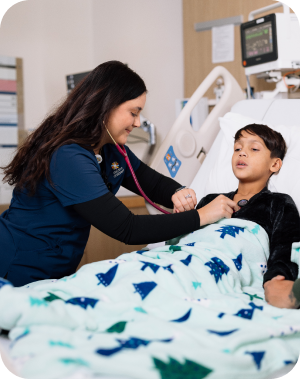
Our audiologists are trained in working with kids and will offer a family friendly environment for your child to receive their hearing test.

diagnosing hearing loss
When we perform a hearing evaluation we are able to diagnose the type and degree of your child’s hearing loss.
Hearing evaluations for young and/or special needs children often require modification of the standard test format. These modifications allow the audiologist to match the test task to the child’s developmental level.
Along with diagnosing children who are showing symptoms of hearing loss, we also monitor children who may be at risk for hearing loss (hematology/oncology patients, children with genetic syndromes, etc.).
types of hearing loss
conductive hearing loss
Conductive hearing loss is caused by an interference in the transmission of sound to the inner ear. Infants and young children frequently develop conductive hearing loss due to ear infections. This loss is usually mild, temporary, and treatable with medicine or surgery.
sensori-neural hearing loss
sensori-neural hearing loss
Sensori-neural hearing loss involves malformation, dysfunction, or damage to the inner ear (cochlea) and is rarely due to problems with the auditory cortex of the brain. The most common type is cochlear hearing loss and this may involve a specific part of the cochlea (inner hair cells or outer hair cells or both). It usually exists at birth, and can be hereditary or the result of a number of medical problems, though sometimes the cause is unknown. This type of hearing loss is usually permanent.
mixed hearing loss
Mixed hearing loss occurs when both conductive and sensorineural hearing loss are present.
central hearing loss
Central hearing loss occurs when the cochlea is working properly, but other parts of the brain are not. This is a rare type of hearing loss and is more difficult to treat.
central auditory processing disorders
Central auditory processing disorders are not exactly a type of hearing loss because people with APD usually hear well in a quiet environment. However, most have great difficulties hearing in noise, which represents the typical environment we live in. In most cases, this disorder can be managed with daily living strategies and therapy which targets the child’s specific areas of weakness.
The degree of your child’s hearing loss can be mild, moderate, severe, or profound. Sometimes the loss is progressive (hearing gradually becomes poorer) and sometimes unilateral (one ear only).
Once we have determined the type and degree of your child’s hearing loss we will work with your child’s primary care physician to manage the diagnosis. You may also receive a referral to an Ear, Nose and Throat specialist or the Dayton Children’s speech and language department.
If the hearing loss is severe or profound we may recommend rehab services or cochlear implants.
our providers
Our specialists are board-certified and fellowship-trained, offering care tailored to infants, children and teens. With years of experience, our team is committed to going above and beyond for your child. Meet our providers, and learn how we partner with you to support your child’s care.
news and blogs
Stay informed with seasonal health tips, treatment updates and advice on particular conditions.
hours and locations
Our team is here to support your child’s health at multiple convenient locations.
contact us
The audiology department welcomes phone calls to 937- 641-3424 during our normal business hours of 8:00 am to 5:00 pm.
A physician referral is necessary prior to the child’s first outpatient visit. All follow up appointments will be made by the audiology department at your visit or by phone.