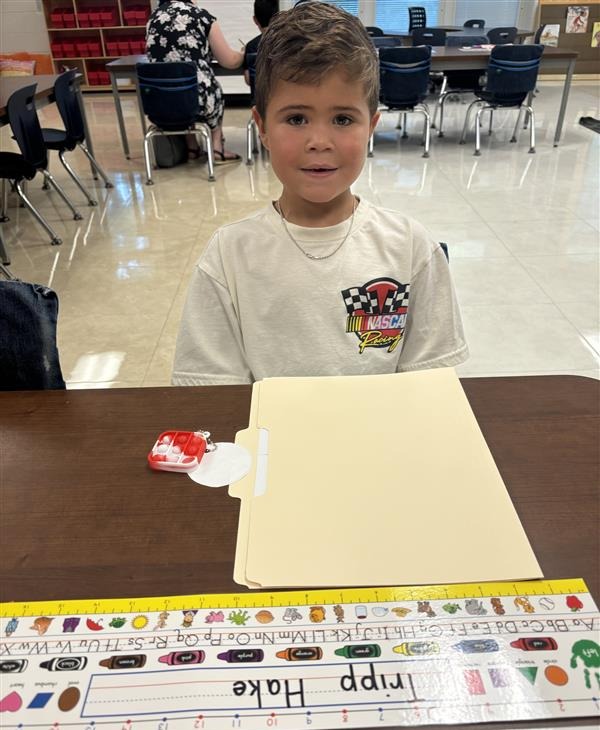
patient name: Tripp Hake
patient age: 7
condition: T-cell leukemia
seen in: hematology oncology
providers: Mukund Dole, MD, pediatric hematology and oncologist and Claire McDowell, MD, pediatrician at PriMed Pediatrics
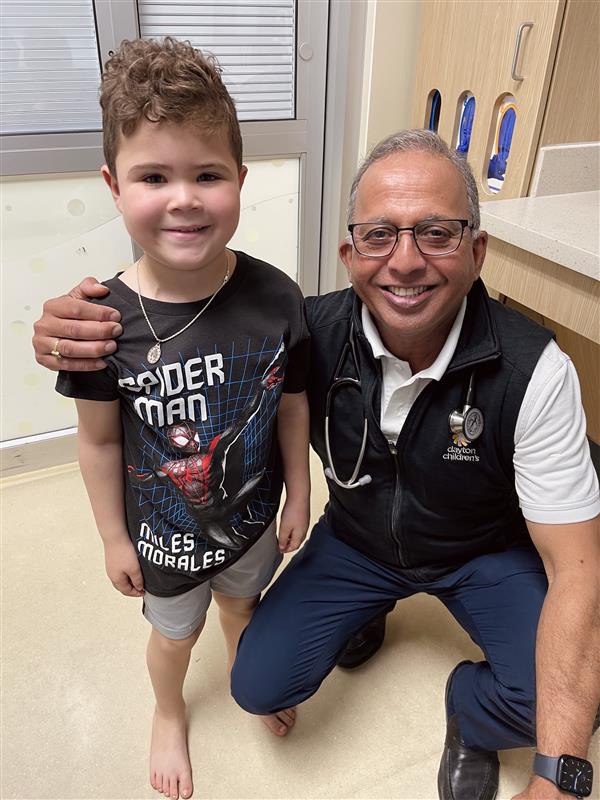
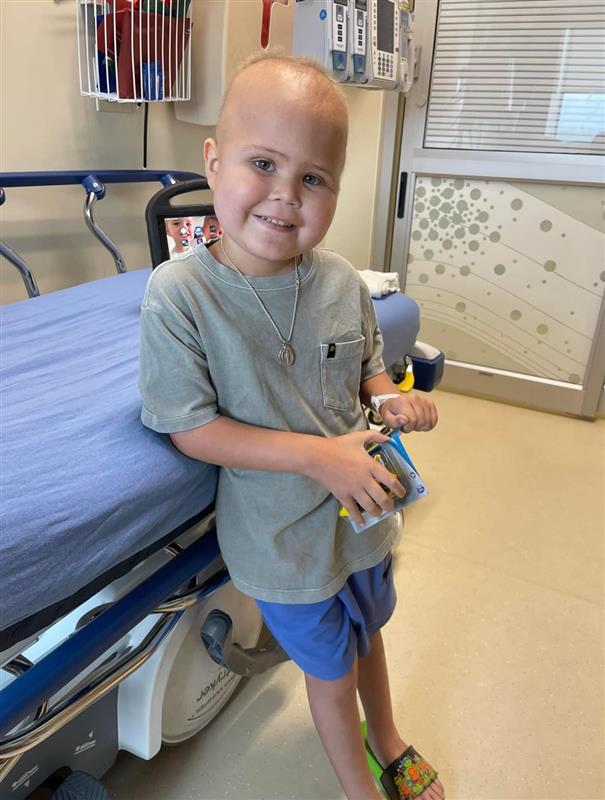
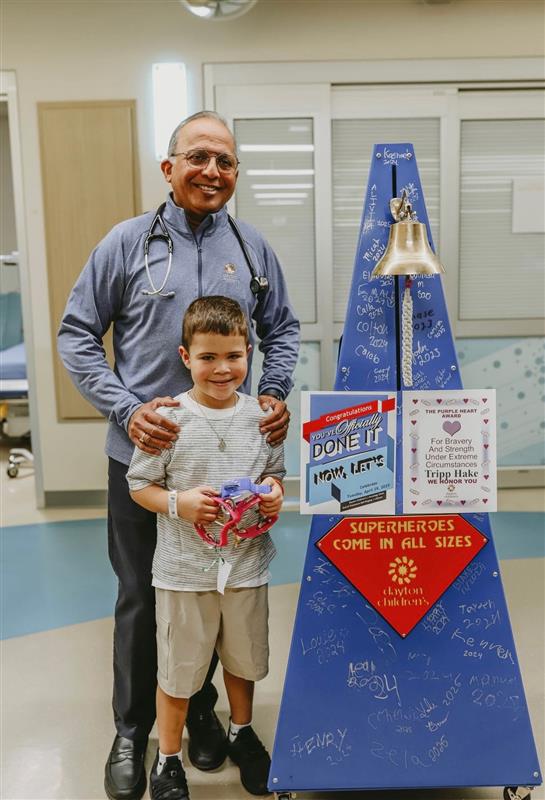
Tripp's story: a marathon, not a sprint
When Tripp was 3, life changed quickly for his family. Kate had noticed that the lymph nodes in his neck looked swollen. His belly seemed swollen, too. Then, while Tripp was at daycare, they called to say he had developed a blood-like rash (a rash with red or purple spots that look like tiny bruises). Kate called the pediatrician, who got them in that evening.
At first, the nurses mentioned mono as a possibility. But when Tripp’s pediatrician, Claire McDowell, MD at PriMed Pediatrics, came in, felt Tripp’s lymph nodes and looked him over, she told Kate she suspected he had leukemia and needed to go straight to Dayton Children’s.
There was no time to wait. Dr. McDowell called ahead so Dayton Children’s would be ready. Once they arrived, labs confirmed that Tripp had some type of leukemia, and the oncology team came to meet the family.
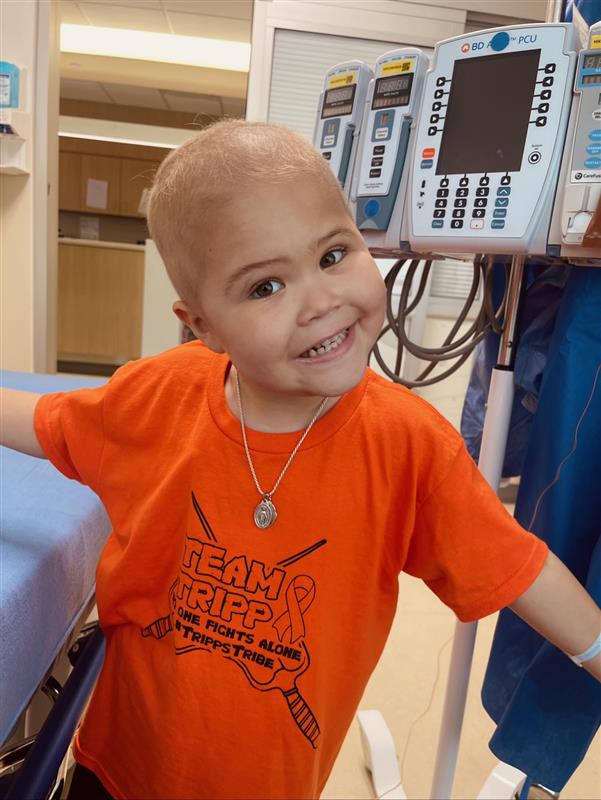
Even then, Tripp was still acting like himself. Kate remembers him climbing on the exam table, full of energy and ready to jump. Later, Dr. Mukund Dole, Tripp’s pediatric hematologist-oncologist at Dayton Children’s, pointed out how sick he was, but was amazed by how much energy he still had.
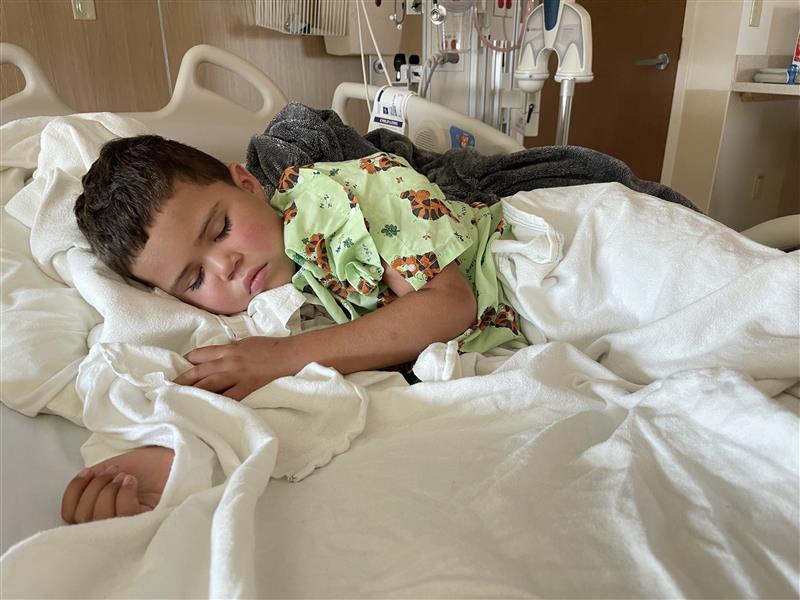
moving forward, one day at a time
For Kate, the first days after diagnosis were a blur of fear, adrenaline and “go mode.” She knew Tripp would need treatment, including chemotherapy and a port, and she wanted to get started right away.
Treatment became part of their everyday life. Tripp received chemotherapy through his port, a small device placed under the skin to make treatment easier, for about two years. He also took medicine by mouth, had lumbar punctures (another way to deliver chemotherapy) and received cranial radiation, a treatment that uses high-energy rays to target and kill cancer cells while protecting as much healthy tissue as possible.
In the beginning, treatment visits were frequent, sometimes Monday through Friday. He did not stay inpatient for infusions, but he did need hospital stays at times when infections happened after his blood counts dropped.
a team that felt like family
As treatment became part of everyday life, the people at Dayton Children’s became part of Tripp’s circle, too. For Kate, trust came from the way the team moved quickly, explained what to expect and made the family feel cared for. She remembers Dr. Dole writing out a treatment plan by hand, helping them understand what was ahead.
The nurses left an especially lasting mark. When Kate talks about them, the emotion is still close. She remembers their knowledge, their bedside manner, the resources they shared and the relationships they built with Tripp. “There really are no words,” she said. “They are fantastic.”
Kate shared that Tripp loved the nurses, too. She also remembered additional support around him, including the pediatric intensive care unit (PICU) team when he was very sick, child life and the facility dogs.
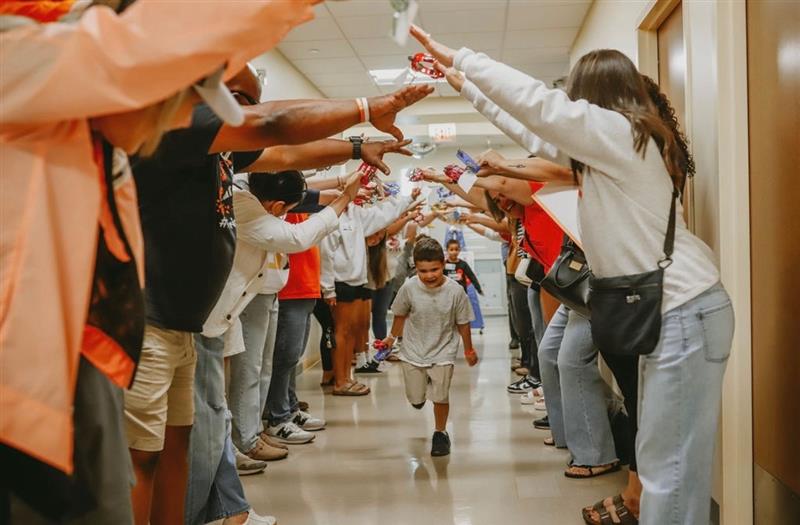
sharing kindness with others
One of Kate’s favorite memories is “pure Tripp,” as she described it.
During treatment, he loved Squishmallows. So, the family asked friends and family to donate them for other kids on the oncology floor. They ended up bringing a trailer full of Squishmallows to Dayton Children’s so children going through similar experiences could pick one out.
Not long after the donation was dropped off, someone came by Tripp’s room and invited him to choose a Squishmallow, not realizing he was the patient behind the donation. Tripp happily played along and picked out his favorite Squishmallow.
life after treatment
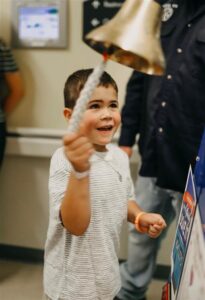
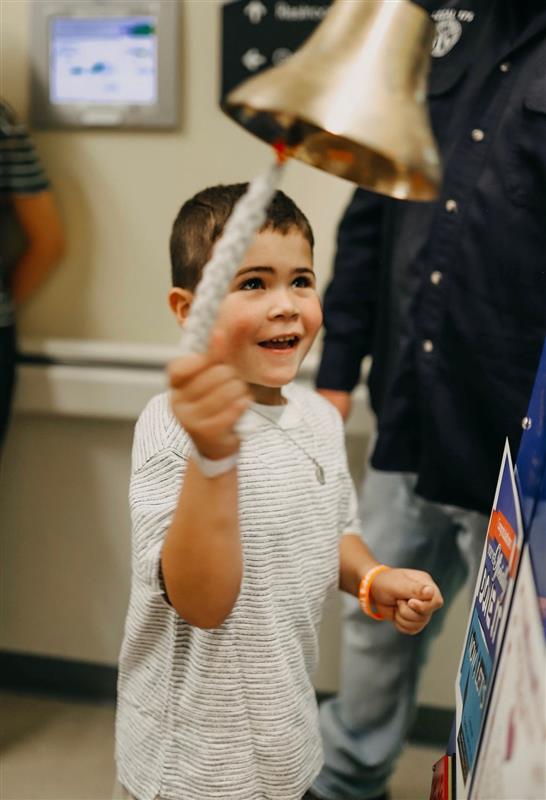
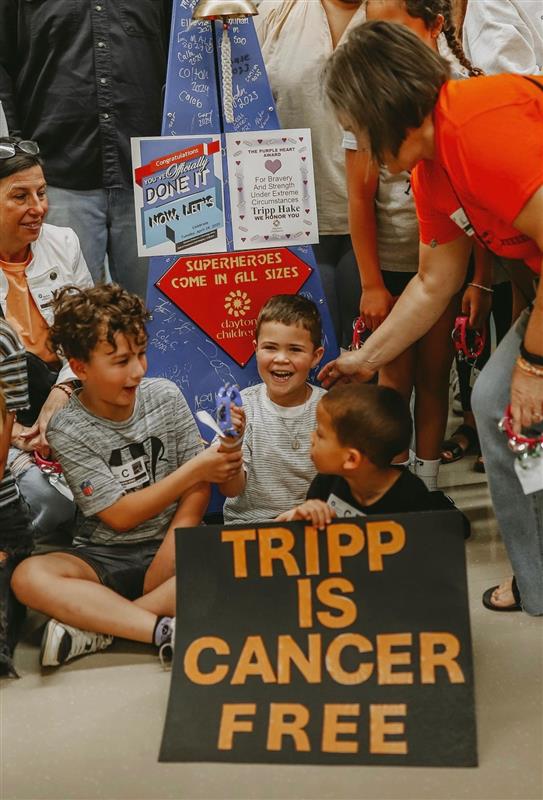
Today, Tripp is in remission. During his first year off treatment, he saw Dr. Dole monthly. Now in his second year, he has checkups and labs every other month.
He kept moving forward during treatment, too. Kate shared that he attended preschool during the heart of his treatment, even though his attendance was not what it would have been for a typical child. By kindergarten, he mainly missed school for appointments, and by first grade, he was in school full time.
When asked what she wants people to know about Tripp, Kate comes back to one word: resilient.
That strength is still easy to see. He is doing wonderfully, excelling in school, playing football and enjoying the simple joys of being a kid. He does not talk about cancer often, though sometimes he will ask questions when he sees someone who reminds him of what he went through. For the most part, Kate says he has put the past behind him.
For families just beginning a similar journey, Kate remembers something one of the nurses told her shortly after Tripp was diagnosed: “This is a marathon, not a sprint.”
That advice stayed with her because it was true. There were days when she wondered when it would be over and whether Tripp would be okay. But she wants other parents to know that even when the road may feel long and uncertain, there is hope ahead.
For Tripp, better days look like second grade, football, swimming, family and all the things that make him who he is. And for Kate, they are a reminder of the care, support and hope that helped carry their family through.