how you can recognize and help if your child is experiencing anxiety
In 2020, 9.7 % of Ohio children ages 3 to 17 were currently experiencing anxiety problems. That’s according to the National Survey of Children’s Health, U.S. Department of Health and Human Services, Health Resources and Services Administration (HRSA), Maternal and Child Health Bureau (MCHB). This number has been steadily increasing over the last several years showing that anxiety is a growing problem for our youth. As times continue to remain uncertain and stressors become ever present, here are some ways to help your child through difficult, anxious moments.
what is anxiety?
First, defining the issue that you want to identify can help with recognizing these anxious moments as they come. Anxiety is defined as a feeling of fear and distress, and is a physical response of the body when it’s faced with severe stress, or danger. Occasional anxiety is a normal part of life. It is important to be aware of what may cause your child’s anxiety so that you can intervene and encourage them to rely on healthy coping strategies. The degrees of anxiety can be mild, moderate, severe or panic and can be caused by a specific phobia, separation or social situations.
so how can parents recognize when their child is experiencing anxiety?
A child might cling, miss school or be emotional. They might act scared, upset, refuse to talk or discontinue activities that they usually enjoy. There are also times that children may break out in a rash called “anxiety hives.” Kids and teens with anxiety also feel symptoms that others can’t see. They might feel shaky, jittery or short of breath. They may feel “butterflies” in their stomach, a hot face, clammy hands, dry mouth or a racing heart. This can be scary and might make them feel afraid, worried, or nervous.
Common anxiety signs and symptoms include:
- Feeling nervous, restless, or tense
- Having a sense of impending danger, panic, or doom
- Having an increased heart rate
- Breathing rapidly (hyperventilation)
- Sweating
- Trembling
- Feeling weak or tired
- Trouble concentrating or thinking about anything other than the present worry
While anxiety can become debilitating if ignored, it is possible to intervene early on and reduce the impact. Meditation, yoga, breathing, and grounding are just a few of the ways one can cope with and prevent anxiety. For children, developing and sticking to routines, providing structure and an environment free of clutter can help reduce anxiety significantly.
tips to calm down – Find emotional empowerment with these easy techniques:
- Practice Yoga
- Exercise
- Practice mindfulness
- Routine sleep schedule
- Practice gratitude
- Set healthy boundaries
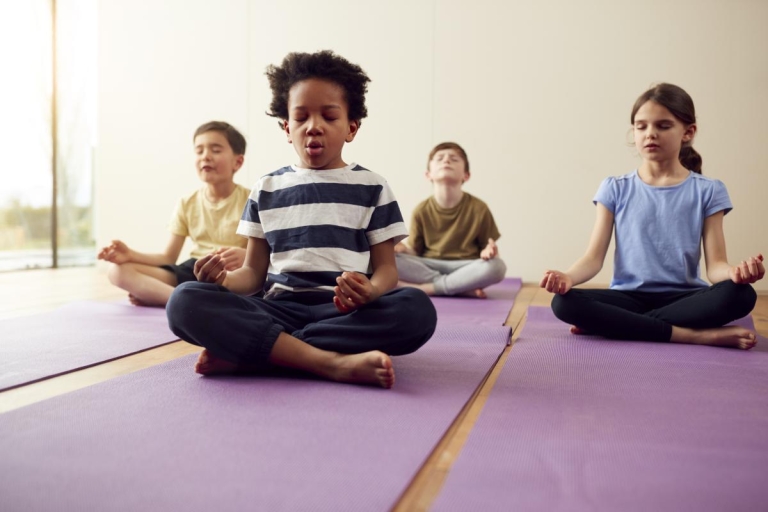
Techniques for grounding and breathing
5-4-3-2-1 Grounding Technique
- Look around and name five things that you can see around you.
- Focus on four things that you can feel.
- Name three things that you can hear around you.
- Notice two things that you can smell around you right now.
- Focus on one thing that you can taste. If you can’t taste anything, then instead you can choose to name a taste that you like.
4-7-8 Breathing
The following steps should all be carried out in the cycle of one breath:
- First, let your lips part. Make a whooshing sound, exhaling completely through your mouth.
- Next, close your lips, inhaling silently through your nose as you count to four in your head.
- Then, for seven seconds, hold your breath.
- Make another whooshing exhale from your mouth for eight seconds.
- When you inhale again, you initiate a new cycle of breath. Practice this pattern for four full breaths.
The held breath (for seven seconds) is the most critical part of this practice. It’s also recommended that you only practice 4-7-8 breathing for four breaths when you’re first starting out. You can gradually work your way up to eight full breaths.
join the On Our Sleeves movement
The mission of On Our Sleeves is to provide every community in America access to free, evidence-informed educational resources necessary for breaking stigmas about child mental health and educating families and advocates. For more information, visit OnOurSleeves.org.