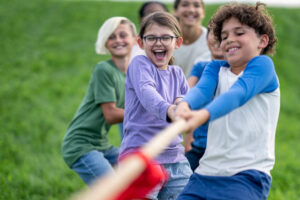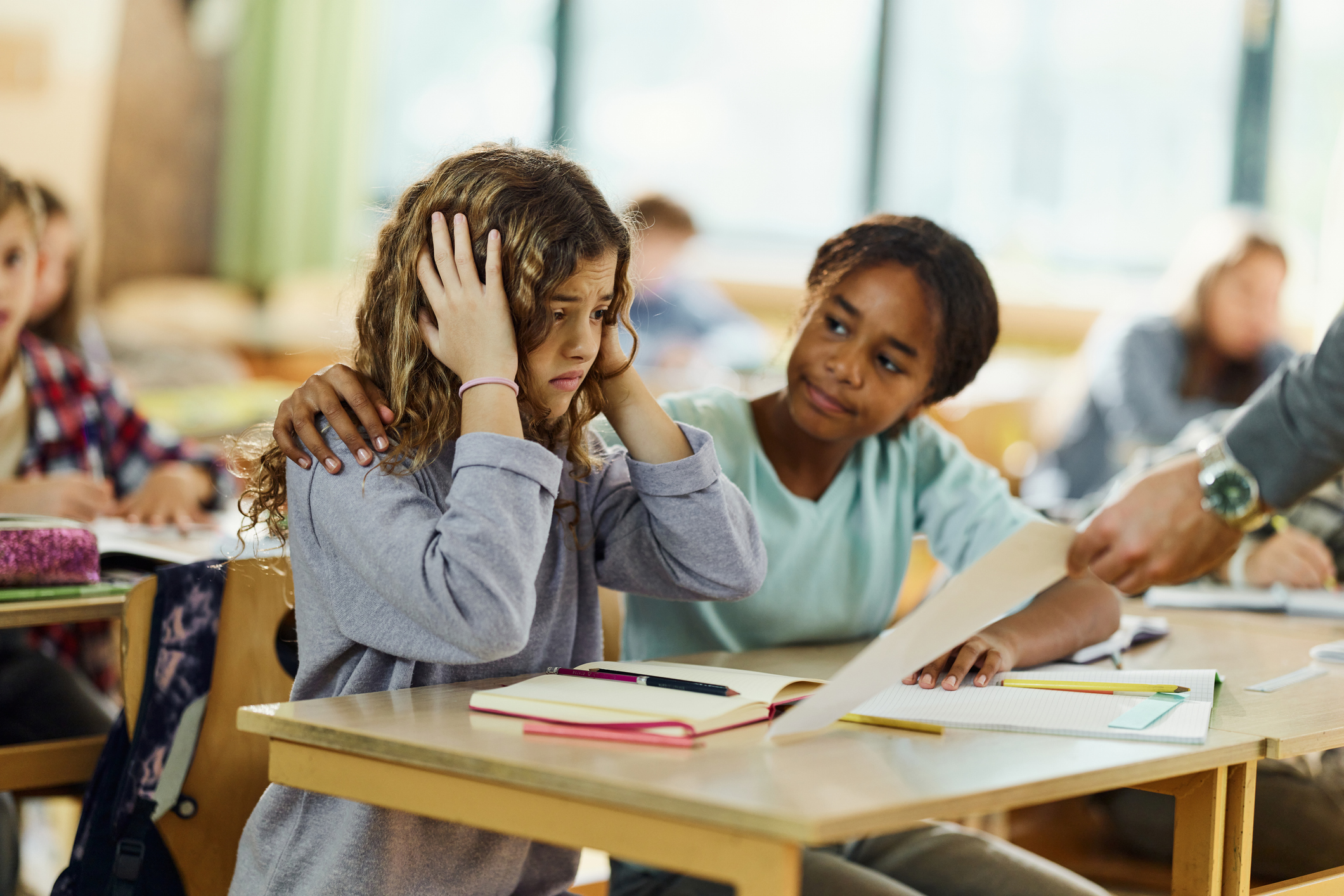
Sometimes, even the best classroom plans don’t unfold the way we expect. You may decide to reward your students with a fun classroom game after a week of hard work. But instead of smiles and excitement, the activity spins out of control, and you hear comments like:
- “He didn’t win! He cheated!”
- “I hate this game!”
- “Stop being a sore loser!”
Maybe a student bangs their desk in frustration, while another laughs at their classmate. In a matter of seconds, your thoughtful reward turns into chaos — and you’re left wondering what went wrong.
As a teacher, you know that school is about more than reading and math. It’s also where students learn to develop the social skills they need to succeed in life. An important lesson they can learn is how to support classmates when they’re feeling disappointed or upset.
How can you help students show empathy and support when a classmate experiences a defeat? Try the activity below to start a conversation with your students about being supportive classmates.
helping students support each other: free activity for a positive classroom culture
How can you help students show empathy and support when a classmate experiences a defeat? Use the activity below to start a conversation with your students about being supportive classmates.
step 1: talk about types of defeat
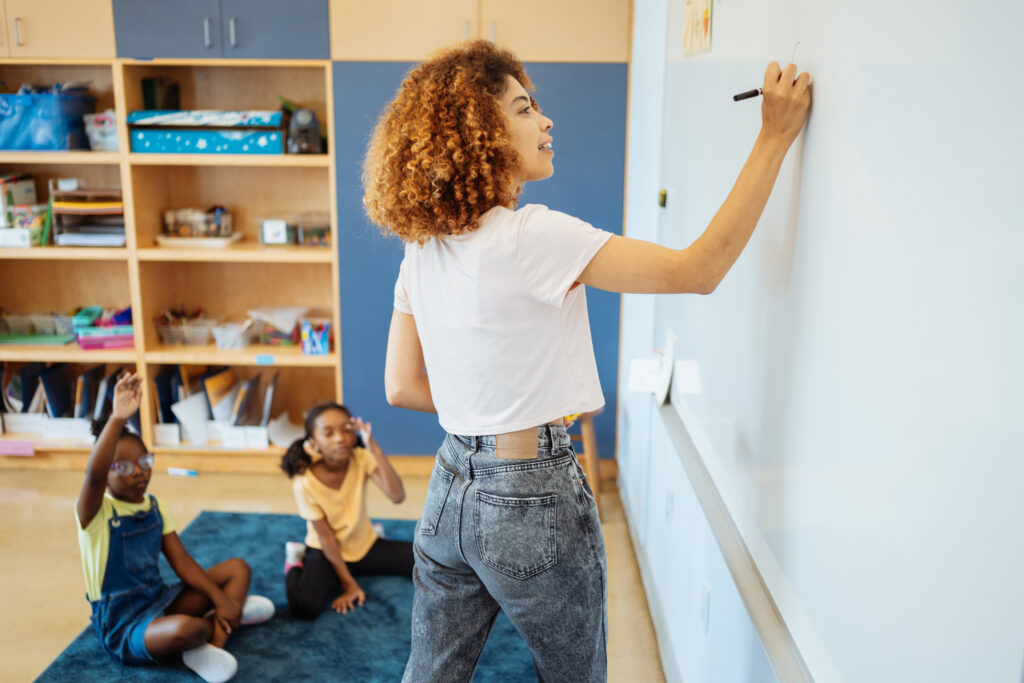
Start by opening a conversation about what defeat really looks and feels like. Students may experience disappointment or setbacks but struggle to name or describe it. Invite them to share examples of when they’ve felt defeated at school, and write their responses on the board. If they need help getting started, you can offer a few examples from the list below of different ways we experience defeat.
step 2: reflect on reactions to defeat
Once you’ve listed some scenarios where they experienced defeat on the board, ask students to think about a time they felt defeated and how others responded. They don’t need to share the full story, just the response they received. Any example is welcome, whether the response was helpful or unhelpful. Write their responses on the board as they share and if they get stuck you can offer a few examples from the list below of how we might react to defeat.

different ways we experience defeat
- Failing a test or getting a low grade
- Losing a game in the classroom, at recess or in gym class
- Receiving some form of school disciplinary action
- Being chosen last for a team or activity
- Not getting to go to the center or activity you wanted
- Being called on and not having the answer
- Falling down in front of classmates
- Forgetting homework and getting called out
- Having an accident or getting sick in front of classmates

how we might react to defeat
- Give encouragement or say something nice
- Laugh at them
- Ignore what is going on
- Whisper to another classmate about the situation
- Stay focused on work
- Stay out of it
- Call them a mean name
- Let the teacher or another adult know if someone needs extra support
- Spread the drama outside the classroom
- Speak up and say “that’s not helpful” when someone is unkind
step 3: sort the responses to learn
With the responses on the board, invite your students to help sort them into helpful and unhelpful categories. Read each response aloud and let students vote on where it belongs. You can create a chart to categorize responses if you’d like. And you may notice that some responses could fit into both categories depending on the situation. This is a great topic to discuss with your class!

bonus step
If you want to keep the activity going, have the class role-play a few scenarios to practice how they can respond in a helpful way the next time a classmate is having a hard time.
supporting students through defeat and beyond
Helping students understand defeat and how to respond to it is an important part of building a positive classroom culture. By exploring different types of defeat, reflecting on helpful and unhelpful responses, and practicing supportive behaviors students learn empathy, kindness and teamwork.
How are your students showing support for one another? If you did this activity or have other feedback, share it with us at onoursleeves@childrensdayton.org or use #ClassroomChampions on social media!