Overview
What Are Coughs?
Coughs are one of the most common symptoms of childhood illness. A cough can sound awful, but usually isn’t a sign of a serious condition. In fact, coughing is a healthy and important reflex that helps protect the airways in the throat and chest.
Top Things to Know
- Coughs often sound worse than they are and help clear your child’s airways.
- Different types of coughs — like wet, dry, barking, wheezing, or whooping — can point to what’s causing the illness.
- Most coughs are due to viruses and usually get better on their own.
- Steam, cool mist, fresh cool air, and plenty of fluids can help kids feel more comfortable.
Types of Coughs
Sometimes, a cough needs a doctor’s care. Understanding the different types of cough can help you know when to handle them at home and when to call your doctor.
Wet Coughs vs. Dry Coughs
With a wet cough, kids cough up mucus that’s often due to illnesses like the flu, a cold, bronchitis, or pneumonia.
With a dry cough, there’s no mucus, but the throat may feel scratchy because of things like asthma, smoke, or allergies.
After mucus clears with a wet cough, it may become a dry cough.
‘Barking’ Cough
“Barking” (or “barky”) coughs sound like barking and are usually caused by swelling in the upper airway. Most of the time, a barking cough comes from croup, a swelling of the larynx (voice box) and trachea (windpipe). Younger children have smaller airways that, if swollen, can make it hard to breathe. Kids younger than age 3 are most at risk for croup because their airways are so narrow.
A cough from croup can start suddenly, often in the middle of the night. Most kids with croup will also have stridor, which is a noisy, harsh breathing that happens when the child inhales (breathes in).
Whooping Cough
Whooping cough (pertussis) is an infection of the airways caused by the bacteria Bordetella pertussis. Kids with pertussis will have spells of back-to-back coughs without breathing in between. At the end of the coughing, they’ll take a deep breath in that makes a “whooping” sound. Other symptoms are a runny nose, sneezing, mild cough, and a low-grade fever.
Whooping cough can happen at any age, but is most severe in infants younger than 1 year old who didn’t get the pertussis vaccine, which is part of the DTaP vaccine (diphtheria, tetanus, acellular pertussis). It’s very contagious, especially in the early phases of illness when it just seems like a cold.
Vaccination is the best way to protect your child and yourself from whooping cough. All kids should get the pertussis shot at 2 months, 4 months, 6 months, 15 months, 4–6 years of age, and a booster dose through the Tdap vaccine at age 11–12.
Cough With Wheezing
If your child makes a wheezing (whistling) sound when breathing out, or exhaling, it could mean that the lower airways in the lungs are swollen, making it hard for air to get through. This can happen with asthma or the viral infection bronchiolitis (brong-kee-oh-LYE-tiss).
Wheezing also can happen if the lower airway is blocked by a foreign object — like a small toy or piece of food. If kids start to cough and wheeze suddenly, a doctor should check them right away to see if they breathed in something by accident.
Nighttime Cough
Lots of coughs get worse at night. When your child has a cold, mucus from the nose and sinuses can drain down the throat and trigger a cough during sleep. This is known as post-nasal drip. It’s only a problem if the cough won’t let your child sleep.
Asthma also can trigger nighttime coughs because the airways tend to be more sensitive and irritable at night. The cough might come from an allergy to dust mites in the bedding or other triggers, so it’s important to find and deal with the cause.
Daytime Cough
Cold air or activity can make coughs worse during the daytime. You can help reduce any possible triggers at home that could cause a cough — like air freshener, pets, or smoke (especially tobacco smoke).
Cough With a Fever
A child who has a cough, mild fever, and runny nose probably has a common cold. But coughs with a fever of 102°F (39°C) or higher can sometimes be due to pneumonia, especially if a child is weak and breathing fast. In this case, call your doctor right away.
Cough With Vomiting
Kids often cough so much that it triggers their gag reflex, making them vomit (throw up). Also, a child who has a cough with a cold or an asthma flare-up might vomit if lots of mucus drains into the stomach and causes nausea. Usually, this isn’t cause for alarm unless the vomiting doesn’t stop.
Lasting Cough
Coughs caused by colds can last weeks, especially if a child has one cold right after another. Asthma, allergies, or a chronic (long lasting) infection in the sinuses or airways also might cause lasting, or persistent, coughs. It might seem like a constant cough. If your child still has a cough after three weeks, call your doctor.
When Should I Call the Doctor?
If you’re concerned about your child’s cough, call your doctor. Depending on the kind of cough, other symptoms, and how long it’s lasting, the doctor might want to see your child. A telehealth visit can save you a trip to the office (especially for a nighttime cough).
Always call your doctor if your child is coughing and:
- has trouble breathing or is working hard to breathe
- is breathing faster than usual
- Is having retractions (when the skin between the ribs pulls in during breathing)
- has a blue or dusky color to the lips, face, or tongue
- has a high fever (especially if your child is coughing but does not have a runny or stuffy nose)
- has any fever and is younger than 3 months old
- is younger than 3 months old and has been coughing for more than a few hours
- makes a “whooping” sound when breathing in after coughing
- is coughing up blood
- has stridor (a noisy or musical sound) when breathing in
- has wheezing when breathing out (unless your doctor already gave you an asthma action plan)
- is weak, cranky, or irritable
- is dehydrated; signs include dizziness, drowsiness, a dry or sticky mouth, sunken eyes, crying with little or no tears, or peeing less often (or having fewer wet diapers)
-
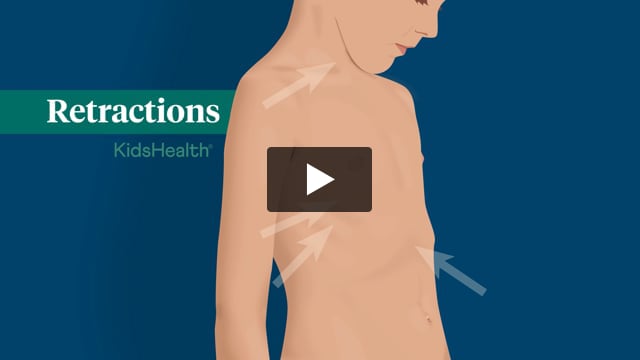
Retractions
Treatment & Care
How Are Coughs Treated?
Most coughs are caused by viruses and have to just run their course (get better on their own). Sometimes, this can take up to two weeks. Doctors usually don’t prescribe antibiotics because those work only against bacteria.
Should I Give My Child Cough Medicine?
Cough medicine isn’t recommended for kids younger than 4 years old. Ask your doctor before giving it to children ages 4–6. Cough medicine usually doesn’t work well and can cause side effects. If you’re considering any over-the-counter (OTC) medicine, check with your doctor first. Avoid combination medicines because kids may have side effects or take too much of them.
How Can I Help My Child Feel Better?
To help ease your child’s cough at home, try these tips:
- Serve plenty of cool drinks to help thin mucus and make it easier to cough up. Offer babies breast milk or formula. If your child is old enough, you can give warm tea or soup.
- Give a small spoonful of honey to kids older than 1 year to soothe the throat. Do not give honey to kids younger than 1 year because it has bacteria that can be harmful to them.
- Let kids older than 4 or 5 years suck on a lozenge or hard candy. Avoid giving these to kids younger than age 3 because they can choke on them.
- Use saline nasal mist or saline rinses (or saline drops in younger kids) to loosen mucus.
- Run hot water in the shower and sit with your child in a steamy bathroom for about 20 minutes to ease a barking or “croupy” cough.
- Try 10–15 minutes in cool outdoor air or run a cool mist humidifier at night.
Prevention
What Can Help Prevent Coughs?
- Follow your doctor’s treatment plan if your child has allergies or asthma. An asthma action plan can help you choose the right asthma medicines to give.
- Have your child avoid anyone who smokes or has a cold.
- Make sure your kids get their vaccines on time to help prevent some respiratory illnesses.
- Teach kids to sneeze or cough into their elbow, not their hands.
- Wash hands well and often.
Other Common Questions
What Can I Do When My Child Coughs at Night?
Things like steam, cool mist, and giving plenty of fluids during the day may help kids sleep better. Depending on the kind of cough and the cause, you can also:
- raise the head with a second pillow (if your child’s old enough for a pillow)
- give some saline drops or spray, and then suction mucus from the nose with a bulb syringe if your child is too young to blow the nose
- run an air purifier to reduce dust and other allergens (things that cause allergic reactions)
- have your child bathe or shower before bed to wash off outdoor allergens
Is Coughing in Babies and Toddlers Different Than in Older Kids?
The immune system of babies and toddlers isn’t fully developed, so they’re more likely than older kids to get illnesses that cause coughing. You can usually handle coughs the same way as in older kids, but avoid giving any OTC cough medicine or cough drops.